


-
 Vietnam
Vietnam | Updated Law on Pharmacy
21 de julio de 2025
- Contratos de distribución
- Comercio internacional
- Derecho Farmacéutico
On 29 June 2025, the Vietnamese government introduced Decree No. 163/2025/ND-CP (Decree 163). This decree provides detailed guidance on how the updated Law on Pharmacy will be implemented.
Like the amended Law on Pharmacy, Decree 163 came into effect on 1 July 2025, replacing the previous Decree No. 54/2017/ND-CP (Decree 54). The new decree sets out comprehensive rules for key aspects of managing pharmaceuticals, including:
- Pharmacy practice certificates
- Certificates allowing pharmaceutical businesses to operate
- Import and export of medicines and drug ingredients
- Good Manufacturing Practice (GMP) inspections of overseas manufacturers
- Recalling medicines and drug ingredients
- Certificates for medicine advertising content
- Medicine price management
Key Changes in Decree 163
Here are some important changes and additions introduced by Decree 163:
Destroying Specially Controlled Medicines
You no longer need to get approval from the relevant authority before destroying narcotic, psychotropic, and precursor drugs, or pharmaceutical ingredients that are narcotic or psychotropic substances or precursors used in medicines. Instead, you just need to provide notification at least seven working days in advance. This notification must include the planned destruction date and a detailed list of items to be destroyed.
E-commerce in Pharmaceutical
Pharmaceutical businesses that sell products online must openly display the following information to ensure transparency and consumer safety:
- Their certificate allowing them to operate as a pharmaceutical business.
- The pharmacy practice certificate of the person responsible for pharmaceutical expertise.
- Information about the medicines themselves.
Shelf-Life Rules for Imported Products
For medicines and ingredients with a total shelf life of nine months or less, at least one-third of their shelf life must remain when they clear customs. Medicines with a shelf life of 30 days or less must still be within their shelf life at the time of customs clearance.
Controlling Imported Products
All medicines with marketing authorisation (MA) are subject to import control, except for:
- Medicines needed for preventing and treating Group A infectious diseases that have been declared epidemics, as per the Law on Prevention and Control of Infectious Diseases.
- Medicines with a shelf life of less than 30 days.
Importers must inform the provincial People’s Committee at least five working days before making a customs declaration. The People’s Committee can then issue a written notice of non-compliance to the customs authority within five working days of receiving this notification.
Medicine Advertising
Decree 163 adds a process that allows an approved medicine advertising certificate to be adjusted for certain changes (such as a change to the MA holder or manufacturer information). This means you don’t have to go through the entire initial registration process for medicine advertising content again, as was required under the previous rules.
Medicine Price Management
Businesses must announce or re-announce wholesale prices, similar to the medicine price declaration process under Decree 54. Some medicines are exempt from this requirement, including those provided free of charge for emergency responses, national health programmes, humanitarian aid, clinical trials, scientific research, or exhibition purposes, and medicines carried as personal luggage.
The Ministry of Health (MOH) can make recommendations if the announced or re-announced price is significantly higher than similar medicines already on the market. This includes situations where:
- The announced or re-announced wholesale price of the medicine is higher than the highest price of similar medicines.
- The price difference is more than 35% (for medicines priced under VND 1 million) or 15% (for medicines priced at VND 1 million and above) compared to winning bid prices in tenders.
- The announced or re-announced price is higher than prices in the country of origin or other markets (if there’s no similar product in Vietnam).
- When such differences are found, the MOH issues a formal recommendation to the announcing business and publishes it online for transparency and accountability.
Further Guidance in New Circular
On 1 July 2025, the MOH issued Circular No. 31/2025/TT-BYT (Circular 31), which further details how the amended Law on Pharmacy and Decree 163 should be implemented. Circular 31 officially replaces Circular No. 07/2018/TT-BYT and Decree 54 and came into effect immediately.
Key provisions of Circular 31 include:
Notification of Practising Pharmacists
Pharmaceutical businesses that are not part of a pharmacy chain must inform the relevant authority of a list of people currently working at the business who hold pharmacy practice certificates. This notification must be submitted within 15 days of the date the certificate allowing the pharmaceutical business to operate was issued, or when there are any changes to the list. This is a shorter deadline than the previous 30 days under earlier rules.
Pharmacy chains have similar notification duties and deadlines. Specifically, the chain operator must inform the provincial authority where each pharmacy in the chain is located about the list of practising pharmacists at those sites. Additionally, pharmacy chains must notify the authority if pharmacies are added or removed from the chain, and if there are any rotations of the people responsible for pharmaceutical expertise between pharmacies within the chain.
Medicine Information Activities
Under Circular 31, medicine information can still be given to healthcare professionals through information materials, seminars, and medical representatives.
However, Circular 31 introduces a significant change by removing the need to obtain a certificate for medicine information content before carrying out these activities. Under the new rules, pharmaceutical businesses, representative offices of foreign pharmaceutical companies in Vietnam, and MA holders are now responsible for creating and distributing medicine information materials. These materials must comply with the package inserts for medicines approved by the MOH, the Vietnamese National Drug Formulary, and any related documents and professional instructions issued or recognised by the MOH.
Donald Trump, never one to shy away from drama or diplomacy-via-caps-lock, has slapped a 50% tariff on all Brazilian exports to the United States. The justification? In his own delicate prose: «The treatment of former President Jair Bolsonaro is a disgrace… A witch hunt that must end IMMEDIATELY!»
And just in case anyone thought this was about trade imbalances or economic strategy, Trump made things crystal clear: «Due to Brazil’s insidious attacks on free elections…».
In short, the 50% tariff isn’t about coffee, orange juice, or flip-flops. It’s about a Supreme Court judgment, applying Brazilian law, regarding Brazilian politicians accused of conspiring in a coup d’état. In other words, this is a brazen (and frankly absurd) attempt at judicial intervention via trade war.
Trump, with his characteristic subtlety, offered a solution: manufacture in the U.S., and he’ll look kindly upon Brazil, like a mafia don offering «protection» after smashing your shop window. But what he meant was: consider Bolsonaro innocent, and we’ll talk.
The Brazilian market took the bait
Although the fishy interference in Brazilian affairs was determined from a fish out of the water, the market took the bait: in the first 48 hours after the infamous letter, at least 1500 tons of fish were already held in Brazilian ports, as US buyers suspended their contracts due to uncertainty about the costs upon arrival. The fish market is on alert, as 80% of the exports head to the US, mainly coming from small family-owned industries that distribute the catch from artisanal fishing communities.
The same effect hit other sectors, from orange, honey, and coffee to aircraft.
Brazil’s response and sorcery: don’t mess with us (or our weather)
Naturally, Brazil will not sit quietly sipping caipirinhas while its sovereignty is trampled. Reciprocity is on the table: if Washington raises tariffs, Brasília can do the same. But above all, one thing is sure: Brazil will never tolerate foreign interference in its independent judiciary.
And then, a curious coincidence: right after Trump’s speech, a tornado accompanied by lightning struck the White House grounds. Pure chance? Maybe. Or could it have been the work of Brazilian indigenous shamans, a particularly well-organized group of umbanda practitioners, or simply the fact that, as every Brazilian child knows, God is Brazilian.
Trump might want to check the weather forecast next time before penning another angry letter.
The unpredictable becoming predictable
Trade wars are rarely tidy affairs, but one thing they consistently deliver is chaos (in legal terms, disruption). And when disruption meets contracts, force majeure disputes often end up in court.
At first glance, Trump’s decision to impose a 50% tariff overnight might feel like an unpredictable thunderbolt (quite literally, given the weather at the White House). But here’s the catch: by now, unpredictable tariffs are becoming predictable. When a government with a well-documented love for impulsive economic diplomacy imposes politically motivated tariffs, can anyone claim to be surprised?
In most jurisdictions, force majeure requires that the event be extraordinary, unforeseeable, and beyond the parties’ control. A sudden 50% tariff certainly ticks a few of those boxes, but following a repetition of erratic trade policy, one might argue that businesses should expect what in past times was considered unexpected, especially when dealing with certain jurisdictions or political figures. In other words, Trump’s tariffs might not excuse performance if parties didn’t prepare for exactly this kind of volatility.
This is where good contract drafting comes into play
Savvy businesses are learning that their contracts must go beyond a vague boilerplate clause about “acts of government” or “changes in law.” Instead, they should expressly address the risk of sudden tariff changes, including
- hardship clauses that allow renegotiation when costs become commercially unreasonable;
- price adjustment mechanisms linked to tariff thresholds;
- termination rights triggered by specified levels of customs duties;
- currency fluctuation provisions (because tariffs rarely travel alone, and currency swings often accompany them).
In short, while no contract can immunize a business from every shock, smart drafting can mean the difference between a commercial headache and a catastrophic breach.
Therefore, tariffs may no longer be an unpredictable storm; they are part of the new predictable landscape. Given that your contract might wake up tomorrow facing ‘IMMEDIATE’ punitive tariffs in all caps, your contract should be ready today.
The unwitting cupid: strengthening EU-Brazil relations
While the tariffs may ruffle trade flows between Brasília and Washington, there’s an unintended silver lining: Trump is proving to be the most efficient matchmaker between Brazil and other markets, such as China and the European Union.
The EU-Brazil relationship, already a flirtation with promising prospects, with relevant progress in the EU-Mercosur Agreement, now seems destined for deeper romance. If Mr. Trump insists on isolating the US from Brazil, the old continent stands ready, with flowers and wine in hand, to pick up where the US left off. After all, Brazilian fish can pair up nicely with champagne, cava and prosecco.
So thank you, Mr. Trump. In your quest to bully Brazil into submission, you may have done more to strengthen transatlantic ties than any EU Commissioner ever could. As they say in Brasília these days: Trump is not a trade warrior. He’s a cupid in disguise.
Summary
The framework supply contract is an agreement that regulates a series of future sales and purchases between two parties (customer and supplier) that take place over a certain period of time. This agreement determines the main elements of future contracts such as price, product volumes, delivery terms, technical or quality specifications, and the duration of the agreement.
The framework contract is useful for ensuring continuity of supply from one or more suppliers of a certain product that is essential for planning industrial or commercial activity. While the general terms and conditions of purchase or sale are the rules that apply to all suppliers or customers of the company. The framework contract is advisable to be concluded with essential suppliers for the continuity of business activity, in general or in relation to a particular project.
What I am talking about in this article:
- What is the supply framework agreement?
- What is the function of the supply framework agreement?
- The difference with the general conditions of sale or purchase
- When to enter a purchase framework agreement?
- When is it beneficial to conclude a sales framework agreement?
- The content of the supply framework agreement
- Price revision clause and hardship
- Delivery terms in the supply framework agreement
- The Force Majeure clause in international sales contracts
- International sales: applicable law and dispute resolution arrangements
What is a framework supply agreement?
It is an agreement that regulates a series of future sales and purchases between two parties (customer and supplier), which will take place over a certain period.
It is therefore referred to as a «framework agreement» because it is an agreement that establishes the rules of a future series of sales and purchase contracts, determining their primary elements (such as the price, the volumes of products to be sold and purchased, the delivery terms of the products, and the duration of the contract).
After concluding the framework agreement, the parties will exchange orders and order confirmations, entering a series of autonomous sales contracts without re-discussing the covenants already defined in the framework agreement.
Depending on one’s point of view, this agreement is also called a sales framework agreement (if the seller/supplier uses it) or a purchasing framework agreement (if the customer proposes it).
What is the function of the framework supply agreement?
It is helpful to arrange a framework agreement in all cases where the parties intend to proceed with a series of purchases/sales of products over time and are interested in giving stability to the commercial agreement by determining its main elements.
In particular, the purchase framework agreement may be helpful to a company that wishes to ensure continuity of supply from one or more suppliers of a specific product that is essential for planning its industrial or commercial activity (raw material, semi-finished product, component).
By concluding the framework agreement, the company can obtain, for example, a commitment from the supplier to supply a particular minimum volume of products, at a specific price, with agreed terms and technical specifications, for a certain period.
This agreement is also beneficial, at the same time, to the seller/supplier, which can plan sales for that period and organize, in turn, the supply chain that enables it to procure the raw materials and components necessary to produce the products.
What is the difference between a purchase or sales framework agreement and the general terms and conditions?
Whereas the framework agreement is an agreement that is used with one or more suppliers for a specific product and a certain time frame, determining the essential elements of future contracts, the general purchase (or sales) conditions are the rules that apply to all the company’s suppliers (or customers).
The first agreement, therefore, is negotiated and defined on a case-by-case basis. At the same time, the general conditions are prepared unilaterally by the company, and the customers or suppliers (depending on whether they are sales or purchase conditions) adhere to and accept that the general conditions apply to the individual order and/or future contracts.
The two agreements might also co-exist: in that case; it is a good idea to specify which contract should prevail in the event of a discrepancy between the different provisions (usually, this hierarchy is envisaged, ranging from the special to the general: order – order confirmation; framework agreement; general terms and conditions of purchase).
When is it important to conclude a purchase framework agreement?
It is beneficial to conclude this agreement when dealing with a mono-supplier or a supplier that would be very difficult to replace if it stopped selling products to the purchasing company.
The risks one aims to avoid or diminish are so-called stock-outs, i.e., supply interruptions due to the supplier’s lack of availability of products or because the products are available, but the parties cannot agree on the delivery time or sales price.
Another result that can be achieved is to bind a strategic supplier for a certain period by agreeing that it will reserve an agreed share of production for the buyer on predetermined terms and conditions and avoid competition with offers from third parties interested in the products for the duration of the agreement.
When is it helpful to conclude a sales framework agreement?
This agreement allows the seller/supplier to plan sales to a particular customer and thus to plan and organize its production and logistical capacity for the agreed period, avoiding extra costs or delays.
Planning sales also makes it possible to correctly manage financial obligations and cash flows with a medium-term vision, harmonizing commitments and investments with the sales to one’s customers.
What is the content of the supply framework agreement?
There is no standard model of this agreement, which originated from business practice to meet the requirements indicated above.
Generally, the agreement provides for a fixed period (e.g., 12 months) in which the parties undertake to conclude a series of purchases and sales of products, determining the price and terms of supply and the main covenants of future sales contracts.
The most important clauses are:
- the identification of products and technical specifications (often identified in an annex)
- the minimum/maximum volume of supplies
- the possible obligation to purchase/sell a minimum/maximum volume of products
- the schedule of supplies
- the delivery times
- the determination of the price and the conditions for its possible modification (see also the next paragraph)
- impediments to performance (Force Majeure)
- cases of Hardship
- penalties for delay or non-performance or for failure to achieve the agreed volumes
- the hierarchy between the framework agreement and the orders and any other contracts between the parties
- applicable law and dispute resolution (especially in international agreements)
How to handle price revision in a supply contract?
A crucial clause, especially in times of strong fluctuations in the prices of raw materials, transport, and energy, is the price revision clause.
In the absence of an agreement on this issue, the parties bear the risk of a price increase by undertaking to respect the conditions initially agreed upon; except in exceptional cases (where the fluctuation is strong, affects a short period, and is caused by unforeseeable events), it isn’t straightforward to invoke the supervening excessive onerousness, which allows renegotiating the price, or the contract to be terminated.
To avoid the uncertainty generated by price fluctuations, it is advisable to agree in the contract on the mechanisms for revising the price (e.g., automatic indexing following the quotation of raw materials). The so-called Hardship or Excessive Onerousness clause establishes what price fluctuation limits are accepted by the parties and what happens if the variations go beyond these limits, providing for the obligation to renegotiate the price or the termination of the contract if no agreement is reached within a certain period.
How to manage delivery terms in a supply agreement?
Another fundamental pact in a medium to long-term supply relationship concerns delivery terms. In this case, it is necessary to reconcile the purchaser’s interest in respecting the agreed dates with the supplier’s interest in avoiding claims for damages in the event of a delay, especially in the case of sales requiring intercontinental transport.
The first thing to be clarified in this regard concerns the nature of delivery deadlines: are they essential or indicative? In the first case, the party affected has the right to terminate (i.e., wind up) the agreement in the event of non-compliance with the term; in the second case, due diligence, information, and timely notification of delays may be required, whereas termination is not a remedy that may be automatically invoked in the event of a delay.
A useful instrument in this regard is the penalty clause: with this covenant, it is established that for each day/week/month of delay, a sum of money is due by way of damages in favor of the party harmed by the delay.
If quantified correctly and not excessively, the penalty is helpful for both parties because it makes it possible to predict the damages that may be claimed for the delay, quantifying them in a fair and determined sum. Consequently, the seller is not exposed to claims for damages related to factors beyond his control. At the same time, the buyer can easily calculate the compensation for the delay without the need for further proof.
The same mechanism, among other things, may be adopted to govern the buyer’s delay in accepting delivery of the goods.
Finally, it is a good idea to specify the limit of the penalty (e.g.,10 percent of the price of the goods) and a maximum period of grace for the delay, beyond which the party concerned is entitled to terminate the contract by retaining the penalty.
The Force Majeure clause in international sales contracts
A situation that is often confused with excessive onerousness, but is, in fact, quite different, is that of Force Majeure, i.e., the supervening impossibility of performance of the contractual obligation due to any event beyond the reasonable control of the party affected, which could not have been reasonably foreseen and the effects of which cannot be overcome by reasonable efforts.
The function of this clause is to set forth clearly when the parties consider that Force Majeure may be invoked, what specific events are included (e.g., a lock-down of the production plant by order of the authority), and what are the consequences for the parties’ obligations (e.g., suspension of the obligation for a certain period, as long as the cause of impossibility of performance lasts, after which the party affected by performance may declare its intention to dissolve the contract).
If the wording of this clause is general (as is often the case), the risk is that it will be of little use; it is also advisable to check that the regulation of force majeure complies with the law applicable to the contract (here an in-depth analysis indicating the regime provided for by 42 national laws).
Applicable law and dispute resolution clauses
Suppose the customer or supplier is based abroad. In that case, several significant differences must be borne in mind: the first is the agreement’s language, which must be intelligible to the foreign party, therefore usually in English or another language familiar to the parties, possibly also in two languages with parallel text.
The second issue concerns the applicable law, which should be expressly indicated in the agreement. This subject matter is vast, and here we can say that the decision on the applicable law must be made on a case-by-case basis, intentionally: in fact, it is not always convenient to recall the application of the law of one’s own country.
In most international sales contracts, the 1980 Vienna Convention on the International Sale of Goods («CISG») applies, a uniform law that is balanced, clear, and easy to understand. Therefore, it is not advisable to exclude it.
Finally, in a supply framework agreement with an international supplier, it is important to identify the method of dispute resolution: no solution fits all. Choosing a country’s jurisdiction is not always the right decision (indeed, it can often prove counterproductive).
Summary – When can the Coronavirus emergency be invoked as a Force Majeure event to avoid contractual liability and compensation for damages? What are the effects on the international supply chain when a Chinese company fails to fulfill its obligations to supply or purchase raw materials, components, or products? What behaviors should foreign entrepreneurs adopt to limit the risks deriving from the interruption of supplies or purchases in the supply chain?
Topics covered
- The impact of Coronavirus (Covid-19) on the international Supply chain
- What is Force Majeure?
- The Force Majeure Contract Clause
- What is Hardship?
- Is the Coronavirus a Force Majeure or Hardship event?
- What is the event reported by the Supplier?
- Did the Supplier provide evidence of Force Majeure?
- Does the contract establish a Force Majeure or Hardship clause?
- What does the law applicable to the Contract establish?
- How to limit supply chain risks?
The impact of Coronavirus (Covid-19) on the international Supply chain
Coronavirus/Covid 19 has created terrible health and social emergencies in China, which have made exceptional measures of public order necessary for the containment of the virus, like quarantines, travel bans, the suspension of public and private events, and the closure of industrial plants, offices and commercial activities for a certain period of time.
Once the reopening of the plants was authorized, the return to normality was strongly slowed because many workers, who had traveled to other regions in China for the Lunar New Year holiday, did not return to their workplaces.
The current data on the reopening of the factories and the number of staff present are not unambiguous, and it is legitimate to doubt their reliability; therefore, it is not possible to predict when the emergency can be defined as having ended, or if and how Chinese companies will be able to fill the delays and production gaps that have been created.
Certainly, it is very probable that, in the coming months, foreign entrepreneurs will see their Chinese counterparts pleading the impossibility of fulfilling their contracts, with Coronavirus as the reason.
To understand the size of the problem, just consider that in the month of February 2020 alone, the China Council for the Promotion of International Trade (the Chinese Chamber of Commerce that is tasked with promoting international commerce) at the request of Chinese companies, has already issued 3,325 certificates attesting to the impossibility of fulfilling contractual obligations due to the Coronavirus epidemic, for a total value of more than 270 billion yuan (US $38.4 bn), according to the official Xinhua News Agency.
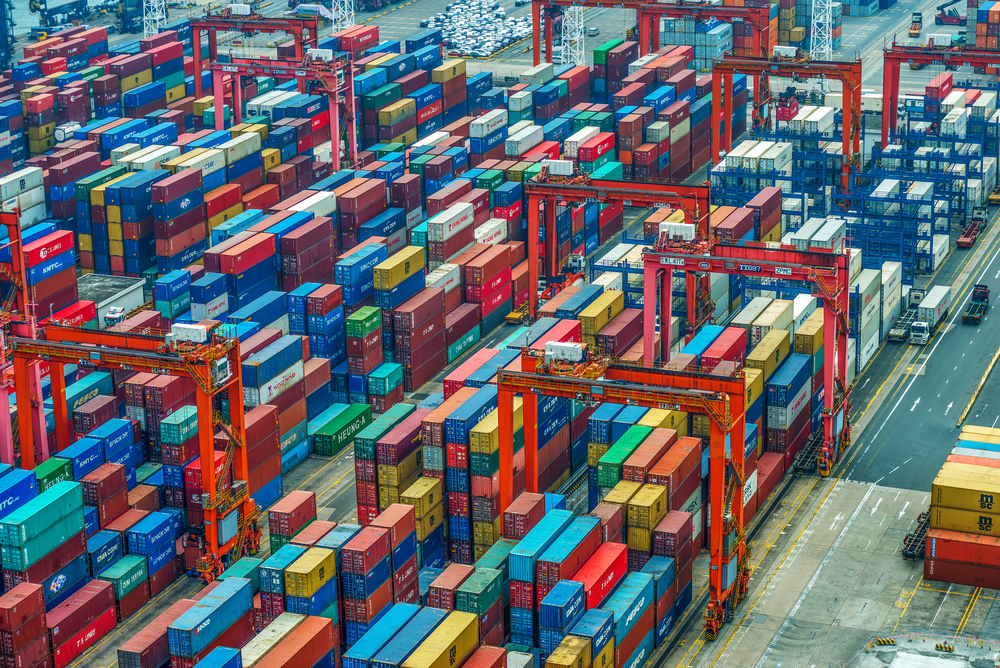
What risks does this situation pose for foreign entrepreneurs, and what consequences can it have beyond Chinese borders?
There are many risks, and the potential damages are enormous: China is the world’s factory, and it currently generates roughly 15% of the world’s GDP. Therefore, it is unlikely that a production chain in any industrial sector does not involve one or more Chinese companies as suppliers of raw materials, semi-finished materials, or components (in the case of Italy, the sectors most integrated with supply chains in China are the automotive, chemical, pharmaceutical, textile, electronic, and machinery sectors).
Failure to fulfill on the part of the Chinese may, therefore, result in a cascade of non-fulfillments of foreign entrepreneurs towards their end clients or towards the next link in the supply chain.
The fact that the virus is spreading rapidly (at the moment of publication of this article the situation is already critical in some regions in Italy (and in South Korea and Iran), and cases are beginning to be flagged in the USA) furthermore, makes it possible that production stops and quarantine situations similar to those described could also be adopted in regions and industrial sectors of other countries.
To simplify this picture, let us consider the case of a Chinese supplier (Party A) that supplies a component or performs a service for a foreign company (Party B), which in turn assembles (in China or abroad) the components into a semi-finished or final product, that is then resold to third parties (Party C).
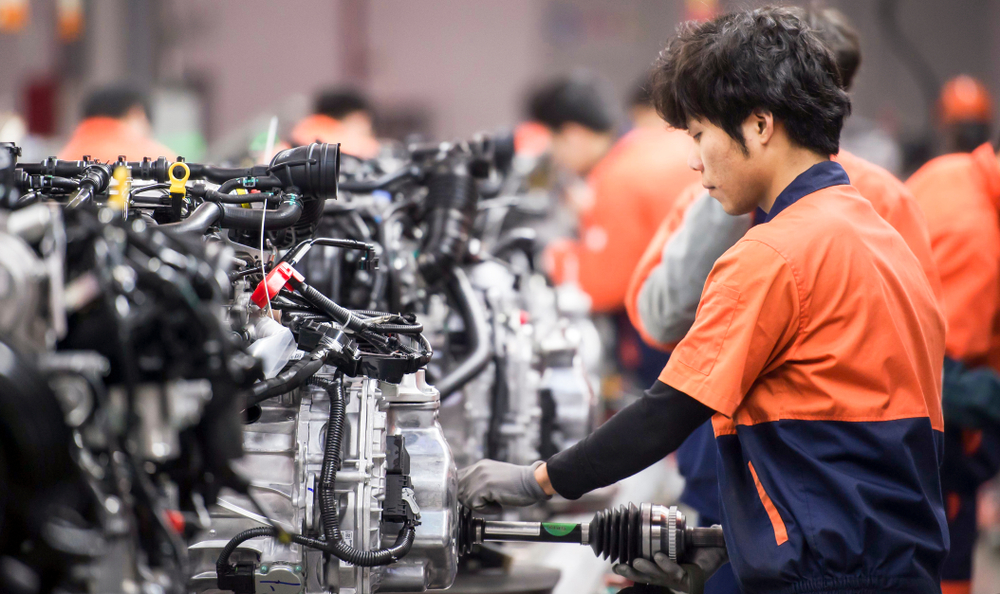
If Party A is late or unable to deliver their product or service to Party B, they risk finding themselves exposed to risks of contract failure versus Party C, and so on along the supply/purchase chain.
Let’s examine how to handle the case in which Party A communicates that it has become impossible to fulfill the contract for reasons related to the Coronavirus emergency, such as in the case of an administrative measure to close the plant, the lack of staff in the factory on reopening, the impossibility of obtaining certain raw materials or components, the blocking of certain logistics services, etc.
In international trade, this situation, i.e. exemption from liability for non-fulfillment of contractual performance, which has become impossible due to events that have occurred outside the sphere of control of the Party, is generally defined as «Force Majeure».
To understand when it is legitimate for a supplier to invoke the impossibility to fulfill a contract due to the Coronavirus and when instead these actions are unfounded or specious, we must ask ourselves when can Party A invoke Force Majeure and what can Party B do to limit damages and avoid being considered in-breach towards Party C.
What is Force Majeure?
At an international level, a unified concept of Force Majeure doesn’t exist because every different country has established their own specific regulations.
A useful reference is given by the 1980 Vienna Convention on Contracts for the International Sale of Goods (CISG), ratified by 93 countries (among which are Italy, China, the USA, Germany, France, Spain, Australia, Japan, and Mexico) and automatically applicable to sales between companies with seat in contracting states.
Art. 79 of CISG, titled, “Impediment Excusing Party from Damages”, provides that, “A party is not liable for a failure to perform any of his obligations if he proves that the failure was due to an impediment beyond his control and that he could not reasonably be expected to have taken the impediment into account at the time of the conclusion of the contract or to have avoided or overcome it or its consequences.”
The characteristics of the cause of exemption from liability for non-fulfillment are, therefore, its unpredictability, the fact that it is beyond the control of the Party, and the impossibility of taking reasonable steps to avoid or overcome it.
In order to establish, in concrete terms, if the conditions for a Force Majeure event exist, what its consequences are, and how the parties should conduct themselves, it is first necessary to analyze the content of the Force Majeure clause (if any) included in the contract.
The Force Majeure Contract Clause
The model Force Majeure clause used for reference in international commerce is the one prepared by the International Chamber of Commerce, la ICC Force Majeure Clause 2003, which provides the requirements that the party invoking force majeure has the burden of proving (in substance they are those provided by art. 79 of CISG), and it indicates a series of events in which these requirements are presumed to occur (including situations of war, embargoes, acts of terrorism, piracy, natural disasters, general strikes, measures of the authorities).
The ICC Force Majeure Clause 2003 also indicates how the party who invokes the event should behave:
- Give prompt notice to the other parties of the impediment;
- In the case in which the impediment will be temporary, promptly communicate to the other parties the end;
- In the event that the impossibility of the performance derives from the non-fulfillment of a third party (as in the case of a subcontractor) provide proof that the conditions of the Force Majeure also apply to the third supplier;
- In the event that this shall lead to the loss of interest in the service, promptly communicate the decision to terminate the contract;
- In the event of termination of the contract, return any service received or an amount of equivalent value.
Given that the parties are free to include in the contract the ICC Force Majeure Clause 2003 or another clause of different content, in the face of a notification of a Force Majeure event, it will, therefore, be necessary, first of all, to analyze what the contractual clause envisages in that specific case.
The second step (or the first, if, in the contract, there is no Force Majeure clause) would then be to verify what the law applicable to the contractual agreement provides (which we will deal with later).
It is also possible that the event indicated by the defaulting party does not lead to the impossibility of the fulfillment of the contract, but makes it excessively burdensome: in this case, you cannot apply Force Majeure, but the assumptions of the so-called Hardship clause could be used.
What is Hardship?
Hardship is another clause that often occurs in international contracts: it regulates the cases in which, after the conclusion of the contract, the performance of one of the parties becomes excessively burdensome or complicated due to events that have occurred, independent of the will of the party.
The outcome of a Hardship event is that of a strong imbalance of the contract in favor of one party. Some textbook examples would be: an unpredictable sharp rise in the price of a raw material, the imposition of duties on the import of a certain product, or the oscillation of the currency beyond a certain range agreed between the parties.
Unlike Force Majeure, in the case of Hardship, performance is still feasible, but it has become excessively onerous.
In this case, the model clause is also that of the ICC Hardship Clause 2003, which provides that Hardship exists if the excessive cost is a consequence of an event outside the party’s reasonable sphere of control, which could not be taken into consideration before the conclusion of the agreement, and whose consequences cannot be reasonably managed.
The ICC Hardship clause stabilizes what happens after a party has proven the existence of a Hardship event, namely:
- The obligation of the parties, within a reasonable time period, to negotiate an alternative solution to mitigate the effects of the event and bring the agreement into balance (extension of delivery times, renegotiation of the price, etc.);
- The termination of the contract, in the event that the parties are unable to reach an alternative agreement to mitigate the effects of the Hardship.
Also, when one of the parties invokes a Hardship event, just as we saw before for Force Majeure, it is necessary to verify if the event has been planned in the contract, what the contents of the clause are, and/or what is established by the norms applicable to the contract.
Is the Coronavirus a Force Majeure or Hardship event?
Let’s return to the case we examined at the beginning of the article, and try to see how to manage a case where a supplier internal to an international supply chain defaults when the Coronavirus emergency is invoked as a cause of exemption from liability.
Let’s start by adding that there is no one response valid in all cases, as it is necessary to examine the facts, the contractual agreements between the parties, and the law applicable to the contract. What we can do is indicate the method that can be used in these cases, that is responding to the following questions:
- The factual situation: what is the event reported by the Supplier?
- Has the party invoking Force Majeure proven that the requirements exist?
- What does the Contract (and/or the General Conditions of Contract) provide for?
- What does the law applicable to the Contract establish?
- What are the consequences on the obligations of the Parties?
What is the event reported by the Supplier?
As seen, the situation of force majeure exists if, after the conclusion of the contract, the performance becomes impossible due to unforeseeable events beyond the control of the obligated party, the consequences of which cannot be overcome with a reasonable effort.
The first check to be complete is whether the event for which the party invokes the Force Majeure was outside the control of the Party and whether it makes performance of the contract impossible (and not just more complex or expensive) without the Party being able to remedy it.
Let’s look at an example: in the contract, it is expected that Party A must deliver a product to Party B or carry out a service within a certain mandatory deadline (i.e. a non-extendable, non-waivable), after which Party B would no longer be interested in receiving the performance (think, for example, of the delivery of some materials necessary for the construction of an infrastructure for the Olympics).
If delivery is not possible because Party A’s factory was closed due to administrative measures, or because their personnel cannot travel to Party B to complete the installation service, it could be included in the Force Majeure case list.
If instead the service of Party A remains possible (for example with the shipping of products from a different factory in another Chinese region or in another country), and can be completed even if it would be done under more expensive conditions, Force Majeure could not be invoked, and it should be verified whether the event creates the prerequisites for Hardship, with the relative consequences.
Did the Supplier provide evidence of Force Majeure?
The next step is to determine if the Supplier/Party A has provided proof of the events that are prerequisites of Force Majeure. Namely, not being able to have avoided the situation, nor having a reasonable possibility of remedying it.
To that end, the mere production of a CCPIT certificate attesting the impossibility of fulfilling contractual obligations, for the reasons explained above, cannot be considered sufficient to prove the effective existence, in the specific case, of a Force Majeure situation.
The verification of the facts put forward and the related evidence is particularly important because, in the event that a cause for exemption by Party A is believed to exist, this evidence can then be used by Party B to document, in turn, the impossibility of fulfilling their obligations towards Party C, and so on down the supply chain.
Does the contract establish a Force Majeure or Hardship clause?
The next step is that of seeing if the contract between the parties, or the general terms and conditions of sale or purchase (if they exist and are applicable), establish a Force Majeure and/or Hardship clause.
If yes, it is necessary to verify if the event reported by the Party invoking Force Majeure falls within those provided for in the contractual clause.
For example, if the reported event was the closure of the factory by order of the authorities and the contractual clause was the ICC Force Majeure Clause 2003, it could be argued that the event falls within those indicated in point 3 [d] or «act of authority» … compliance with any law or governmental order, rule, regulation or direction, curfew restriction» or in point 3 [e] «epidemic» or 3 [g] «general labor disturbance».
It should then be examined what consequences are provided for in the Clause: generally, responsibility for timely notification of the event is expected, that the party is exempt from performing the service for the duration of the Force Majeure event, and finally, a maximum term of suspension of the obligation, after which, the parties can communicate the termination of the contract.
If the event does not fall among those provided for in the Force Majeure clause, or if there is no such clause in the contract, it should be verified whether a Hardship clause exists and whether the event can be attributed to that prevision.
Finally, it is still necessary to verify what is established by the law applicable to the contract.
What does the law applicable to the Contract establish?
The last step is to verify what the laws applicable to the contract provide, both in the case when the event falls under a Force Majeure or Hardship clause, and when this clause is not present or does not include the event.
The requirements and consequences of Force Majeure or Hardship can be regulated very differently according to the applicable laws.
If Party A and Party B were both based in China, the law of the People’s Republic of China would apply to the sales contract, and the possibility of successfully invoking Force Majeure would have to be assessed by applying these rules.
If instead, Party B were based in Italy, in most cases, the 1980 Vienna Convention on Contracts for the International Sale of Goods would apply to the sales contract (and as previously seen, art.79 “Impediment Excusing Party from Damages”). As far as what is not covered by CISG, the law indicated by the parties in the contract (or in the absence identified by the mechanisms of private international law) would apply.
Similar reasoning should be applied when determining which law are applicable to the contract between Party B and Party C, and what this law provides for, and so on down the international supply chain.
No problems are posed when the various relationships are regulated by the same legislation (for example, the CISG), but as is likely the case, if the applicable laws were different, the situation becomes much more complicated. This is because the same event could be considered a cause for exemption from contractual liability for Party A to Party B, but not in the next step of the supply chain, from Party B to Party C, and so on.
How to limit supply chain risks?
The best way to limit the risk of claims for damages from other companies in the supply chain is to request timely confirmation from your Supplier of their willingness to perform the contractual services according to the established terms, and then to share that information with the other companies that are part of the supply chain.
In the case of non-fulfillment motivated by the Coronavirus emergency, it is essential to verify whether the reported event falls among those that may be a cause of contractual exemption from liability and to require the supplier to provide the relevant evidence. The proof, if it confirms the impossibility of the supplier’s performance, can be used by the buyer, in turn, to invoke Force Majeure towards other companies in the Supply Chain.
If there are Force Majeure/Hardship clauses in the contracts, it would be necessary to examine what they establish in terms of notice of the impossibility to perform, term of suspension of the obligation, consequences of termination of the contract, as well as what the laws applicable to the contracts provide.
Finally, it is important to remember that most laws establish a responsibility of the non-defaulting party to mitigate damages deriving from the possible non-fulfillment of the other party. This means that if it is probable, or just possible, that the Chinese Supplier will default on a delivery, the purchasing party would then have to do everything possible to remedy it, and in any case, fulfill their obligations towards the other companies that form part of the supply chain; for example by obtaining the product from other suppliers even at greater expense.
El pasado 30 de diciembre de 2018 entró en vigor el Tratado Integral y Progresista de Asociación Transpacífico (“CPTPP”, por sus siglas en inglés).
Este Tratado es considerado el tercer mayor acuerdo comercial a nivel mundial detrás del Tratado entre Canadá y la Unión Europea (“CETA”, por sus siglas en inglés) y el Tratado entre México, Estados Unidos y Canadá (“T-MEC”, por sus siglas en español), ya que representa un modelo de liberalización comercial, el cual tiene como finalidad mantener los mercados abiertos, incrementar el comercio mundial y crear nuevas oportunidades económicas entre los países miembros.
El CPTPP reafirma y materializa gran parte de las disposiciones del Acuerdo Transpacífico de Cooperación Económica (“TPP”, por sus siglas en inglés), el cual originalmente había sido suscrito por 12 países; posteriormente Estados Unidos de América (“EE.UU”) decidió anunciar su salida.
Como resultado de lo anterior, este Tratado constituye el acuerdo al que llegaron los 11 países restantes del TPP, conformado por Australia, Brunéi, Canadá, Chile, Japón, Malasia, México, Nueva Zelanda, Perú, Singapur y Vietnam, incorporando el texto original con excepción de 22 disposiciones relacionadas con reglas que fueron introducidas por EE.UU, las cuales quedan suspendidas.
El Tratado tiene cuatro características principales:
- Mejora el acceso a los mercados de los países que lo conforman, eliminando y reduciendo las barreras arancelarias entre ellos. También incrementa los beneficios preexistentes con aquellos países con los que ya se habían firmado tratados previamente.
- Promueve la innovación, la productividad y la competitividad;
- Fomenta el comercio incluyente, pues incorpora nuevos elementos para asegurar el desarrollo de la economía, ya que regula actividades de las empresas propiedad del Estado, propiedad intelectual, coherencia regulatoria, comercio electrónico y facilidades para las Pequeñas y Medianas Empresas (“PYMES”) para hacer el comercio más ágil y sencillo.
- Por medio de una plataforma de integración regional, busca potenciar el encadenamiento productivo y la posibilidad de inclusión de distintas y futuras economías.
Para dimensionar la relevancia del Tratado, la Secretaría de Economía ha señalado que si bien la ausencia de Estados Unidos ha reducido las dimensiones económicas del mercado establecidas en un principio por el instrumento (dado que pasó de representar el 40% a 13% de la economía mundial), las perspectivas a futuro son favorables, ya que con la participación de los 11 países, se crea un mercado de 500 millones de consumidores y se aportará un 13.5% del Producto Interno Bruto (PIB) mundial, además de que la posible incorporación de otros países, podría compensar la ausencia de los EUA.
Con el CPTPP, México busca expandir su apertura comercial en la zona más dinámica del mundo (Asia-Pacífico), permitiendo que los productos mexicanos tengan acceso a 6 nuevos países: Australia, Burnéi, Malasia, Nueva Zelanda, Singapur y Vietnam, lo que permitirá diversificar la actividad económica comercial potencializando a sectores como el agrícola, el automotriz y aeroespacial y productos como dispositivos médicos, equipos eléctricos, lácteos, atún, sardinas, cosméticos, tequila, mezcal, cerveza, etc.
Este Tratado, también permitirá profundizar el acceso al mercado de Japón y consolidará las preferencias arancelarias con países con los que ya se habían firmado tratados de libre comercio como Canadá, Chile y Perú.
El principal motivo del gobierno de México tras la negociación del CPTPP es continuar con una política de Estado de apertura comercial que inició desde 1989. Actualmente, México cuenta con una red de 12 tratados de libre comercio con 46 países; 33 acuerdos para la Promoción Recíproca de las Inversiones; y 9 acuerdos de alcance limitado (Acuerdos de Complementación Económica y Acuerdos de Alcance Parcial) en el marco de la Asociación Latinoamericana de Integración.
Very frequently, different business settings present the opportunity to sign a Non-Disclosure Agreement (“NDA”) and a Memorandum of Understanding (“MoU”) or Letter of Intent (“LoI”), so much so that these three acronyms – NDA, MoU and Lol – are now commonly used, particularly throughout international negotiations.
However, often times, these contracts are used in an improper way and with different purposes than those for which they were established in international commercial praxis, with the result that they are either not useful because they do not effectively protect the parties’ interests, or are counterproductive.
We shall start by taking a look at the characteristics of the Non-Disclosure Agreement – NDA – and how it should be used.
What is a NDA?
The NDA is an agreement whose function is to protect the confidential information that the parties (generally identified, respectively as the “Disclosing Party” and the “Receiving Party”) intend sharing, in different possible scenarios: forwarding of information for a preliminary due diligence relating to an investment, the evaluation of commercial data for a distribution contract, technical specifications related to a certain product that is subject of transfer of technology etc.
The first step of the negotiations, in fact, often requires that different types of information whether technical, financial or commercial, are made available by one or both parties, and the need for this information to remain confidential (hereinafter the “Confidential Information”) during and after the conclusion of the negotiations.
NDA – Who are the parties?
Right from the recitals of the agreement, it is very important to correctly identify the parties obliged to safeguard the information and maintain its confidentiality, especially when group companies are involved, and where the interlocutors may be many and located in different countries. In such cases, it is advisable to oblige the Receiving Party to guarantee confidentiality by all the companies by means of a specific clause. It is also important that the agreement accurately indicates the people belonging to the Receiving Party’s organization (such as: employees, technical consultants, experts, collaborators, etc.) who have a right to access the information, if possible by signing a confidentiality agreement by all the people involved.
NDA – What is Confidential Information?
The use of recycled NDA templates, found on forms or proposed by the counterparty is certainly not a recommended practice, but unfortunately one that is very widespread. These templates are very often generic and include broad definitions of Confidential Information as well as very detailed lists which actually include all contents of a business activity, often including areas that are not applicable to the object of the activity being negotiated, or information that is actually not reserved.
The problem regarding these templates is that it is difficult, ex post, to verify whether certain information would have been included in the Confidential Information, for example either because it would be difficult to determine whether the Receiving Party would have already been in possession before the signing of the NDA, or because the information would not have been expressly mentioned in a clause that contains a very detailed list, but which does not include the individual piece of information that is of interest, or lastly because after the signing of the NDA, the Confidential Information would have been shared using non-secure and non-traceable procedures (for example as an email attachment).
The best way to proceed is that of identifying in a very specific way only the information that needs to be shared, listing the documents in an attachment to the NDA, thereafter making them available in a format that leaves no doubt regarding their confidentiality, for example by marking them with a watermark or stamp “Confidential under NDA”. Furthermore, a good praxis is to provide access to the Confidential Information only through a secure way (such as a reserved cloud , accessible only through an individual user name and password that is given to authorized people).
NDA – Prohibition from using the Confidential Information
Often times through the standard NDA templates, the Receiving Party is only obliged to maintain the Confidential Information reserved, without being prohibited from its use which – especially in cases of competitor companies – may be more dangerous than divulging the information: imagine technology development or patents based on data acquired, or the use of lists of clients or other commercial information. To highlight and strengthen this obligation it would be more correct to name the document Non-Disclosure and Non-Use Agreement (“NDNUA”).
NDA – Duration
The function of the NDA is to protect the Confidential Information for the entire time during which it needs to be shared between the Parties. It is therefore important to clearly indicate the last moment the information will be used and – in the event that the Receiving Party is in possession of a copy of the Confidential Information – ensure that the Receiving Party returns or destroys the documents and shall maintain the Information reserved and shall refrain from using the Information for a few months (better years) following the termination of the NDA.
Breach of the NDA
Attempting to quantify the damages resulting from a breach of the confidentiality clause is generally very complex: it may therefore be useful to provide for a penalty clause, that establishes a certain amount for the damage deriving from a contractual non-fulfilment. To this effect it is important to consider that the estimate of the penalty shall be reasonable in relation to the damage assumed to derive from the breach of confidentiality, and that different types of penalties can be established according to different cases of non-fulfilment (for example, registration or counterfeit of a patent through the use of shared technical information, or contact with certain business partners).
There is also another advantage inserting a penalty clause in the NDA: if during the negotiations the Receiving Party objects to the clause or requests it to be reduced, it may indicate a mental reservation of default, and in any case is symptomatic of a fear of having to pay this amount, which would have no reason to exist if the party intended abiding strictly to the contractual obligations.
NDA – Litigation, jurisdiction and applicable law
Even in this case there is an unfortunate practice, which is that of relegating this type of clause to the end of the agreement (concerning the so-called midnight clauses, to this effect you may refer to this post on legalmondo) and thus not dedicate enough attention to its contents, which may lead to adopting clauses that are completely wrong (or worse still, null).
In reality this is a very important provision, which leads to ensuring contractual enforcement and/or obtaining a judicial decision that may be executed in a rapid and effective way. There is no solution that applies to all cases and the individual negotiation need to be considered: for example in an NDA with a Chinese counterpart it may be counterproductive to choose the Italian jurisdiction and apply Italian law, given that in the event of non-fulfilment it is usually necessary to take legal action and enforce the judicial or arbitral decision in China (even with interim – urgent measures). It would therefore be more opportune, to draft an NDA with an English/Chinese bilingual text and provide for an arbitration in China, applying Chinese law.
NDA – Conclusion
The NDA is a fundamental tool to protect confidential information, and this can be achieved only if it is well drafted, taking into consideration the specific case at hand: it is advisable to refrain from the “do-it-yourself” and seek legal advice from a lawyer who knows how to draw up an NDA bearing in mind all the characteristics of this type of contract (type of negotiation, information to be shared, location of the parties and countries where the NDA will be executed).
Después de una larga espera por parte de los proveedores de productos de marca, los minoristas de tiendas no virtuales, los minoristas de Internet y los proveedores de plataformas de comercio electrónico como Amazon, eBay, Zalando, el Tribunal de Justicia de la Unión Europea (TJUE) acaba de dictaminar (6 de diciembre de 2017) que los proveedores de productos de lujo pueden legítimamente prohibir las ventas de sus productos a través de plataformas online de terceros. Según el TJUE, esta prohibición de utilizar plataformas no constituye necesariamente una restricción ilegal de la competencia a tenor del artículo 101 del Tratado de Funcionamiento de la Unión Europea («TFUE«): el Tribunal ha confirmado que los sistemas de distribución selectiva para los productos de lujo, destinados principalmente a preservar la imagen de lujo de los productos, pueden considerarse compatibles con la legislación europea sobre acuerdos verticales.
En concreto, el Tribunal ha decidido que las prohibiciones para utilizar plataformas de comercio electrónico son legítimas, es decir, que la legislación europea permite la restricción de las ventas online en
“una cláusula contractual como la controvertida, que prohíbe a los distribuidores autorizados de un sistema de distribución selectiva de productos de lujo dirigido, con carácter principal, a preservar la imagen de lujo de dichos productos, recurrir de manera evidente a plataformas de terceros para vender en Internet los productos de que se trata, si se cumplen los siguientes requisitos: (i) dicha cláusula debe pretender preservar la imagen de lujo de esos productos, (ii) debe establecerse de modo uniforme y aplicarse de forma no discriminatoria y (iii) debe ser proporcionada al objetivo perseguido.”
(véase el Comunicado de Prensa del TJUE n.º 132/17 y el texto completo de la decisión).
Este es el resultado intermedio del caso Coty – ahora toca al Tribunal de Apelaciones de Frankfurt (“Oberlandesgericht Frankfurt”) aplicar estos requisitos al caso Coty. En pocas palabras, la pregunta que surge en el presente caso es si los propietarios de marcas de lujo pueden, total o parcialmente, prohibir la reventa a través de Internet en plataformas de terceros.
La historia del caso Coty es extremadamente interesante: la filial alemana del proveedor de perfumes de lujo Coty, Coty Germany GmbH («Coty») ha creado un sistema de distribución selectivo y sus distribuidores pueden realizar ventas por Internet, pero tienen prohibido vender a través de plataformas de terceros, visibles como tal desde el exterior, como Amazon, eBay, Zalando & Co. El tribunal de primera instancia consideró que la imposición de la prohibición para realizar ventas a través de plataformas de terceros era una restricción ilegal de la competencia. En cambio, el tribunal de segunda instancia, no vio la respuesta tan clara, por ello interpuso una petición al TJUE para que emitiera una decisión prejudicial sobre cómo debían interpretarse las normas europeas sobre acuerdos verticales y prácticas concertadas, más específicamente el art. 101 TFUE y el art. 4 letras b y c del Reglamento (UE) n° 330/2010 de la Comisión, de 20 de abril de 2010 , relativo a la aplicación del artículo 101 (decisión del 19.04.2016, para más detalles, véase el post anterior «Comercio electrónico: restricciones para los distribuidores en Alemania«). El 30 de marzo de 2017 tuvo lugar la audiencia ante el TJUE, en la cual Coty defendió la prohibición de vender en plataformas de terceros, argumentando que su objetivo es el de proteger la imagen de lujo de marcas como Marc Jacobs, Calvin Klein o Chloé. El distribuidor Parfümerie Akzente GmbH, por otro lado, afirmó que las plataformas conocidas como Amazon y eBay ya vendían productos de marca, como L’Oréal, y consecuentemente no había ninguna razón para que Coty prohibiera la reventa a través de dichas plataformas. Otro argumento utilizado contra la prohibición de usar plataformas fue que las plataformas online serían importantes para las pequeñas y medianas empresas. El 26 de julio de 2017 aparecieron indicios sobre cómo podría pronunciarse el Tribunal cuando el Abogado General presentó sus conclusiones y concluyó que la prohibición de utilizar plataformas era admisible, siempre que “esa cláusula contractual esté condicionada por la naturaleza del producto, si se establece de modo uniforme y se aplica indistintamente, y si no excede de lo necesario” (apartado 122 de las conclusiones del Abogado General, véase el post anterior “Distribución online – Prohibiciones de venta en plataformas online en distribución selectiva »[el caso Coty persiste])»).
Conclusiones
- La Sentencia del 6 de diciembre de 2017 es extremadamente importante para todos los proveedores de productos de marca, minoristas (distribuidores) en tiendas físicas, distribuidores de Internet y proveedores de plataformas online, ya que aclara que los proveedores de productos de marca pueden prohibir las ventas a través de plataformas de terceros (Amazon, eBay, Zalando & Co.) para garantizar el mismo nivel de calidad de distribución en todos los canales de distribución, tanto fuera de línea como en línea.
- Una mirada hacia atrás: El 4 de octubre de 2017 el Tribunal del Distrito de Amsterdam decidió que la prohibición impuesta por Nike a sus distribuidores selectivos de no usar plataformas online constituía un criterio de distribución legítimo para salvaguardar la imagen de marca de lujo de Nike (Nike European Operations Netherlands BV caso contra el minorista italiano, Action Sport Soc. Coop, ARL, caso n° C/13/615474 / HA ZA 16-959). ¡Pronto habrá nuevos detalles en Legalmondo!
- La prohibición general de utilizar comparadores de precios online, según lo estipulado por el proveedor de productos deportivos Asics en su «Sistema de distribución 1.0«, debería ser contraria a la competencia, según el Bundeskartellamt (autoridad alemana responsable de la regulación de la competencia) y confirmada por el Tribunal de Apelaciones de Düsseldorf el 5 de abril de 2017. Sin embargo, aún no se ha dicho la última palabra: consulte la publicación «Distribución online – ¿Es nula la prohibición de comparadores de precios online?«. Será interesante ver cómo el resultado del caso Coty influirá en tales prohibiciones de comparadores de precios.
- Para conocer más tendencias sobre distribución online, consulte el Informe final de la investigación sectorial sobre el comercio electrónico de la Comisión de la UE y los detalles el documento de trabajo.
- Para información acerca de los sistemas de distribución y distribución online, véase mis artículos:
- “Internetvertrieb in der EU 2018 ff. – Online-Vertriebsvorgaben von Asics über BMW bis Coty”, in: Zeitschrift für Vertriebsrecht2017, 274-281: y
- „Plattformverbote im Selektivvertrieb – der EuGH-Vorlagebeschluss des OLG Frankfurt vom 19.4.2016“, in: Zeitschrift für Vertriebsrecht 2016,278–283.
El caso Coty es muy relevante para la distribución en Europa porque más del 70% de los productos de lujo del mundo se venden aquí, y muchos de ellos ahora se venden a través del comercio electrónico. Para obtener más información acerca de los sistemas de distribución existentes y futuros y de los acuerdos respectivos, manténgase en contacto, ¡continuaremos informándole en Legalmondo!
Con la reciente sentencia 16601/2017, la Corte Suprema – después de diferentes pronunciamientos contrarios – ha abierto la posibilidad de reconocer en Italia las sentencias extranjeras que contengan daños punitivos.
En este breve artículo veremos en qué consisten los daños punitivos, cuáles son las condiciones por las cuales podrían reconocerse y aplicarse en Italia y, sobretodo, qué medidas conviene tomar para afrontar este nuevo riesgo.
Los daños punitivos, en inglés punitive damages, son un instituto jurídico originario de los ordenamientos anglosajones que prevén la posibilidad de reconocer a la parte perjudicada una indemnización adicional respecto a la compensación del daño sufrido, en los casos en los que el causante del daño haya actuado con dolo o culpa grave (“malice” y “gross negligence”, respectivamente).
Con los daños punitivos, además de la función compensatoria, la indemnización del daño también asume una finalidad sancionadora, típica del derecho penal, actuando como elemento de disuasión ante otros potenciales infractores.
En los ordenamientos en los que se prevén los daños punitivos, el reconocimiento y la cuantificación de la indemnización se someten a la discrecionalidad del juez.
En los Estados Unidos de América los daños punitivos se prevén en los principios de common law, pero se disciplinan de modo diverso en cada uno de los Estados. Sin embargo, en general, se aplican siempre que la conducta del causante del daño haya sido dirigida a causar el daño intencionadamente o, se haya llevado a cabo sin tener en cuenta las normas de seguridad preestablecidas. Por lo general, no pueden reconocerse por el incumplimiento de un contrato, salvo que no se determine como un ilícito (tort) autónomo.
En algunos Estados se prevén límites máximos a los daños punitivos, a veces incorporados en los daños compensatorios, otras veces como cuantía máxima. Además, la Corte Suprema de los EEUU ha intervenido en diferentes casos para limitar el importe de condena.
En los ordenamientos de civil law, entre ellos Italia, el instituto de daños punitivos tradicionalmente no se reconoce, ya que la sanción al causante del daño se considera que queda al margen de los principios del derecho civil, basándose en la concepción de que la indemnización por daños tiene como objetivo restaurar la esfera patrimonial del perjudicado.
En consecuencia, el reconocimiento de los daños punitivos en una sentencia, se obstaculizaban por el límite de orden público y tales sentencias no tenían acceso en el espacio jurídico italiano.
La sentencia de las Secciones Unidas núm. 16601/2017, de 5 de julio de 2017 de la Corte Suprema de Casación ha girado las cartas sobre la mesa.
En el presente caso se solicitó a la Corte de Apelación de Venecia el reconocimiento (ex. Art. 64 de la Ley 218/1995) de tres sentencias de la District Court of Appeal of the State of Florida que, admitió una denuncia de garantía interpuesta por un revendedor americano de cascos contra la sociedad productora italiana, por la cual se había condenado a ésta última al pago de 1.436.136,87 USD (además de gastos e intereses) en base al resarcimiento de los daños causas por un defecto del casco utilizado en un accidente de tráfico.
La Corte de Apelación de Venecia reconoció la eficacia de la sentencia del juez extranjero, considerando que el importe era meramente indemnizatorio y no punitivo. La decisión fue recurrida en Casación por la parte condenada, que sostenía la contrariedad al orden publico de la sentencia estadunidense, en base a la orientación jurisprudencial hasta ese momento.
La Casación ha confirmado la decisión de la Corte de Apelación, considerando que el importe no es punitivo y ha declarado el reconocimiento de la sentencia estadunidense en Italia.
Las Secciones Unidas, por su parte, han aprovechado la ocasión para afrontar la cuestión inherente a la admisibilidad de los daños punitivos en Italia, cambiando la orientación histórica de la Corte Suprema (véase Cass. 1781/2012).
Según la Corte, la noción de responsabilidad civil entendida como mera reparación de los daños sufridos, se debe considerar como obsoleta dada la evolución del instituto a través de intervenciones legislativas y jurisprudenciales nacionales y europeas, que han introducido medidas indemnizatorias con finalidad sancionadora y disuasiva. De hecho, en el ordenamiento italiano es posible encontrar diversos casos de indemnización por daños con finalidad sancionadora: en materia de difamación en medios de comunicación (art. 12 L. 47/48), derechos de autor (art. 158 L 633/41), propiedad industrial (art. 125 D. Lgs 30/2005), abuso del proceso (art. 96.3 c.p.c. y art. 26.2 c.p.a.), derecho laboral (art. 18.14 c.p.c.), derecho de familia (art. 709-ter c.p.c.), etc.
De este modo, la Corte de Casación ha introducido el siguiente principio de derecho: “En el vigente ordenamiento italiano, a la responsabilidad civil no solo se le asigna el deber de restaurar la esfera patrimonial del sujeto que ha sufrido la lesión, porque se consideran incluidas en el sistema la función de disuasión y la función sancionadora de la responsabilidad civil. Por tanto, no es ontológicamente incompatible con el ordenamiento italiano el instituto de origen estadunidense de la indemnización punitiva”.
La consecuencia, a tener en muy cuenta, es que el pronunciamiento abre la puerta a posibles deliberaciones de sentencias extranjeras, que condenen a una de las partes al pago de un importe superior respecto al importe calculado para compensar el prejuicio creado a causa de un daño.
Sin embargo, a tal fin, la Corte Suprema ha dispuesto algunas condiciones para que la sentencia extranjera pueda reconocerse. La decisión ha debido ser tomada en el ordenamiento extranjero en base a:
- Garantizar la tipicidad de la condena.
- La previsibilidad de la misma.
- Los límites cuantificativos.
Los posibles efectos de la Sentencia en el ordenamiento italiano
En primer lugar, hay que tener claro que la Sentencia no ha modificado el sistema indemnizatorio interno del ordenamiento italiano. En otras palabras, la Sentencia no permitirá a los jueces italianos condenar por daños punitivos al interno de los procedimientos italianos.
En cambio, por lo que respecta a las sentencias extranjeras, ahora será posible obtener la indemnización por daños punitivos a través del reconocimiento y la ejecución en el sistema italiano de una decisión extranjera que prevea la condena de dicha tipología de daño, con la condición de que se respeten los mencionados presupuestos.
Por todo lo expuesto, las empresas que hayan invertido o que realicen negocios en países en los que se prevén los daños punitivos, tendrán que tener en consideración dicho riesgo.
Los instrumentos para tutelarse
El empresario quien opere en mercados extranjeros en los que se prevén los daños punitivos debe considerar con atención este riesgo.
La óptica debe ser necesariamente de prevención y los instrumentos a disposición son diversos: en primer lugar, la adopción de cláusulas contractuales que prevean la renuncia del perjudicado a este tipo de daño o, que acuerden un límite a la indemnización de los daños contractuales, por ejemplo limitándolos al valor de los productos o a los servicios ofrecidos.
Es además fundamental, que se conozca la legislación y la jurisprudencia de los mercados en los cuales se opera, incluso indirectamente (por ejemplo, con la distribución comercial de los productos) con el fin de escoger de modo consciente la ley aplicable al contrato y la modalidad de resolución de controversias (por ejemplo, con previsión de la exclusiva jurisdiccional del foro del país que no prevea daños punitivos).
Finalmente, este tipo de responsabilidad y riesgo puede ser objeto de valoración con pólizas aseguradoras que ofrecen una cobertura específica respecto a eventuales condenas de indemnización de daños punitivos.


 Canadá
Poland – B2B Contract Reclassification: New Powers for Labour Inspectors (PIP)
- Derecho Laboral
-
 Polonia

Portugal – The New Tax Regime For Inbound Talent Explained
- Inmigración
- Derecho Fiscal y Tributario
-
Portugal

Cartels, Compliance, and Data Privacy: The New «Brazil Risk»
- Compliance
- Privacidad y Protección de Datos
-
 Brasil

EU – Mercosur and the Wine Trade: What Lawyers Need to Understand Before It Comes into Force
- Contratos de distribución
- Derecho Fiscal y Tributario
-
Brasil

 Francia

España | Franquicia, Teoria Del Riesgo Y Garantia De Los Socios
- Contratos de distribución
- Litigios
-
 España

Vietnam on the EU Tax Blacklist: A Guide for EU Buyers
- Derecho Societario
- Contratos de distribución
-
Vietnam
Vietnam on the EU Tax Blacklist: A Guide for EU Buyers
- Derecho Societario
- Contratos de distribución
-
Vietnam

Assessing the US-Vietnam Framework Agreement on Trade
- Contratos de distribución
- Derecho Fiscal y Tributario
-
 EEUU
EEUU -
Vietnam

Vietnam | New Decree on Internet Services and Online Information
- Inversiones extranjeras
- Tecnologías de la información
-
Vietnam
 Hong Kong

 Singapur
 Contacta con Federico
The USA vs. Brazil Trade War | How to Lose a Trade Partner in 10 Tweets
18 de julio de 2025
-
Brasil
-
EEUU
- Contratos de distribución
- Comercio internacional
- Derecho Fiscal y Tributario
On 29 June 2025, the Vietnamese government introduced Decree No. 163/2025/ND-CP (Decree 163). This decree provides detailed guidance on how the updated Law on Pharmacy will be implemented.
Like the amended Law on Pharmacy, Decree 163 came into effect on 1 July 2025, replacing the previous Decree No. 54/2017/ND-CP (Decree 54). The new decree sets out comprehensive rules for key aspects of managing pharmaceuticals, including:
- Pharmacy practice certificates
- Certificates allowing pharmaceutical businesses to operate
- Import and export of medicines and drug ingredients
- Good Manufacturing Practice (GMP) inspections of overseas manufacturers
- Recalling medicines and drug ingredients
- Certificates for medicine advertising content
- Medicine price management
Key Changes in Decree 163
Here are some important changes and additions introduced by Decree 163:
Destroying Specially Controlled Medicines
You no longer need to get approval from the relevant authority before destroying narcotic, psychotropic, and precursor drugs, or pharmaceutical ingredients that are narcotic or psychotropic substances or precursors used in medicines. Instead, you just need to provide notification at least seven working days in advance. This notification must include the planned destruction date and a detailed list of items to be destroyed.
E-commerce in Pharmaceutical
Pharmaceutical businesses that sell products online must openly display the following information to ensure transparency and consumer safety:
- Their certificate allowing them to operate as a pharmaceutical business.
- The pharmacy practice certificate of the person responsible for pharmaceutical expertise.
- Information about the medicines themselves.
Shelf-Life Rules for Imported Products
For medicines and ingredients with a total shelf life of nine months or less, at least one-third of their shelf life must remain when they clear customs. Medicines with a shelf life of 30 days or less must still be within their shelf life at the time of customs clearance.
Controlling Imported Products
All medicines with marketing authorisation (MA) are subject to import control, except for:
- Medicines needed for preventing and treating Group A infectious diseases that have been declared epidemics, as per the Law on Prevention and Control of Infectious Diseases.
- Medicines with a shelf life of less than 30 days.
Importers must inform the provincial People’s Committee at least five working days before making a customs declaration. The People’s Committee can then issue a written notice of non-compliance to the customs authority within five working days of receiving this notification.
Medicine Advertising
Decree 163 adds a process that allows an approved medicine advertising certificate to be adjusted for certain changes (such as a change to the MA holder or manufacturer information). This means you don’t have to go through the entire initial registration process for medicine advertising content again, as was required under the previous rules.
Medicine Price Management
Businesses must announce or re-announce wholesale prices, similar to the medicine price declaration process under Decree 54. Some medicines are exempt from this requirement, including those provided free of charge for emergency responses, national health programmes, humanitarian aid, clinical trials, scientific research, or exhibition purposes, and medicines carried as personal luggage.
The Ministry of Health (MOH) can make recommendations if the announced or re-announced price is significantly higher than similar medicines already on the market. This includes situations where:
- The announced or re-announced wholesale price of the medicine is higher than the highest price of similar medicines.
- The price difference is more than 35% (for medicines priced under VND 1 million) or 15% (for medicines priced at VND 1 million and above) compared to winning bid prices in tenders.
- The announced or re-announced price is higher than prices in the country of origin or other markets (if there’s no similar product in Vietnam).
- When such differences are found, the MOH issues a formal recommendation to the announcing business and publishes it online for transparency and accountability.
Further Guidance in New Circular
On 1 July 2025, the MOH issued Circular No. 31/2025/TT-BYT (Circular 31), which further details how the amended Law on Pharmacy and Decree 163 should be implemented. Circular 31 officially replaces Circular No. 07/2018/TT-BYT and Decree 54 and came into effect immediately.
Key provisions of Circular 31 include:
Notification of Practising Pharmacists
Pharmaceutical businesses that are not part of a pharmacy chain must inform the relevant authority of a list of people currently working at the business who hold pharmacy practice certificates. This notification must be submitted within 15 days of the date the certificate allowing the pharmaceutical business to operate was issued, or when there are any changes to the list. This is a shorter deadline than the previous 30 days under earlier rules.
Pharmacy chains have similar notification duties and deadlines. Specifically, the chain operator must inform the provincial authority where each pharmacy in the chain is located about the list of practising pharmacists at those sites. Additionally, pharmacy chains must notify the authority if pharmacies are added or removed from the chain, and if there are any rotations of the people responsible for pharmaceutical expertise between pharmacies within the chain.
Medicine Information Activities
Under Circular 31, medicine information can still be given to healthcare professionals through information materials, seminars, and medical representatives.
However, Circular 31 introduces a significant change by removing the need to obtain a certificate for medicine information content before carrying out these activities. Under the new rules, pharmaceutical businesses, representative offices of foreign pharmaceutical companies in Vietnam, and MA holders are now responsible for creating and distributing medicine information materials. These materials must comply with the package inserts for medicines approved by the MOH, the Vietnamese National Drug Formulary, and any related documents and professional instructions issued or recognised by the MOH.
Donald Trump, never one to shy away from drama or diplomacy-via-caps-lock, has slapped a 50% tariff on all Brazilian exports to the United States. The justification? In his own delicate prose: «The treatment of former President Jair Bolsonaro is a disgrace… A witch hunt that must end IMMEDIATELY!»
And just in case anyone thought this was about trade imbalances or economic strategy, Trump made things crystal clear: «Due to Brazil’s insidious attacks on free elections…».
In short, the 50% tariff isn’t about coffee, orange juice, or flip-flops. It’s about a Supreme Court judgment, applying Brazilian law, regarding Brazilian politicians accused of conspiring in a coup d’état. In other words, this is a brazen (and frankly absurd) attempt at judicial intervention via trade war.
Trump, with his characteristic subtlety, offered a solution: manufacture in the U.S., and he’ll look kindly upon Brazil, like a mafia don offering «protection» after smashing your shop window. But what he meant was: consider Bolsonaro innocent, and we’ll talk.
The Brazilian market took the bait
Although the fishy interference in Brazilian affairs was determined from a fish out of the water, the market took the bait: in the first 48 hours after the infamous letter, at least 1500 tons of fish were already held in Brazilian ports, as US buyers suspended their contracts due to uncertainty about the costs upon arrival. The fish market is on alert, as 80% of the exports head to the US, mainly coming from small family-owned industries that distribute the catch from artisanal fishing communities.
The same effect hit other sectors, from orange, honey, and coffee to aircraft.
Brazil’s response and sorcery: don’t mess with us (or our weather)
Naturally, Brazil will not sit quietly sipping caipirinhas while its sovereignty is trampled. Reciprocity is on the table: if Washington raises tariffs, Brasília can do the same. But above all, one thing is sure: Brazil will never tolerate foreign interference in its independent judiciary.
And then, a curious coincidence: right after Trump’s speech, a tornado accompanied by lightning struck the White House grounds. Pure chance? Maybe. Or could it have been the work of Brazilian indigenous shamans, a particularly well-organized group of umbanda practitioners, or simply the fact that, as every Brazilian child knows, God is Brazilian.
Trump might want to check the weather forecast next time before penning another angry letter.
The unpredictable becoming predictable
Trade wars are rarely tidy affairs, but one thing they consistently deliver is chaos (in legal terms, disruption). And when disruption meets contracts, force majeure disputes often end up in court.
At first glance, Trump’s decision to impose a 50% tariff overnight might feel like an unpredictable thunderbolt (quite literally, given the weather at the White House). But here’s the catch: by now, unpredictable tariffs are becoming predictable. When a government with a well-documented love for impulsive economic diplomacy imposes politically motivated tariffs, can anyone claim to be surprised?
In most jurisdictions, force majeure requires that the event be extraordinary, unforeseeable, and beyond the parties’ control. A sudden 50% tariff certainly ticks a few of those boxes, but following a repetition of erratic trade policy, one might argue that businesses should expect what in past times was considered unexpected, especially when dealing with certain jurisdictions or political figures. In other words, Trump’s tariffs might not excuse performance if parties didn’t prepare for exactly this kind of volatility.
This is where good contract drafting comes into play
Savvy businesses are learning that their contracts must go beyond a vague boilerplate clause about “acts of government” or “changes in law.” Instead, they should expressly address the risk of sudden tariff changes, including
- hardship clauses that allow renegotiation when costs become commercially unreasonable;
- price adjustment mechanisms linked to tariff thresholds;
- termination rights triggered by specified levels of customs duties;
- currency fluctuation provisions (because tariffs rarely travel alone, and currency swings often accompany them).
In short, while no contract can immunize a business from every shock, smart drafting can mean the difference between a commercial headache and a catastrophic breach.
Therefore, tariffs may no longer be an unpredictable storm; they are part of the new predictable landscape. Given that your contract might wake up tomorrow facing ‘IMMEDIATE’ punitive tariffs in all caps, your contract should be ready today.
The unwitting cupid: strengthening EU-Brazil relations
While the tariffs may ruffle trade flows between Brasília and Washington, there’s an unintended silver lining: Trump is proving to be the most efficient matchmaker between Brazil and other markets, such as China and the European Union.
The EU-Brazil relationship, already a flirtation with promising prospects, with relevant progress in the EU-Mercosur Agreement, now seems destined for deeper romance. If Mr. Trump insists on isolating the US from Brazil, the old continent stands ready, with flowers and wine in hand, to pick up where the US left off. After all, Brazilian fish can pair up nicely with champagne, cava and prosecco.
So thank you, Mr. Trump. In your quest to bully Brazil into submission, you may have done more to strengthen transatlantic ties than any EU Commissioner ever could. As they say in Brasília these days: Trump is not a trade warrior. He’s a cupid in disguise.
Summary
The framework supply contract is an agreement that regulates a series of future sales and purchases between two parties (customer and supplier) that take place over a certain period of time. This agreement determines the main elements of future contracts such as price, product volumes, delivery terms, technical or quality specifications, and the duration of the agreement.
The framework contract is useful for ensuring continuity of supply from one or more suppliers of a certain product that is essential for planning industrial or commercial activity. While the general terms and conditions of purchase or sale are the rules that apply to all suppliers or customers of the company. The framework contract is advisable to be concluded with essential suppliers for the continuity of business activity, in general or in relation to a particular project.
What I am talking about in this article:
- What is the supply framework agreement?
- What is the function of the supply framework agreement?
- The difference with the general conditions of sale or purchase
- When to enter a purchase framework agreement?
- When is it beneficial to conclude a sales framework agreement?
- The content of the supply framework agreement
- Price revision clause and hardship
- Delivery terms in the supply framework agreement
- The Force Majeure clause in international sales contracts
- International sales: applicable law and dispute resolution arrangements
What is a framework supply agreement?
It is an agreement that regulates a series of future sales and purchases between two parties (customer and supplier), which will take place over a certain period.
It is therefore referred to as a «framework agreement» because it is an agreement that establishes the rules of a future series of sales and purchase contracts, determining their primary elements (such as the price, the volumes of products to be sold and purchased, the delivery terms of the products, and the duration of the contract).
After concluding the framework agreement, the parties will exchange orders and order confirmations, entering a series of autonomous sales contracts without re-discussing the covenants already defined in the framework agreement.
Depending on one’s point of view, this agreement is also called a sales framework agreement (if the seller/supplier uses it) or a purchasing framework agreement (if the customer proposes it).
What is the function of the framework supply agreement?
It is helpful to arrange a framework agreement in all cases where the parties intend to proceed with a series of purchases/sales of products over time and are interested in giving stability to the commercial agreement by determining its main elements.
In particular, the purchase framework agreement may be helpful to a company that wishes to ensure continuity of supply from one or more suppliers of a specific product that is essential for planning its industrial or commercial activity (raw material, semi-finished product, component).
By concluding the framework agreement, the company can obtain, for example, a commitment from the supplier to supply a particular minimum volume of products, at a specific price, with agreed terms and technical specifications, for a certain period.
This agreement is also beneficial, at the same time, to the seller/supplier, which can plan sales for that period and organize, in turn, the supply chain that enables it to procure the raw materials and components necessary to produce the products.
What is the difference between a purchase or sales framework agreement and the general terms and conditions?
Whereas the framework agreement is an agreement that is used with one or more suppliers for a specific product and a certain time frame, determining the essential elements of future contracts, the general purchase (or sales) conditions are the rules that apply to all the company’s suppliers (or customers).
The first agreement, therefore, is negotiated and defined on a case-by-case basis. At the same time, the general conditions are prepared unilaterally by the company, and the customers or suppliers (depending on whether they are sales or purchase conditions) adhere to and accept that the general conditions apply to the individual order and/or future contracts.
The two agreements might also co-exist: in that case; it is a good idea to specify which contract should prevail in the event of a discrepancy between the different provisions (usually, this hierarchy is envisaged, ranging from the special to the general: order – order confirmation; framework agreement; general terms and conditions of purchase).
When is it important to conclude a purchase framework agreement?
It is beneficial to conclude this agreement when dealing with a mono-supplier or a supplier that would be very difficult to replace if it stopped selling products to the purchasing company.
The risks one aims to avoid or diminish are so-called stock-outs, i.e., supply interruptions due to the supplier’s lack of availability of products or because the products are available, but the parties cannot agree on the delivery time or sales price.
Another result that can be achieved is to bind a strategic supplier for a certain period by agreeing that it will reserve an agreed share of production for the buyer on predetermined terms and conditions and avoid competition with offers from third parties interested in the products for the duration of the agreement.
When is it helpful to conclude a sales framework agreement?
This agreement allows the seller/supplier to plan sales to a particular customer and thus to plan and organize its production and logistical capacity for the agreed period, avoiding extra costs or delays.
Planning sales also makes it possible to correctly manage financial obligations and cash flows with a medium-term vision, harmonizing commitments and investments with the sales to one’s customers.
What is the content of the supply framework agreement?
There is no standard model of this agreement, which originated from business practice to meet the requirements indicated above.
Generally, the agreement provides for a fixed period (e.g., 12 months) in which the parties undertake to conclude a series of purchases and sales of products, determining the price and terms of supply and the main covenants of future sales contracts.
The most important clauses are:
- the identification of products and technical specifications (often identified in an annex)
- the minimum/maximum volume of supplies
- the possible obligation to purchase/sell a minimum/maximum volume of products
- the schedule of supplies
- the delivery times
- the determination of the price and the conditions for its possible modification (see also the next paragraph)
- impediments to performance (Force Majeure)
- cases of Hardship
- penalties for delay or non-performance or for failure to achieve the agreed volumes
- the hierarchy between the framework agreement and the orders and any other contracts between the parties
- applicable law and dispute resolution (especially in international agreements)
How to handle price revision in a supply contract?
A crucial clause, especially in times of strong fluctuations in the prices of raw materials, transport, and energy, is the price revision clause.
In the absence of an agreement on this issue, the parties bear the risk of a price increase by undertaking to respect the conditions initially agreed upon; except in exceptional cases (where the fluctuation is strong, affects a short period, and is caused by unforeseeable events), it isn’t straightforward to invoke the supervening excessive onerousness, which allows renegotiating the price, or the contract to be terminated.
To avoid the uncertainty generated by price fluctuations, it is advisable to agree in the contract on the mechanisms for revising the price (e.g., automatic indexing following the quotation of raw materials). The so-called Hardship or Excessive Onerousness clause establishes what price fluctuation limits are accepted by the parties and what happens if the variations go beyond these limits, providing for the obligation to renegotiate the price or the termination of the contract if no agreement is reached within a certain period.
How to manage delivery terms in a supply agreement?
Another fundamental pact in a medium to long-term supply relationship concerns delivery terms. In this case, it is necessary to reconcile the purchaser’s interest in respecting the agreed dates with the supplier’s interest in avoiding claims for damages in the event of a delay, especially in the case of sales requiring intercontinental transport.
The first thing to be clarified in this regard concerns the nature of delivery deadlines: are they essential or indicative? In the first case, the party affected has the right to terminate (i.e., wind up) the agreement in the event of non-compliance with the term; in the second case, due diligence, information, and timely notification of delays may be required, whereas termination is not a remedy that may be automatically invoked in the event of a delay.
A useful instrument in this regard is the penalty clause: with this covenant, it is established that for each day/week/month of delay, a sum of money is due by way of damages in favor of the party harmed by the delay.
If quantified correctly and not excessively, the penalty is helpful for both parties because it makes it possible to predict the damages that may be claimed for the delay, quantifying them in a fair and determined sum. Consequently, the seller is not exposed to claims for damages related to factors beyond his control. At the same time, the buyer can easily calculate the compensation for the delay without the need for further proof.
The same mechanism, among other things, may be adopted to govern the buyer’s delay in accepting delivery of the goods.
Finally, it is a good idea to specify the limit of the penalty (e.g.,10 percent of the price of the goods) and a maximum period of grace for the delay, beyond which the party concerned is entitled to terminate the contract by retaining the penalty.
The Force Majeure clause in international sales contracts
A situation that is often confused with excessive onerousness, but is, in fact, quite different, is that of Force Majeure, i.e., the supervening impossibility of performance of the contractual obligation due to any event beyond the reasonable control of the party affected, which could not have been reasonably foreseen and the effects of which cannot be overcome by reasonable efforts.
The function of this clause is to set forth clearly when the parties consider that Force Majeure may be invoked, what specific events are included (e.g., a lock-down of the production plant by order of the authority), and what are the consequences for the parties’ obligations (e.g., suspension of the obligation for a certain period, as long as the cause of impossibility of performance lasts, after which the party affected by performance may declare its intention to dissolve the contract).
If the wording of this clause is general (as is often the case), the risk is that it will be of little use; it is also advisable to check that the regulation of force majeure complies with the law applicable to the contract (here an in-depth analysis indicating the regime provided for by 42 national laws).
Applicable law and dispute resolution clauses
Suppose the customer or supplier is based abroad. In that case, several significant differences must be borne in mind: the first is the agreement’s language, which must be intelligible to the foreign party, therefore usually in English or another language familiar to the parties, possibly also in two languages with parallel text.
The second issue concerns the applicable law, which should be expressly indicated in the agreement. This subject matter is vast, and here we can say that the decision on the applicable law must be made on a case-by-case basis, intentionally: in fact, it is not always convenient to recall the application of the law of one’s own country.
In most international sales contracts, the 1980 Vienna Convention on the International Sale of Goods («CISG») applies, a uniform law that is balanced, clear, and easy to understand. Therefore, it is not advisable to exclude it.
Finally, in a supply framework agreement with an international supplier, it is important to identify the method of dispute resolution: no solution fits all. Choosing a country’s jurisdiction is not always the right decision (indeed, it can often prove counterproductive).
Summary – When can the Coronavirus emergency be invoked as a Force Majeure event to avoid contractual liability and compensation for damages? What are the effects on the international supply chain when a Chinese company fails to fulfill its obligations to supply or purchase raw materials, components, or products? What behaviors should foreign entrepreneurs adopt to limit the risks deriving from the interruption of supplies or purchases in the supply chain?
Topics covered
- The impact of Coronavirus (Covid-19) on the international Supply chain
- What is Force Majeure?
- The Force Majeure Contract Clause
- What is Hardship?
- Is the Coronavirus a Force Majeure or Hardship event?
- What is the event reported by the Supplier?
- Did the Supplier provide evidence of Force Majeure?
- Does the contract establish a Force Majeure or Hardship clause?
- What does the law applicable to the Contract establish?
- How to limit supply chain risks?
The impact of Coronavirus (Covid-19) on the international Supply chain
Coronavirus/Covid 19 has created terrible health and social emergencies in China, which have made exceptional measures of public order necessary for the containment of the virus, like quarantines, travel bans, the suspension of public and private events, and the closure of industrial plants, offices and commercial activities for a certain period of time.
Once the reopening of the plants was authorized, the return to normality was strongly slowed because many workers, who had traveled to other regions in China for the Lunar New Year holiday, did not return to their workplaces.
The current data on the reopening of the factories and the number of staff present are not unambiguous, and it is legitimate to doubt their reliability; therefore, it is not possible to predict when the emergency can be defined as having ended, or if and how Chinese companies will be able to fill the delays and production gaps that have been created.
Certainly, it is very probable that, in the coming months, foreign entrepreneurs will see their Chinese counterparts pleading the impossibility of fulfilling their contracts, with Coronavirus as the reason.
To understand the size of the problem, just consider that in the month of February 2020 alone, the China Council for the Promotion of International Trade (the Chinese Chamber of Commerce that is tasked with promoting international commerce) at the request of Chinese companies, has already issued 3,325 certificates attesting to the impossibility of fulfilling contractual obligations due to the Coronavirus epidemic, for a total value of more than 270 billion yuan (US $38.4 bn), according to the official Xinhua News Agency.
What risks does this situation pose for foreign entrepreneurs, and what consequences can it have beyond Chinese borders?
There are many risks, and the potential damages are enormous: China is the world’s factory, and it currently generates roughly 15% of the world’s GDP. Therefore, it is unlikely that a production chain in any industrial sector does not involve one or more Chinese companies as suppliers of raw materials, semi-finished materials, or components (in the case of Italy, the sectors most integrated with supply chains in China are the automotive, chemical, pharmaceutical, textile, electronic, and machinery sectors).
Failure to fulfill on the part of the Chinese may, therefore, result in a cascade of non-fulfillments of foreign entrepreneurs towards their end clients or towards the next link in the supply chain.
The fact that the virus is spreading rapidly (at the moment of publication of this article the situation is already critical in some regions in Italy (and in South Korea and Iran), and cases are beginning to be flagged in the USA) furthermore, makes it possible that production stops and quarantine situations similar to those described could also be adopted in regions and industrial sectors of other countries.
To simplify this picture, let us consider the case of a Chinese supplier (Party A) that supplies a component or performs a service for a foreign company (Party B), which in turn assembles (in China or abroad) the components into a semi-finished or final product, that is then resold to third parties (Party C).
If Party A is late or unable to deliver their product or service to Party B, they risk finding themselves exposed to risks of contract failure versus Party C, and so on along the supply/purchase chain.
Let’s examine how to handle the case in which Party A communicates that it has become impossible to fulfill the contract for reasons related to the Coronavirus emergency, such as in the case of an administrative measure to close the plant, the lack of staff in the factory on reopening, the impossibility of obtaining certain raw materials or components, the blocking of certain logistics services, etc.
In international trade, this situation, i.e. exemption from liability for non-fulfillment of contractual performance, which has become impossible due to events that have occurred outside the sphere of control of the Party, is generally defined as «Force Majeure».
To understand when it is legitimate for a supplier to invoke the impossibility to fulfill a contract due to the Coronavirus and when instead these actions are unfounded or specious, we must ask ourselves when can Party A invoke Force Majeure and what can Party B do to limit damages and avoid being considered in-breach towards Party C.
What is Force Majeure?
At an international level, a unified concept of Force Majeure doesn’t exist because every different country has established their own specific regulations.
A useful reference is given by the 1980 Vienna Convention on Contracts for the International Sale of Goods (CISG), ratified by 93 countries (among which are Italy, China, the USA, Germany, France, Spain, Australia, Japan, and Mexico) and automatically applicable to sales between companies with seat in contracting states.
Art. 79 of CISG, titled, “Impediment Excusing Party from Damages”, provides that, “A party is not liable for a failure to perform any of his obligations if he proves that the failure was due to an impediment beyond his control and that he could not reasonably be expected to have taken the impediment into account at the time of the conclusion of the contract or to have avoided or overcome it or its consequences.”
The characteristics of the cause of exemption from liability for non-fulfillment are, therefore, its unpredictability, the fact that it is beyond the control of the Party, and the impossibility of taking reasonable steps to avoid or overcome it.
In order to establish, in concrete terms, if the conditions for a Force Majeure event exist, what its consequences are, and how the parties should conduct themselves, it is first necessary to analyze the content of the Force Majeure clause (if any) included in the contract.
The Force Majeure Contract Clause
The model Force Majeure clause used for reference in international commerce is the one prepared by the International Chamber of Commerce, la ICC Force Majeure Clause 2003, which provides the requirements that the party invoking force majeure has the burden of proving (in substance they are those provided by art. 79 of CISG), and it indicates a series of events in which these requirements are presumed to occur (including situations of war, embargoes, acts of terrorism, piracy, natural disasters, general strikes, measures of the authorities).
The ICC Force Majeure Clause 2003 also indicates how the party who invokes the event should behave:
- Give prompt notice to the other parties of the impediment;
- In the case in which the impediment will be temporary, promptly communicate to the other parties the end;
- In the event that the impossibility of the performance derives from the non-fulfillment of a third party (as in the case of a subcontractor) provide proof that the conditions of the Force Majeure also apply to the third supplier;
- In the event that this shall lead to the loss of interest in the service, promptly communicate the decision to terminate the contract;
- In the event of termination of the contract, return any service received or an amount of equivalent value.
Given that the parties are free to include in the contract the ICC Force Majeure Clause 2003 or another clause of different content, in the face of a notification of a Force Majeure event, it will, therefore, be necessary, first of all, to analyze what the contractual clause envisages in that specific case.
The second step (or the first, if, in the contract, there is no Force Majeure clause) would then be to verify what the law applicable to the contractual agreement provides (which we will deal with later).
It is also possible that the event indicated by the defaulting party does not lead to the impossibility of the fulfillment of the contract, but makes it excessively burdensome: in this case, you cannot apply Force Majeure, but the assumptions of the so-called Hardship clause could be used.
What is Hardship?
Hardship is another clause that often occurs in international contracts: it regulates the cases in which, after the conclusion of the contract, the performance of one of the parties becomes excessively burdensome or complicated due to events that have occurred, independent of the will of the party.
The outcome of a Hardship event is that of a strong imbalance of the contract in favor of one party. Some textbook examples would be: an unpredictable sharp rise in the price of a raw material, the imposition of duties on the import of a certain product, or the oscillation of the currency beyond a certain range agreed between the parties.
Unlike Force Majeure, in the case of Hardship, performance is still feasible, but it has become excessively onerous.
In this case, the model clause is also that of the ICC Hardship Clause 2003, which provides that Hardship exists if the excessive cost is a consequence of an event outside the party’s reasonable sphere of control, which could not be taken into consideration before the conclusion of the agreement, and whose consequences cannot be reasonably managed.
The ICC Hardship clause stabilizes what happens after a party has proven the existence of a Hardship event, namely:
- The obligation of the parties, within a reasonable time period, to negotiate an alternative solution to mitigate the effects of the event and bring the agreement into balance (extension of delivery times, renegotiation of the price, etc.);
- The termination of the contract, in the event that the parties are unable to reach an alternative agreement to mitigate the effects of the Hardship.
Also, when one of the parties invokes a Hardship event, just as we saw before for Force Majeure, it is necessary to verify if the event has been planned in the contract, what the contents of the clause are, and/or what is established by the norms applicable to the contract.
Is the Coronavirus a Force Majeure or Hardship event?
Let’s return to the case we examined at the beginning of the article, and try to see how to manage a case where a supplier internal to an international supply chain defaults when the Coronavirus emergency is invoked as a cause of exemption from liability.
Let’s start by adding that there is no one response valid in all cases, as it is necessary to examine the facts, the contractual agreements between the parties, and the law applicable to the contract. What we can do is indicate the method that can be used in these cases, that is responding to the following questions:
- The factual situation: what is the event reported by the Supplier?
- Has the party invoking Force Majeure proven that the requirements exist?
- What does the Contract (and/or the General Conditions of Contract) provide for?
- What does the law applicable to the Contract establish?
- What are the consequences on the obligations of the Parties?
What is the event reported by the Supplier?
As seen, the situation of force majeure exists if, after the conclusion of the contract, the performance becomes impossible due to unforeseeable events beyond the control of the obligated party, the consequences of which cannot be overcome with a reasonable effort.
The first check to be complete is whether the event for which the party invokes the Force Majeure was outside the control of the Party and whether it makes performance of the contract impossible (and not just more complex or expensive) without the Party being able to remedy it.
Let’s look at an example: in the contract, it is expected that Party A must deliver a product to Party B or carry out a service within a certain mandatory deadline (i.e. a non-extendable, non-waivable), after which Party B would no longer be interested in receiving the performance (think, for example, of the delivery of some materials necessary for the construction of an infrastructure for the Olympics).
If delivery is not possible because Party A’s factory was closed due to administrative measures, or because their personnel cannot travel to Party B to complete the installation service, it could be included in the Force Majeure case list.
If instead the service of Party A remains possible (for example with the shipping of products from a different factory in another Chinese region or in another country), and can be completed even if it would be done under more expensive conditions, Force Majeure could not be invoked, and it should be verified whether the event creates the prerequisites for Hardship, with the relative consequences.
Did the Supplier provide evidence of Force Majeure?
The next step is to determine if the Supplier/Party A has provided proof of the events that are prerequisites of Force Majeure. Namely, not being able to have avoided the situation, nor having a reasonable possibility of remedying it.
To that end, the mere production of a CCPIT certificate attesting the impossibility of fulfilling contractual obligations, for the reasons explained above, cannot be considered sufficient to prove the effective existence, in the specific case, of a Force Majeure situation.
The verification of the facts put forward and the related evidence is particularly important because, in the event that a cause for exemption by Party A is believed to exist, this evidence can then be used by Party B to document, in turn, the impossibility of fulfilling their obligations towards Party C, and so on down the supply chain.
Does the contract establish a Force Majeure or Hardship clause?
The next step is that of seeing if the contract between the parties, or the general terms and conditions of sale or purchase (if they exist and are applicable), establish a Force Majeure and/or Hardship clause.
If yes, it is necessary to verify if the event reported by the Party invoking Force Majeure falls within those provided for in the contractual clause.
For example, if the reported event was the closure of the factory by order of the authorities and the contractual clause was the ICC Force Majeure Clause 2003, it could be argued that the event falls within those indicated in point 3 [d] or «act of authority» … compliance with any law or governmental order, rule, regulation or direction, curfew restriction» or in point 3 [e] «epidemic» or 3 [g] «general labor disturbance».
It should then be examined what consequences are provided for in the Clause: generally, responsibility for timely notification of the event is expected, that the party is exempt from performing the service for the duration of the Force Majeure event, and finally, a maximum term of suspension of the obligation, after which, the parties can communicate the termination of the contract.
If the event does not fall among those provided for in the Force Majeure clause, or if there is no such clause in the contract, it should be verified whether a Hardship clause exists and whether the event can be attributed to that prevision.
Finally, it is still necessary to verify what is established by the law applicable to the contract.
What does the law applicable to the Contract establish?
The last step is to verify what the laws applicable to the contract provide, both in the case when the event falls under a Force Majeure or Hardship clause, and when this clause is not present or does not include the event.
The requirements and consequences of Force Majeure or Hardship can be regulated very differently according to the applicable laws.
If Party A and Party B were both based in China, the law of the People’s Republic of China would apply to the sales contract, and the possibility of successfully invoking Force Majeure would have to be assessed by applying these rules.
If instead, Party B were based in Italy, in most cases, the 1980 Vienna Convention on Contracts for the International Sale of Goods would apply to the sales contract (and as previously seen, art.79 “Impediment Excusing Party from Damages”). As far as what is not covered by CISG, the law indicated by the parties in the contract (or in the absence identified by the mechanisms of private international law) would apply.
Similar reasoning should be applied when determining which law are applicable to the contract between Party B and Party C, and what this law provides for, and so on down the international supply chain.
No problems are posed when the various relationships are regulated by the same legislation (for example, the CISG), but as is likely the case, if the applicable laws were different, the situation becomes much more complicated. This is because the same event could be considered a cause for exemption from contractual liability for Party A to Party B, but not in the next step of the supply chain, from Party B to Party C, and so on.
How to limit supply chain risks?
The best way to limit the risk of claims for damages from other companies in the supply chain is to request timely confirmation from your Supplier of their willingness to perform the contractual services according to the established terms, and then to share that information with the other companies that are part of the supply chain.
In the case of non-fulfillment motivated by the Coronavirus emergency, it is essential to verify whether the reported event falls among those that may be a cause of contractual exemption from liability and to require the supplier to provide the relevant evidence. The proof, if it confirms the impossibility of the supplier’s performance, can be used by the buyer, in turn, to invoke Force Majeure towards other companies in the Supply Chain.
If there are Force Majeure/Hardship clauses in the contracts, it would be necessary to examine what they establish in terms of notice of the impossibility to perform, term of suspension of the obligation, consequences of termination of the contract, as well as what the laws applicable to the contracts provide.
Finally, it is important to remember that most laws establish a responsibility of the non-defaulting party to mitigate damages deriving from the possible non-fulfillment of the other party. This means that if it is probable, or just possible, that the Chinese Supplier will default on a delivery, the purchasing party would then have to do everything possible to remedy it, and in any case, fulfill their obligations towards the other companies that form part of the supply chain; for example by obtaining the product from other suppliers even at greater expense.
El pasado 30 de diciembre de 2018 entró en vigor el Tratado Integral y Progresista de Asociación Transpacífico (“CPTPP”, por sus siglas en inglés).
Este Tratado es considerado el tercer mayor acuerdo comercial a nivel mundial detrás del Tratado entre Canadá y la Unión Europea (“CETA”, por sus siglas en inglés) y el Tratado entre México, Estados Unidos y Canadá (“T-MEC”, por sus siglas en español), ya que representa un modelo de liberalización comercial, el cual tiene como finalidad mantener los mercados abiertos, incrementar el comercio mundial y crear nuevas oportunidades económicas entre los países miembros.
El CPTPP reafirma y materializa gran parte de las disposiciones del Acuerdo Transpacífico de Cooperación Económica (“TPP”, por sus siglas en inglés), el cual originalmente había sido suscrito por 12 países; posteriormente Estados Unidos de América (“EE.UU”) decidió anunciar su salida.
Como resultado de lo anterior, este Tratado constituye el acuerdo al que llegaron los 11 países restantes del TPP, conformado por Australia, Brunéi, Canadá, Chile, Japón, Malasia, México, Nueva Zelanda, Perú, Singapur y Vietnam, incorporando el texto original con excepción de 22 disposiciones relacionadas con reglas que fueron introducidas por EE.UU, las cuales quedan suspendidas.
El Tratado tiene cuatro características principales:
- Mejora el acceso a los mercados de los países que lo conforman, eliminando y reduciendo las barreras arancelarias entre ellos. También incrementa los beneficios preexistentes con aquellos países con los que ya se habían firmado tratados previamente.
- Promueve la innovación, la productividad y la competitividad;
- Fomenta el comercio incluyente, pues incorpora nuevos elementos para asegurar el desarrollo de la economía, ya que regula actividades de las empresas propiedad del Estado, propiedad intelectual, coherencia regulatoria, comercio electrónico y facilidades para las Pequeñas y Medianas Empresas (“PYMES”) para hacer el comercio más ágil y sencillo.
- Por medio de una plataforma de integración regional, busca potenciar el encadenamiento productivo y la posibilidad de inclusión de distintas y futuras economías.
Para dimensionar la relevancia del Tratado, la Secretaría de Economía ha señalado que si bien la ausencia de Estados Unidos ha reducido las dimensiones económicas del mercado establecidas en un principio por el instrumento (dado que pasó de representar el 40% a 13% de la economía mundial), las perspectivas a futuro son favorables, ya que con la participación de los 11 países, se crea un mercado de 500 millones de consumidores y se aportará un 13.5% del Producto Interno Bruto (PIB) mundial, además de que la posible incorporación de otros países, podría compensar la ausencia de los EUA.
Con el CPTPP, México busca expandir su apertura comercial en la zona más dinámica del mundo (Asia-Pacífico), permitiendo que los productos mexicanos tengan acceso a 6 nuevos países: Australia, Burnéi, Malasia, Nueva Zelanda, Singapur y Vietnam, lo que permitirá diversificar la actividad económica comercial potencializando a sectores como el agrícola, el automotriz y aeroespacial y productos como dispositivos médicos, equipos eléctricos, lácteos, atún, sardinas, cosméticos, tequila, mezcal, cerveza, etc.
Este Tratado, también permitirá profundizar el acceso al mercado de Japón y consolidará las preferencias arancelarias con países con los que ya se habían firmado tratados de libre comercio como Canadá, Chile y Perú.
El principal motivo del gobierno de México tras la negociación del CPTPP es continuar con una política de Estado de apertura comercial que inició desde 1989. Actualmente, México cuenta con una red de 12 tratados de libre comercio con 46 países; 33 acuerdos para la Promoción Recíproca de las Inversiones; y 9 acuerdos de alcance limitado (Acuerdos de Complementación Económica y Acuerdos de Alcance Parcial) en el marco de la Asociación Latinoamericana de Integración.
Very frequently, different business settings present the opportunity to sign a Non-Disclosure Agreement (“NDA”) and a Memorandum of Understanding (“MoU”) or Letter of Intent (“LoI”), so much so that these three acronyms – NDA, MoU and Lol – are now commonly used, particularly throughout international negotiations.
However, often times, these contracts are used in an improper way and with different purposes than those for which they were established in international commercial praxis, with the result that they are either not useful because they do not effectively protect the parties’ interests, or are counterproductive.
We shall start by taking a look at the characteristics of the Non-Disclosure Agreement – NDA – and how it should be used.
What is a NDA?
The NDA is an agreement whose function is to protect the confidential information that the parties (generally identified, respectively as the “Disclosing Party” and the “Receiving Party”) intend sharing, in different possible scenarios: forwarding of information for a preliminary due diligence relating to an investment, the evaluation of commercial data for a distribution contract, technical specifications related to a certain product that is subject of transfer of technology etc.
The first step of the negotiations, in fact, often requires that different types of information whether technical, financial or commercial, are made available by one or both parties, and the need for this information to remain confidential (hereinafter the “Confidential Information”) during and after the conclusion of the negotiations.
NDA – Who are the parties?
Right from the recitals of the agreement, it is very important to correctly identify the parties obliged to safeguard the information and maintain its confidentiality, especially when group companies are involved, and where the interlocutors may be many and located in different countries. In such cases, it is advisable to oblige the Receiving Party to guarantee confidentiality by all the companies by means of a specific clause. It is also important that the agreement accurately indicates the people belonging to the Receiving Party’s organization (such as: employees, technical consultants, experts, collaborators, etc.) who have a right to access the information, if possible by signing a confidentiality agreement by all the people involved.
NDA – What is Confidential Information?
The use of recycled NDA templates, found on forms or proposed by the counterparty is certainly not a recommended practice, but unfortunately one that is very widespread. These templates are very often generic and include broad definitions of Confidential Information as well as very detailed lists which actually include all contents of a business activity, often including areas that are not applicable to the object of the activity being negotiated, or information that is actually not reserved.
The problem regarding these templates is that it is difficult, ex post, to verify whether certain information would have been included in the Confidential Information, for example either because it would be difficult to determine whether the Receiving Party would have already been in possession before the signing of the NDA, or because the information would not have been expressly mentioned in a clause that contains a very detailed list, but which does not include the individual piece of information that is of interest, or lastly because after the signing of the NDA, the Confidential Information would have been shared using non-secure and non-traceable procedures (for example as an email attachment).
The best way to proceed is that of identifying in a very specific way only the information that needs to be shared, listing the documents in an attachment to the NDA, thereafter making them available in a format that leaves no doubt regarding their confidentiality, for example by marking them with a watermark or stamp “Confidential under NDA”. Furthermore, a good praxis is to provide access to the Confidential Information only through a secure way (such as a reserved cloud , accessible only through an individual user name and password that is given to authorized people).
NDA – Prohibition from using the Confidential Information
Often times through the standard NDA templates, the Receiving Party is only obliged to maintain the Confidential Information reserved, without being prohibited from its use which – especially in cases of competitor companies – may be more dangerous than divulging the information: imagine technology development or patents based on data acquired, or the use of lists of clients or other commercial information. To highlight and strengthen this obligation it would be more correct to name the document Non-Disclosure and Non-Use Agreement (“NDNUA”).
NDA – Duration
The function of the NDA is to protect the Confidential Information for the entire time during which it needs to be shared between the Parties. It is therefore important to clearly indicate the last moment the information will be used and – in the event that the Receiving Party is in possession of a copy of the Confidential Information – ensure that the Receiving Party returns or destroys the documents and shall maintain the Information reserved and shall refrain from using the Information for a few months (better years) following the termination of the NDA.
Breach of the NDA
Attempting to quantify the damages resulting from a breach of the confidentiality clause is generally very complex: it may therefore be useful to provide for a penalty clause, that establishes a certain amount for the damage deriving from a contractual non-fulfilment. To this effect it is important to consider that the estimate of the penalty shall be reasonable in relation to the damage assumed to derive from the breach of confidentiality, and that different types of penalties can be established according to different cases of non-fulfilment (for example, registration or counterfeit of a patent through the use of shared technical information, or contact with certain business partners).
There is also another advantage inserting a penalty clause in the NDA: if during the negotiations the Receiving Party objects to the clause or requests it to be reduced, it may indicate a mental reservation of default, and in any case is symptomatic of a fear of having to pay this amount, which would have no reason to exist if the party intended abiding strictly to the contractual obligations.
NDA – Litigation, jurisdiction and applicable law
Even in this case there is an unfortunate practice, which is that of relegating this type of clause to the end of the agreement (concerning the so-called midnight clauses, to this effect you may refer to this post on legalmondo) and thus not dedicate enough attention to its contents, which may lead to adopting clauses that are completely wrong (or worse still, null).
In reality this is a very important provision, which leads to ensuring contractual enforcement and/or obtaining a judicial decision that may be executed in a rapid and effective way. There is no solution that applies to all cases and the individual negotiation need to be considered: for example in an NDA with a Chinese counterpart it may be counterproductive to choose the Italian jurisdiction and apply Italian law, given that in the event of non-fulfilment it is usually necessary to take legal action and enforce the judicial or arbitral decision in China (even with interim – urgent measures). It would therefore be more opportune, to draft an NDA with an English/Chinese bilingual text and provide for an arbitration in China, applying Chinese law.
NDA – Conclusion
The NDA is a fundamental tool to protect confidential information, and this can be achieved only if it is well drafted, taking into consideration the specific case at hand: it is advisable to refrain from the “do-it-yourself” and seek legal advice from a lawyer who knows how to draw up an NDA bearing in mind all the characteristics of this type of contract (type of negotiation, information to be shared, location of the parties and countries where the NDA will be executed).
Después de una larga espera por parte de los proveedores de productos de marca, los minoristas de tiendas no virtuales, los minoristas de Internet y los proveedores de plataformas de comercio electrónico como Amazon, eBay, Zalando, el Tribunal de Justicia de la Unión Europea (TJUE) acaba de dictaminar (6 de diciembre de 2017) que los proveedores de productos de lujo pueden legítimamente prohibir las ventas de sus productos a través de plataformas online de terceros. Según el TJUE, esta prohibición de utilizar plataformas no constituye necesariamente una restricción ilegal de la competencia a tenor del artículo 101 del Tratado de Funcionamiento de la Unión Europea («TFUE«): el Tribunal ha confirmado que los sistemas de distribución selectiva para los productos de lujo, destinados principalmente a preservar la imagen de lujo de los productos, pueden considerarse compatibles con la legislación europea sobre acuerdos verticales.
En concreto, el Tribunal ha decidido que las prohibiciones para utilizar plataformas de comercio electrónico son legítimas, es decir, que la legislación europea permite la restricción de las ventas online en
“una cláusula contractual como la controvertida, que prohíbe a los distribuidores autorizados de un sistema de distribución selectiva de productos de lujo dirigido, con carácter principal, a preservar la imagen de lujo de dichos productos, recurrir de manera evidente a plataformas de terceros para vender en Internet los productos de que se trata, si se cumplen los siguientes requisitos: (i) dicha cláusula debe pretender preservar la imagen de lujo de esos productos, (ii) debe establecerse de modo uniforme y aplicarse de forma no discriminatoria y (iii) debe ser proporcionada al objetivo perseguido.”
(véase el Comunicado de Prensa del TJUE n.º 132/17 y el texto completo de la decisión).
Este es el resultado intermedio del caso Coty – ahora toca al Tribunal de Apelaciones de Frankfurt (“Oberlandesgericht Frankfurt”) aplicar estos requisitos al caso Coty. En pocas palabras, la pregunta que surge en el presente caso es si los propietarios de marcas de lujo pueden, total o parcialmente, prohibir la reventa a través de Internet en plataformas de terceros.
La historia del caso Coty es extremadamente interesante: la filial alemana del proveedor de perfumes de lujo Coty, Coty Germany GmbH («Coty») ha creado un sistema de distribución selectivo y sus distribuidores pueden realizar ventas por Internet, pero tienen prohibido vender a través de plataformas de terceros, visibles como tal desde el exterior, como Amazon, eBay, Zalando & Co. El tribunal de primera instancia consideró que la imposición de la prohibición para realizar ventas a través de plataformas de terceros era una restricción ilegal de la competencia. En cambio, el tribunal de segunda instancia, no vio la respuesta tan clara, por ello interpuso una petición al TJUE para que emitiera una decisión prejudicial sobre cómo debían interpretarse las normas europeas sobre acuerdos verticales y prácticas concertadas, más específicamente el art. 101 TFUE y el art. 4 letras b y c del Reglamento (UE) n° 330/2010 de la Comisión, de 20 de abril de 2010 , relativo a la aplicación del artículo 101 (decisión del 19.04.2016, para más detalles, véase el post anterior «Comercio electrónico: restricciones para los distribuidores en Alemania«). El 30 de marzo de 2017 tuvo lugar la audiencia ante el TJUE, en la cual Coty defendió la prohibición de vender en plataformas de terceros, argumentando que su objetivo es el de proteger la imagen de lujo de marcas como Marc Jacobs, Calvin Klein o Chloé. El distribuidor Parfümerie Akzente GmbH, por otro lado, afirmó que las plataformas conocidas como Amazon y eBay ya vendían productos de marca, como L’Oréal, y consecuentemente no había ninguna razón para que Coty prohibiera la reventa a través de dichas plataformas. Otro argumento utilizado contra la prohibición de usar plataformas fue que las plataformas online serían importantes para las pequeñas y medianas empresas. El 26 de julio de 2017 aparecieron indicios sobre cómo podría pronunciarse el Tribunal cuando el Abogado General presentó sus conclusiones y concluyó que la prohibición de utilizar plataformas era admisible, siempre que “esa cláusula contractual esté condicionada por la naturaleza del producto, si se establece de modo uniforme y se aplica indistintamente, y si no excede de lo necesario” (apartado 122 de las conclusiones del Abogado General, véase el post anterior “Distribución online – Prohibiciones de venta en plataformas online en distribución selectiva »[el caso Coty persiste])»).
Conclusiones
- La Sentencia del 6 de diciembre de 2017 es extremadamente importante para todos los proveedores de productos de marca, minoristas (distribuidores) en tiendas físicas, distribuidores de Internet y proveedores de plataformas online, ya que aclara que los proveedores de productos de marca pueden prohibir las ventas a través de plataformas de terceros (Amazon, eBay, Zalando & Co.) para garantizar el mismo nivel de calidad de distribución en todos los canales de distribución, tanto fuera de línea como en línea.
- Una mirada hacia atrás: El 4 de octubre de 2017 el Tribunal del Distrito de Amsterdam decidió que la prohibición impuesta por Nike a sus distribuidores selectivos de no usar plataformas online constituía un criterio de distribución legítimo para salvaguardar la imagen de marca de lujo de Nike (Nike European Operations Netherlands BV caso contra el minorista italiano, Action Sport Soc. Coop, ARL, caso n° C/13/615474 / HA ZA 16-959). ¡Pronto habrá nuevos detalles en Legalmondo!
- La prohibición general de utilizar comparadores de precios online, según lo estipulado por el proveedor de productos deportivos Asics en su «Sistema de distribución 1.0«, debería ser contraria a la competencia, según el Bundeskartellamt (autoridad alemana responsable de la regulación de la competencia) y confirmada por el Tribunal de Apelaciones de Düsseldorf el 5 de abril de 2017. Sin embargo, aún no se ha dicho la última palabra: consulte la publicación «Distribución online – ¿Es nula la prohibición de comparadores de precios online?«. Será interesante ver cómo el resultado del caso Coty influirá en tales prohibiciones de comparadores de precios.
- Para conocer más tendencias sobre distribución online, consulte el Informe final de la investigación sectorial sobre el comercio electrónico de la Comisión de la UE y los detalles el documento de trabajo.
- Para información acerca de los sistemas de distribución y distribución online, véase mis artículos:
- “Internetvertrieb in der EU 2018 ff. – Online-Vertriebsvorgaben von Asics über BMW bis Coty”, in: Zeitschrift für Vertriebsrecht2017, 274-281: y
- „Plattformverbote im Selektivvertrieb – der EuGH-Vorlagebeschluss des OLG Frankfurt vom 19.4.2016“, in: Zeitschrift für Vertriebsrecht 2016,278–283.
El caso Coty es muy relevante para la distribución en Europa porque más del 70% de los productos de lujo del mundo se venden aquí, y muchos de ellos ahora se venden a través del comercio electrónico. Para obtener más información acerca de los sistemas de distribución existentes y futuros y de los acuerdos respectivos, manténgase en contacto, ¡continuaremos informándole en Legalmondo!
Con la reciente sentencia 16601/2017, la Corte Suprema – después de diferentes pronunciamientos contrarios – ha abierto la posibilidad de reconocer en Italia las sentencias extranjeras que contengan daños punitivos.
En este breve artículo veremos en qué consisten los daños punitivos, cuáles son las condiciones por las cuales podrían reconocerse y aplicarse en Italia y, sobretodo, qué medidas conviene tomar para afrontar este nuevo riesgo.
Los daños punitivos, en inglés punitive damages, son un instituto jurídico originario de los ordenamientos anglosajones que prevén la posibilidad de reconocer a la parte perjudicada una indemnización adicional respecto a la compensación del daño sufrido, en los casos en los que el causante del daño haya actuado con dolo o culpa grave (“malice” y “gross negligence”, respectivamente).
Con los daños punitivos, además de la función compensatoria, la indemnización del daño también asume una finalidad sancionadora, típica del derecho penal, actuando como elemento de disuasión ante otros potenciales infractores.
En los ordenamientos en los que se prevén los daños punitivos, el reconocimiento y la cuantificación de la indemnización se someten a la discrecionalidad del juez.
En los Estados Unidos de América los daños punitivos se prevén en los principios de common law, pero se disciplinan de modo diverso en cada uno de los Estados. Sin embargo, en general, se aplican siempre que la conducta del causante del daño haya sido dirigida a causar el daño intencionadamente o, se haya llevado a cabo sin tener en cuenta las normas de seguridad preestablecidas. Por lo general, no pueden reconocerse por el incumplimiento de un contrato, salvo que no se determine como un ilícito (tort) autónomo.
En algunos Estados se prevén límites máximos a los daños punitivos, a veces incorporados en los daños compensatorios, otras veces como cuantía máxima. Además, la Corte Suprema de los EEUU ha intervenido en diferentes casos para limitar el importe de condena.
En los ordenamientos de civil law, entre ellos Italia, el instituto de daños punitivos tradicionalmente no se reconoce, ya que la sanción al causante del daño se considera que queda al margen de los principios del derecho civil, basándose en la concepción de que la indemnización por daños tiene como objetivo restaurar la esfera patrimonial del perjudicado.
En consecuencia, el reconocimiento de los daños punitivos en una sentencia, se obstaculizaban por el límite de orden público y tales sentencias no tenían acceso en el espacio jurídico italiano.
La sentencia de las Secciones Unidas núm. 16601/2017, de 5 de julio de 2017 de la Corte Suprema de Casación ha girado las cartas sobre la mesa.
En el presente caso se solicitó a la Corte de Apelación de Venecia el reconocimiento (ex. Art. 64 de la Ley 218/1995) de tres sentencias de la District Court of Appeal of the State of Florida que, admitió una denuncia de garantía interpuesta por un revendedor americano de cascos contra la sociedad productora italiana, por la cual se había condenado a ésta última al pago de 1.436.136,87 USD (además de gastos e intereses) en base al resarcimiento de los daños causas por un defecto del casco utilizado en un accidente de tráfico.
La Corte de Apelación de Venecia reconoció la eficacia de la sentencia del juez extranjero, considerando que el importe era meramente indemnizatorio y no punitivo. La decisión fue recurrida en Casación por la parte condenada, que sostenía la contrariedad al orden publico de la sentencia estadunidense, en base a la orientación jurisprudencial hasta ese momento.
La Casación ha confirmado la decisión de la Corte de Apelación, considerando que el importe no es punitivo y ha declarado el reconocimiento de la sentencia estadunidense en Italia.
Las Secciones Unidas, por su parte, han aprovechado la ocasión para afrontar la cuestión inherente a la admisibilidad de los daños punitivos en Italia, cambiando la orientación histórica de la Corte Suprema (véase Cass. 1781/2012).
Según la Corte, la noción de responsabilidad civil entendida como mera reparación de los daños sufridos, se debe considerar como obsoleta dada la evolución del instituto a través de intervenciones legislativas y jurisprudenciales nacionales y europeas, que han introducido medidas indemnizatorias con finalidad sancionadora y disuasiva. De hecho, en el ordenamiento italiano es posible encontrar diversos casos de indemnización por daños con finalidad sancionadora: en materia de difamación en medios de comunicación (art. 12 L. 47/48), derechos de autor (art. 158 L 633/41), propiedad industrial (art. 125 D. Lgs 30/2005), abuso del proceso (art. 96.3 c.p.c. y art. 26.2 c.p.a.), derecho laboral (art. 18.14 c.p.c.), derecho de familia (art. 709-ter c.p.c.), etc.
De este modo, la Corte de Casación ha introducido el siguiente principio de derecho: “En el vigente ordenamiento italiano, a la responsabilidad civil no solo se le asigna el deber de restaurar la esfera patrimonial del sujeto que ha sufrido la lesión, porque se consideran incluidas en el sistema la función de disuasión y la función sancionadora de la responsabilidad civil. Por tanto, no es ontológicamente incompatible con el ordenamiento italiano el instituto de origen estadunidense de la indemnización punitiva”.
La consecuencia, a tener en muy cuenta, es que el pronunciamiento abre la puerta a posibles deliberaciones de sentencias extranjeras, que condenen a una de las partes al pago de un importe superior respecto al importe calculado para compensar el prejuicio creado a causa de un daño.
Sin embargo, a tal fin, la Corte Suprema ha dispuesto algunas condiciones para que la sentencia extranjera pueda reconocerse. La decisión ha debido ser tomada en el ordenamiento extranjero en base a:
- Garantizar la tipicidad de la condena.
- La previsibilidad de la misma.
- Los límites cuantificativos.
Los posibles efectos de la Sentencia en el ordenamiento italiano
En primer lugar, hay que tener claro que la Sentencia no ha modificado el sistema indemnizatorio interno del ordenamiento italiano. En otras palabras, la Sentencia no permitirá a los jueces italianos condenar por daños punitivos al interno de los procedimientos italianos.
En cambio, por lo que respecta a las sentencias extranjeras, ahora será posible obtener la indemnización por daños punitivos a través del reconocimiento y la ejecución en el sistema italiano de una decisión extranjera que prevea la condena de dicha tipología de daño, con la condición de que se respeten los mencionados presupuestos.
Por todo lo expuesto, las empresas que hayan invertido o que realicen negocios en países en los que se prevén los daños punitivos, tendrán que tener en consideración dicho riesgo.
Los instrumentos para tutelarse
El empresario quien opere en mercados extranjeros en los que se prevén los daños punitivos debe considerar con atención este riesgo.
La óptica debe ser necesariamente de prevención y los instrumentos a disposición son diversos: en primer lugar, la adopción de cláusulas contractuales que prevean la renuncia del perjudicado a este tipo de daño o, que acuerden un límite a la indemnización de los daños contractuales, por ejemplo limitándolos al valor de los productos o a los servicios ofrecidos.
Es además fundamental, que se conozca la legislación y la jurisprudencia de los mercados en los cuales se opera, incluso indirectamente (por ejemplo, con la distribución comercial de los productos) con el fin de escoger de modo consciente la ley aplicable al contrato y la modalidad de resolución de controversias (por ejemplo, con previsión de la exclusiva jurisdiccional del foro del país que no prevea daños punitivos).
Finalmente, este tipo de responsabilidad y riesgo puede ser objeto de valoración con pólizas aseguradoras que ofrecen una cobertura específica respecto a eventuales condenas de indemnización de daños punitivos.

Poland – B2B Contract Reclassification: New Powers for Labour Inspectors (PIP)
- Derecho Laboral
-
Polonia
Portugal – The New Tax Regime For Inbound Talent Explained
- Inmigración
- Derecho Fiscal y Tributario
-
Portugal
Cartels, Compliance, and Data Privacy: The New «Brazil Risk»
- Compliance
- Privacidad y Protección de Datos
-
Brasil
EU – Mercosur and the Wine Trade: What Lawyers Need to Understand Before It Comes into Force
- Contratos de distribución
- Derecho Fiscal y Tributario
-
Brasil
España | Franquicia, Teoria Del Riesgo Y Garantia De Los Socios
- Contratos de distribución
- Litigios
-
España
Vietnam on the EU Tax Blacklist: A Guide for EU Buyers
- Derecho Societario
- Contratos de distribución
-
Vietnam
Vietnam on the EU Tax Blacklist: A Guide for EU Buyers
- Derecho Societario
- Contratos de distribución
-
Vietnam
Assessing the US-Vietnam Framework Agreement on Trade
- Contratos de distribución
- Derecho Fiscal y Tributario
-
EEUU
-
Vietnam
Vietnam | New Decree on Internet Services and Online Information
- Inversiones extranjeras
- Tecnologías de la información
-
Vietnam
Contacta con Geraldo
The Supply Framework Agreement
20 de marzo de 2023
- Contratos
- Contratos de distribución
- Comercio internacional
On 29 June 2025, the Vietnamese government introduced Decree No. 163/2025/ND-CP (Decree 163). This decree provides detailed guidance on how the updated Law on Pharmacy will be implemented.
Like the amended Law on Pharmacy, Decree 163 came into effect on 1 July 2025, replacing the previous Decree No. 54/2017/ND-CP (Decree 54). The new decree sets out comprehensive rules for key aspects of managing pharmaceuticals, including:
- Pharmacy practice certificates
- Certificates allowing pharmaceutical businesses to operate
- Import and export of medicines and drug ingredients
- Good Manufacturing Practice (GMP) inspections of overseas manufacturers
- Recalling medicines and drug ingredients
- Certificates for medicine advertising content
- Medicine price management
Key Changes in Decree 163
Here are some important changes and additions introduced by Decree 163:
Destroying Specially Controlled Medicines
You no longer need to get approval from the relevant authority before destroying narcotic, psychotropic, and precursor drugs, or pharmaceutical ingredients that are narcotic or psychotropic substances or precursors used in medicines. Instead, you just need to provide notification at least seven working days in advance. This notification must include the planned destruction date and a detailed list of items to be destroyed.
E-commerce in Pharmaceutical
Pharmaceutical businesses that sell products online must openly display the following information to ensure transparency and consumer safety:
- Their certificate allowing them to operate as a pharmaceutical business.
- The pharmacy practice certificate of the person responsible for pharmaceutical expertise.
- Information about the medicines themselves.
Shelf-Life Rules for Imported Products
For medicines and ingredients with a total shelf life of nine months or less, at least one-third of their shelf life must remain when they clear customs. Medicines with a shelf life of 30 days or less must still be within their shelf life at the time of customs clearance.
Controlling Imported Products
All medicines with marketing authorisation (MA) are subject to import control, except for:
- Medicines needed for preventing and treating Group A infectious diseases that have been declared epidemics, as per the Law on Prevention and Control of Infectious Diseases.
- Medicines with a shelf life of less than 30 days.
Importers must inform the provincial People’s Committee at least five working days before making a customs declaration. The People’s Committee can then issue a written notice of non-compliance to the customs authority within five working days of receiving this notification.
Medicine Advertising
Decree 163 adds a process that allows an approved medicine advertising certificate to be adjusted for certain changes (such as a change to the MA holder or manufacturer information). This means you don’t have to go through the entire initial registration process for medicine advertising content again, as was required under the previous rules.
Medicine Price Management
Businesses must announce or re-announce wholesale prices, similar to the medicine price declaration process under Decree 54. Some medicines are exempt from this requirement, including those provided free of charge for emergency responses, national health programmes, humanitarian aid, clinical trials, scientific research, or exhibition purposes, and medicines carried as personal luggage.
The Ministry of Health (MOH) can make recommendations if the announced or re-announced price is significantly higher than similar medicines already on the market. This includes situations where:
- The announced or re-announced wholesale price of the medicine is higher than the highest price of similar medicines.
- The price difference is more than 35% (for medicines priced under VND 1 million) or 15% (for medicines priced at VND 1 million and above) compared to winning bid prices in tenders.
- The announced or re-announced price is higher than prices in the country of origin or other markets (if there’s no similar product in Vietnam).
- When such differences are found, the MOH issues a formal recommendation to the announcing business and publishes it online for transparency and accountability.
Further Guidance in New Circular
On 1 July 2025, the MOH issued Circular No. 31/2025/TT-BYT (Circular 31), which further details how the amended Law on Pharmacy and Decree 163 should be implemented. Circular 31 officially replaces Circular No. 07/2018/TT-BYT and Decree 54 and came into effect immediately.
Key provisions of Circular 31 include:
Notification of Practising Pharmacists
Pharmaceutical businesses that are not part of a pharmacy chain must inform the relevant authority of a list of people currently working at the business who hold pharmacy practice certificates. This notification must be submitted within 15 days of the date the certificate allowing the pharmaceutical business to operate was issued, or when there are any changes to the list. This is a shorter deadline than the previous 30 days under earlier rules.
Pharmacy chains have similar notification duties and deadlines. Specifically, the chain operator must inform the provincial authority where each pharmacy in the chain is located about the list of practising pharmacists at those sites. Additionally, pharmacy chains must notify the authority if pharmacies are added or removed from the chain, and if there are any rotations of the people responsible for pharmaceutical expertise between pharmacies within the chain.
Medicine Information Activities
Under Circular 31, medicine information can still be given to healthcare professionals through information materials, seminars, and medical representatives.
However, Circular 31 introduces a significant change by removing the need to obtain a certificate for medicine information content before carrying out these activities. Under the new rules, pharmaceutical businesses, representative offices of foreign pharmaceutical companies in Vietnam, and MA holders are now responsible for creating and distributing medicine information materials. These materials must comply with the package inserts for medicines approved by the MOH, the Vietnamese National Drug Formulary, and any related documents and professional instructions issued or recognised by the MOH.
Donald Trump, never one to shy away from drama or diplomacy-via-caps-lock, has slapped a 50% tariff on all Brazilian exports to the United States. The justification? In his own delicate prose: «The treatment of former President Jair Bolsonaro is a disgrace… A witch hunt that must end IMMEDIATELY!»
And just in case anyone thought this was about trade imbalances or economic strategy, Trump made things crystal clear: «Due to Brazil’s insidious attacks on free elections…».
In short, the 50% tariff isn’t about coffee, orange juice, or flip-flops. It’s about a Supreme Court judgment, applying Brazilian law, regarding Brazilian politicians accused of conspiring in a coup d’état. In other words, this is a brazen (and frankly absurd) attempt at judicial intervention via trade war.
Trump, with his characteristic subtlety, offered a solution: manufacture in the U.S., and he’ll look kindly upon Brazil, like a mafia don offering «protection» after smashing your shop window. But what he meant was: consider Bolsonaro innocent, and we’ll talk.
The Brazilian market took the bait
Although the fishy interference in Brazilian affairs was determined from a fish out of the water, the market took the bait: in the first 48 hours after the infamous letter, at least 1500 tons of fish were already held in Brazilian ports, as US buyers suspended their contracts due to uncertainty about the costs upon arrival. The fish market is on alert, as 80% of the exports head to the US, mainly coming from small family-owned industries that distribute the catch from artisanal fishing communities.
The same effect hit other sectors, from orange, honey, and coffee to aircraft.
Brazil’s response and sorcery: don’t mess with us (or our weather)
Naturally, Brazil will not sit quietly sipping caipirinhas while its sovereignty is trampled. Reciprocity is on the table: if Washington raises tariffs, Brasília can do the same. But above all, one thing is sure: Brazil will never tolerate foreign interference in its independent judiciary.
And then, a curious coincidence: right after Trump’s speech, a tornado accompanied by lightning struck the White House grounds. Pure chance? Maybe. Or could it have been the work of Brazilian indigenous shamans, a particularly well-organized group of umbanda practitioners, or simply the fact that, as every Brazilian child knows, God is Brazilian.
Trump might want to check the weather forecast next time before penning another angry letter.
The unpredictable becoming predictable
Trade wars are rarely tidy affairs, but one thing they consistently deliver is chaos (in legal terms, disruption). And when disruption meets contracts, force majeure disputes often end up in court.
At first glance, Trump’s decision to impose a 50% tariff overnight might feel like an unpredictable thunderbolt (quite literally, given the weather at the White House). But here’s the catch: by now, unpredictable tariffs are becoming predictable. When a government with a well-documented love for impulsive economic diplomacy imposes politically motivated tariffs, can anyone claim to be surprised?
In most jurisdictions, force majeure requires that the event be extraordinary, unforeseeable, and beyond the parties’ control. A sudden 50% tariff certainly ticks a few of those boxes, but following a repetition of erratic trade policy, one might argue that businesses should expect what in past times was considered unexpected, especially when dealing with certain jurisdictions or political figures. In other words, Trump’s tariffs might not excuse performance if parties didn’t prepare for exactly this kind of volatility.
This is where good contract drafting comes into play
Savvy businesses are learning that their contracts must go beyond a vague boilerplate clause about “acts of government” or “changes in law.” Instead, they should expressly address the risk of sudden tariff changes, including
- hardship clauses that allow renegotiation when costs become commercially unreasonable;
- price adjustment mechanisms linked to tariff thresholds;
- termination rights triggered by specified levels of customs duties;
- currency fluctuation provisions (because tariffs rarely travel alone, and currency swings often accompany them).
In short, while no contract can immunize a business from every shock, smart drafting can mean the difference between a commercial headache and a catastrophic breach.
Therefore, tariffs may no longer be an unpredictable storm; they are part of the new predictable landscape. Given that your contract might wake up tomorrow facing ‘IMMEDIATE’ punitive tariffs in all caps, your contract should be ready today.
The unwitting cupid: strengthening EU-Brazil relations
While the tariffs may ruffle trade flows between Brasília and Washington, there’s an unintended silver lining: Trump is proving to be the most efficient matchmaker between Brazil and other markets, such as China and the European Union.
The EU-Brazil relationship, already a flirtation with promising prospects, with relevant progress in the EU-Mercosur Agreement, now seems destined for deeper romance. If Mr. Trump insists on isolating the US from Brazil, the old continent stands ready, with flowers and wine in hand, to pick up where the US left off. After all, Brazilian fish can pair up nicely with champagne, cava and prosecco.
So thank you, Mr. Trump. In your quest to bully Brazil into submission, you may have done more to strengthen transatlantic ties than any EU Commissioner ever could. As they say in Brasília these days: Trump is not a trade warrior. He’s a cupid in disguise.
Summary
The framework supply contract is an agreement that regulates a series of future sales and purchases between two parties (customer and supplier) that take place over a certain period of time. This agreement determines the main elements of future contracts such as price, product volumes, delivery terms, technical or quality specifications, and the duration of the agreement.
The framework contract is useful for ensuring continuity of supply from one or more suppliers of a certain product that is essential for planning industrial or commercial activity. While the general terms and conditions of purchase or sale are the rules that apply to all suppliers or customers of the company. The framework contract is advisable to be concluded with essential suppliers for the continuity of business activity, in general or in relation to a particular project.
What I am talking about in this article:
- What is the supply framework agreement?
- What is the function of the supply framework agreement?
- The difference with the general conditions of sale or purchase
- When to enter a purchase framework agreement?
- When is it beneficial to conclude a sales framework agreement?
- The content of the supply framework agreement
- Price revision clause and hardship
- Delivery terms in the supply framework agreement
- The Force Majeure clause in international sales contracts
- International sales: applicable law and dispute resolution arrangements
What is a framework supply agreement?
It is an agreement that regulates a series of future sales and purchases between two parties (customer and supplier), which will take place over a certain period.
It is therefore referred to as a «framework agreement» because it is an agreement that establishes the rules of a future series of sales and purchase contracts, determining their primary elements (such as the price, the volumes of products to be sold and purchased, the delivery terms of the products, and the duration of the contract).
After concluding the framework agreement, the parties will exchange orders and order confirmations, entering a series of autonomous sales contracts without re-discussing the covenants already defined in the framework agreement.
Depending on one’s point of view, this agreement is also called a sales framework agreement (if the seller/supplier uses it) or a purchasing framework agreement (if the customer proposes it).
What is the function of the framework supply agreement?
It is helpful to arrange a framework agreement in all cases where the parties intend to proceed with a series of purchases/sales of products over time and are interested in giving stability to the commercial agreement by determining its main elements.
In particular, the purchase framework agreement may be helpful to a company that wishes to ensure continuity of supply from one or more suppliers of a specific product that is essential for planning its industrial or commercial activity (raw material, semi-finished product, component).
By concluding the framework agreement, the company can obtain, for example, a commitment from the supplier to supply a particular minimum volume of products, at a specific price, with agreed terms and technical specifications, for a certain period.
This agreement is also beneficial, at the same time, to the seller/supplier, which can plan sales for that period and organize, in turn, the supply chain that enables it to procure the raw materials and components necessary to produce the products.
What is the difference between a purchase or sales framework agreement and the general terms and conditions?
Whereas the framework agreement is an agreement that is used with one or more suppliers for a specific product and a certain time frame, determining the essential elements of future contracts, the general purchase (or sales) conditions are the rules that apply to all the company’s suppliers (or customers).
The first agreement, therefore, is negotiated and defined on a case-by-case basis. At the same time, the general conditions are prepared unilaterally by the company, and the customers or suppliers (depending on whether they are sales or purchase conditions) adhere to and accept that the general conditions apply to the individual order and/or future contracts.
The two agreements might also co-exist: in that case; it is a good idea to specify which contract should prevail in the event of a discrepancy between the different provisions (usually, this hierarchy is envisaged, ranging from the special to the general: order – order confirmation; framework agreement; general terms and conditions of purchase).
When is it important to conclude a purchase framework agreement?
It is beneficial to conclude this agreement when dealing with a mono-supplier or a supplier that would be very difficult to replace if it stopped selling products to the purchasing company.
The risks one aims to avoid or diminish are so-called stock-outs, i.e., supply interruptions due to the supplier’s lack of availability of products or because the products are available, but the parties cannot agree on the delivery time or sales price.
Another result that can be achieved is to bind a strategic supplier for a certain period by agreeing that it will reserve an agreed share of production for the buyer on predetermined terms and conditions and avoid competition with offers from third parties interested in the products for the duration of the agreement.
When is it helpful to conclude a sales framework agreement?
This agreement allows the seller/supplier to plan sales to a particular customer and thus to plan and organize its production and logistical capacity for the agreed period, avoiding extra costs or delays.
Planning sales also makes it possible to correctly manage financial obligations and cash flows with a medium-term vision, harmonizing commitments and investments with the sales to one’s customers.
What is the content of the supply framework agreement?
There is no standard model of this agreement, which originated from business practice to meet the requirements indicated above.
Generally, the agreement provides for a fixed period (e.g., 12 months) in which the parties undertake to conclude a series of purchases and sales of products, determining the price and terms of supply and the main covenants of future sales contracts.
The most important clauses are:
- the identification of products and technical specifications (often identified in an annex)
- the minimum/maximum volume of supplies
- the possible obligation to purchase/sell a minimum/maximum volume of products
- the schedule of supplies
- the delivery times
- the determination of the price and the conditions for its possible modification (see also the next paragraph)
- impediments to performance (Force Majeure)
- cases of Hardship
- penalties for delay or non-performance or for failure to achieve the agreed volumes
- the hierarchy between the framework agreement and the orders and any other contracts between the parties
- applicable law and dispute resolution (especially in international agreements)
How to handle price revision in a supply contract?
A crucial clause, especially in times of strong fluctuations in the prices of raw materials, transport, and energy, is the price revision clause.
In the absence of an agreement on this issue, the parties bear the risk of a price increase by undertaking to respect the conditions initially agreed upon; except in exceptional cases (where the fluctuation is strong, affects a short period, and is caused by unforeseeable events), it isn’t straightforward to invoke the supervening excessive onerousness, which allows renegotiating the price, or the contract to be terminated.
To avoid the uncertainty generated by price fluctuations, it is advisable to agree in the contract on the mechanisms for revising the price (e.g., automatic indexing following the quotation of raw materials). The so-called Hardship or Excessive Onerousness clause establishes what price fluctuation limits are accepted by the parties and what happens if the variations go beyond these limits, providing for the obligation to renegotiate the price or the termination of the contract if no agreement is reached within a certain period.
How to manage delivery terms in a supply agreement?
Another fundamental pact in a medium to long-term supply relationship concerns delivery terms. In this case, it is necessary to reconcile the purchaser’s interest in respecting the agreed dates with the supplier’s interest in avoiding claims for damages in the event of a delay, especially in the case of sales requiring intercontinental transport.
The first thing to be clarified in this regard concerns the nature of delivery deadlines: are they essential or indicative? In the first case, the party affected has the right to terminate (i.e., wind up) the agreement in the event of non-compliance with the term; in the second case, due diligence, information, and timely notification of delays may be required, whereas termination is not a remedy that may be automatically invoked in the event of a delay.
A useful instrument in this regard is the penalty clause: with this covenant, it is established that for each day/week/month of delay, a sum of money is due by way of damages in favor of the party harmed by the delay.
If quantified correctly and not excessively, the penalty is helpful for both parties because it makes it possible to predict the damages that may be claimed for the delay, quantifying them in a fair and determined sum. Consequently, the seller is not exposed to claims for damages related to factors beyond his control. At the same time, the buyer can easily calculate the compensation for the delay without the need for further proof.
The same mechanism, among other things, may be adopted to govern the buyer’s delay in accepting delivery of the goods.
Finally, it is a good idea to specify the limit of the penalty (e.g.,10 percent of the price of the goods) and a maximum period of grace for the delay, beyond which the party concerned is entitled to terminate the contract by retaining the penalty.
The Force Majeure clause in international sales contracts
A situation that is often confused with excessive onerousness, but is, in fact, quite different, is that of Force Majeure, i.e., the supervening impossibility of performance of the contractual obligation due to any event beyond the reasonable control of the party affected, which could not have been reasonably foreseen and the effects of which cannot be overcome by reasonable efforts.
The function of this clause is to set forth clearly when the parties consider that Force Majeure may be invoked, what specific events are included (e.g., a lock-down of the production plant by order of the authority), and what are the consequences for the parties’ obligations (e.g., suspension of the obligation for a certain period, as long as the cause of impossibility of performance lasts, after which the party affected by performance may declare its intention to dissolve the contract).
If the wording of this clause is general (as is often the case), the risk is that it will be of little use; it is also advisable to check that the regulation of force majeure complies with the law applicable to the contract (here an in-depth analysis indicating the regime provided for by 42 national laws).
Applicable law and dispute resolution clauses
Suppose the customer or supplier is based abroad. In that case, several significant differences must be borne in mind: the first is the agreement’s language, which must be intelligible to the foreign party, therefore usually in English or another language familiar to the parties, possibly also in two languages with parallel text.
The second issue concerns the applicable law, which should be expressly indicated in the agreement. This subject matter is vast, and here we can say that the decision on the applicable law must be made on a case-by-case basis, intentionally: in fact, it is not always convenient to recall the application of the law of one’s own country.
In most international sales contracts, the 1980 Vienna Convention on the International Sale of Goods («CISG») applies, a uniform law that is balanced, clear, and easy to understand. Therefore, it is not advisable to exclude it.
Finally, in a supply framework agreement with an international supplier, it is important to identify the method of dispute resolution: no solution fits all. Choosing a country’s jurisdiction is not always the right decision (indeed, it can often prove counterproductive).
Summary – When can the Coronavirus emergency be invoked as a Force Majeure event to avoid contractual liability and compensation for damages? What are the effects on the international supply chain when a Chinese company fails to fulfill its obligations to supply or purchase raw materials, components, or products? What behaviors should foreign entrepreneurs adopt to limit the risks deriving from the interruption of supplies or purchases in the supply chain?
Topics covered
- The impact of Coronavirus (Covid-19) on the international Supply chain
- What is Force Majeure?
- The Force Majeure Contract Clause
- What is Hardship?
- Is the Coronavirus a Force Majeure or Hardship event?
- What is the event reported by the Supplier?
- Did the Supplier provide evidence of Force Majeure?
- Does the contract establish a Force Majeure or Hardship clause?
- What does the law applicable to the Contract establish?
- How to limit supply chain risks?
The impact of Coronavirus (Covid-19) on the international Supply chain
Coronavirus/Covid 19 has created terrible health and social emergencies in China, which have made exceptional measures of public order necessary for the containment of the virus, like quarantines, travel bans, the suspension of public and private events, and the closure of industrial plants, offices and commercial activities for a certain period of time.
Once the reopening of the plants was authorized, the return to normality was strongly slowed because many workers, who had traveled to other regions in China for the Lunar New Year holiday, did not return to their workplaces.
The current data on the reopening of the factories and the number of staff present are not unambiguous, and it is legitimate to doubt their reliability; therefore, it is not possible to predict when the emergency can be defined as having ended, or if and how Chinese companies will be able to fill the delays and production gaps that have been created.
Certainly, it is very probable that, in the coming months, foreign entrepreneurs will see their Chinese counterparts pleading the impossibility of fulfilling their contracts, with Coronavirus as the reason.
To understand the size of the problem, just consider that in the month of February 2020 alone, the China Council for the Promotion of International Trade (the Chinese Chamber of Commerce that is tasked with promoting international commerce) at the request of Chinese companies, has already issued 3,325 certificates attesting to the impossibility of fulfilling contractual obligations due to the Coronavirus epidemic, for a total value of more than 270 billion yuan (US $38.4 bn), according to the official Xinhua News Agency.
What risks does this situation pose for foreign entrepreneurs, and what consequences can it have beyond Chinese borders?
There are many risks, and the potential damages are enormous: China is the world’s factory, and it currently generates roughly 15% of the world’s GDP. Therefore, it is unlikely that a production chain in any industrial sector does not involve one or more Chinese companies as suppliers of raw materials, semi-finished materials, or components (in the case of Italy, the sectors most integrated with supply chains in China are the automotive, chemical, pharmaceutical, textile, electronic, and machinery sectors).
Failure to fulfill on the part of the Chinese may, therefore, result in a cascade of non-fulfillments of foreign entrepreneurs towards their end clients or towards the next link in the supply chain.
The fact that the virus is spreading rapidly (at the moment of publication of this article the situation is already critical in some regions in Italy (and in South Korea and Iran), and cases are beginning to be flagged in the USA) furthermore, makes it possible that production stops and quarantine situations similar to those described could also be adopted in regions and industrial sectors of other countries.
To simplify this picture, let us consider the case of a Chinese supplier (Party A) that supplies a component or performs a service for a foreign company (Party B), which in turn assembles (in China or abroad) the components into a semi-finished or final product, that is then resold to third parties (Party C).
If Party A is late or unable to deliver their product or service to Party B, they risk finding themselves exposed to risks of contract failure versus Party C, and so on along the supply/purchase chain.
Let’s examine how to handle the case in which Party A communicates that it has become impossible to fulfill the contract for reasons related to the Coronavirus emergency, such as in the case of an administrative measure to close the plant, the lack of staff in the factory on reopening, the impossibility of obtaining certain raw materials or components, the blocking of certain logistics services, etc.
In international trade, this situation, i.e. exemption from liability for non-fulfillment of contractual performance, which has become impossible due to events that have occurred outside the sphere of control of the Party, is generally defined as «Force Majeure».
To understand when it is legitimate for a supplier to invoke the impossibility to fulfill a contract due to the Coronavirus and when instead these actions are unfounded or specious, we must ask ourselves when can Party A invoke Force Majeure and what can Party B do to limit damages and avoid being considered in-breach towards Party C.
What is Force Majeure?
At an international level, a unified concept of Force Majeure doesn’t exist because every different country has established their own specific regulations.
A useful reference is given by the 1980 Vienna Convention on Contracts for the International Sale of Goods (CISG), ratified by 93 countries (among which are Italy, China, the USA, Germany, France, Spain, Australia, Japan, and Mexico) and automatically applicable to sales between companies with seat in contracting states.
Art. 79 of CISG, titled, “Impediment Excusing Party from Damages”, provides that, “A party is not liable for a failure to perform any of his obligations if he proves that the failure was due to an impediment beyond his control and that he could not reasonably be expected to have taken the impediment into account at the time of the conclusion of the contract or to have avoided or overcome it or its consequences.”
The characteristics of the cause of exemption from liability for non-fulfillment are, therefore, its unpredictability, the fact that it is beyond the control of the Party, and the impossibility of taking reasonable steps to avoid or overcome it.
In order to establish, in concrete terms, if the conditions for a Force Majeure event exist, what its consequences are, and how the parties should conduct themselves, it is first necessary to analyze the content of the Force Majeure clause (if any) included in the contract.
The Force Majeure Contract Clause
The model Force Majeure clause used for reference in international commerce is the one prepared by the International Chamber of Commerce, la ICC Force Majeure Clause 2003, which provides the requirements that the party invoking force majeure has the burden of proving (in substance they are those provided by art. 79 of CISG), and it indicates a series of events in which these requirements are presumed to occur (including situations of war, embargoes, acts of terrorism, piracy, natural disasters, general strikes, measures of the authorities).
The ICC Force Majeure Clause 2003 also indicates how the party who invokes the event should behave:
- Give prompt notice to the other parties of the impediment;
- In the case in which the impediment will be temporary, promptly communicate to the other parties the end;
- In the event that the impossibility of the performance derives from the non-fulfillment of a third party (as in the case of a subcontractor) provide proof that the conditions of the Force Majeure also apply to the third supplier;
- In the event that this shall lead to the loss of interest in the service, promptly communicate the decision to terminate the contract;
- In the event of termination of the contract, return any service received or an amount of equivalent value.
Given that the parties are free to include in the contract the ICC Force Majeure Clause 2003 or another clause of different content, in the face of a notification of a Force Majeure event, it will, therefore, be necessary, first of all, to analyze what the contractual clause envisages in that specific case.
The second step (or the first, if, in the contract, there is no Force Majeure clause) would then be to verify what the law applicable to the contractual agreement provides (which we will deal with later).
It is also possible that the event indicated by the defaulting party does not lead to the impossibility of the fulfillment of the contract, but makes it excessively burdensome: in this case, you cannot apply Force Majeure, but the assumptions of the so-called Hardship clause could be used.
What is Hardship?
Hardship is another clause that often occurs in international contracts: it regulates the cases in which, after the conclusion of the contract, the performance of one of the parties becomes excessively burdensome or complicated due to events that have occurred, independent of the will of the party.
The outcome of a Hardship event is that of a strong imbalance of the contract in favor of one party. Some textbook examples would be: an unpredictable sharp rise in the price of a raw material, the imposition of duties on the import of a certain product, or the oscillation of the currency beyond a certain range agreed between the parties.
Unlike Force Majeure, in the case of Hardship, performance is still feasible, but it has become excessively onerous.
In this case, the model clause is also that of the ICC Hardship Clause 2003, which provides that Hardship exists if the excessive cost is a consequence of an event outside the party’s reasonable sphere of control, which could not be taken into consideration before the conclusion of the agreement, and whose consequences cannot be reasonably managed.
The ICC Hardship clause stabilizes what happens after a party has proven the existence of a Hardship event, namely:
- The obligation of the parties, within a reasonable time period, to negotiate an alternative solution to mitigate the effects of the event and bring the agreement into balance (extension of delivery times, renegotiation of the price, etc.);
- The termination of the contract, in the event that the parties are unable to reach an alternative agreement to mitigate the effects of the Hardship.
Also, when one of the parties invokes a Hardship event, just as we saw before for Force Majeure, it is necessary to verify if the event has been planned in the contract, what the contents of the clause are, and/or what is established by the norms applicable to the contract.
Is the Coronavirus a Force Majeure or Hardship event?
Let’s return to the case we examined at the beginning of the article, and try to see how to manage a case where a supplier internal to an international supply chain defaults when the Coronavirus emergency is invoked as a cause of exemption from liability.
Let’s start by adding that there is no one response valid in all cases, as it is necessary to examine the facts, the contractual agreements between the parties, and the law applicable to the contract. What we can do is indicate the method that can be used in these cases, that is responding to the following questions:
- The factual situation: what is the event reported by the Supplier?
- Has the party invoking Force Majeure proven that the requirements exist?
- What does the Contract (and/or the General Conditions of Contract) provide for?
- What does the law applicable to the Contract establish?
- What are the consequences on the obligations of the Parties?
What is the event reported by the Supplier?
As seen, the situation of force majeure exists if, after the conclusion of the contract, the performance becomes impossible due to unforeseeable events beyond the control of the obligated party, the consequences of which cannot be overcome with a reasonable effort.
The first check to be complete is whether the event for which the party invokes the Force Majeure was outside the control of the Party and whether it makes performance of the contract impossible (and not just more complex or expensive) without the Party being able to remedy it.
Let’s look at an example: in the contract, it is expected that Party A must deliver a product to Party B or carry out a service within a certain mandatory deadline (i.e. a non-extendable, non-waivable), after which Party B would no longer be interested in receiving the performance (think, for example, of the delivery of some materials necessary for the construction of an infrastructure for the Olympics).
If delivery is not possible because Party A’s factory was closed due to administrative measures, or because their personnel cannot travel to Party B to complete the installation service, it could be included in the Force Majeure case list.
If instead the service of Party A remains possible (for example with the shipping of products from a different factory in another Chinese region or in another country), and can be completed even if it would be done under more expensive conditions, Force Majeure could not be invoked, and it should be verified whether the event creates the prerequisites for Hardship, with the relative consequences.
Did the Supplier provide evidence of Force Majeure?
The next step is to determine if the Supplier/Party A has provided proof of the events that are prerequisites of Force Majeure. Namely, not being able to have avoided the situation, nor having a reasonable possibility of remedying it.
To that end, the mere production of a CCPIT certificate attesting the impossibility of fulfilling contractual obligations, for the reasons explained above, cannot be considered sufficient to prove the effective existence, in the specific case, of a Force Majeure situation.
The verification of the facts put forward and the related evidence is particularly important because, in the event that a cause for exemption by Party A is believed to exist, this evidence can then be used by Party B to document, in turn, the impossibility of fulfilling their obligations towards Party C, and so on down the supply chain.
Does the contract establish a Force Majeure or Hardship clause?
The next step is that of seeing if the contract between the parties, or the general terms and conditions of sale or purchase (if they exist and are applicable), establish a Force Majeure and/or Hardship clause.
If yes, it is necessary to verify if the event reported by the Party invoking Force Majeure falls within those provided for in the contractual clause.
For example, if the reported event was the closure of the factory by order of the authorities and the contractual clause was the ICC Force Majeure Clause 2003, it could be argued that the event falls within those indicated in point 3 [d] or «act of authority» … compliance with any law or governmental order, rule, regulation or direction, curfew restriction» or in point 3 [e] «epidemic» or 3 [g] «general labor disturbance».
It should then be examined what consequences are provided for in the Clause: generally, responsibility for timely notification of the event is expected, that the party is exempt from performing the service for the duration of the Force Majeure event, and finally, a maximum term of suspension of the obligation, after which, the parties can communicate the termination of the contract.
If the event does not fall among those provided for in the Force Majeure clause, or if there is no such clause in the contract, it should be verified whether a Hardship clause exists and whether the event can be attributed to that prevision.
Finally, it is still necessary to verify what is established by the law applicable to the contract.
What does the law applicable to the Contract establish?
The last step is to verify what the laws applicable to the contract provide, both in the case when the event falls under a Force Majeure or Hardship clause, and when this clause is not present or does not include the event.
The requirements and consequences of Force Majeure or Hardship can be regulated very differently according to the applicable laws.
If Party A and Party B were both based in China, the law of the People’s Republic of China would apply to the sales contract, and the possibility of successfully invoking Force Majeure would have to be assessed by applying these rules.
If instead, Party B were based in Italy, in most cases, the 1980 Vienna Convention on Contracts for the International Sale of Goods would apply to the sales contract (and as previously seen, art.79 “Impediment Excusing Party from Damages”). As far as what is not covered by CISG, the law indicated by the parties in the contract (or in the absence identified by the mechanisms of private international law) would apply.
Similar reasoning should be applied when determining which law are applicable to the contract between Party B and Party C, and what this law provides for, and so on down the international supply chain.
No problems are posed when the various relationships are regulated by the same legislation (for example, the CISG), but as is likely the case, if the applicable laws were different, the situation becomes much more complicated. This is because the same event could be considered a cause for exemption from contractual liability for Party A to Party B, but not in the next step of the supply chain, from Party B to Party C, and so on.
How to limit supply chain risks?
The best way to limit the risk of claims for damages from other companies in the supply chain is to request timely confirmation from your Supplier of their willingness to perform the contractual services according to the established terms, and then to share that information with the other companies that are part of the supply chain.
In the case of non-fulfillment motivated by the Coronavirus emergency, it is essential to verify whether the reported event falls among those that may be a cause of contractual exemption from liability and to require the supplier to provide the relevant evidence. The proof, if it confirms the impossibility of the supplier’s performance, can be used by the buyer, in turn, to invoke Force Majeure towards other companies in the Supply Chain.
If there are Force Majeure/Hardship clauses in the contracts, it would be necessary to examine what they establish in terms of notice of the impossibility to perform, term of suspension of the obligation, consequences of termination of the contract, as well as what the laws applicable to the contracts provide.
Finally, it is important to remember that most laws establish a responsibility of the non-defaulting party to mitigate damages deriving from the possible non-fulfillment of the other party. This means that if it is probable, or just possible, that the Chinese Supplier will default on a delivery, the purchasing party would then have to do everything possible to remedy it, and in any case, fulfill their obligations towards the other companies that form part of the supply chain; for example by obtaining the product from other suppliers even at greater expense.
El pasado 30 de diciembre de 2018 entró en vigor el Tratado Integral y Progresista de Asociación Transpacífico (“CPTPP”, por sus siglas en inglés).
Este Tratado es considerado el tercer mayor acuerdo comercial a nivel mundial detrás del Tratado entre Canadá y la Unión Europea (“CETA”, por sus siglas en inglés) y el Tratado entre México, Estados Unidos y Canadá (“T-MEC”, por sus siglas en español), ya que representa un modelo de liberalización comercial, el cual tiene como finalidad mantener los mercados abiertos, incrementar el comercio mundial y crear nuevas oportunidades económicas entre los países miembros.
El CPTPP reafirma y materializa gran parte de las disposiciones del Acuerdo Transpacífico de Cooperación Económica (“TPP”, por sus siglas en inglés), el cual originalmente había sido suscrito por 12 países; posteriormente Estados Unidos de América (“EE.UU”) decidió anunciar su salida.
Como resultado de lo anterior, este Tratado constituye el acuerdo al que llegaron los 11 países restantes del TPP, conformado por Australia, Brunéi, Canadá, Chile, Japón, Malasia, México, Nueva Zelanda, Perú, Singapur y Vietnam, incorporando el texto original con excepción de 22 disposiciones relacionadas con reglas que fueron introducidas por EE.UU, las cuales quedan suspendidas.
El Tratado tiene cuatro características principales:
- Mejora el acceso a los mercados de los países que lo conforman, eliminando y reduciendo las barreras arancelarias entre ellos. También incrementa los beneficios preexistentes con aquellos países con los que ya se habían firmado tratados previamente.
- Promueve la innovación, la productividad y la competitividad;
- Fomenta el comercio incluyente, pues incorpora nuevos elementos para asegurar el desarrollo de la economía, ya que regula actividades de las empresas propiedad del Estado, propiedad intelectual, coherencia regulatoria, comercio electrónico y facilidades para las Pequeñas y Medianas Empresas (“PYMES”) para hacer el comercio más ágil y sencillo.
- Por medio de una plataforma de integración regional, busca potenciar el encadenamiento productivo y la posibilidad de inclusión de distintas y futuras economías.
Para dimensionar la relevancia del Tratado, la Secretaría de Economía ha señalado que si bien la ausencia de Estados Unidos ha reducido las dimensiones económicas del mercado establecidas en un principio por el instrumento (dado que pasó de representar el 40% a 13% de la economía mundial), las perspectivas a futuro son favorables, ya que con la participación de los 11 países, se crea un mercado de 500 millones de consumidores y se aportará un 13.5% del Producto Interno Bruto (PIB) mundial, además de que la posible incorporación de otros países, podría compensar la ausencia de los EUA.
Con el CPTPP, México busca expandir su apertura comercial en la zona más dinámica del mundo (Asia-Pacífico), permitiendo que los productos mexicanos tengan acceso a 6 nuevos países: Australia, Burnéi, Malasia, Nueva Zelanda, Singapur y Vietnam, lo que permitirá diversificar la actividad económica comercial potencializando a sectores como el agrícola, el automotriz y aeroespacial y productos como dispositivos médicos, equipos eléctricos, lácteos, atún, sardinas, cosméticos, tequila, mezcal, cerveza, etc.
Este Tratado, también permitirá profundizar el acceso al mercado de Japón y consolidará las preferencias arancelarias con países con los que ya se habían firmado tratados de libre comercio como Canadá, Chile y Perú.
El principal motivo del gobierno de México tras la negociación del CPTPP es continuar con una política de Estado de apertura comercial que inició desde 1989. Actualmente, México cuenta con una red de 12 tratados de libre comercio con 46 países; 33 acuerdos para la Promoción Recíproca de las Inversiones; y 9 acuerdos de alcance limitado (Acuerdos de Complementación Económica y Acuerdos de Alcance Parcial) en el marco de la Asociación Latinoamericana de Integración.
Very frequently, different business settings present the opportunity to sign a Non-Disclosure Agreement (“NDA”) and a Memorandum of Understanding (“MoU”) or Letter of Intent (“LoI”), so much so that these three acronyms – NDA, MoU and Lol – are now commonly used, particularly throughout international negotiations.
However, often times, these contracts are used in an improper way and with different purposes than those for which they were established in international commercial praxis, with the result that they are either not useful because they do not effectively protect the parties’ interests, or are counterproductive.
We shall start by taking a look at the characteristics of the Non-Disclosure Agreement – NDA – and how it should be used.
What is a NDA?
The NDA is an agreement whose function is to protect the confidential information that the parties (generally identified, respectively as the “Disclosing Party” and the “Receiving Party”) intend sharing, in different possible scenarios: forwarding of information for a preliminary due diligence relating to an investment, the evaluation of commercial data for a distribution contract, technical specifications related to a certain product that is subject of transfer of technology etc.
The first step of the negotiations, in fact, often requires that different types of information whether technical, financial or commercial, are made available by one or both parties, and the need for this information to remain confidential (hereinafter the “Confidential Information”) during and after the conclusion of the negotiations.
NDA – Who are the parties?
Right from the recitals of the agreement, it is very important to correctly identify the parties obliged to safeguard the information and maintain its confidentiality, especially when group companies are involved, and where the interlocutors may be many and located in different countries. In such cases, it is advisable to oblige the Receiving Party to guarantee confidentiality by all the companies by means of a specific clause. It is also important that the agreement accurately indicates the people belonging to the Receiving Party’s organization (such as: employees, technical consultants, experts, collaborators, etc.) who have a right to access the information, if possible by signing a confidentiality agreement by all the people involved.
NDA – What is Confidential Information?
The use of recycled NDA templates, found on forms or proposed by the counterparty is certainly not a recommended practice, but unfortunately one that is very widespread. These templates are very often generic and include broad definitions of Confidential Information as well as very detailed lists which actually include all contents of a business activity, often including areas that are not applicable to the object of the activity being negotiated, or information that is actually not reserved.
The problem regarding these templates is that it is difficult, ex post, to verify whether certain information would have been included in the Confidential Information, for example either because it would be difficult to determine whether the Receiving Party would have already been in possession before the signing of the NDA, or because the information would not have been expressly mentioned in a clause that contains a very detailed list, but which does not include the individual piece of information that is of interest, or lastly because after the signing of the NDA, the Confidential Information would have been shared using non-secure and non-traceable procedures (for example as an email attachment).
The best way to proceed is that of identifying in a very specific way only the information that needs to be shared, listing the documents in an attachment to the NDA, thereafter making them available in a format that leaves no doubt regarding their confidentiality, for example by marking them with a watermark or stamp “Confidential under NDA”. Furthermore, a good praxis is to provide access to the Confidential Information only through a secure way (such as a reserved cloud , accessible only through an individual user name and password that is given to authorized people).
NDA – Prohibition from using the Confidential Information
Often times through the standard NDA templates, the Receiving Party is only obliged to maintain the Confidential Information reserved, without being prohibited from its use which – especially in cases of competitor companies – may be more dangerous than divulging the information: imagine technology development or patents based on data acquired, or the use of lists of clients or other commercial information. To highlight and strengthen this obligation it would be more correct to name the document Non-Disclosure and Non-Use Agreement (“NDNUA”).
NDA – Duration
The function of the NDA is to protect the Confidential Information for the entire time during which it needs to be shared between the Parties. It is therefore important to clearly indicate the last moment the information will be used and – in the event that the Receiving Party is in possession of a copy of the Confidential Information – ensure that the Receiving Party returns or destroys the documents and shall maintain the Information reserved and shall refrain from using the Information for a few months (better years) following the termination of the NDA.
Breach of the NDA
Attempting to quantify the damages resulting from a breach of the confidentiality clause is generally very complex: it may therefore be useful to provide for a penalty clause, that establishes a certain amount for the damage deriving from a contractual non-fulfilment. To this effect it is important to consider that the estimate of the penalty shall be reasonable in relation to the damage assumed to derive from the breach of confidentiality, and that different types of penalties can be established according to different cases of non-fulfilment (for example, registration or counterfeit of a patent through the use of shared technical information, or contact with certain business partners).
There is also another advantage inserting a penalty clause in the NDA: if during the negotiations the Receiving Party objects to the clause or requests it to be reduced, it may indicate a mental reservation of default, and in any case is symptomatic of a fear of having to pay this amount, which would have no reason to exist if the party intended abiding strictly to the contractual obligations.
NDA – Litigation, jurisdiction and applicable law
Even in this case there is an unfortunate practice, which is that of relegating this type of clause to the end of the agreement (concerning the so-called midnight clauses, to this effect you may refer to this post on legalmondo) and thus not dedicate enough attention to its contents, which may lead to adopting clauses that are completely wrong (or worse still, null).
In reality this is a very important provision, which leads to ensuring contractual enforcement and/or obtaining a judicial decision that may be executed in a rapid and effective way. There is no solution that applies to all cases and the individual negotiation need to be considered: for example in an NDA with a Chinese counterpart it may be counterproductive to choose the Italian jurisdiction and apply Italian law, given that in the event of non-fulfilment it is usually necessary to take legal action and enforce the judicial or arbitral decision in China (even with interim – urgent measures). It would therefore be more opportune, to draft an NDA with an English/Chinese bilingual text and provide for an arbitration in China, applying Chinese law.
NDA – Conclusion
The NDA is a fundamental tool to protect confidential information, and this can be achieved only if it is well drafted, taking into consideration the specific case at hand: it is advisable to refrain from the “do-it-yourself” and seek legal advice from a lawyer who knows how to draw up an NDA bearing in mind all the characteristics of this type of contract (type of negotiation, information to be shared, location of the parties and countries where the NDA will be executed).
Después de una larga espera por parte de los proveedores de productos de marca, los minoristas de tiendas no virtuales, los minoristas de Internet y los proveedores de plataformas de comercio electrónico como Amazon, eBay, Zalando, el Tribunal de Justicia de la Unión Europea (TJUE) acaba de dictaminar (6 de diciembre de 2017) que los proveedores de productos de lujo pueden legítimamente prohibir las ventas de sus productos a través de plataformas online de terceros. Según el TJUE, esta prohibición de utilizar plataformas no constituye necesariamente una restricción ilegal de la competencia a tenor del artículo 101 del Tratado de Funcionamiento de la Unión Europea («TFUE«): el Tribunal ha confirmado que los sistemas de distribución selectiva para los productos de lujo, destinados principalmente a preservar la imagen de lujo de los productos, pueden considerarse compatibles con la legislación europea sobre acuerdos verticales.
En concreto, el Tribunal ha decidido que las prohibiciones para utilizar plataformas de comercio electrónico son legítimas, es decir, que la legislación europea permite la restricción de las ventas online en
“una cláusula contractual como la controvertida, que prohíbe a los distribuidores autorizados de un sistema de distribución selectiva de productos de lujo dirigido, con carácter principal, a preservar la imagen de lujo de dichos productos, recurrir de manera evidente a plataformas de terceros para vender en Internet los productos de que se trata, si se cumplen los siguientes requisitos: (i) dicha cláusula debe pretender preservar la imagen de lujo de esos productos, (ii) debe establecerse de modo uniforme y aplicarse de forma no discriminatoria y (iii) debe ser proporcionada al objetivo perseguido.”
(véase el Comunicado de Prensa del TJUE n.º 132/17 y el texto completo de la decisión).
Este es el resultado intermedio del caso Coty – ahora toca al Tribunal de Apelaciones de Frankfurt (“Oberlandesgericht Frankfurt”) aplicar estos requisitos al caso Coty. En pocas palabras, la pregunta que surge en el presente caso es si los propietarios de marcas de lujo pueden, total o parcialmente, prohibir la reventa a través de Internet en plataformas de terceros.
La historia del caso Coty es extremadamente interesante: la filial alemana del proveedor de perfumes de lujo Coty, Coty Germany GmbH («Coty») ha creado un sistema de distribución selectivo y sus distribuidores pueden realizar ventas por Internet, pero tienen prohibido vender a través de plataformas de terceros, visibles como tal desde el exterior, como Amazon, eBay, Zalando & Co. El tribunal de primera instancia consideró que la imposición de la prohibición para realizar ventas a través de plataformas de terceros era una restricción ilegal de la competencia. En cambio, el tribunal de segunda instancia, no vio la respuesta tan clara, por ello interpuso una petición al TJUE para que emitiera una decisión prejudicial sobre cómo debían interpretarse las normas europeas sobre acuerdos verticales y prácticas concertadas, más específicamente el art. 101 TFUE y el art. 4 letras b y c del Reglamento (UE) n° 330/2010 de la Comisión, de 20 de abril de 2010 , relativo a la aplicación del artículo 101 (decisión del 19.04.2016, para más detalles, véase el post anterior «Comercio electrónico: restricciones para los distribuidores en Alemania«). El 30 de marzo de 2017 tuvo lugar la audiencia ante el TJUE, en la cual Coty defendió la prohibición de vender en plataformas de terceros, argumentando que su objetivo es el de proteger la imagen de lujo de marcas como Marc Jacobs, Calvin Klein o Chloé. El distribuidor Parfümerie Akzente GmbH, por otro lado, afirmó que las plataformas conocidas como Amazon y eBay ya vendían productos de marca, como L’Oréal, y consecuentemente no había ninguna razón para que Coty prohibiera la reventa a través de dichas plataformas. Otro argumento utilizado contra la prohibición de usar plataformas fue que las plataformas online serían importantes para las pequeñas y medianas empresas. El 26 de julio de 2017 aparecieron indicios sobre cómo podría pronunciarse el Tribunal cuando el Abogado General presentó sus conclusiones y concluyó que la prohibición de utilizar plataformas era admisible, siempre que “esa cláusula contractual esté condicionada por la naturaleza del producto, si se establece de modo uniforme y se aplica indistintamente, y si no excede de lo necesario” (apartado 122 de las conclusiones del Abogado General, véase el post anterior “Distribución online – Prohibiciones de venta en plataformas online en distribución selectiva »[el caso Coty persiste])»).
Conclusiones
- La Sentencia del 6 de diciembre de 2017 es extremadamente importante para todos los proveedores de productos de marca, minoristas (distribuidores) en tiendas físicas, distribuidores de Internet y proveedores de plataformas online, ya que aclara que los proveedores de productos de marca pueden prohibir las ventas a través de plataformas de terceros (Amazon, eBay, Zalando & Co.) para garantizar el mismo nivel de calidad de distribución en todos los canales de distribución, tanto fuera de línea como en línea.
- Una mirada hacia atrás: El 4 de octubre de 2017 el Tribunal del Distrito de Amsterdam decidió que la prohibición impuesta por Nike a sus distribuidores selectivos de no usar plataformas online constituía un criterio de distribución legítimo para salvaguardar la imagen de marca de lujo de Nike (Nike European Operations Netherlands BV caso contra el minorista italiano, Action Sport Soc. Coop, ARL, caso n° C/13/615474 / HA ZA 16-959). ¡Pronto habrá nuevos detalles en Legalmondo!
- La prohibición general de utilizar comparadores de precios online, según lo estipulado por el proveedor de productos deportivos Asics en su «Sistema de distribución 1.0«, debería ser contraria a la competencia, según el Bundeskartellamt (autoridad alemana responsable de la regulación de la competencia) y confirmada por el Tribunal de Apelaciones de Düsseldorf el 5 de abril de 2017. Sin embargo, aún no se ha dicho la última palabra: consulte la publicación «Distribución online – ¿Es nula la prohibición de comparadores de precios online?«. Será interesante ver cómo el resultado del caso Coty influirá en tales prohibiciones de comparadores de precios.
- Para conocer más tendencias sobre distribución online, consulte el Informe final de la investigación sectorial sobre el comercio electrónico de la Comisión de la UE y los detalles el documento de trabajo.
- Para información acerca de los sistemas de distribución y distribución online, véase mis artículos:
- “Internetvertrieb in der EU 2018 ff. – Online-Vertriebsvorgaben von Asics über BMW bis Coty”, in: Zeitschrift für Vertriebsrecht2017, 274-281: y
- „Plattformverbote im Selektivvertrieb – der EuGH-Vorlagebeschluss des OLG Frankfurt vom 19.4.2016“, in: Zeitschrift für Vertriebsrecht 2016,278–283.
El caso Coty es muy relevante para la distribución en Europa porque más del 70% de los productos de lujo del mundo se venden aquí, y muchos de ellos ahora se venden a través del comercio electrónico. Para obtener más información acerca de los sistemas de distribución existentes y futuros y de los acuerdos respectivos, manténgase en contacto, ¡continuaremos informándole en Legalmondo!
Con la reciente sentencia 16601/2017, la Corte Suprema – después de diferentes pronunciamientos contrarios – ha abierto la posibilidad de reconocer en Italia las sentencias extranjeras que contengan daños punitivos.
En este breve artículo veremos en qué consisten los daños punitivos, cuáles son las condiciones por las cuales podrían reconocerse y aplicarse en Italia y, sobretodo, qué medidas conviene tomar para afrontar este nuevo riesgo.
Los daños punitivos, en inglés punitive damages, son un instituto jurídico originario de los ordenamientos anglosajones que prevén la posibilidad de reconocer a la parte perjudicada una indemnización adicional respecto a la compensación del daño sufrido, en los casos en los que el causante del daño haya actuado con dolo o culpa grave (“malice” y “gross negligence”, respectivamente).
Con los daños punitivos, además de la función compensatoria, la indemnización del daño también asume una finalidad sancionadora, típica del derecho penal, actuando como elemento de disuasión ante otros potenciales infractores.
En los ordenamientos en los que se prevén los daños punitivos, el reconocimiento y la cuantificación de la indemnización se someten a la discrecionalidad del juez.
En los Estados Unidos de América los daños punitivos se prevén en los principios de common law, pero se disciplinan de modo diverso en cada uno de los Estados. Sin embargo, en general, se aplican siempre que la conducta del causante del daño haya sido dirigida a causar el daño intencionadamente o, se haya llevado a cabo sin tener en cuenta las normas de seguridad preestablecidas. Por lo general, no pueden reconocerse por el incumplimiento de un contrato, salvo que no se determine como un ilícito (tort) autónomo.
En algunos Estados se prevén límites máximos a los daños punitivos, a veces incorporados en los daños compensatorios, otras veces como cuantía máxima. Además, la Corte Suprema de los EEUU ha intervenido en diferentes casos para limitar el importe de condena.
En los ordenamientos de civil law, entre ellos Italia, el instituto de daños punitivos tradicionalmente no se reconoce, ya que la sanción al causante del daño se considera que queda al margen de los principios del derecho civil, basándose en la concepción de que la indemnización por daños tiene como objetivo restaurar la esfera patrimonial del perjudicado.
En consecuencia, el reconocimiento de los daños punitivos en una sentencia, se obstaculizaban por el límite de orden público y tales sentencias no tenían acceso en el espacio jurídico italiano.
La sentencia de las Secciones Unidas núm. 16601/2017, de 5 de julio de 2017 de la Corte Suprema de Casación ha girado las cartas sobre la mesa.
En el presente caso se solicitó a la Corte de Apelación de Venecia el reconocimiento (ex. Art. 64 de la Ley 218/1995) de tres sentencias de la District Court of Appeal of the State of Florida que, admitió una denuncia de garantía interpuesta por un revendedor americano de cascos contra la sociedad productora italiana, por la cual se había condenado a ésta última al pago de 1.436.136,87 USD (además de gastos e intereses) en base al resarcimiento de los daños causas por un defecto del casco utilizado en un accidente de tráfico.
La Corte de Apelación de Venecia reconoció la eficacia de la sentencia del juez extranjero, considerando que el importe era meramente indemnizatorio y no punitivo. La decisión fue recurrida en Casación por la parte condenada, que sostenía la contrariedad al orden publico de la sentencia estadunidense, en base a la orientación jurisprudencial hasta ese momento.
La Casación ha confirmado la decisión de la Corte de Apelación, considerando que el importe no es punitivo y ha declarado el reconocimiento de la sentencia estadunidense en Italia.
Las Secciones Unidas, por su parte, han aprovechado la ocasión para afrontar la cuestión inherente a la admisibilidad de los daños punitivos en Italia, cambiando la orientación histórica de la Corte Suprema (véase Cass. 1781/2012).
Según la Corte, la noción de responsabilidad civil entendida como mera reparación de los daños sufridos, se debe considerar como obsoleta dada la evolución del instituto a través de intervenciones legislativas y jurisprudenciales nacionales y europeas, que han introducido medidas indemnizatorias con finalidad sancionadora y disuasiva. De hecho, en el ordenamiento italiano es posible encontrar diversos casos de indemnización por daños con finalidad sancionadora: en materia de difamación en medios de comunicación (art. 12 L. 47/48), derechos de autor (art. 158 L 633/41), propiedad industrial (art. 125 D. Lgs 30/2005), abuso del proceso (art. 96.3 c.p.c. y art. 26.2 c.p.a.), derecho laboral (art. 18.14 c.p.c.), derecho de familia (art. 709-ter c.p.c.), etc.
De este modo, la Corte de Casación ha introducido el siguiente principio de derecho: “En el vigente ordenamiento italiano, a la responsabilidad civil no solo se le asigna el deber de restaurar la esfera patrimonial del sujeto que ha sufrido la lesión, porque se consideran incluidas en el sistema la función de disuasión y la función sancionadora de la responsabilidad civil. Por tanto, no es ontológicamente incompatible con el ordenamiento italiano el instituto de origen estadunidense de la indemnización punitiva”.
La consecuencia, a tener en muy cuenta, es que el pronunciamiento abre la puerta a posibles deliberaciones de sentencias extranjeras, que condenen a una de las partes al pago de un importe superior respecto al importe calculado para compensar el prejuicio creado a causa de un daño.
Sin embargo, a tal fin, la Corte Suprema ha dispuesto algunas condiciones para que la sentencia extranjera pueda reconocerse. La decisión ha debido ser tomada en el ordenamiento extranjero en base a:
- Garantizar la tipicidad de la condena.
- La previsibilidad de la misma.
- Los límites cuantificativos.
Los posibles efectos de la Sentencia en el ordenamiento italiano
En primer lugar, hay que tener claro que la Sentencia no ha modificado el sistema indemnizatorio interno del ordenamiento italiano. En otras palabras, la Sentencia no permitirá a los jueces italianos condenar por daños punitivos al interno de los procedimientos italianos.
En cambio, por lo que respecta a las sentencias extranjeras, ahora será posible obtener la indemnización por daños punitivos a través del reconocimiento y la ejecución en el sistema italiano de una decisión extranjera que prevea la condena de dicha tipología de daño, con la condición de que se respeten los mencionados presupuestos.
Por todo lo expuesto, las empresas que hayan invertido o que realicen negocios en países en los que se prevén los daños punitivos, tendrán que tener en consideración dicho riesgo.
Los instrumentos para tutelarse
El empresario quien opere en mercados extranjeros en los que se prevén los daños punitivos debe considerar con atención este riesgo.
La óptica debe ser necesariamente de prevención y los instrumentos a disposición son diversos: en primer lugar, la adopción de cláusulas contractuales que prevean la renuncia del perjudicado a este tipo de daño o, que acuerden un límite a la indemnización de los daños contractuales, por ejemplo limitándolos al valor de los productos o a los servicios ofrecidos.
Es además fundamental, que se conozca la legislación y la jurisprudencia de los mercados en los cuales se opera, incluso indirectamente (por ejemplo, con la distribución comercial de los productos) con el fin de escoger de modo consciente la ley aplicable al contrato y la modalidad de resolución de controversias (por ejemplo, con previsión de la exclusiva jurisdiccional del foro del país que no prevea daños punitivos).
Finalmente, este tipo de responsabilidad y riesgo puede ser objeto de valoración con pólizas aseguradoras que ofrecen una cobertura específica respecto a eventuales condenas de indemnización de daños punitivos.

Poland – B2B Contract Reclassification: New Powers for Labour Inspectors (PIP)
- Derecho Laboral
-
Polonia
Portugal – The New Tax Regime For Inbound Talent Explained
- Inmigración
- Derecho Fiscal y Tributario
-
Portugal
Cartels, Compliance, and Data Privacy: The New «Brazil Risk»
- Compliance
- Privacidad y Protección de Datos
-
Brasil
EU – Mercosur and the Wine Trade: What Lawyers Need to Understand Before It Comes into Force
- Contratos de distribución
- Derecho Fiscal y Tributario
-
Brasil
España | Franquicia, Teoria Del Riesgo Y Garantia De Los Socios
- Contratos de distribución
- Litigios
-
España
Vietnam on the EU Tax Blacklist: A Guide for EU Buyers
- Derecho Societario
- Contratos de distribución
-
Vietnam
Vietnam on the EU Tax Blacklist: A Guide for EU Buyers
- Derecho Societario
- Contratos de distribución
-
Vietnam
Assessing the US-Vietnam Framework Agreement on Trade
- Contratos de distribución
- Derecho Fiscal y Tributario
-
EEUU
-
Vietnam
Vietnam | New Decree on Internet Services and Online Information
- Inversiones extranjeras
- Tecnologías de la información
-
Vietnam
Contacta con Roberto
The Effects of Coronavirus on the International Supply Chain
7 de marzo de 2020
-
 China
China -
 Italia
- Comercio internacional
On 29 June 2025, the Vietnamese government introduced Decree No. 163/2025/ND-CP (Decree 163). This decree provides detailed guidance on how the updated Law on Pharmacy will be implemented.
Like the amended Law on Pharmacy, Decree 163 came into effect on 1 July 2025, replacing the previous Decree No. 54/2017/ND-CP (Decree 54). The new decree sets out comprehensive rules for key aspects of managing pharmaceuticals, including:
- Pharmacy practice certificates
- Certificates allowing pharmaceutical businesses to operate
- Import and export of medicines and drug ingredients
- Good Manufacturing Practice (GMP) inspections of overseas manufacturers
- Recalling medicines and drug ingredients
- Certificates for medicine advertising content
- Medicine price management
Key Changes in Decree 163
Here are some important changes and additions introduced by Decree 163:
Destroying Specially Controlled Medicines
You no longer need to get approval from the relevant authority before destroying narcotic, psychotropic, and precursor drugs, or pharmaceutical ingredients that are narcotic or psychotropic substances or precursors used in medicines. Instead, you just need to provide notification at least seven working days in advance. This notification must include the planned destruction date and a detailed list of items to be destroyed.
E-commerce in Pharmaceutical
Pharmaceutical businesses that sell products online must openly display the following information to ensure transparency and consumer safety:
- Their certificate allowing them to operate as a pharmaceutical business.
- The pharmacy practice certificate of the person responsible for pharmaceutical expertise.
- Information about the medicines themselves.
Shelf-Life Rules for Imported Products
For medicines and ingredients with a total shelf life of nine months or less, at least one-third of their shelf life must remain when they clear customs. Medicines with a shelf life of 30 days or less must still be within their shelf life at the time of customs clearance.
Controlling Imported Products
All medicines with marketing authorisation (MA) are subject to import control, except for:
- Medicines needed for preventing and treating Group A infectious diseases that have been declared epidemics, as per the Law on Prevention and Control of Infectious Diseases.
- Medicines with a shelf life of less than 30 days.
Importers must inform the provincial People’s Committee at least five working days before making a customs declaration. The People’s Committee can then issue a written notice of non-compliance to the customs authority within five working days of receiving this notification.
Medicine Advertising
Decree 163 adds a process that allows an approved medicine advertising certificate to be adjusted for certain changes (such as a change to the MA holder or manufacturer information). This means you don’t have to go through the entire initial registration process for medicine advertising content again, as was required under the previous rules.
Medicine Price Management
Businesses must announce or re-announce wholesale prices, similar to the medicine price declaration process under Decree 54. Some medicines are exempt from this requirement, including those provided free of charge for emergency responses, national health programmes, humanitarian aid, clinical trials, scientific research, or exhibition purposes, and medicines carried as personal luggage.
The Ministry of Health (MOH) can make recommendations if the announced or re-announced price is significantly higher than similar medicines already on the market. This includes situations where:
- The announced or re-announced wholesale price of the medicine is higher than the highest price of similar medicines.
- The price difference is more than 35% (for medicines priced under VND 1 million) or 15% (for medicines priced at VND 1 million and above) compared to winning bid prices in tenders.
- The announced or re-announced price is higher than prices in the country of origin or other markets (if there’s no similar product in Vietnam).
- When such differences are found, the MOH issues a formal recommendation to the announcing business and publishes it online for transparency and accountability.
Further Guidance in New Circular
On 1 July 2025, the MOH issued Circular No. 31/2025/TT-BYT (Circular 31), which further details how the amended Law on Pharmacy and Decree 163 should be implemented. Circular 31 officially replaces Circular No. 07/2018/TT-BYT and Decree 54 and came into effect immediately.
Key provisions of Circular 31 include:
Notification of Practising Pharmacists
Pharmaceutical businesses that are not part of a pharmacy chain must inform the relevant authority of a list of people currently working at the business who hold pharmacy practice certificates. This notification must be submitted within 15 days of the date the certificate allowing the pharmaceutical business to operate was issued, or when there are any changes to the list. This is a shorter deadline than the previous 30 days under earlier rules.
Pharmacy chains have similar notification duties and deadlines. Specifically, the chain operator must inform the provincial authority where each pharmacy in the chain is located about the list of practising pharmacists at those sites. Additionally, pharmacy chains must notify the authority if pharmacies are added or removed from the chain, and if there are any rotations of the people responsible for pharmaceutical expertise between pharmacies within the chain.
Medicine Information Activities
Under Circular 31, medicine information can still be given to healthcare professionals through information materials, seminars, and medical representatives.
However, Circular 31 introduces a significant change by removing the need to obtain a certificate for medicine information content before carrying out these activities. Under the new rules, pharmaceutical businesses, representative offices of foreign pharmaceutical companies in Vietnam, and MA holders are now responsible for creating and distributing medicine information materials. These materials must comply with the package inserts for medicines approved by the MOH, the Vietnamese National Drug Formulary, and any related documents and professional instructions issued or recognised by the MOH.
Donald Trump, never one to shy away from drama or diplomacy-via-caps-lock, has slapped a 50% tariff on all Brazilian exports to the United States. The justification? In his own delicate prose: «The treatment of former President Jair Bolsonaro is a disgrace… A witch hunt that must end IMMEDIATELY!»
And just in case anyone thought this was about trade imbalances or economic strategy, Trump made things crystal clear: «Due to Brazil’s insidious attacks on free elections…».
In short, the 50% tariff isn’t about coffee, orange juice, or flip-flops. It’s about a Supreme Court judgment, applying Brazilian law, regarding Brazilian politicians accused of conspiring in a coup d’état. In other words, this is a brazen (and frankly absurd) attempt at judicial intervention via trade war.
Trump, with his characteristic subtlety, offered a solution: manufacture in the U.S., and he’ll look kindly upon Brazil, like a mafia don offering «protection» after smashing your shop window. But what he meant was: consider Bolsonaro innocent, and we’ll talk.
The Brazilian market took the bait
Although the fishy interference in Brazilian affairs was determined from a fish out of the water, the market took the bait: in the first 48 hours after the infamous letter, at least 1500 tons of fish were already held in Brazilian ports, as US buyers suspended their contracts due to uncertainty about the costs upon arrival. The fish market is on alert, as 80% of the exports head to the US, mainly coming from small family-owned industries that distribute the catch from artisanal fishing communities.
The same effect hit other sectors, from orange, honey, and coffee to aircraft.
Brazil’s response and sorcery: don’t mess with us (or our weather)
Naturally, Brazil will not sit quietly sipping caipirinhas while its sovereignty is trampled. Reciprocity is on the table: if Washington raises tariffs, Brasília can do the same. But above all, one thing is sure: Brazil will never tolerate foreign interference in its independent judiciary.
And then, a curious coincidence: right after Trump’s speech, a tornado accompanied by lightning struck the White House grounds. Pure chance? Maybe. Or could it have been the work of Brazilian indigenous shamans, a particularly well-organized group of umbanda practitioners, or simply the fact that, as every Brazilian child knows, God is Brazilian.
Trump might want to check the weather forecast next time before penning another angry letter.
The unpredictable becoming predictable
Trade wars are rarely tidy affairs, but one thing they consistently deliver is chaos (in legal terms, disruption). And when disruption meets contracts, force majeure disputes often end up in court.
At first glance, Trump’s decision to impose a 50% tariff overnight might feel like an unpredictable thunderbolt (quite literally, given the weather at the White House). But here’s the catch: by now, unpredictable tariffs are becoming predictable. When a government with a well-documented love for impulsive economic diplomacy imposes politically motivated tariffs, can anyone claim to be surprised?
In most jurisdictions, force majeure requires that the event be extraordinary, unforeseeable, and beyond the parties’ control. A sudden 50% tariff certainly ticks a few of those boxes, but following a repetition of erratic trade policy, one might argue that businesses should expect what in past times was considered unexpected, especially when dealing with certain jurisdictions or political figures. In other words, Trump’s tariffs might not excuse performance if parties didn’t prepare for exactly this kind of volatility.
This is where good contract drafting comes into play
Savvy businesses are learning that their contracts must go beyond a vague boilerplate clause about “acts of government” or “changes in law.” Instead, they should expressly address the risk of sudden tariff changes, including
- hardship clauses that allow renegotiation when costs become commercially unreasonable;
- price adjustment mechanisms linked to tariff thresholds;
- termination rights triggered by specified levels of customs duties;
- currency fluctuation provisions (because tariffs rarely travel alone, and currency swings often accompany them).
In short, while no contract can immunize a business from every shock, smart drafting can mean the difference between a commercial headache and a catastrophic breach.
Therefore, tariffs may no longer be an unpredictable storm; they are part of the new predictable landscape. Given that your contract might wake up tomorrow facing ‘IMMEDIATE’ punitive tariffs in all caps, your contract should be ready today.
The unwitting cupid: strengthening EU-Brazil relations
While the tariffs may ruffle trade flows between Brasília and Washington, there’s an unintended silver lining: Trump is proving to be the most efficient matchmaker between Brazil and other markets, such as China and the European Union.
The EU-Brazil relationship, already a flirtation with promising prospects, with relevant progress in the EU-Mercosur Agreement, now seems destined for deeper romance. If Mr. Trump insists on isolating the US from Brazil, the old continent stands ready, with flowers and wine in hand, to pick up where the US left off. After all, Brazilian fish can pair up nicely with champagne, cava and prosecco.
So thank you, Mr. Trump. In your quest to bully Brazil into submission, you may have done more to strengthen transatlantic ties than any EU Commissioner ever could. As they say in Brasília these days: Trump is not a trade warrior. He’s a cupid in disguise.
Summary
The framework supply contract is an agreement that regulates a series of future sales and purchases between two parties (customer and supplier) that take place over a certain period of time. This agreement determines the main elements of future contracts such as price, product volumes, delivery terms, technical or quality specifications, and the duration of the agreement.
The framework contract is useful for ensuring continuity of supply from one or more suppliers of a certain product that is essential for planning industrial or commercial activity. While the general terms and conditions of purchase or sale are the rules that apply to all suppliers or customers of the company. The framework contract is advisable to be concluded with essential suppliers for the continuity of business activity, in general or in relation to a particular project.
What I am talking about in this article:
- What is the supply framework agreement?
- What is the function of the supply framework agreement?
- The difference with the general conditions of sale or purchase
- When to enter a purchase framework agreement?
- When is it beneficial to conclude a sales framework agreement?
- The content of the supply framework agreement
- Price revision clause and hardship
- Delivery terms in the supply framework agreement
- The Force Majeure clause in international sales contracts
- International sales: applicable law and dispute resolution arrangements
What is a framework supply agreement?
It is an agreement that regulates a series of future sales and purchases between two parties (customer and supplier), which will take place over a certain period.
It is therefore referred to as a «framework agreement» because it is an agreement that establishes the rules of a future series of sales and purchase contracts, determining their primary elements (such as the price, the volumes of products to be sold and purchased, the delivery terms of the products, and the duration of the contract).
After concluding the framework agreement, the parties will exchange orders and order confirmations, entering a series of autonomous sales contracts without re-discussing the covenants already defined in the framework agreement.
Depending on one’s point of view, this agreement is also called a sales framework agreement (if the seller/supplier uses it) or a purchasing framework agreement (if the customer proposes it).
What is the function of the framework supply agreement?
It is helpful to arrange a framework agreement in all cases where the parties intend to proceed with a series of purchases/sales of products over time and are interested in giving stability to the commercial agreement by determining its main elements.
In particular, the purchase framework agreement may be helpful to a company that wishes to ensure continuity of supply from one or more suppliers of a specific product that is essential for planning its industrial or commercial activity (raw material, semi-finished product, component).
By concluding the framework agreement, the company can obtain, for example, a commitment from the supplier to supply a particular minimum volume of products, at a specific price, with agreed terms and technical specifications, for a certain period.
This agreement is also beneficial, at the same time, to the seller/supplier, which can plan sales for that period and organize, in turn, the supply chain that enables it to procure the raw materials and components necessary to produce the products.
What is the difference between a purchase or sales framework agreement and the general terms and conditions?
Whereas the framework agreement is an agreement that is used with one or more suppliers for a specific product and a certain time frame, determining the essential elements of future contracts, the general purchase (or sales) conditions are the rules that apply to all the company’s suppliers (or customers).
The first agreement, therefore, is negotiated and defined on a case-by-case basis. At the same time, the general conditions are prepared unilaterally by the company, and the customers or suppliers (depending on whether they are sales or purchase conditions) adhere to and accept that the general conditions apply to the individual order and/or future contracts.
The two agreements might also co-exist: in that case; it is a good idea to specify which contract should prevail in the event of a discrepancy between the different provisions (usually, this hierarchy is envisaged, ranging from the special to the general: order – order confirmation; framework agreement; general terms and conditions of purchase).
When is it important to conclude a purchase framework agreement?
It is beneficial to conclude this agreement when dealing with a mono-supplier or a supplier that would be very difficult to replace if it stopped selling products to the purchasing company.
The risks one aims to avoid or diminish are so-called stock-outs, i.e., supply interruptions due to the supplier’s lack of availability of products or because the products are available, but the parties cannot agree on the delivery time or sales price.
Another result that can be achieved is to bind a strategic supplier for a certain period by agreeing that it will reserve an agreed share of production for the buyer on predetermined terms and conditions and avoid competition with offers from third parties interested in the products for the duration of the agreement.
When is it helpful to conclude a sales framework agreement?
This agreement allows the seller/supplier to plan sales to a particular customer and thus to plan and organize its production and logistical capacity for the agreed period, avoiding extra costs or delays.
Planning sales also makes it possible to correctly manage financial obligations and cash flows with a medium-term vision, harmonizing commitments and investments with the sales to one’s customers.
What is the content of the supply framework agreement?
There is no standard model of this agreement, which originated from business practice to meet the requirements indicated above.
Generally, the agreement provides for a fixed period (e.g., 12 months) in which the parties undertake to conclude a series of purchases and sales of products, determining the price and terms of supply and the main covenants of future sales contracts.
The most important clauses are:
- the identification of products and technical specifications (often identified in an annex)
- the minimum/maximum volume of supplies
- the possible obligation to purchase/sell a minimum/maximum volume of products
- the schedule of supplies
- the delivery times
- the determination of the price and the conditions for its possible modification (see also the next paragraph)
- impediments to performance (Force Majeure)
- cases of Hardship
- penalties for delay or non-performance or for failure to achieve the agreed volumes
- the hierarchy between the framework agreement and the orders and any other contracts between the parties
- applicable law and dispute resolution (especially in international agreements)
How to handle price revision in a supply contract?
A crucial clause, especially in times of strong fluctuations in the prices of raw materials, transport, and energy, is the price revision clause.
In the absence of an agreement on this issue, the parties bear the risk of a price increase by undertaking to respect the conditions initially agreed upon; except in exceptional cases (where the fluctuation is strong, affects a short period, and is caused by unforeseeable events), it isn’t straightforward to invoke the supervening excessive onerousness, which allows renegotiating the price, or the contract to be terminated.
To avoid the uncertainty generated by price fluctuations, it is advisable to agree in the contract on the mechanisms for revising the price (e.g., automatic indexing following the quotation of raw materials). The so-called Hardship or Excessive Onerousness clause establishes what price fluctuation limits are accepted by the parties and what happens if the variations go beyond these limits, providing for the obligation to renegotiate the price or the termination of the contract if no agreement is reached within a certain period.
How to manage delivery terms in a supply agreement?
Another fundamental pact in a medium to long-term supply relationship concerns delivery terms. In this case, it is necessary to reconcile the purchaser’s interest in respecting the agreed dates with the supplier’s interest in avoiding claims for damages in the event of a delay, especially in the case of sales requiring intercontinental transport.
The first thing to be clarified in this regard concerns the nature of delivery deadlines: are they essential or indicative? In the first case, the party affected has the right to terminate (i.e., wind up) the agreement in the event of non-compliance with the term; in the second case, due diligence, information, and timely notification of delays may be required, whereas termination is not a remedy that may be automatically invoked in the event of a delay.
A useful instrument in this regard is the penalty clause: with this covenant, it is established that for each day/week/month of delay, a sum of money is due by way of damages in favor of the party harmed by the delay.
If quantified correctly and not excessively, the penalty is helpful for both parties because it makes it possible to predict the damages that may be claimed for the delay, quantifying them in a fair and determined sum. Consequently, the seller is not exposed to claims for damages related to factors beyond his control. At the same time, the buyer can easily calculate the compensation for the delay without the need for further proof.
The same mechanism, among other things, may be adopted to govern the buyer’s delay in accepting delivery of the goods.
Finally, it is a good idea to specify the limit of the penalty (e.g.,10 percent of the price of the goods) and a maximum period of grace for the delay, beyond which the party concerned is entitled to terminate the contract by retaining the penalty.
The Force Majeure clause in international sales contracts
A situation that is often confused with excessive onerousness, but is, in fact, quite different, is that of Force Majeure, i.e., the supervening impossibility of performance of the contractual obligation due to any event beyond the reasonable control of the party affected, which could not have been reasonably foreseen and the effects of which cannot be overcome by reasonable efforts.
The function of this clause is to set forth clearly when the parties consider that Force Majeure may be invoked, what specific events are included (e.g., a lock-down of the production plant by order of the authority), and what are the consequences for the parties’ obligations (e.g., suspension of the obligation for a certain period, as long as the cause of impossibility of performance lasts, after which the party affected by performance may declare its intention to dissolve the contract).
If the wording of this clause is general (as is often the case), the risk is that it will be of little use; it is also advisable to check that the regulation of force majeure complies with the law applicable to the contract (here an in-depth analysis indicating the regime provided for by 42 national laws).
Applicable law and dispute resolution clauses
Suppose the customer or supplier is based abroad. In that case, several significant differences must be borne in mind: the first is the agreement’s language, which must be intelligible to the foreign party, therefore usually in English or another language familiar to the parties, possibly also in two languages with parallel text.
The second issue concerns the applicable law, which should be expressly indicated in the agreement. This subject matter is vast, and here we can say that the decision on the applicable law must be made on a case-by-case basis, intentionally: in fact, it is not always convenient to recall the application of the law of one’s own country.
In most international sales contracts, the 1980 Vienna Convention on the International Sale of Goods («CISG») applies, a uniform law that is balanced, clear, and easy to understand. Therefore, it is not advisable to exclude it.
Finally, in a supply framework agreement with an international supplier, it is important to identify the method of dispute resolution: no solution fits all. Choosing a country’s jurisdiction is not always the right decision (indeed, it can often prove counterproductive).
Summary – When can the Coronavirus emergency be invoked as a Force Majeure event to avoid contractual liability and compensation for damages? What are the effects on the international supply chain when a Chinese company fails to fulfill its obligations to supply or purchase raw materials, components, or products? What behaviors should foreign entrepreneurs adopt to limit the risks deriving from the interruption of supplies or purchases in the supply chain?
Topics covered
- The impact of Coronavirus (Covid-19) on the international Supply chain
- What is Force Majeure?
- The Force Majeure Contract Clause
- What is Hardship?
- Is the Coronavirus a Force Majeure or Hardship event?
- What is the event reported by the Supplier?
- Did the Supplier provide evidence of Force Majeure?
- Does the contract establish a Force Majeure or Hardship clause?
- What does the law applicable to the Contract establish?
- How to limit supply chain risks?
The impact of Coronavirus (Covid-19) on the international Supply chain
Coronavirus/Covid 19 has created terrible health and social emergencies in China, which have made exceptional measures of public order necessary for the containment of the virus, like quarantines, travel bans, the suspension of public and private events, and the closure of industrial plants, offices and commercial activities for a certain period of time.
Once the reopening of the plants was authorized, the return to normality was strongly slowed because many workers, who had traveled to other regions in China for the Lunar New Year holiday, did not return to their workplaces.
The current data on the reopening of the factories and the number of staff present are not unambiguous, and it is legitimate to doubt their reliability; therefore, it is not possible to predict when the emergency can be defined as having ended, or if and how Chinese companies will be able to fill the delays and production gaps that have been created.
Certainly, it is very probable that, in the coming months, foreign entrepreneurs will see their Chinese counterparts pleading the impossibility of fulfilling their contracts, with Coronavirus as the reason.
To understand the size of the problem, just consider that in the month of February 2020 alone, the China Council for the Promotion of International Trade (the Chinese Chamber of Commerce that is tasked with promoting international commerce) at the request of Chinese companies, has already issued 3,325 certificates attesting to the impossibility of fulfilling contractual obligations due to the Coronavirus epidemic, for a total value of more than 270 billion yuan (US $38.4 bn), according to the official Xinhua News Agency.
What risks does this situation pose for foreign entrepreneurs, and what consequences can it have beyond Chinese borders?
There are many risks, and the potential damages are enormous: China is the world’s factory, and it currently generates roughly 15% of the world’s GDP. Therefore, it is unlikely that a production chain in any industrial sector does not involve one or more Chinese companies as suppliers of raw materials, semi-finished materials, or components (in the case of Italy, the sectors most integrated with supply chains in China are the automotive, chemical, pharmaceutical, textile, electronic, and machinery sectors).
Failure to fulfill on the part of the Chinese may, therefore, result in a cascade of non-fulfillments of foreign entrepreneurs towards their end clients or towards the next link in the supply chain.
The fact that the virus is spreading rapidly (at the moment of publication of this article the situation is already critical in some regions in Italy (and in South Korea and Iran), and cases are beginning to be flagged in the USA) furthermore, makes it possible that production stops and quarantine situations similar to those described could also be adopted in regions and industrial sectors of other countries.
To simplify this picture, let us consider the case of a Chinese supplier (Party A) that supplies a component or performs a service for a foreign company (Party B), which in turn assembles (in China or abroad) the components into a semi-finished or final product, that is then resold to third parties (Party C).
If Party A is late or unable to deliver their product or service to Party B, they risk finding themselves exposed to risks of contract failure versus Party C, and so on along the supply/purchase chain.
Let’s examine how to handle the case in which Party A communicates that it has become impossible to fulfill the contract for reasons related to the Coronavirus emergency, such as in the case of an administrative measure to close the plant, the lack of staff in the factory on reopening, the impossibility of obtaining certain raw materials or components, the blocking of certain logistics services, etc.
In international trade, this situation, i.e. exemption from liability for non-fulfillment of contractual performance, which has become impossible due to events that have occurred outside the sphere of control of the Party, is generally defined as «Force Majeure».
To understand when it is legitimate for a supplier to invoke the impossibility to fulfill a contract due to the Coronavirus and when instead these actions are unfounded or specious, we must ask ourselves when can Party A invoke Force Majeure and what can Party B do to limit damages and avoid being considered in-breach towards Party C.
What is Force Majeure?
At an international level, a unified concept of Force Majeure doesn’t exist because every different country has established their own specific regulations.
A useful reference is given by the 1980 Vienna Convention on Contracts for the International Sale of Goods (CISG), ratified by 93 countries (among which are Italy, China, the USA, Germany, France, Spain, Australia, Japan, and Mexico) and automatically applicable to sales between companies with seat in contracting states.
Art. 79 of CISG, titled, “Impediment Excusing Party from Damages”, provides that, “A party is not liable for a failure to perform any of his obligations if he proves that the failure was due to an impediment beyond his control and that he could not reasonably be expected to have taken the impediment into account at the time of the conclusion of the contract or to have avoided or overcome it or its consequences.”
The characteristics of the cause of exemption from liability for non-fulfillment are, therefore, its unpredictability, the fact that it is beyond the control of the Party, and the impossibility of taking reasonable steps to avoid or overcome it.
In order to establish, in concrete terms, if the conditions for a Force Majeure event exist, what its consequences are, and how the parties should conduct themselves, it is first necessary to analyze the content of the Force Majeure clause (if any) included in the contract.
The Force Majeure Contract Clause
The model Force Majeure clause used for reference in international commerce is the one prepared by the International Chamber of Commerce, la ICC Force Majeure Clause 2003, which provides the requirements that the party invoking force majeure has the burden of proving (in substance they are those provided by art. 79 of CISG), and it indicates a series of events in which these requirements are presumed to occur (including situations of war, embargoes, acts of terrorism, piracy, natural disasters, general strikes, measures of the authorities).
The ICC Force Majeure Clause 2003 also indicates how the party who invokes the event should behave:
- Give prompt notice to the other parties of the impediment;
- In the case in which the impediment will be temporary, promptly communicate to the other parties the end;
- In the event that the impossibility of the performance derives from the non-fulfillment of a third party (as in the case of a subcontractor) provide proof that the conditions of the Force Majeure also apply to the third supplier;
- In the event that this shall lead to the loss of interest in the service, promptly communicate the decision to terminate the contract;
- In the event of termination of the contract, return any service received or an amount of equivalent value.
Given that the parties are free to include in the contract the ICC Force Majeure Clause 2003 or another clause of different content, in the face of a notification of a Force Majeure event, it will, therefore, be necessary, first of all, to analyze what the contractual clause envisages in that specific case.
The second step (or the first, if, in the contract, there is no Force Majeure clause) would then be to verify what the law applicable to the contractual agreement provides (which we will deal with later).
It is also possible that the event indicated by the defaulting party does not lead to the impossibility of the fulfillment of the contract, but makes it excessively burdensome: in this case, you cannot apply Force Majeure, but the assumptions of the so-called Hardship clause could be used.
What is Hardship?
Hardship is another clause that often occurs in international contracts: it regulates the cases in which, after the conclusion of the contract, the performance of one of the parties becomes excessively burdensome or complicated due to events that have occurred, independent of the will of the party.
The outcome of a Hardship event is that of a strong imbalance of the contract in favor of one party. Some textbook examples would be: an unpredictable sharp rise in the price of a raw material, the imposition of duties on the import of a certain product, or the oscillation of the currency beyond a certain range agreed between the parties.
Unlike Force Majeure, in the case of Hardship, performance is still feasible, but it has become excessively onerous.
In this case, the model clause is also that of the ICC Hardship Clause 2003, which provides that Hardship exists if the excessive cost is a consequence of an event outside the party’s reasonable sphere of control, which could not be taken into consideration before the conclusion of the agreement, and whose consequences cannot be reasonably managed.
The ICC Hardship clause stabilizes what happens after a party has proven the existence of a Hardship event, namely:
- The obligation of the parties, within a reasonable time period, to negotiate an alternative solution to mitigate the effects of the event and bring the agreement into balance (extension of delivery times, renegotiation of the price, etc.);
- The termination of the contract, in the event that the parties are unable to reach an alternative agreement to mitigate the effects of the Hardship.
Also, when one of the parties invokes a Hardship event, just as we saw before for Force Majeure, it is necessary to verify if the event has been planned in the contract, what the contents of the clause are, and/or what is established by the norms applicable to the contract.
Is the Coronavirus a Force Majeure or Hardship event?
Let’s return to the case we examined at the beginning of the article, and try to see how to manage a case where a supplier internal to an international supply chain defaults when the Coronavirus emergency is invoked as a cause of exemption from liability.
Let’s start by adding that there is no one response valid in all cases, as it is necessary to examine the facts, the contractual agreements between the parties, and the law applicable to the contract. What we can do is indicate the method that can be used in these cases, that is responding to the following questions:
- The factual situation: what is the event reported by the Supplier?
- Has the party invoking Force Majeure proven that the requirements exist?
- What does the Contract (and/or the General Conditions of Contract) provide for?
- What does the law applicable to the Contract establish?
- What are the consequences on the obligations of the Parties?
What is the event reported by the Supplier?
As seen, the situation of force majeure exists if, after the conclusion of the contract, the performance becomes impossible due to unforeseeable events beyond the control of the obligated party, the consequences of which cannot be overcome with a reasonable effort.
The first check to be complete is whether the event for which the party invokes the Force Majeure was outside the control of the Party and whether it makes performance of the contract impossible (and not just more complex or expensive) without the Party being able to remedy it.
Let’s look at an example: in the contract, it is expected that Party A must deliver a product to Party B or carry out a service within a certain mandatory deadline (i.e. a non-extendable, non-waivable), after which Party B would no longer be interested in receiving the performance (think, for example, of the delivery of some materials necessary for the construction of an infrastructure for the Olympics).
If delivery is not possible because Party A’s factory was closed due to administrative measures, or because their personnel cannot travel to Party B to complete the installation service, it could be included in the Force Majeure case list.
If instead the service of Party A remains possible (for example with the shipping of products from a different factory in another Chinese region or in another country), and can be completed even if it would be done under more expensive conditions, Force Majeure could not be invoked, and it should be verified whether the event creates the prerequisites for Hardship, with the relative consequences.
Did the Supplier provide evidence of Force Majeure?
The next step is to determine if the Supplier/Party A has provided proof of the events that are prerequisites of Force Majeure. Namely, not being able to have avoided the situation, nor having a reasonable possibility of remedying it.
To that end, the mere production of a CCPIT certificate attesting the impossibility of fulfilling contractual obligations, for the reasons explained above, cannot be considered sufficient to prove the effective existence, in the specific case, of a Force Majeure situation.
The verification of the facts put forward and the related evidence is particularly important because, in the event that a cause for exemption by Party A is believed to exist, this evidence can then be used by Party B to document, in turn, the impossibility of fulfilling their obligations towards Party C, and so on down the supply chain.
Does the contract establish a Force Majeure or Hardship clause?
The next step is that of seeing if the contract between the parties, or the general terms and conditions of sale or purchase (if they exist and are applicable), establish a Force Majeure and/or Hardship clause.
If yes, it is necessary to verify if the event reported by the Party invoking Force Majeure falls within those provided for in the contractual clause.
For example, if the reported event was the closure of the factory by order of the authorities and the contractual clause was the ICC Force Majeure Clause 2003, it could be argued that the event falls within those indicated in point 3 [d] or «act of authority» … compliance with any law or governmental order, rule, regulation or direction, curfew restriction» or in point 3 [e] «epidemic» or 3 [g] «general labor disturbance».
It should then be examined what consequences are provided for in the Clause: generally, responsibility for timely notification of the event is expected, that the party is exempt from performing the service for the duration of the Force Majeure event, and finally, a maximum term of suspension of the obligation, after which, the parties can communicate the termination of the contract.
If the event does not fall among those provided for in the Force Majeure clause, or if there is no such clause in the contract, it should be verified whether a Hardship clause exists and whether the event can be attributed to that prevision.
Finally, it is still necessary to verify what is established by the law applicable to the contract.
What does the law applicable to the Contract establish?
The last step is to verify what the laws applicable to the contract provide, both in the case when the event falls under a Force Majeure or Hardship clause, and when this clause is not present or does not include the event.
The requirements and consequences of Force Majeure or Hardship can be regulated very differently according to the applicable laws.
If Party A and Party B were both based in China, the law of the People’s Republic of China would apply to the sales contract, and the possibility of successfully invoking Force Majeure would have to be assessed by applying these rules.
If instead, Party B were based in Italy, in most cases, the 1980 Vienna Convention on Contracts for the International Sale of Goods would apply to the sales contract (and as previously seen, art.79 “Impediment Excusing Party from Damages”). As far as what is not covered by CISG, the law indicated by the parties in the contract (or in the absence identified by the mechanisms of private international law) would apply.
Similar reasoning should be applied when determining which law are applicable to the contract between Party B and Party C, and what this law provides for, and so on down the international supply chain.
No problems are posed when the various relationships are regulated by the same legislation (for example, the CISG), but as is likely the case, if the applicable laws were different, the situation becomes much more complicated. This is because the same event could be considered a cause for exemption from contractual liability for Party A to Party B, but not in the next step of the supply chain, from Party B to Party C, and so on.
How to limit supply chain risks?
The best way to limit the risk of claims for damages from other companies in the supply chain is to request timely confirmation from your Supplier of their willingness to perform the contractual services according to the established terms, and then to share that information with the other companies that are part of the supply chain.
In the case of non-fulfillment motivated by the Coronavirus emergency, it is essential to verify whether the reported event falls among those that may be a cause of contractual exemption from liability and to require the supplier to provide the relevant evidence. The proof, if it confirms the impossibility of the supplier’s performance, can be used by the buyer, in turn, to invoke Force Majeure towards other companies in the Supply Chain.
If there are Force Majeure/Hardship clauses in the contracts, it would be necessary to examine what they establish in terms of notice of the impossibility to perform, term of suspension of the obligation, consequences of termination of the contract, as well as what the laws applicable to the contracts provide.
Finally, it is important to remember that most laws establish a responsibility of the non-defaulting party to mitigate damages deriving from the possible non-fulfillment of the other party. This means that if it is probable, or just possible, that the Chinese Supplier will default on a delivery, the purchasing party would then have to do everything possible to remedy it, and in any case, fulfill their obligations towards the other companies that form part of the supply chain; for example by obtaining the product from other suppliers even at greater expense.
El pasado 30 de diciembre de 2018 entró en vigor el Tratado Integral y Progresista de Asociación Transpacífico (“CPTPP”, por sus siglas en inglés).
Este Tratado es considerado el tercer mayor acuerdo comercial a nivel mundial detrás del Tratado entre Canadá y la Unión Europea (“CETA”, por sus siglas en inglés) y el Tratado entre México, Estados Unidos y Canadá (“T-MEC”, por sus siglas en español), ya que representa un modelo de liberalización comercial, el cual tiene como finalidad mantener los mercados abiertos, incrementar el comercio mundial y crear nuevas oportunidades económicas entre los países miembros.
El CPTPP reafirma y materializa gran parte de las disposiciones del Acuerdo Transpacífico de Cooperación Económica (“TPP”, por sus siglas en inglés), el cual originalmente había sido suscrito por 12 países; posteriormente Estados Unidos de América (“EE.UU”) decidió anunciar su salida.
Como resultado de lo anterior, este Tratado constituye el acuerdo al que llegaron los 11 países restantes del TPP, conformado por Australia, Brunéi, Canadá, Chile, Japón, Malasia, México, Nueva Zelanda, Perú, Singapur y Vietnam, incorporando el texto original con excepción de 22 disposiciones relacionadas con reglas que fueron introducidas por EE.UU, las cuales quedan suspendidas.
El Tratado tiene cuatro características principales:
- Mejora el acceso a los mercados de los países que lo conforman, eliminando y reduciendo las barreras arancelarias entre ellos. También incrementa los beneficios preexistentes con aquellos países con los que ya se habían firmado tratados previamente.
- Promueve la innovación, la productividad y la competitividad;
- Fomenta el comercio incluyente, pues incorpora nuevos elementos para asegurar el desarrollo de la economía, ya que regula actividades de las empresas propiedad del Estado, propiedad intelectual, coherencia regulatoria, comercio electrónico y facilidades para las Pequeñas y Medianas Empresas (“PYMES”) para hacer el comercio más ágil y sencillo.
- Por medio de una plataforma de integración regional, busca potenciar el encadenamiento productivo y la posibilidad de inclusión de distintas y futuras economías.
Para dimensionar la relevancia del Tratado, la Secretaría de Economía ha señalado que si bien la ausencia de Estados Unidos ha reducido las dimensiones económicas del mercado establecidas en un principio por el instrumento (dado que pasó de representar el 40% a 13% de la economía mundial), las perspectivas a futuro son favorables, ya que con la participación de los 11 países, se crea un mercado de 500 millones de consumidores y se aportará un 13.5% del Producto Interno Bruto (PIB) mundial, además de que la posible incorporación de otros países, podría compensar la ausencia de los EUA.
Con el CPTPP, México busca expandir su apertura comercial en la zona más dinámica del mundo (Asia-Pacífico), permitiendo que los productos mexicanos tengan acceso a 6 nuevos países: Australia, Burnéi, Malasia, Nueva Zelanda, Singapur y Vietnam, lo que permitirá diversificar la actividad económica comercial potencializando a sectores como el agrícola, el automotriz y aeroespacial y productos como dispositivos médicos, equipos eléctricos, lácteos, atún, sardinas, cosméticos, tequila, mezcal, cerveza, etc.
Este Tratado, también permitirá profundizar el acceso al mercado de Japón y consolidará las preferencias arancelarias con países con los que ya se habían firmado tratados de libre comercio como Canadá, Chile y Perú.
El principal motivo del gobierno de México tras la negociación del CPTPP es continuar con una política de Estado de apertura comercial que inició desde 1989. Actualmente, México cuenta con una red de 12 tratados de libre comercio con 46 países; 33 acuerdos para la Promoción Recíproca de las Inversiones; y 9 acuerdos de alcance limitado (Acuerdos de Complementación Económica y Acuerdos de Alcance Parcial) en el marco de la Asociación Latinoamericana de Integración.
Very frequently, different business settings present the opportunity to sign a Non-Disclosure Agreement (“NDA”) and a Memorandum of Understanding (“MoU”) or Letter of Intent (“LoI”), so much so that these three acronyms – NDA, MoU and Lol – are now commonly used, particularly throughout international negotiations.
However, often times, these contracts are used in an improper way and with different purposes than those for which they were established in international commercial praxis, with the result that they are either not useful because they do not effectively protect the parties’ interests, or are counterproductive.
We shall start by taking a look at the characteristics of the Non-Disclosure Agreement – NDA – and how it should be used.
What is a NDA?
The NDA is an agreement whose function is to protect the confidential information that the parties (generally identified, respectively as the “Disclosing Party” and the “Receiving Party”) intend sharing, in different possible scenarios: forwarding of information for a preliminary due diligence relating to an investment, the evaluation of commercial data for a distribution contract, technical specifications related to a certain product that is subject of transfer of technology etc.
The first step of the negotiations, in fact, often requires that different types of information whether technical, financial or commercial, are made available by one or both parties, and the need for this information to remain confidential (hereinafter the “Confidential Information”) during and after the conclusion of the negotiations.
NDA – Who are the parties?
Right from the recitals of the agreement, it is very important to correctly identify the parties obliged to safeguard the information and maintain its confidentiality, especially when group companies are involved, and where the interlocutors may be many and located in different countries. In such cases, it is advisable to oblige the Receiving Party to guarantee confidentiality by all the companies by means of a specific clause. It is also important that the agreement accurately indicates the people belonging to the Receiving Party’s organization (such as: employees, technical consultants, experts, collaborators, etc.) who have a right to access the information, if possible by signing a confidentiality agreement by all the people involved.
NDA – What is Confidential Information?
The use of recycled NDA templates, found on forms or proposed by the counterparty is certainly not a recommended practice, but unfortunately one that is very widespread. These templates are very often generic and include broad definitions of Confidential Information as well as very detailed lists which actually include all contents of a business activity, often including areas that are not applicable to the object of the activity being negotiated, or information that is actually not reserved.
The problem regarding these templates is that it is difficult, ex post, to verify whether certain information would have been included in the Confidential Information, for example either because it would be difficult to determine whether the Receiving Party would have already been in possession before the signing of the NDA, or because the information would not have been expressly mentioned in a clause that contains a very detailed list, but which does not include the individual piece of information that is of interest, or lastly because after the signing of the NDA, the Confidential Information would have been shared using non-secure and non-traceable procedures (for example as an email attachment).
The best way to proceed is that of identifying in a very specific way only the information that needs to be shared, listing the documents in an attachment to the NDA, thereafter making them available in a format that leaves no doubt regarding their confidentiality, for example by marking them with a watermark or stamp “Confidential under NDA”. Furthermore, a good praxis is to provide access to the Confidential Information only through a secure way (such as a reserved cloud , accessible only through an individual user name and password that is given to authorized people).
NDA – Prohibition from using the Confidential Information
Often times through the standard NDA templates, the Receiving Party is only obliged to maintain the Confidential Information reserved, without being prohibited from its use which – especially in cases of competitor companies – may be more dangerous than divulging the information: imagine technology development or patents based on data acquired, or the use of lists of clients or other commercial information. To highlight and strengthen this obligation it would be more correct to name the document Non-Disclosure and Non-Use Agreement (“NDNUA”).
NDA – Duration
The function of the NDA is to protect the Confidential Information for the entire time during which it needs to be shared between the Parties. It is therefore important to clearly indicate the last moment the information will be used and – in the event that the Receiving Party is in possession of a copy of the Confidential Information – ensure that the Receiving Party returns or destroys the documents and shall maintain the Information reserved and shall refrain from using the Information for a few months (better years) following the termination of the NDA.
Breach of the NDA
Attempting to quantify the damages resulting from a breach of the confidentiality clause is generally very complex: it may therefore be useful to provide for a penalty clause, that establishes a certain amount for the damage deriving from a contractual non-fulfilment. To this effect it is important to consider that the estimate of the penalty shall be reasonable in relation to the damage assumed to derive from the breach of confidentiality, and that different types of penalties can be established according to different cases of non-fulfilment (for example, registration or counterfeit of a patent through the use of shared technical information, or contact with certain business partners).
There is also another advantage inserting a penalty clause in the NDA: if during the negotiations the Receiving Party objects to the clause or requests it to be reduced, it may indicate a mental reservation of default, and in any case is symptomatic of a fear of having to pay this amount, which would have no reason to exist if the party intended abiding strictly to the contractual obligations.
NDA – Litigation, jurisdiction and applicable law
Even in this case there is an unfortunate practice, which is that of relegating this type of clause to the end of the agreement (concerning the so-called midnight clauses, to this effect you may refer to this post on legalmondo) and thus not dedicate enough attention to its contents, which may lead to adopting clauses that are completely wrong (or worse still, null).
In reality this is a very important provision, which leads to ensuring contractual enforcement and/or obtaining a judicial decision that may be executed in a rapid and effective way. There is no solution that applies to all cases and the individual negotiation need to be considered: for example in an NDA with a Chinese counterpart it may be counterproductive to choose the Italian jurisdiction and apply Italian law, given that in the event of non-fulfilment it is usually necessary to take legal action and enforce the judicial or arbitral decision in China (even with interim – urgent measures). It would therefore be more opportune, to draft an NDA with an English/Chinese bilingual text and provide for an arbitration in China, applying Chinese law.
NDA – Conclusion
The NDA is a fundamental tool to protect confidential information, and this can be achieved only if it is well drafted, taking into consideration the specific case at hand: it is advisable to refrain from the “do-it-yourself” and seek legal advice from a lawyer who knows how to draw up an NDA bearing in mind all the characteristics of this type of contract (type of negotiation, information to be shared, location of the parties and countries where the NDA will be executed).
Después de una larga espera por parte de los proveedores de productos de marca, los minoristas de tiendas no virtuales, los minoristas de Internet y los proveedores de plataformas de comercio electrónico como Amazon, eBay, Zalando, el Tribunal de Justicia de la Unión Europea (TJUE) acaba de dictaminar (6 de diciembre de 2017) que los proveedores de productos de lujo pueden legítimamente prohibir las ventas de sus productos a través de plataformas online de terceros. Según el TJUE, esta prohibición de utilizar plataformas no constituye necesariamente una restricción ilegal de la competencia a tenor del artículo 101 del Tratado de Funcionamiento de la Unión Europea («TFUE«): el Tribunal ha confirmado que los sistemas de distribución selectiva para los productos de lujo, destinados principalmente a preservar la imagen de lujo de los productos, pueden considerarse compatibles con la legislación europea sobre acuerdos verticales.
En concreto, el Tribunal ha decidido que las prohibiciones para utilizar plataformas de comercio electrónico son legítimas, es decir, que la legislación europea permite la restricción de las ventas online en
“una cláusula contractual como la controvertida, que prohíbe a los distribuidores autorizados de un sistema de distribución selectiva de productos de lujo dirigido, con carácter principal, a preservar la imagen de lujo de dichos productos, recurrir de manera evidente a plataformas de terceros para vender en Internet los productos de que se trata, si se cumplen los siguientes requisitos: (i) dicha cláusula debe pretender preservar la imagen de lujo de esos productos, (ii) debe establecerse de modo uniforme y aplicarse de forma no discriminatoria y (iii) debe ser proporcionada al objetivo perseguido.”
(véase el Comunicado de Prensa del TJUE n.º 132/17 y el texto completo de la decisión).
Este es el resultado intermedio del caso Coty – ahora toca al Tribunal de Apelaciones de Frankfurt (“Oberlandesgericht Frankfurt”) aplicar estos requisitos al caso Coty. En pocas palabras, la pregunta que surge en el presente caso es si los propietarios de marcas de lujo pueden, total o parcialmente, prohibir la reventa a través de Internet en plataformas de terceros.
La historia del caso Coty es extremadamente interesante: la filial alemana del proveedor de perfumes de lujo Coty, Coty Germany GmbH («Coty») ha creado un sistema de distribución selectivo y sus distribuidores pueden realizar ventas por Internet, pero tienen prohibido vender a través de plataformas de terceros, visibles como tal desde el exterior, como Amazon, eBay, Zalando & Co. El tribunal de primera instancia consideró que la imposición de la prohibición para realizar ventas a través de plataformas de terceros era una restricción ilegal de la competencia. En cambio, el tribunal de segunda instancia, no vio la respuesta tan clara, por ello interpuso una petición al TJUE para que emitiera una decisión prejudicial sobre cómo debían interpretarse las normas europeas sobre acuerdos verticales y prácticas concertadas, más específicamente el art. 101 TFUE y el art. 4 letras b y c del Reglamento (UE) n° 330/2010 de la Comisión, de 20 de abril de 2010 , relativo a la aplicación del artículo 101 (decisión del 19.04.2016, para más detalles, véase el post anterior «Comercio electrónico: restricciones para los distribuidores en Alemania«). El 30 de marzo de 2017 tuvo lugar la audiencia ante el TJUE, en la cual Coty defendió la prohibición de vender en plataformas de terceros, argumentando que su objetivo es el de proteger la imagen de lujo de marcas como Marc Jacobs, Calvin Klein o Chloé. El distribuidor Parfümerie Akzente GmbH, por otro lado, afirmó que las plataformas conocidas como Amazon y eBay ya vendían productos de marca, como L’Oréal, y consecuentemente no había ninguna razón para que Coty prohibiera la reventa a través de dichas plataformas. Otro argumento utilizado contra la prohibición de usar plataformas fue que las plataformas online serían importantes para las pequeñas y medianas empresas. El 26 de julio de 2017 aparecieron indicios sobre cómo podría pronunciarse el Tribunal cuando el Abogado General presentó sus conclusiones y concluyó que la prohibición de utilizar plataformas era admisible, siempre que “esa cláusula contractual esté condicionada por la naturaleza del producto, si se establece de modo uniforme y se aplica indistintamente, y si no excede de lo necesario” (apartado 122 de las conclusiones del Abogado General, véase el post anterior “Distribución online – Prohibiciones de venta en plataformas online en distribución selectiva »[el caso Coty persiste])»).
Conclusiones
- La Sentencia del 6 de diciembre de 2017 es extremadamente importante para todos los proveedores de productos de marca, minoristas (distribuidores) en tiendas físicas, distribuidores de Internet y proveedores de plataformas online, ya que aclara que los proveedores de productos de marca pueden prohibir las ventas a través de plataformas de terceros (Amazon, eBay, Zalando & Co.) para garantizar el mismo nivel de calidad de distribución en todos los canales de distribución, tanto fuera de línea como en línea.
- Una mirada hacia atrás: El 4 de octubre de 2017 el Tribunal del Distrito de Amsterdam decidió que la prohibición impuesta por Nike a sus distribuidores selectivos de no usar plataformas online constituía un criterio de distribución legítimo para salvaguardar la imagen de marca de lujo de Nike (Nike European Operations Netherlands BV caso contra el minorista italiano, Action Sport Soc. Coop, ARL, caso n° C/13/615474 / HA ZA 16-959). ¡Pronto habrá nuevos detalles en Legalmondo!
- La prohibición general de utilizar comparadores de precios online, según lo estipulado por el proveedor de productos deportivos Asics en su «Sistema de distribución 1.0«, debería ser contraria a la competencia, según el Bundeskartellamt (autoridad alemana responsable de la regulación de la competencia) y confirmada por el Tribunal de Apelaciones de Düsseldorf el 5 de abril de 2017. Sin embargo, aún no se ha dicho la última palabra: consulte la publicación «Distribución online – ¿Es nula la prohibición de comparadores de precios online?«. Será interesante ver cómo el resultado del caso Coty influirá en tales prohibiciones de comparadores de precios.
- Para conocer más tendencias sobre distribución online, consulte el Informe final de la investigación sectorial sobre el comercio electrónico de la Comisión de la UE y los detalles el documento de trabajo.
- Para información acerca de los sistemas de distribución y distribución online, véase mis artículos:
- “Internetvertrieb in der EU 2018 ff. – Online-Vertriebsvorgaben von Asics über BMW bis Coty”, in: Zeitschrift für Vertriebsrecht2017, 274-281: y
- „Plattformverbote im Selektivvertrieb – der EuGH-Vorlagebeschluss des OLG Frankfurt vom 19.4.2016“, in: Zeitschrift für Vertriebsrecht 2016,278–283.
El caso Coty es muy relevante para la distribución en Europa porque más del 70% de los productos de lujo del mundo se venden aquí, y muchos de ellos ahora se venden a través del comercio electrónico. Para obtener más información acerca de los sistemas de distribución existentes y futuros y de los acuerdos respectivos, manténgase en contacto, ¡continuaremos informándole en Legalmondo!
Con la reciente sentencia 16601/2017, la Corte Suprema – después de diferentes pronunciamientos contrarios – ha abierto la posibilidad de reconocer en Italia las sentencias extranjeras que contengan daños punitivos.
En este breve artículo veremos en qué consisten los daños punitivos, cuáles son las condiciones por las cuales podrían reconocerse y aplicarse en Italia y, sobretodo, qué medidas conviene tomar para afrontar este nuevo riesgo.
Los daños punitivos, en inglés punitive damages, son un instituto jurídico originario de los ordenamientos anglosajones que prevén la posibilidad de reconocer a la parte perjudicada una indemnización adicional respecto a la compensación del daño sufrido, en los casos en los que el causante del daño haya actuado con dolo o culpa grave (“malice” y “gross negligence”, respectivamente).
Con los daños punitivos, además de la función compensatoria, la indemnización del daño también asume una finalidad sancionadora, típica del derecho penal, actuando como elemento de disuasión ante otros potenciales infractores.
En los ordenamientos en los que se prevén los daños punitivos, el reconocimiento y la cuantificación de la indemnización se someten a la discrecionalidad del juez.
En los Estados Unidos de América los daños punitivos se prevén en los principios de common law, pero se disciplinan de modo diverso en cada uno de los Estados. Sin embargo, en general, se aplican siempre que la conducta del causante del daño haya sido dirigida a causar el daño intencionadamente o, se haya llevado a cabo sin tener en cuenta las normas de seguridad preestablecidas. Por lo general, no pueden reconocerse por el incumplimiento de un contrato, salvo que no se determine como un ilícito (tort) autónomo.
En algunos Estados se prevén límites máximos a los daños punitivos, a veces incorporados en los daños compensatorios, otras veces como cuantía máxima. Además, la Corte Suprema de los EEUU ha intervenido en diferentes casos para limitar el importe de condena.
En los ordenamientos de civil law, entre ellos Italia, el instituto de daños punitivos tradicionalmente no se reconoce, ya que la sanción al causante del daño se considera que queda al margen de los principios del derecho civil, basándose en la concepción de que la indemnización por daños tiene como objetivo restaurar la esfera patrimonial del perjudicado.
En consecuencia, el reconocimiento de los daños punitivos en una sentencia, se obstaculizaban por el límite de orden público y tales sentencias no tenían acceso en el espacio jurídico italiano.
La sentencia de las Secciones Unidas núm. 16601/2017, de 5 de julio de 2017 de la Corte Suprema de Casación ha girado las cartas sobre la mesa.
En el presente caso se solicitó a la Corte de Apelación de Venecia el reconocimiento (ex. Art. 64 de la Ley 218/1995) de tres sentencias de la District Court of Appeal of the State of Florida que, admitió una denuncia de garantía interpuesta por un revendedor americano de cascos contra la sociedad productora italiana, por la cual se había condenado a ésta última al pago de 1.436.136,87 USD (además de gastos e intereses) en base al resarcimiento de los daños causas por un defecto del casco utilizado en un accidente de tráfico.
La Corte de Apelación de Venecia reconoció la eficacia de la sentencia del juez extranjero, considerando que el importe era meramente indemnizatorio y no punitivo. La decisión fue recurrida en Casación por la parte condenada, que sostenía la contrariedad al orden publico de la sentencia estadunidense, en base a la orientación jurisprudencial hasta ese momento.
La Casación ha confirmado la decisión de la Corte de Apelación, considerando que el importe no es punitivo y ha declarado el reconocimiento de la sentencia estadunidense en Italia.
Las Secciones Unidas, por su parte, han aprovechado la ocasión para afrontar la cuestión inherente a la admisibilidad de los daños punitivos en Italia, cambiando la orientación histórica de la Corte Suprema (véase Cass. 1781/2012).
Según la Corte, la noción de responsabilidad civil entendida como mera reparación de los daños sufridos, se debe considerar como obsoleta dada la evolución del instituto a través de intervenciones legislativas y jurisprudenciales nacionales y europeas, que han introducido medidas indemnizatorias con finalidad sancionadora y disuasiva. De hecho, en el ordenamiento italiano es posible encontrar diversos casos de indemnización por daños con finalidad sancionadora: en materia de difamación en medios de comunicación (art. 12 L. 47/48), derechos de autor (art. 158 L 633/41), propiedad industrial (art. 125 D. Lgs 30/2005), abuso del proceso (art. 96.3 c.p.c. y art. 26.2 c.p.a.), derecho laboral (art. 18.14 c.p.c.), derecho de familia (art. 709-ter c.p.c.), etc.
De este modo, la Corte de Casación ha introducido el siguiente principio de derecho: “En el vigente ordenamiento italiano, a la responsabilidad civil no solo se le asigna el deber de restaurar la esfera patrimonial del sujeto que ha sufrido la lesión, porque se consideran incluidas en el sistema la función de disuasión y la función sancionadora de la responsabilidad civil. Por tanto, no es ontológicamente incompatible con el ordenamiento italiano el instituto de origen estadunidense de la indemnización punitiva”.
La consecuencia, a tener en muy cuenta, es que el pronunciamiento abre la puerta a posibles deliberaciones de sentencias extranjeras, que condenen a una de las partes al pago de un importe superior respecto al importe calculado para compensar el prejuicio creado a causa de un daño.
Sin embargo, a tal fin, la Corte Suprema ha dispuesto algunas condiciones para que la sentencia extranjera pueda reconocerse. La decisión ha debido ser tomada en el ordenamiento extranjero en base a:
- Garantizar la tipicidad de la condena.
- La previsibilidad de la misma.
- Los límites cuantificativos.
Los posibles efectos de la Sentencia en el ordenamiento italiano
En primer lugar, hay que tener claro que la Sentencia no ha modificado el sistema indemnizatorio interno del ordenamiento italiano. En otras palabras, la Sentencia no permitirá a los jueces italianos condenar por daños punitivos al interno de los procedimientos italianos.
En cambio, por lo que respecta a las sentencias extranjeras, ahora será posible obtener la indemnización por daños punitivos a través del reconocimiento y la ejecución en el sistema italiano de una decisión extranjera que prevea la condena de dicha tipología de daño, con la condición de que se respeten los mencionados presupuestos.
Por todo lo expuesto, las empresas que hayan invertido o que realicen negocios en países en los que se prevén los daños punitivos, tendrán que tener en consideración dicho riesgo.
Los instrumentos para tutelarse
El empresario quien opere en mercados extranjeros en los que se prevén los daños punitivos debe considerar con atención este riesgo.
La óptica debe ser necesariamente de prevención y los instrumentos a disposición son diversos: en primer lugar, la adopción de cláusulas contractuales que prevean la renuncia del perjudicado a este tipo de daño o, que acuerden un límite a la indemnización de los daños contractuales, por ejemplo limitándolos al valor de los productos o a los servicios ofrecidos.
Es además fundamental, que se conozca la legislación y la jurisprudencia de los mercados en los cuales se opera, incluso indirectamente (por ejemplo, con la distribución comercial de los productos) con el fin de escoger de modo consciente la ley aplicable al contrato y la modalidad de resolución de controversias (por ejemplo, con previsión de la exclusiva jurisdiccional del foro del país que no prevea daños punitivos).
Finalmente, este tipo de responsabilidad y riesgo puede ser objeto de valoración con pólizas aseguradoras que ofrecen una cobertura específica respecto a eventuales condenas de indemnización de daños punitivos.
Poland – B2B Contract Reclassification: New Powers for Labour Inspectors (PIP)
- Derecho Laboral
-
Polonia
Portugal – The New Tax Regime For Inbound Talent Explained
- Inmigración
- Derecho Fiscal y Tributario
-
Portugal
Cartels, Compliance, and Data Privacy: The New «Brazil Risk»
- Compliance
- Privacidad y Protección de Datos
-
Brasil
EU – Mercosur and the Wine Trade: What Lawyers Need to Understand Before It Comes into Force
- Contratos de distribución
- Derecho Fiscal y Tributario
-
Brasil
España | Franquicia, Teoria Del Riesgo Y Garantia De Los Socios
- Contratos de distribución
- Litigios
-
España
Vietnam on the EU Tax Blacklist: A Guide for EU Buyers
- Derecho Societario
- Contratos de distribución
-
Vietnam
Vietnam on the EU Tax Blacklist: A Guide for EU Buyers
- Derecho Societario
- Contratos de distribución
-
Vietnam
Assessing the US-Vietnam Framework Agreement on Trade
- Contratos de distribución
- Derecho Fiscal y Tributario
-
EEUU
-
Vietnam
Vietnam | New Decree on Internet Services and Online Information
- Inversiones extranjeras
- Tecnologías de la información
-
Vietnam
Contacta con Roberto
Tratado Integral y Progresista de Asociación Transpacífico
19 de febrero de 2019
-
 Mexico
- Comercio internacional
On 29 June 2025, the Vietnamese government introduced Decree No. 163/2025/ND-CP (Decree 163). This decree provides detailed guidance on how the updated Law on Pharmacy will be implemented.
Like the amended Law on Pharmacy, Decree 163 came into effect on 1 July 2025, replacing the previous Decree No. 54/2017/ND-CP (Decree 54). The new decree sets out comprehensive rules for key aspects of managing pharmaceuticals, including:
- Pharmacy practice certificates
- Certificates allowing pharmaceutical businesses to operate
- Import and export of medicines and drug ingredients
- Good Manufacturing Practice (GMP) inspections of overseas manufacturers
- Recalling medicines and drug ingredients
- Certificates for medicine advertising content
- Medicine price management
Key Changes in Decree 163
Here are some important changes and additions introduced by Decree 163:
Destroying Specially Controlled Medicines
You no longer need to get approval from the relevant authority before destroying narcotic, psychotropic, and precursor drugs, or pharmaceutical ingredients that are narcotic or psychotropic substances or precursors used in medicines. Instead, you just need to provide notification at least seven working days in advance. This notification must include the planned destruction date and a detailed list of items to be destroyed.
E-commerce in Pharmaceutical
Pharmaceutical businesses that sell products online must openly display the following information to ensure transparency and consumer safety:
- Their certificate allowing them to operate as a pharmaceutical business.
- The pharmacy practice certificate of the person responsible for pharmaceutical expertise.
- Information about the medicines themselves.
Shelf-Life Rules for Imported Products
For medicines and ingredients with a total shelf life of nine months or less, at least one-third of their shelf life must remain when they clear customs. Medicines with a shelf life of 30 days or less must still be within their shelf life at the time of customs clearance.
Controlling Imported Products
All medicines with marketing authorisation (MA) are subject to import control, except for:
- Medicines needed for preventing and treating Group A infectious diseases that have been declared epidemics, as per the Law on Prevention and Control of Infectious Diseases.
- Medicines with a shelf life of less than 30 days.
Importers must inform the provincial People’s Committee at least five working days before making a customs declaration. The People’s Committee can then issue a written notice of non-compliance to the customs authority within five working days of receiving this notification.
Medicine Advertising
Decree 163 adds a process that allows an approved medicine advertising certificate to be adjusted for certain changes (such as a change to the MA holder or manufacturer information). This means you don’t have to go through the entire initial registration process for medicine advertising content again, as was required under the previous rules.
Medicine Price Management
Businesses must announce or re-announce wholesale prices, similar to the medicine price declaration process under Decree 54. Some medicines are exempt from this requirement, including those provided free of charge for emergency responses, national health programmes, humanitarian aid, clinical trials, scientific research, or exhibition purposes, and medicines carried as personal luggage.
The Ministry of Health (MOH) can make recommendations if the announced or re-announced price is significantly higher than similar medicines already on the market. This includes situations where:
- The announced or re-announced wholesale price of the medicine is higher than the highest price of similar medicines.
- The price difference is more than 35% (for medicines priced under VND 1 million) or 15% (for medicines priced at VND 1 million and above) compared to winning bid prices in tenders.
- The announced or re-announced price is higher than prices in the country of origin or other markets (if there’s no similar product in Vietnam).
- When such differences are found, the MOH issues a formal recommendation to the announcing business and publishes it online for transparency and accountability.
Further Guidance in New Circular
On 1 July 2025, the MOH issued Circular No. 31/2025/TT-BYT (Circular 31), which further details how the amended Law on Pharmacy and Decree 163 should be implemented. Circular 31 officially replaces Circular No. 07/2018/TT-BYT and Decree 54 and came into effect immediately.
Key provisions of Circular 31 include:
Notification of Practising Pharmacists
Pharmaceutical businesses that are not part of a pharmacy chain must inform the relevant authority of a list of people currently working at the business who hold pharmacy practice certificates. This notification must be submitted within 15 days of the date the certificate allowing the pharmaceutical business to operate was issued, or when there are any changes to the list. This is a shorter deadline than the previous 30 days under earlier rules.
Pharmacy chains have similar notification duties and deadlines. Specifically, the chain operator must inform the provincial authority where each pharmacy in the chain is located about the list of practising pharmacists at those sites. Additionally, pharmacy chains must notify the authority if pharmacies are added or removed from the chain, and if there are any rotations of the people responsible for pharmaceutical expertise between pharmacies within the chain.
Medicine Information Activities
Under Circular 31, medicine information can still be given to healthcare professionals through information materials, seminars, and medical representatives.
However, Circular 31 introduces a significant change by removing the need to obtain a certificate for medicine information content before carrying out these activities. Under the new rules, pharmaceutical businesses, representative offices of foreign pharmaceutical companies in Vietnam, and MA holders are now responsible for creating and distributing medicine information materials. These materials must comply with the package inserts for medicines approved by the MOH, the Vietnamese National Drug Formulary, and any related documents and professional instructions issued or recognised by the MOH.
Donald Trump, never one to shy away from drama or diplomacy-via-caps-lock, has slapped a 50% tariff on all Brazilian exports to the United States. The justification? In his own delicate prose: «The treatment of former President Jair Bolsonaro is a disgrace… A witch hunt that must end IMMEDIATELY!»
And just in case anyone thought this was about trade imbalances or economic strategy, Trump made things crystal clear: «Due to Brazil’s insidious attacks on free elections…».
In short, the 50% tariff isn’t about coffee, orange juice, or flip-flops. It’s about a Supreme Court judgment, applying Brazilian law, regarding Brazilian politicians accused of conspiring in a coup d’état. In other words, this is a brazen (and frankly absurd) attempt at judicial intervention via trade war.
Trump, with his characteristic subtlety, offered a solution: manufacture in the U.S., and he’ll look kindly upon Brazil, like a mafia don offering «protection» after smashing your shop window. But what he meant was: consider Bolsonaro innocent, and we’ll talk.
The Brazilian market took the bait
Although the fishy interference in Brazilian affairs was determined from a fish out of the water, the market took the bait: in the first 48 hours after the infamous letter, at least 1500 tons of fish were already held in Brazilian ports, as US buyers suspended their contracts due to uncertainty about the costs upon arrival. The fish market is on alert, as 80% of the exports head to the US, mainly coming from small family-owned industries that distribute the catch from artisanal fishing communities.
The same effect hit other sectors, from orange, honey, and coffee to aircraft.
Brazil’s response and sorcery: don’t mess with us (or our weather)
Naturally, Brazil will not sit quietly sipping caipirinhas while its sovereignty is trampled. Reciprocity is on the table: if Washington raises tariffs, Brasília can do the same. But above all, one thing is sure: Brazil will never tolerate foreign interference in its independent judiciary.
And then, a curious coincidence: right after Trump’s speech, a tornado accompanied by lightning struck the White House grounds. Pure chance? Maybe. Or could it have been the work of Brazilian indigenous shamans, a particularly well-organized group of umbanda practitioners, or simply the fact that, as every Brazilian child knows, God is Brazilian.
Trump might want to check the weather forecast next time before penning another angry letter.
The unpredictable becoming predictable
Trade wars are rarely tidy affairs, but one thing they consistently deliver is chaos (in legal terms, disruption). And when disruption meets contracts, force majeure disputes often end up in court.
At first glance, Trump’s decision to impose a 50% tariff overnight might feel like an unpredictable thunderbolt (quite literally, given the weather at the White House). But here’s the catch: by now, unpredictable tariffs are becoming predictable. When a government with a well-documented love for impulsive economic diplomacy imposes politically motivated tariffs, can anyone claim to be surprised?
In most jurisdictions, force majeure requires that the event be extraordinary, unforeseeable, and beyond the parties’ control. A sudden 50% tariff certainly ticks a few of those boxes, but following a repetition of erratic trade policy, one might argue that businesses should expect what in past times was considered unexpected, especially when dealing with certain jurisdictions or political figures. In other words, Trump’s tariffs might not excuse performance if parties didn’t prepare for exactly this kind of volatility.
This is where good contract drafting comes into play
Savvy businesses are learning that their contracts must go beyond a vague boilerplate clause about “acts of government” or “changes in law.” Instead, they should expressly address the risk of sudden tariff changes, including
- hardship clauses that allow renegotiation when costs become commercially unreasonable;
- price adjustment mechanisms linked to tariff thresholds;
- termination rights triggered by specified levels of customs duties;
- currency fluctuation provisions (because tariffs rarely travel alone, and currency swings often accompany them).
In short, while no contract can immunize a business from every shock, smart drafting can mean the difference between a commercial headache and a catastrophic breach.
Therefore, tariffs may no longer be an unpredictable storm; they are part of the new predictable landscape. Given that your contract might wake up tomorrow facing ‘IMMEDIATE’ punitive tariffs in all caps, your contract should be ready today.
The unwitting cupid: strengthening EU-Brazil relations
While the tariffs may ruffle trade flows between Brasília and Washington, there’s an unintended silver lining: Trump is proving to be the most efficient matchmaker between Brazil and other markets, such as China and the European Union.
The EU-Brazil relationship, already a flirtation with promising prospects, with relevant progress in the EU-Mercosur Agreement, now seems destined for deeper romance. If Mr. Trump insists on isolating the US from Brazil, the old continent stands ready, with flowers and wine in hand, to pick up where the US left off. After all, Brazilian fish can pair up nicely with champagne, cava and prosecco.
So thank you, Mr. Trump. In your quest to bully Brazil into submission, you may have done more to strengthen transatlantic ties than any EU Commissioner ever could. As they say in Brasília these days: Trump is not a trade warrior. He’s a cupid in disguise.
Summary
The framework supply contract is an agreement that regulates a series of future sales and purchases between two parties (customer and supplier) that take place over a certain period of time. This agreement determines the main elements of future contracts such as price, product volumes, delivery terms, technical or quality specifications, and the duration of the agreement.
The framework contract is useful for ensuring continuity of supply from one or more suppliers of a certain product that is essential for planning industrial or commercial activity. While the general terms and conditions of purchase or sale are the rules that apply to all suppliers or customers of the company. The framework contract is advisable to be concluded with essential suppliers for the continuity of business activity, in general or in relation to a particular project.
What I am talking about in this article:
- What is the supply framework agreement?
- What is the function of the supply framework agreement?
- The difference with the general conditions of sale or purchase
- When to enter a purchase framework agreement?
- When is it beneficial to conclude a sales framework agreement?
- The content of the supply framework agreement
- Price revision clause and hardship
- Delivery terms in the supply framework agreement
- The Force Majeure clause in international sales contracts
- International sales: applicable law and dispute resolution arrangements
What is a framework supply agreement?
It is an agreement that regulates a series of future sales and purchases between two parties (customer and supplier), which will take place over a certain period.
It is therefore referred to as a «framework agreement» because it is an agreement that establishes the rules of a future series of sales and purchase contracts, determining their primary elements (such as the price, the volumes of products to be sold and purchased, the delivery terms of the products, and the duration of the contract).
After concluding the framework agreement, the parties will exchange orders and order confirmations, entering a series of autonomous sales contracts without re-discussing the covenants already defined in the framework agreement.
Depending on one’s point of view, this agreement is also called a sales framework agreement (if the seller/supplier uses it) or a purchasing framework agreement (if the customer proposes it).
What is the function of the framework supply agreement?
It is helpful to arrange a framework agreement in all cases where the parties intend to proceed with a series of purchases/sales of products over time and are interested in giving stability to the commercial agreement by determining its main elements.
In particular, the purchase framework agreement may be helpful to a company that wishes to ensure continuity of supply from one or more suppliers of a specific product that is essential for planning its industrial or commercial activity (raw material, semi-finished product, component).
By concluding the framework agreement, the company can obtain, for example, a commitment from the supplier to supply a particular minimum volume of products, at a specific price, with agreed terms and technical specifications, for a certain period.
This agreement is also beneficial, at the same time, to the seller/supplier, which can plan sales for that period and organize, in turn, the supply chain that enables it to procure the raw materials and components necessary to produce the products.
What is the difference between a purchase or sales framework agreement and the general terms and conditions?
Whereas the framework agreement is an agreement that is used with one or more suppliers for a specific product and a certain time frame, determining the essential elements of future contracts, the general purchase (or sales) conditions are the rules that apply to all the company’s suppliers (or customers).
The first agreement, therefore, is negotiated and defined on a case-by-case basis. At the same time, the general conditions are prepared unilaterally by the company, and the customers or suppliers (depending on whether they are sales or purchase conditions) adhere to and accept that the general conditions apply to the individual order and/or future contracts.
The two agreements might also co-exist: in that case; it is a good idea to specify which contract should prevail in the event of a discrepancy between the different provisions (usually, this hierarchy is envisaged, ranging from the special to the general: order – order confirmation; framework agreement; general terms and conditions of purchase).
When is it important to conclude a purchase framework agreement?
It is beneficial to conclude this agreement when dealing with a mono-supplier or a supplier that would be very difficult to replace if it stopped selling products to the purchasing company.
The risks one aims to avoid or diminish are so-called stock-outs, i.e., supply interruptions due to the supplier’s lack of availability of products or because the products are available, but the parties cannot agree on the delivery time or sales price.
Another result that can be achieved is to bind a strategic supplier for a certain period by agreeing that it will reserve an agreed share of production for the buyer on predetermined terms and conditions and avoid competition with offers from third parties interested in the products for the duration of the agreement.
When is it helpful to conclude a sales framework agreement?
This agreement allows the seller/supplier to plan sales to a particular customer and thus to plan and organize its production and logistical capacity for the agreed period, avoiding extra costs or delays.
Planning sales also makes it possible to correctly manage financial obligations and cash flows with a medium-term vision, harmonizing commitments and investments with the sales to one’s customers.
What is the content of the supply framework agreement?
There is no standard model of this agreement, which originated from business practice to meet the requirements indicated above.
Generally, the agreement provides for a fixed period (e.g., 12 months) in which the parties undertake to conclude a series of purchases and sales of products, determining the price and terms of supply and the main covenants of future sales contracts.
The most important clauses are:
- the identification of products and technical specifications (often identified in an annex)
- the minimum/maximum volume of supplies
- the possible obligation to purchase/sell a minimum/maximum volume of products
- the schedule of supplies
- the delivery times
- the determination of the price and the conditions for its possible modification (see also the next paragraph)
- impediments to performance (Force Majeure)
- cases of Hardship
- penalties for delay or non-performance or for failure to achieve the agreed volumes
- the hierarchy between the framework agreement and the orders and any other contracts between the parties
- applicable law and dispute resolution (especially in international agreements)
How to handle price revision in a supply contract?
A crucial clause, especially in times of strong fluctuations in the prices of raw materials, transport, and energy, is the price revision clause.
In the absence of an agreement on this issue, the parties bear the risk of a price increase by undertaking to respect the conditions initially agreed upon; except in exceptional cases (where the fluctuation is strong, affects a short period, and is caused by unforeseeable events), it isn’t straightforward to invoke the supervening excessive onerousness, which allows renegotiating the price, or the contract to be terminated.
To avoid the uncertainty generated by price fluctuations, it is advisable to agree in the contract on the mechanisms for revising the price (e.g., automatic indexing following the quotation of raw materials). The so-called Hardship or Excessive Onerousness clause establishes what price fluctuation limits are accepted by the parties and what happens if the variations go beyond these limits, providing for the obligation to renegotiate the price or the termination of the contract if no agreement is reached within a certain period.
How to manage delivery terms in a supply agreement?
Another fundamental pact in a medium to long-term supply relationship concerns delivery terms. In this case, it is necessary to reconcile the purchaser’s interest in respecting the agreed dates with the supplier’s interest in avoiding claims for damages in the event of a delay, especially in the case of sales requiring intercontinental transport.
The first thing to be clarified in this regard concerns the nature of delivery deadlines: are they essential or indicative? In the first case, the party affected has the right to terminate (i.e., wind up) the agreement in the event of non-compliance with the term; in the second case, due diligence, information, and timely notification of delays may be required, whereas termination is not a remedy that may be automatically invoked in the event of a delay.
A useful instrument in this regard is the penalty clause: with this covenant, it is established that for each day/week/month of delay, a sum of money is due by way of damages in favor of the party harmed by the delay.
If quantified correctly and not excessively, the penalty is helpful for both parties because it makes it possible to predict the damages that may be claimed for the delay, quantifying them in a fair and determined sum. Consequently, the seller is not exposed to claims for damages related to factors beyond his control. At the same time, the buyer can easily calculate the compensation for the delay without the need for further proof.
The same mechanism, among other things, may be adopted to govern the buyer’s delay in accepting delivery of the goods.
Finally, it is a good idea to specify the limit of the penalty (e.g.,10 percent of the price of the goods) and a maximum period of grace for the delay, beyond which the party concerned is entitled to terminate the contract by retaining the penalty.
The Force Majeure clause in international sales contracts
A situation that is often confused with excessive onerousness, but is, in fact, quite different, is that of Force Majeure, i.e., the supervening impossibility of performance of the contractual obligation due to any event beyond the reasonable control of the party affected, which could not have been reasonably foreseen and the effects of which cannot be overcome by reasonable efforts.
The function of this clause is to set forth clearly when the parties consider that Force Majeure may be invoked, what specific events are included (e.g., a lock-down of the production plant by order of the authority), and what are the consequences for the parties’ obligations (e.g., suspension of the obligation for a certain period, as long as the cause of impossibility of performance lasts, after which the party affected by performance may declare its intention to dissolve the contract).
If the wording of this clause is general (as is often the case), the risk is that it will be of little use; it is also advisable to check that the regulation of force majeure complies with the law applicable to the contract (here an in-depth analysis indicating the regime provided for by 42 national laws).
Applicable law and dispute resolution clauses
Suppose the customer or supplier is based abroad. In that case, several significant differences must be borne in mind: the first is the agreement’s language, which must be intelligible to the foreign party, therefore usually in English or another language familiar to the parties, possibly also in two languages with parallel text.
The second issue concerns the applicable law, which should be expressly indicated in the agreement. This subject matter is vast, and here we can say that the decision on the applicable law must be made on a case-by-case basis, intentionally: in fact, it is not always convenient to recall the application of the law of one’s own country.
In most international sales contracts, the 1980 Vienna Convention on the International Sale of Goods («CISG») applies, a uniform law that is balanced, clear, and easy to understand. Therefore, it is not advisable to exclude it.
Finally, in a supply framework agreement with an international supplier, it is important to identify the method of dispute resolution: no solution fits all. Choosing a country’s jurisdiction is not always the right decision (indeed, it can often prove counterproductive).
Summary – When can the Coronavirus emergency be invoked as a Force Majeure event to avoid contractual liability and compensation for damages? What are the effects on the international supply chain when a Chinese company fails to fulfill its obligations to supply or purchase raw materials, components, or products? What behaviors should foreign entrepreneurs adopt to limit the risks deriving from the interruption of supplies or purchases in the supply chain?
Topics covered
- The impact of Coronavirus (Covid-19) on the international Supply chain
- What is Force Majeure?
- The Force Majeure Contract Clause
- What is Hardship?
- Is the Coronavirus a Force Majeure or Hardship event?
- What is the event reported by the Supplier?
- Did the Supplier provide evidence of Force Majeure?
- Does the contract establish a Force Majeure or Hardship clause?
- What does the law applicable to the Contract establish?
- How to limit supply chain risks?
The impact of Coronavirus (Covid-19) on the international Supply chain
Coronavirus/Covid 19 has created terrible health and social emergencies in China, which have made exceptional measures of public order necessary for the containment of the virus, like quarantines, travel bans, the suspension of public and private events, and the closure of industrial plants, offices and commercial activities for a certain period of time.
Once the reopening of the plants was authorized, the return to normality was strongly slowed because many workers, who had traveled to other regions in China for the Lunar New Year holiday, did not return to their workplaces.
The current data on the reopening of the factories and the number of staff present are not unambiguous, and it is legitimate to doubt their reliability; therefore, it is not possible to predict when the emergency can be defined as having ended, or if and how Chinese companies will be able to fill the delays and production gaps that have been created.
Certainly, it is very probable that, in the coming months, foreign entrepreneurs will see their Chinese counterparts pleading the impossibility of fulfilling their contracts, with Coronavirus as the reason.
To understand the size of the problem, just consider that in the month of February 2020 alone, the China Council for the Promotion of International Trade (the Chinese Chamber of Commerce that is tasked with promoting international commerce) at the request of Chinese companies, has already issued 3,325 certificates attesting to the impossibility of fulfilling contractual obligations due to the Coronavirus epidemic, for a total value of more than 270 billion yuan (US $38.4 bn), according to the official Xinhua News Agency.
What risks does this situation pose for foreign entrepreneurs, and what consequences can it have beyond Chinese borders?
There are many risks, and the potential damages are enormous: China is the world’s factory, and it currently generates roughly 15% of the world’s GDP. Therefore, it is unlikely that a production chain in any industrial sector does not involve one or more Chinese companies as suppliers of raw materials, semi-finished materials, or components (in the case of Italy, the sectors most integrated with supply chains in China are the automotive, chemical, pharmaceutical, textile, electronic, and machinery sectors).
Failure to fulfill on the part of the Chinese may, therefore, result in a cascade of non-fulfillments of foreign entrepreneurs towards their end clients or towards the next link in the supply chain.
The fact that the virus is spreading rapidly (at the moment of publication of this article the situation is already critical in some regions in Italy (and in South Korea and Iran), and cases are beginning to be flagged in the USA) furthermore, makes it possible that production stops and quarantine situations similar to those described could also be adopted in regions and industrial sectors of other countries.
To simplify this picture, let us consider the case of a Chinese supplier (Party A) that supplies a component or performs a service for a foreign company (Party B), which in turn assembles (in China or abroad) the components into a semi-finished or final product, that is then resold to third parties (Party C).
If Party A is late or unable to deliver their product or service to Party B, they risk finding themselves exposed to risks of contract failure versus Party C, and so on along the supply/purchase chain.
Let’s examine how to handle the case in which Party A communicates that it has become impossible to fulfill the contract for reasons related to the Coronavirus emergency, such as in the case of an administrative measure to close the plant, the lack of staff in the factory on reopening, the impossibility of obtaining certain raw materials or components, the blocking of certain logistics services, etc.
In international trade, this situation, i.e. exemption from liability for non-fulfillment of contractual performance, which has become impossible due to events that have occurred outside the sphere of control of the Party, is generally defined as «Force Majeure».
To understand when it is legitimate for a supplier to invoke the impossibility to fulfill a contract due to the Coronavirus and when instead these actions are unfounded or specious, we must ask ourselves when can Party A invoke Force Majeure and what can Party B do to limit damages and avoid being considered in-breach towards Party C.
What is Force Majeure?
At an international level, a unified concept of Force Majeure doesn’t exist because every different country has established their own specific regulations.
A useful reference is given by the 1980 Vienna Convention on Contracts for the International Sale of Goods (CISG), ratified by 93 countries (among which are Italy, China, the USA, Germany, France, Spain, Australia, Japan, and Mexico) and automatically applicable to sales between companies with seat in contracting states.
Art. 79 of CISG, titled, “Impediment Excusing Party from Damages”, provides that, “A party is not liable for a failure to perform any of his obligations if he proves that the failure was due to an impediment beyond his control and that he could not reasonably be expected to have taken the impediment into account at the time of the conclusion of the contract or to have avoided or overcome it or its consequences.”
The characteristics of the cause of exemption from liability for non-fulfillment are, therefore, its unpredictability, the fact that it is beyond the control of the Party, and the impossibility of taking reasonable steps to avoid or overcome it.
In order to establish, in concrete terms, if the conditions for a Force Majeure event exist, what its consequences are, and how the parties should conduct themselves, it is first necessary to analyze the content of the Force Majeure clause (if any) included in the contract.
The Force Majeure Contract Clause
The model Force Majeure clause used for reference in international commerce is the one prepared by the International Chamber of Commerce, la ICC Force Majeure Clause 2003, which provides the requirements that the party invoking force majeure has the burden of proving (in substance they are those provided by art. 79 of CISG), and it indicates a series of events in which these requirements are presumed to occur (including situations of war, embargoes, acts of terrorism, piracy, natural disasters, general strikes, measures of the authorities).
The ICC Force Majeure Clause 2003 also indicates how the party who invokes the event should behave:
- Give prompt notice to the other parties of the impediment;
- In the case in which the impediment will be temporary, promptly communicate to the other parties the end;
- In the event that the impossibility of the performance derives from the non-fulfillment of a third party (as in the case of a subcontractor) provide proof that the conditions of the Force Majeure also apply to the third supplier;
- In the event that this shall lead to the loss of interest in the service, promptly communicate the decision to terminate the contract;
- In the event of termination of the contract, return any service received or an amount of equivalent value.
Given that the parties are free to include in the contract the ICC Force Majeure Clause 2003 or another clause of different content, in the face of a notification of a Force Majeure event, it will, therefore, be necessary, first of all, to analyze what the contractual clause envisages in that specific case.
The second step (or the first, if, in the contract, there is no Force Majeure clause) would then be to verify what the law applicable to the contractual agreement provides (which we will deal with later).
It is also possible that the event indicated by the defaulting party does not lead to the impossibility of the fulfillment of the contract, but makes it excessively burdensome: in this case, you cannot apply Force Majeure, but the assumptions of the so-called Hardship clause could be used.
What is Hardship?
Hardship is another clause that often occurs in international contracts: it regulates the cases in which, after the conclusion of the contract, the performance of one of the parties becomes excessively burdensome or complicated due to events that have occurred, independent of the will of the party.
The outcome of a Hardship event is that of a strong imbalance of the contract in favor of one party. Some textbook examples would be: an unpredictable sharp rise in the price of a raw material, the imposition of duties on the import of a certain product, or the oscillation of the currency beyond a certain range agreed between the parties.
Unlike Force Majeure, in the case of Hardship, performance is still feasible, but it has become excessively onerous.
In this case, the model clause is also that of the ICC Hardship Clause 2003, which provides that Hardship exists if the excessive cost is a consequence of an event outside the party’s reasonable sphere of control, which could not be taken into consideration before the conclusion of the agreement, and whose consequences cannot be reasonably managed.
The ICC Hardship clause stabilizes what happens after a party has proven the existence of a Hardship event, namely:
- The obligation of the parties, within a reasonable time period, to negotiate an alternative solution to mitigate the effects of the event and bring the agreement into balance (extension of delivery times, renegotiation of the price, etc.);
- The termination of the contract, in the event that the parties are unable to reach an alternative agreement to mitigate the effects of the Hardship.
Also, when one of the parties invokes a Hardship event, just as we saw before for Force Majeure, it is necessary to verify if the event has been planned in the contract, what the contents of the clause are, and/or what is established by the norms applicable to the contract.
Is the Coronavirus a Force Majeure or Hardship event?
Let’s return to the case we examined at the beginning of the article, and try to see how to manage a case where a supplier internal to an international supply chain defaults when the Coronavirus emergency is invoked as a cause of exemption from liability.
Let’s start by adding that there is no one response valid in all cases, as it is necessary to examine the facts, the contractual agreements between the parties, and the law applicable to the contract. What we can do is indicate the method that can be used in these cases, that is responding to the following questions:
- The factual situation: what is the event reported by the Supplier?
- Has the party invoking Force Majeure proven that the requirements exist?
- What does the Contract (and/or the General Conditions of Contract) provide for?
- What does the law applicable to the Contract establish?
- What are the consequences on the obligations of the Parties?
What is the event reported by the Supplier?
As seen, the situation of force majeure exists if, after the conclusion of the contract, the performance becomes impossible due to unforeseeable events beyond the control of the obligated party, the consequences of which cannot be overcome with a reasonable effort.
The first check to be complete is whether the event for which the party invokes the Force Majeure was outside the control of the Party and whether it makes performance of the contract impossible (and not just more complex or expensive) without the Party being able to remedy it.
Let’s look at an example: in the contract, it is expected that Party A must deliver a product to Party B or carry out a service within a certain mandatory deadline (i.e. a non-extendable, non-waivable), after which Party B would no longer be interested in receiving the performance (think, for example, of the delivery of some materials necessary for the construction of an infrastructure for the Olympics).
If delivery is not possible because Party A’s factory was closed due to administrative measures, or because their personnel cannot travel to Party B to complete the installation service, it could be included in the Force Majeure case list.
If instead the service of Party A remains possible (for example with the shipping of products from a different factory in another Chinese region or in another country), and can be completed even if it would be done under more expensive conditions, Force Majeure could not be invoked, and it should be verified whether the event creates the prerequisites for Hardship, with the relative consequences.
Did the Supplier provide evidence of Force Majeure?
The next step is to determine if the Supplier/Party A has provided proof of the events that are prerequisites of Force Majeure. Namely, not being able to have avoided the situation, nor having a reasonable possibility of remedying it.
To that end, the mere production of a CCPIT certificate attesting the impossibility of fulfilling contractual obligations, for the reasons explained above, cannot be considered sufficient to prove the effective existence, in the specific case, of a Force Majeure situation.
The verification of the facts put forward and the related evidence is particularly important because, in the event that a cause for exemption by Party A is believed to exist, this evidence can then be used by Party B to document, in turn, the impossibility of fulfilling their obligations towards Party C, and so on down the supply chain.
Does the contract establish a Force Majeure or Hardship clause?
The next step is that of seeing if the contract between the parties, or the general terms and conditions of sale or purchase (if they exist and are applicable), establish a Force Majeure and/or Hardship clause.
If yes, it is necessary to verify if the event reported by the Party invoking Force Majeure falls within those provided for in the contractual clause.
For example, if the reported event was the closure of the factory by order of the authorities and the contractual clause was the ICC Force Majeure Clause 2003, it could be argued that the event falls within those indicated in point 3 [d] or «act of authority» … compliance with any law or governmental order, rule, regulation or direction, curfew restriction» or in point 3 [e] «epidemic» or 3 [g] «general labor disturbance».
It should then be examined what consequences are provided for in the Clause: generally, responsibility for timely notification of the event is expected, that the party is exempt from performing the service for the duration of the Force Majeure event, and finally, a maximum term of suspension of the obligation, after which, the parties can communicate the termination of the contract.
If the event does not fall among those provided for in the Force Majeure clause, or if there is no such clause in the contract, it should be verified whether a Hardship clause exists and whether the event can be attributed to that prevision.
Finally, it is still necessary to verify what is established by the law applicable to the contract.
What does the law applicable to the Contract establish?
The last step is to verify what the laws applicable to the contract provide, both in the case when the event falls under a Force Majeure or Hardship clause, and when this clause is not present or does not include the event.
The requirements and consequences of Force Majeure or Hardship can be regulated very differently according to the applicable laws.
If Party A and Party B were both based in China, the law of the People’s Republic of China would apply to the sales contract, and the possibility of successfully invoking Force Majeure would have to be assessed by applying these rules.
If instead, Party B were based in Italy, in most cases, the 1980 Vienna Convention on Contracts for the International Sale of Goods would apply to the sales contract (and as previously seen, art.79 “Impediment Excusing Party from Damages”). As far as what is not covered by CISG, the law indicated by the parties in the contract (or in the absence identified by the mechanisms of private international law) would apply.
Similar reasoning should be applied when determining which law are applicable to the contract between Party B and Party C, and what this law provides for, and so on down the international supply chain.
No problems are posed when the various relationships are regulated by the same legislation (for example, the CISG), but as is likely the case, if the applicable laws were different, the situation becomes much more complicated. This is because the same event could be considered a cause for exemption from contractual liability for Party A to Party B, but not in the next step of the supply chain, from Party B to Party C, and so on.
How to limit supply chain risks?
The best way to limit the risk of claims for damages from other companies in the supply chain is to request timely confirmation from your Supplier of their willingness to perform the contractual services according to the established terms, and then to share that information with the other companies that are part of the supply chain.
In the case of non-fulfillment motivated by the Coronavirus emergency, it is essential to verify whether the reported event falls among those that may be a cause of contractual exemption from liability and to require the supplier to provide the relevant evidence. The proof, if it confirms the impossibility of the supplier’s performance, can be used by the buyer, in turn, to invoke Force Majeure towards other companies in the Supply Chain.
If there are Force Majeure/Hardship clauses in the contracts, it would be necessary to examine what they establish in terms of notice of the impossibility to perform, term of suspension of the obligation, consequences of termination of the contract, as well as what the laws applicable to the contracts provide.
Finally, it is important to remember that most laws establish a responsibility of the non-defaulting party to mitigate damages deriving from the possible non-fulfillment of the other party. This means that if it is probable, or just possible, that the Chinese Supplier will default on a delivery, the purchasing party would then have to do everything possible to remedy it, and in any case, fulfill their obligations towards the other companies that form part of the supply chain; for example by obtaining the product from other suppliers even at greater expense.
El pasado 30 de diciembre de 2018 entró en vigor el Tratado Integral y Progresista de Asociación Transpacífico (“CPTPP”, por sus siglas en inglés).
Este Tratado es considerado el tercer mayor acuerdo comercial a nivel mundial detrás del Tratado entre Canadá y la Unión Europea (“CETA”, por sus siglas en inglés) y el Tratado entre México, Estados Unidos y Canadá (“T-MEC”, por sus siglas en español), ya que representa un modelo de liberalización comercial, el cual tiene como finalidad mantener los mercados abiertos, incrementar el comercio mundial y crear nuevas oportunidades económicas entre los países miembros.
El CPTPP reafirma y materializa gran parte de las disposiciones del Acuerdo Transpacífico de Cooperación Económica (“TPP”, por sus siglas en inglés), el cual originalmente había sido suscrito por 12 países; posteriormente Estados Unidos de América (“EE.UU”) decidió anunciar su salida.
Como resultado de lo anterior, este Tratado constituye el acuerdo al que llegaron los 11 países restantes del TPP, conformado por Australia, Brunéi, Canadá, Chile, Japón, Malasia, México, Nueva Zelanda, Perú, Singapur y Vietnam, incorporando el texto original con excepción de 22 disposiciones relacionadas con reglas que fueron introducidas por EE.UU, las cuales quedan suspendidas.
El Tratado tiene cuatro características principales:
- Mejora el acceso a los mercados de los países que lo conforman, eliminando y reduciendo las barreras arancelarias entre ellos. También incrementa los beneficios preexistentes con aquellos países con los que ya se habían firmado tratados previamente.
- Promueve la innovación, la productividad y la competitividad;
- Fomenta el comercio incluyente, pues incorpora nuevos elementos para asegurar el desarrollo de la economía, ya que regula actividades de las empresas propiedad del Estado, propiedad intelectual, coherencia regulatoria, comercio electrónico y facilidades para las Pequeñas y Medianas Empresas (“PYMES”) para hacer el comercio más ágil y sencillo.
- Por medio de una plataforma de integración regional, busca potenciar el encadenamiento productivo y la posibilidad de inclusión de distintas y futuras economías.
Para dimensionar la relevancia del Tratado, la Secretaría de Economía ha señalado que si bien la ausencia de Estados Unidos ha reducido las dimensiones económicas del mercado establecidas en un principio por el instrumento (dado que pasó de representar el 40% a 13% de la economía mundial), las perspectivas a futuro son favorables, ya que con la participación de los 11 países, se crea un mercado de 500 millones de consumidores y se aportará un 13.5% del Producto Interno Bruto (PIB) mundial, además de que la posible incorporación de otros países, podría compensar la ausencia de los EUA.
Con el CPTPP, México busca expandir su apertura comercial en la zona más dinámica del mundo (Asia-Pacífico), permitiendo que los productos mexicanos tengan acceso a 6 nuevos países: Australia, Burnéi, Malasia, Nueva Zelanda, Singapur y Vietnam, lo que permitirá diversificar la actividad económica comercial potencializando a sectores como el agrícola, el automotriz y aeroespacial y productos como dispositivos médicos, equipos eléctricos, lácteos, atún, sardinas, cosméticos, tequila, mezcal, cerveza, etc.
Este Tratado, también permitirá profundizar el acceso al mercado de Japón y consolidará las preferencias arancelarias con países con los que ya se habían firmado tratados de libre comercio como Canadá, Chile y Perú.
El principal motivo del gobierno de México tras la negociación del CPTPP es continuar con una política de Estado de apertura comercial que inició desde 1989. Actualmente, México cuenta con una red de 12 tratados de libre comercio con 46 países; 33 acuerdos para la Promoción Recíproca de las Inversiones; y 9 acuerdos de alcance limitado (Acuerdos de Complementación Económica y Acuerdos de Alcance Parcial) en el marco de la Asociación Latinoamericana de Integración.
Very frequently, different business settings present the opportunity to sign a Non-Disclosure Agreement (“NDA”) and a Memorandum of Understanding (“MoU”) or Letter of Intent (“LoI”), so much so that these three acronyms – NDA, MoU and Lol – are now commonly used, particularly throughout international negotiations.
However, often times, these contracts are used in an improper way and with different purposes than those for which they were established in international commercial praxis, with the result that they are either not useful because they do not effectively protect the parties’ interests, or are counterproductive.
We shall start by taking a look at the characteristics of the Non-Disclosure Agreement – NDA – and how it should be used.
What is a NDA?
The NDA is an agreement whose function is to protect the confidential information that the parties (generally identified, respectively as the “Disclosing Party” and the “Receiving Party”) intend sharing, in different possible scenarios: forwarding of information for a preliminary due diligence relating to an investment, the evaluation of commercial data for a distribution contract, technical specifications related to a certain product that is subject of transfer of technology etc.
The first step of the negotiations, in fact, often requires that different types of information whether technical, financial or commercial, are made available by one or both parties, and the need for this information to remain confidential (hereinafter the “Confidential Information”) during and after the conclusion of the negotiations.
NDA – Who are the parties?
Right from the recitals of the agreement, it is very important to correctly identify the parties obliged to safeguard the information and maintain its confidentiality, especially when group companies are involved, and where the interlocutors may be many and located in different countries. In such cases, it is advisable to oblige the Receiving Party to guarantee confidentiality by all the companies by means of a specific clause. It is also important that the agreement accurately indicates the people belonging to the Receiving Party’s organization (such as: employees, technical consultants, experts, collaborators, etc.) who have a right to access the information, if possible by signing a confidentiality agreement by all the people involved.
NDA – What is Confidential Information?
The use of recycled NDA templates, found on forms or proposed by the counterparty is certainly not a recommended practice, but unfortunately one that is very widespread. These templates are very often generic and include broad definitions of Confidential Information as well as very detailed lists which actually include all contents of a business activity, often including areas that are not applicable to the object of the activity being negotiated, or information that is actually not reserved.
The problem regarding these templates is that it is difficult, ex post, to verify whether certain information would have been included in the Confidential Information, for example either because it would be difficult to determine whether the Receiving Party would have already been in possession before the signing of the NDA, or because the information would not have been expressly mentioned in a clause that contains a very detailed list, but which does not include the individual piece of information that is of interest, or lastly because after the signing of the NDA, the Confidential Information would have been shared using non-secure and non-traceable procedures (for example as an email attachment).
The best way to proceed is that of identifying in a very specific way only the information that needs to be shared, listing the documents in an attachment to the NDA, thereafter making them available in a format that leaves no doubt regarding their confidentiality, for example by marking them with a watermark or stamp “Confidential under NDA”. Furthermore, a good praxis is to provide access to the Confidential Information only through a secure way (such as a reserved cloud , accessible only through an individual user name and password that is given to authorized people).
NDA – Prohibition from using the Confidential Information
Often times through the standard NDA templates, the Receiving Party is only obliged to maintain the Confidential Information reserved, without being prohibited from its use which – especially in cases of competitor companies – may be more dangerous than divulging the information: imagine technology development or patents based on data acquired, or the use of lists of clients or other commercial information. To highlight and strengthen this obligation it would be more correct to name the document Non-Disclosure and Non-Use Agreement (“NDNUA”).
NDA – Duration
The function of the NDA is to protect the Confidential Information for the entire time during which it needs to be shared between the Parties. It is therefore important to clearly indicate the last moment the information will be used and – in the event that the Receiving Party is in possession of a copy of the Confidential Information – ensure that the Receiving Party returns or destroys the documents and shall maintain the Information reserved and shall refrain from using the Information for a few months (better years) following the termination of the NDA.
Breach of the NDA
Attempting to quantify the damages resulting from a breach of the confidentiality clause is generally very complex: it may therefore be useful to provide for a penalty clause, that establishes a certain amount for the damage deriving from a contractual non-fulfilment. To this effect it is important to consider that the estimate of the penalty shall be reasonable in relation to the damage assumed to derive from the breach of confidentiality, and that different types of penalties can be established according to different cases of non-fulfilment (for example, registration or counterfeit of a patent through the use of shared technical information, or contact with certain business partners).
There is also another advantage inserting a penalty clause in the NDA: if during the negotiations the Receiving Party objects to the clause or requests it to be reduced, it may indicate a mental reservation of default, and in any case is symptomatic of a fear of having to pay this amount, which would have no reason to exist if the party intended abiding strictly to the contractual obligations.
NDA – Litigation, jurisdiction and applicable law
Even in this case there is an unfortunate practice, which is that of relegating this type of clause to the end of the agreement (concerning the so-called midnight clauses, to this effect you may refer to this post on legalmondo) and thus not dedicate enough attention to its contents, which may lead to adopting clauses that are completely wrong (or worse still, null).
In reality this is a very important provision, which leads to ensuring contractual enforcement and/or obtaining a judicial decision that may be executed in a rapid and effective way. There is no solution that applies to all cases and the individual negotiation need to be considered: for example in an NDA with a Chinese counterpart it may be counterproductive to choose the Italian jurisdiction and apply Italian law, given that in the event of non-fulfilment it is usually necessary to take legal action and enforce the judicial or arbitral decision in China (even with interim – urgent measures). It would therefore be more opportune, to draft an NDA with an English/Chinese bilingual text and provide for an arbitration in China, applying Chinese law.
NDA – Conclusion
The NDA is a fundamental tool to protect confidential information, and this can be achieved only if it is well drafted, taking into consideration the specific case at hand: it is advisable to refrain from the “do-it-yourself” and seek legal advice from a lawyer who knows how to draw up an NDA bearing in mind all the characteristics of this type of contract (type of negotiation, information to be shared, location of the parties and countries where the NDA will be executed).
Después de una larga espera por parte de los proveedores de productos de marca, los minoristas de tiendas no virtuales, los minoristas de Internet y los proveedores de plataformas de comercio electrónico como Amazon, eBay, Zalando, el Tribunal de Justicia de la Unión Europea (TJUE) acaba de dictaminar (6 de diciembre de 2017) que los proveedores de productos de lujo pueden legítimamente prohibir las ventas de sus productos a través de plataformas online de terceros. Según el TJUE, esta prohibición de utilizar plataformas no constituye necesariamente una restricción ilegal de la competencia a tenor del artículo 101 del Tratado de Funcionamiento de la Unión Europea («TFUE«): el Tribunal ha confirmado que los sistemas de distribución selectiva para los productos de lujo, destinados principalmente a preservar la imagen de lujo de los productos, pueden considerarse compatibles con la legislación europea sobre acuerdos verticales.
En concreto, el Tribunal ha decidido que las prohibiciones para utilizar plataformas de comercio electrónico son legítimas, es decir, que la legislación europea permite la restricción de las ventas online en
“una cláusula contractual como la controvertida, que prohíbe a los distribuidores autorizados de un sistema de distribución selectiva de productos de lujo dirigido, con carácter principal, a preservar la imagen de lujo de dichos productos, recurrir de manera evidente a plataformas de terceros para vender en Internet los productos de que se trata, si se cumplen los siguientes requisitos: (i) dicha cláusula debe pretender preservar la imagen de lujo de esos productos, (ii) debe establecerse de modo uniforme y aplicarse de forma no discriminatoria y (iii) debe ser proporcionada al objetivo perseguido.”
(véase el Comunicado de Prensa del TJUE n.º 132/17 y el texto completo de la decisión).
Este es el resultado intermedio del caso Coty – ahora toca al Tribunal de Apelaciones de Frankfurt (“Oberlandesgericht Frankfurt”) aplicar estos requisitos al caso Coty. En pocas palabras, la pregunta que surge en el presente caso es si los propietarios de marcas de lujo pueden, total o parcialmente, prohibir la reventa a través de Internet en plataformas de terceros.
La historia del caso Coty es extremadamente interesante: la filial alemana del proveedor de perfumes de lujo Coty, Coty Germany GmbH («Coty») ha creado un sistema de distribución selectivo y sus distribuidores pueden realizar ventas por Internet, pero tienen prohibido vender a través de plataformas de terceros, visibles como tal desde el exterior, como Amazon, eBay, Zalando & Co. El tribunal de primera instancia consideró que la imposición de la prohibición para realizar ventas a través de plataformas de terceros era una restricción ilegal de la competencia. En cambio, el tribunal de segunda instancia, no vio la respuesta tan clara, por ello interpuso una petición al TJUE para que emitiera una decisión prejudicial sobre cómo debían interpretarse las normas europeas sobre acuerdos verticales y prácticas concertadas, más específicamente el art. 101 TFUE y el art. 4 letras b y c del Reglamento (UE) n° 330/2010 de la Comisión, de 20 de abril de 2010 , relativo a la aplicación del artículo 101 (decisión del 19.04.2016, para más detalles, véase el post anterior «Comercio electrónico: restricciones para los distribuidores en Alemania«). El 30 de marzo de 2017 tuvo lugar la audiencia ante el TJUE, en la cual Coty defendió la prohibición de vender en plataformas de terceros, argumentando que su objetivo es el de proteger la imagen de lujo de marcas como Marc Jacobs, Calvin Klein o Chloé. El distribuidor Parfümerie Akzente GmbH, por otro lado, afirmó que las plataformas conocidas como Amazon y eBay ya vendían productos de marca, como L’Oréal, y consecuentemente no había ninguna razón para que Coty prohibiera la reventa a través de dichas plataformas. Otro argumento utilizado contra la prohibición de usar plataformas fue que las plataformas online serían importantes para las pequeñas y medianas empresas. El 26 de julio de 2017 aparecieron indicios sobre cómo podría pronunciarse el Tribunal cuando el Abogado General presentó sus conclusiones y concluyó que la prohibición de utilizar plataformas era admisible, siempre que “esa cláusula contractual esté condicionada por la naturaleza del producto, si se establece de modo uniforme y se aplica indistintamente, y si no excede de lo necesario” (apartado 122 de las conclusiones del Abogado General, véase el post anterior “Distribución online – Prohibiciones de venta en plataformas online en distribución selectiva »[el caso Coty persiste])»).
Conclusiones
- La Sentencia del 6 de diciembre de 2017 es extremadamente importante para todos los proveedores de productos de marca, minoristas (distribuidores) en tiendas físicas, distribuidores de Internet y proveedores de plataformas online, ya que aclara que los proveedores de productos de marca pueden prohibir las ventas a través de plataformas de terceros (Amazon, eBay, Zalando & Co.) para garantizar el mismo nivel de calidad de distribución en todos los canales de distribución, tanto fuera de línea como en línea.
- Una mirada hacia atrás: El 4 de octubre de 2017 el Tribunal del Distrito de Amsterdam decidió que la prohibición impuesta por Nike a sus distribuidores selectivos de no usar plataformas online constituía un criterio de distribución legítimo para salvaguardar la imagen de marca de lujo de Nike (Nike European Operations Netherlands BV caso contra el minorista italiano, Action Sport Soc. Coop, ARL, caso n° C/13/615474 / HA ZA 16-959). ¡Pronto habrá nuevos detalles en Legalmondo!
- La prohibición general de utilizar comparadores de precios online, según lo estipulado por el proveedor de productos deportivos Asics en su «Sistema de distribución 1.0«, debería ser contraria a la competencia, según el Bundeskartellamt (autoridad alemana responsable de la regulación de la competencia) y confirmada por el Tribunal de Apelaciones de Düsseldorf el 5 de abril de 2017. Sin embargo, aún no se ha dicho la última palabra: consulte la publicación «Distribución online – ¿Es nula la prohibición de comparadores de precios online?«. Será interesante ver cómo el resultado del caso Coty influirá en tales prohibiciones de comparadores de precios.
- Para conocer más tendencias sobre distribución online, consulte el Informe final de la investigación sectorial sobre el comercio electrónico de la Comisión de la UE y los detalles el documento de trabajo.
- Para información acerca de los sistemas de distribución y distribución online, véase mis artículos:
- “Internetvertrieb in der EU 2018 ff. – Online-Vertriebsvorgaben von Asics über BMW bis Coty”, in: Zeitschrift für Vertriebsrecht2017, 274-281: y
- „Plattformverbote im Selektivvertrieb – der EuGH-Vorlagebeschluss des OLG Frankfurt vom 19.4.2016“, in: Zeitschrift für Vertriebsrecht 2016,278–283.
El caso Coty es muy relevante para la distribución en Europa porque más del 70% de los productos de lujo del mundo se venden aquí, y muchos de ellos ahora se venden a través del comercio electrónico. Para obtener más información acerca de los sistemas de distribución existentes y futuros y de los acuerdos respectivos, manténgase en contacto, ¡continuaremos informándole en Legalmondo!
Con la reciente sentencia 16601/2017, la Corte Suprema – después de diferentes pronunciamientos contrarios – ha abierto la posibilidad de reconocer en Italia las sentencias extranjeras que contengan daños punitivos.
En este breve artículo veremos en qué consisten los daños punitivos, cuáles son las condiciones por las cuales podrían reconocerse y aplicarse en Italia y, sobretodo, qué medidas conviene tomar para afrontar este nuevo riesgo.
Los daños punitivos, en inglés punitive damages, son un instituto jurídico originario de los ordenamientos anglosajones que prevén la posibilidad de reconocer a la parte perjudicada una indemnización adicional respecto a la compensación del daño sufrido, en los casos en los que el causante del daño haya actuado con dolo o culpa grave (“malice” y “gross negligence”, respectivamente).
Con los daños punitivos, además de la función compensatoria, la indemnización del daño también asume una finalidad sancionadora, típica del derecho penal, actuando como elemento de disuasión ante otros potenciales infractores.
En los ordenamientos en los que se prevén los daños punitivos, el reconocimiento y la cuantificación de la indemnización se someten a la discrecionalidad del juez.
En los Estados Unidos de América los daños punitivos se prevén en los principios de common law, pero se disciplinan de modo diverso en cada uno de los Estados. Sin embargo, en general, se aplican siempre que la conducta del causante del daño haya sido dirigida a causar el daño intencionadamente o, se haya llevado a cabo sin tener en cuenta las normas de seguridad preestablecidas. Por lo general, no pueden reconocerse por el incumplimiento de un contrato, salvo que no se determine como un ilícito (tort) autónomo.
En algunos Estados se prevén límites máximos a los daños punitivos, a veces incorporados en los daños compensatorios, otras veces como cuantía máxima. Además, la Corte Suprema de los EEUU ha intervenido en diferentes casos para limitar el importe de condena.
En los ordenamientos de civil law, entre ellos Italia, el instituto de daños punitivos tradicionalmente no se reconoce, ya que la sanción al causante del daño se considera que queda al margen de los principios del derecho civil, basándose en la concepción de que la indemnización por daños tiene como objetivo restaurar la esfera patrimonial del perjudicado.
En consecuencia, el reconocimiento de los daños punitivos en una sentencia, se obstaculizaban por el límite de orden público y tales sentencias no tenían acceso en el espacio jurídico italiano.
La sentencia de las Secciones Unidas núm. 16601/2017, de 5 de julio de 2017 de la Corte Suprema de Casación ha girado las cartas sobre la mesa.
En el presente caso se solicitó a la Corte de Apelación de Venecia el reconocimiento (ex. Art. 64 de la Ley 218/1995) de tres sentencias de la District Court of Appeal of the State of Florida que, admitió una denuncia de garantía interpuesta por un revendedor americano de cascos contra la sociedad productora italiana, por la cual se había condenado a ésta última al pago de 1.436.136,87 USD (además de gastos e intereses) en base al resarcimiento de los daños causas por un defecto del casco utilizado en un accidente de tráfico.
La Corte de Apelación de Venecia reconoció la eficacia de la sentencia del juez extranjero, considerando que el importe era meramente indemnizatorio y no punitivo. La decisión fue recurrida en Casación por la parte condenada, que sostenía la contrariedad al orden publico de la sentencia estadunidense, en base a la orientación jurisprudencial hasta ese momento.
La Casación ha confirmado la decisión de la Corte de Apelación, considerando que el importe no es punitivo y ha declarado el reconocimiento de la sentencia estadunidense en Italia.
Las Secciones Unidas, por su parte, han aprovechado la ocasión para afrontar la cuestión inherente a la admisibilidad de los daños punitivos en Italia, cambiando la orientación histórica de la Corte Suprema (véase Cass. 1781/2012).
Según la Corte, la noción de responsabilidad civil entendida como mera reparación de los daños sufridos, se debe considerar como obsoleta dada la evolución del instituto a través de intervenciones legislativas y jurisprudenciales nacionales y europeas, que han introducido medidas indemnizatorias con finalidad sancionadora y disuasiva. De hecho, en el ordenamiento italiano es posible encontrar diversos casos de indemnización por daños con finalidad sancionadora: en materia de difamación en medios de comunicación (art. 12 L. 47/48), derechos de autor (art. 158 L 633/41), propiedad industrial (art. 125 D. Lgs 30/2005), abuso del proceso (art. 96.3 c.p.c. y art. 26.2 c.p.a.), derecho laboral (art. 18.14 c.p.c.), derecho de familia (art. 709-ter c.p.c.), etc.
De este modo, la Corte de Casación ha introducido el siguiente principio de derecho: “En el vigente ordenamiento italiano, a la responsabilidad civil no solo se le asigna el deber de restaurar la esfera patrimonial del sujeto que ha sufrido la lesión, porque se consideran incluidas en el sistema la función de disuasión y la función sancionadora de la responsabilidad civil. Por tanto, no es ontológicamente incompatible con el ordenamiento italiano el instituto de origen estadunidense de la indemnización punitiva”.
La consecuencia, a tener en muy cuenta, es que el pronunciamiento abre la puerta a posibles deliberaciones de sentencias extranjeras, que condenen a una de las partes al pago de un importe superior respecto al importe calculado para compensar el prejuicio creado a causa de un daño.
Sin embargo, a tal fin, la Corte Suprema ha dispuesto algunas condiciones para que la sentencia extranjera pueda reconocerse. La decisión ha debido ser tomada en el ordenamiento extranjero en base a:
- Garantizar la tipicidad de la condena.
- La previsibilidad de la misma.
- Los límites cuantificativos.
Los posibles efectos de la Sentencia en el ordenamiento italiano
En primer lugar, hay que tener claro que la Sentencia no ha modificado el sistema indemnizatorio interno del ordenamiento italiano. En otras palabras, la Sentencia no permitirá a los jueces italianos condenar por daños punitivos al interno de los procedimientos italianos.
En cambio, por lo que respecta a las sentencias extranjeras, ahora será posible obtener la indemnización por daños punitivos a través del reconocimiento y la ejecución en el sistema italiano de una decisión extranjera que prevea la condena de dicha tipología de daño, con la condición de que se respeten los mencionados presupuestos.
Por todo lo expuesto, las empresas que hayan invertido o que realicen negocios en países en los que se prevén los daños punitivos, tendrán que tener en consideración dicho riesgo.
Los instrumentos para tutelarse
El empresario quien opere en mercados extranjeros en los que se prevén los daños punitivos debe considerar con atención este riesgo.
La óptica debe ser necesariamente de prevención y los instrumentos a disposición son diversos: en primer lugar, la adopción de cláusulas contractuales que prevean la renuncia del perjudicado a este tipo de daño o, que acuerden un límite a la indemnización de los daños contractuales, por ejemplo limitándolos al valor de los productos o a los servicios ofrecidos.
Es además fundamental, que se conozca la legislación y la jurisprudencia de los mercados en los cuales se opera, incluso indirectamente (por ejemplo, con la distribución comercial de los productos) con el fin de escoger de modo consciente la ley aplicable al contrato y la modalidad de resolución de controversias (por ejemplo, con previsión de la exclusiva jurisdiccional del foro del país que no prevea daños punitivos).
Finalmente, este tipo de responsabilidad y riesgo puede ser objeto de valoración con pólizas aseguradoras que ofrecen una cobertura específica respecto a eventuales condenas de indemnización de daños punitivos.

Poland – B2B Contract Reclassification: New Powers for Labour Inspectors (PIP)
- Derecho Laboral
-
Polonia
Portugal – The New Tax Regime For Inbound Talent Explained
- Inmigración
- Derecho Fiscal y Tributario
-
Portugal
Cartels, Compliance, and Data Privacy: The New «Brazil Risk»
- Compliance
- Privacidad y Protección de Datos
-
Brasil
EU – Mercosur and the Wine Trade: What Lawyers Need to Understand Before It Comes into Force
- Contratos de distribución
- Derecho Fiscal y Tributario
-
Brasil
España | Franquicia, Teoria Del Riesgo Y Garantia De Los Socios
- Contratos de distribución
- Litigios
-
España
Vietnam on the EU Tax Blacklist: A Guide for EU Buyers
- Derecho Societario
- Contratos de distribución
-
Vietnam
Vietnam on the EU Tax Blacklist: A Guide for EU Buyers
- Derecho Societario
- Contratos de distribución
-
Vietnam
Assessing the US-Vietnam Framework Agreement on Trade
- Contratos de distribución
- Derecho Fiscal y Tributario
-
EEUU
-
Vietnam
Vietnam | New Decree on Internet Services and Online Information
- Inversiones extranjeras
- Tecnologías de la información
-
Vietnam
Contacta con Joaquin
NDA – Non Disclosure Agreement
11 de diciembre de 2018
- Contratos de distribución
- Comercio internacional
On 29 June 2025, the Vietnamese government introduced Decree No. 163/2025/ND-CP (Decree 163). This decree provides detailed guidance on how the updated Law on Pharmacy will be implemented.
Like the amended Law on Pharmacy, Decree 163 came into effect on 1 July 2025, replacing the previous Decree No. 54/2017/ND-CP (Decree 54). The new decree sets out comprehensive rules for key aspects of managing pharmaceuticals, including:
- Pharmacy practice certificates
- Certificates allowing pharmaceutical businesses to operate
- Import and export of medicines and drug ingredients
- Good Manufacturing Practice (GMP) inspections of overseas manufacturers
- Recalling medicines and drug ingredients
- Certificates for medicine advertising content
- Medicine price management
Key Changes in Decree 163
Here are some important changes and additions introduced by Decree 163:
Destroying Specially Controlled Medicines
You no longer need to get approval from the relevant authority before destroying narcotic, psychotropic, and precursor drugs, or pharmaceutical ingredients that are narcotic or psychotropic substances or precursors used in medicines. Instead, you just need to provide notification at least seven working days in advance. This notification must include the planned destruction date and a detailed list of items to be destroyed.
E-commerce in Pharmaceutical
Pharmaceutical businesses that sell products online must openly display the following information to ensure transparency and consumer safety:
- Their certificate allowing them to operate as a pharmaceutical business.
- The pharmacy practice certificate of the person responsible for pharmaceutical expertise.
- Information about the medicines themselves.
Shelf-Life Rules for Imported Products
For medicines and ingredients with a total shelf life of nine months or less, at least one-third of their shelf life must remain when they clear customs. Medicines with a shelf life of 30 days or less must still be within their shelf life at the time of customs clearance.
Controlling Imported Products
All medicines with marketing authorisation (MA) are subject to import control, except for:
- Medicines needed for preventing and treating Group A infectious diseases that have been declared epidemics, as per the Law on Prevention and Control of Infectious Diseases.
- Medicines with a shelf life of less than 30 days.
Importers must inform the provincial People’s Committee at least five working days before making a customs declaration. The People’s Committee can then issue a written notice of non-compliance to the customs authority within five working days of receiving this notification.
Medicine Advertising
Decree 163 adds a process that allows an approved medicine advertising certificate to be adjusted for certain changes (such as a change to the MA holder or manufacturer information). This means you don’t have to go through the entire initial registration process for medicine advertising content again, as was required under the previous rules.
Medicine Price Management
Businesses must announce or re-announce wholesale prices, similar to the medicine price declaration process under Decree 54. Some medicines are exempt from this requirement, including those provided free of charge for emergency responses, national health programmes, humanitarian aid, clinical trials, scientific research, or exhibition purposes, and medicines carried as personal luggage.
The Ministry of Health (MOH) can make recommendations if the announced or re-announced price is significantly higher than similar medicines already on the market. This includes situations where:
- The announced or re-announced wholesale price of the medicine is higher than the highest price of similar medicines.
- The price difference is more than 35% (for medicines priced under VND 1 million) or 15% (for medicines priced at VND 1 million and above) compared to winning bid prices in tenders.
- The announced or re-announced price is higher than prices in the country of origin or other markets (if there’s no similar product in Vietnam).
- When such differences are found, the MOH issues a formal recommendation to the announcing business and publishes it online for transparency and accountability.
Further Guidance in New Circular
On 1 July 2025, the MOH issued Circular No. 31/2025/TT-BYT (Circular 31), which further details how the amended Law on Pharmacy and Decree 163 should be implemented. Circular 31 officially replaces Circular No. 07/2018/TT-BYT and Decree 54 and came into effect immediately.
Key provisions of Circular 31 include:
Notification of Practising Pharmacists
Pharmaceutical businesses that are not part of a pharmacy chain must inform the relevant authority of a list of people currently working at the business who hold pharmacy practice certificates. This notification must be submitted within 15 days of the date the certificate allowing the pharmaceutical business to operate was issued, or when there are any changes to the list. This is a shorter deadline than the previous 30 days under earlier rules.
Pharmacy chains have similar notification duties and deadlines. Specifically, the chain operator must inform the provincial authority where each pharmacy in the chain is located about the list of practising pharmacists at those sites. Additionally, pharmacy chains must notify the authority if pharmacies are added or removed from the chain, and if there are any rotations of the people responsible for pharmaceutical expertise between pharmacies within the chain.
Medicine Information Activities
Under Circular 31, medicine information can still be given to healthcare professionals through information materials, seminars, and medical representatives.
However, Circular 31 introduces a significant change by removing the need to obtain a certificate for medicine information content before carrying out these activities. Under the new rules, pharmaceutical businesses, representative offices of foreign pharmaceutical companies in Vietnam, and MA holders are now responsible for creating and distributing medicine information materials. These materials must comply with the package inserts for medicines approved by the MOH, the Vietnamese National Drug Formulary, and any related documents and professional instructions issued or recognised by the MOH.
Donald Trump, never one to shy away from drama or diplomacy-via-caps-lock, has slapped a 50% tariff on all Brazilian exports to the United States. The justification? In his own delicate prose: «The treatment of former President Jair Bolsonaro is a disgrace… A witch hunt that must end IMMEDIATELY!»
And just in case anyone thought this was about trade imbalances or economic strategy, Trump made things crystal clear: «Due to Brazil’s insidious attacks on free elections…».
In short, the 50% tariff isn’t about coffee, orange juice, or flip-flops. It’s about a Supreme Court judgment, applying Brazilian law, regarding Brazilian politicians accused of conspiring in a coup d’état. In other words, this is a brazen (and frankly absurd) attempt at judicial intervention via trade war.
Trump, with his characteristic subtlety, offered a solution: manufacture in the U.S., and he’ll look kindly upon Brazil, like a mafia don offering «protection» after smashing your shop window. But what he meant was: consider Bolsonaro innocent, and we’ll talk.
The Brazilian market took the bait
Although the fishy interference in Brazilian affairs was determined from a fish out of the water, the market took the bait: in the first 48 hours after the infamous letter, at least 1500 tons of fish were already held in Brazilian ports, as US buyers suspended their contracts due to uncertainty about the costs upon arrival. The fish market is on alert, as 80% of the exports head to the US, mainly coming from small family-owned industries that distribute the catch from artisanal fishing communities.
The same effect hit other sectors, from orange, honey, and coffee to aircraft.
Brazil’s response and sorcery: don’t mess with us (or our weather)
Naturally, Brazil will not sit quietly sipping caipirinhas while its sovereignty is trampled. Reciprocity is on the table: if Washington raises tariffs, Brasília can do the same. But above all, one thing is sure: Brazil will never tolerate foreign interference in its independent judiciary.
And then, a curious coincidence: right after Trump’s speech, a tornado accompanied by lightning struck the White House grounds. Pure chance? Maybe. Or could it have been the work of Brazilian indigenous shamans, a particularly well-organized group of umbanda practitioners, or simply the fact that, as every Brazilian child knows, God is Brazilian.
Trump might want to check the weather forecast next time before penning another angry letter.
The unpredictable becoming predictable
Trade wars are rarely tidy affairs, but one thing they consistently deliver is chaos (in legal terms, disruption). And when disruption meets contracts, force majeure disputes often end up in court.
At first glance, Trump’s decision to impose a 50% tariff overnight might feel like an unpredictable thunderbolt (quite literally, given the weather at the White House). But here’s the catch: by now, unpredictable tariffs are becoming predictable. When a government with a well-documented love for impulsive economic diplomacy imposes politically motivated tariffs, can anyone claim to be surprised?
In most jurisdictions, force majeure requires that the event be extraordinary, unforeseeable, and beyond the parties’ control. A sudden 50% tariff certainly ticks a few of those boxes, but following a repetition of erratic trade policy, one might argue that businesses should expect what in past times was considered unexpected, especially when dealing with certain jurisdictions or political figures. In other words, Trump’s tariffs might not excuse performance if parties didn’t prepare for exactly this kind of volatility.
This is where good contract drafting comes into play
Savvy businesses are learning that their contracts must go beyond a vague boilerplate clause about “acts of government” or “changes in law.” Instead, they should expressly address the risk of sudden tariff changes, including
- hardship clauses that allow renegotiation when costs become commercially unreasonable;
- price adjustment mechanisms linked to tariff thresholds;
- termination rights triggered by specified levels of customs duties;
- currency fluctuation provisions (because tariffs rarely travel alone, and currency swings often accompany them).
In short, while no contract can immunize a business from every shock, smart drafting can mean the difference between a commercial headache and a catastrophic breach.
Therefore, tariffs may no longer be an unpredictable storm; they are part of the new predictable landscape. Given that your contract might wake up tomorrow facing ‘IMMEDIATE’ punitive tariffs in all caps, your contract should be ready today.
The unwitting cupid: strengthening EU-Brazil relations
While the tariffs may ruffle trade flows between Brasília and Washington, there’s an unintended silver lining: Trump is proving to be the most efficient matchmaker between Brazil and other markets, such as China and the European Union.
The EU-Brazil relationship, already a flirtation with promising prospects, with relevant progress in the EU-Mercosur Agreement, now seems destined for deeper romance. If Mr. Trump insists on isolating the US from Brazil, the old continent stands ready, with flowers and wine in hand, to pick up where the US left off. After all, Brazilian fish can pair up nicely with champagne, cava and prosecco.
So thank you, Mr. Trump. In your quest to bully Brazil into submission, you may have done more to strengthen transatlantic ties than any EU Commissioner ever could. As they say in Brasília these days: Trump is not a trade warrior. He’s a cupid in disguise.
Summary
The framework supply contract is an agreement that regulates a series of future sales and purchases between two parties (customer and supplier) that take place over a certain period of time. This agreement determines the main elements of future contracts such as price, product volumes, delivery terms, technical or quality specifications, and the duration of the agreement.
The framework contract is useful for ensuring continuity of supply from one or more suppliers of a certain product that is essential for planning industrial or commercial activity. While the general terms and conditions of purchase or sale are the rules that apply to all suppliers or customers of the company. The framework contract is advisable to be concluded with essential suppliers for the continuity of business activity, in general or in relation to a particular project.
What I am talking about in this article:
- What is the supply framework agreement?
- What is the function of the supply framework agreement?
- The difference with the general conditions of sale or purchase
- When to enter a purchase framework agreement?
- When is it beneficial to conclude a sales framework agreement?
- The content of the supply framework agreement
- Price revision clause and hardship
- Delivery terms in the supply framework agreement
- The Force Majeure clause in international sales contracts
- International sales: applicable law and dispute resolution arrangements
What is a framework supply agreement?
It is an agreement that regulates a series of future sales and purchases between two parties (customer and supplier), which will take place over a certain period.
It is therefore referred to as a «framework agreement» because it is an agreement that establishes the rules of a future series of sales and purchase contracts, determining their primary elements (such as the price, the volumes of products to be sold and purchased, the delivery terms of the products, and the duration of the contract).
After concluding the framework agreement, the parties will exchange orders and order confirmations, entering a series of autonomous sales contracts without re-discussing the covenants already defined in the framework agreement.
Depending on one’s point of view, this agreement is also called a sales framework agreement (if the seller/supplier uses it) or a purchasing framework agreement (if the customer proposes it).
What is the function of the framework supply agreement?
It is helpful to arrange a framework agreement in all cases where the parties intend to proceed with a series of purchases/sales of products over time and are interested in giving stability to the commercial agreement by determining its main elements.
In particular, the purchase framework agreement may be helpful to a company that wishes to ensure continuity of supply from one or more suppliers of a specific product that is essential for planning its industrial or commercial activity (raw material, semi-finished product, component).
By concluding the framework agreement, the company can obtain, for example, a commitment from the supplier to supply a particular minimum volume of products, at a specific price, with agreed terms and technical specifications, for a certain period.
This agreement is also beneficial, at the same time, to the seller/supplier, which can plan sales for that period and organize, in turn, the supply chain that enables it to procure the raw materials and components necessary to produce the products.
What is the difference between a purchase or sales framework agreement and the general terms and conditions?
Whereas the framework agreement is an agreement that is used with one or more suppliers for a specific product and a certain time frame, determining the essential elements of future contracts, the general purchase (or sales) conditions are the rules that apply to all the company’s suppliers (or customers).
The first agreement, therefore, is negotiated and defined on a case-by-case basis. At the same time, the general conditions are prepared unilaterally by the company, and the customers or suppliers (depending on whether they are sales or purchase conditions) adhere to and accept that the general conditions apply to the individual order and/or future contracts.
The two agreements might also co-exist: in that case; it is a good idea to specify which contract should prevail in the event of a discrepancy between the different provisions (usually, this hierarchy is envisaged, ranging from the special to the general: order – order confirmation; framework agreement; general terms and conditions of purchase).
When is it important to conclude a purchase framework agreement?
It is beneficial to conclude this agreement when dealing with a mono-supplier or a supplier that would be very difficult to replace if it stopped selling products to the purchasing company.
The risks one aims to avoid or diminish are so-called stock-outs, i.e., supply interruptions due to the supplier’s lack of availability of products or because the products are available, but the parties cannot agree on the delivery time or sales price.
Another result that can be achieved is to bind a strategic supplier for a certain period by agreeing that it will reserve an agreed share of production for the buyer on predetermined terms and conditions and avoid competition with offers from third parties interested in the products for the duration of the agreement.
When is it helpful to conclude a sales framework agreement?
This agreement allows the seller/supplier to plan sales to a particular customer and thus to plan and organize its production and logistical capacity for the agreed period, avoiding extra costs or delays.
Planning sales also makes it possible to correctly manage financial obligations and cash flows with a medium-term vision, harmonizing commitments and investments with the sales to one’s customers.
What is the content of the supply framework agreement?
There is no standard model of this agreement, which originated from business practice to meet the requirements indicated above.
Generally, the agreement provides for a fixed period (e.g., 12 months) in which the parties undertake to conclude a series of purchases and sales of products, determining the price and terms of supply and the main covenants of future sales contracts.
The most important clauses are:
- the identification of products and technical specifications (often identified in an annex)
- the minimum/maximum volume of supplies
- the possible obligation to purchase/sell a minimum/maximum volume of products
- the schedule of supplies
- the delivery times
- the determination of the price and the conditions for its possible modification (see also the next paragraph)
- impediments to performance (Force Majeure)
- cases of Hardship
- penalties for delay or non-performance or for failure to achieve the agreed volumes
- the hierarchy between the framework agreement and the orders and any other contracts between the parties
- applicable law and dispute resolution (especially in international agreements)
How to handle price revision in a supply contract?
A crucial clause, especially in times of strong fluctuations in the prices of raw materials, transport, and energy, is the price revision clause.
In the absence of an agreement on this issue, the parties bear the risk of a price increase by undertaking to respect the conditions initially agreed upon; except in exceptional cases (where the fluctuation is strong, affects a short period, and is caused by unforeseeable events), it isn’t straightforward to invoke the supervening excessive onerousness, which allows renegotiating the price, or the contract to be terminated.
To avoid the uncertainty generated by price fluctuations, it is advisable to agree in the contract on the mechanisms for revising the price (e.g., automatic indexing following the quotation of raw materials). The so-called Hardship or Excessive Onerousness clause establishes what price fluctuation limits are accepted by the parties and what happens if the variations go beyond these limits, providing for the obligation to renegotiate the price or the termination of the contract if no agreement is reached within a certain period.
How to manage delivery terms in a supply agreement?
Another fundamental pact in a medium to long-term supply relationship concerns delivery terms. In this case, it is necessary to reconcile the purchaser’s interest in respecting the agreed dates with the supplier’s interest in avoiding claims for damages in the event of a delay, especially in the case of sales requiring intercontinental transport.
The first thing to be clarified in this regard concerns the nature of delivery deadlines: are they essential or indicative? In the first case, the party affected has the right to terminate (i.e., wind up) the agreement in the event of non-compliance with the term; in the second case, due diligence, information, and timely notification of delays may be required, whereas termination is not a remedy that may be automatically invoked in the event of a delay.
A useful instrument in this regard is the penalty clause: with this covenant, it is established that for each day/week/month of delay, a sum of money is due by way of damages in favor of the party harmed by the delay.
If quantified correctly and not excessively, the penalty is helpful for both parties because it makes it possible to predict the damages that may be claimed for the delay, quantifying them in a fair and determined sum. Consequently, the seller is not exposed to claims for damages related to factors beyond his control. At the same time, the buyer can easily calculate the compensation for the delay without the need for further proof.
The same mechanism, among other things, may be adopted to govern the buyer’s delay in accepting delivery of the goods.
Finally, it is a good idea to specify the limit of the penalty (e.g.,10 percent of the price of the goods) and a maximum period of grace for the delay, beyond which the party concerned is entitled to terminate the contract by retaining the penalty.
The Force Majeure clause in international sales contracts
A situation that is often confused with excessive onerousness, but is, in fact, quite different, is that of Force Majeure, i.e., the supervening impossibility of performance of the contractual obligation due to any event beyond the reasonable control of the party affected, which could not have been reasonably foreseen and the effects of which cannot be overcome by reasonable efforts.
The function of this clause is to set forth clearly when the parties consider that Force Majeure may be invoked, what specific events are included (e.g., a lock-down of the production plant by order of the authority), and what are the consequences for the parties’ obligations (e.g., suspension of the obligation for a certain period, as long as the cause of impossibility of performance lasts, after which the party affected by performance may declare its intention to dissolve the contract).
If the wording of this clause is general (as is often the case), the risk is that it will be of little use; it is also advisable to check that the regulation of force majeure complies with the law applicable to the contract (here an in-depth analysis indicating the regime provided for by 42 national laws).
Applicable law and dispute resolution clauses
Suppose the customer or supplier is based abroad. In that case, several significant differences must be borne in mind: the first is the agreement’s language, which must be intelligible to the foreign party, therefore usually in English or another language familiar to the parties, possibly also in two languages with parallel text.
The second issue concerns the applicable law, which should be expressly indicated in the agreement. This subject matter is vast, and here we can say that the decision on the applicable law must be made on a case-by-case basis, intentionally: in fact, it is not always convenient to recall the application of the law of one’s own country.
In most international sales contracts, the 1980 Vienna Convention on the International Sale of Goods («CISG») applies, a uniform law that is balanced, clear, and easy to understand. Therefore, it is not advisable to exclude it.
Finally, in a supply framework agreement with an international supplier, it is important to identify the method of dispute resolution: no solution fits all. Choosing a country’s jurisdiction is not always the right decision (indeed, it can often prove counterproductive).
Summary – When can the Coronavirus emergency be invoked as a Force Majeure event to avoid contractual liability and compensation for damages? What are the effects on the international supply chain when a Chinese company fails to fulfill its obligations to supply or purchase raw materials, components, or products? What behaviors should foreign entrepreneurs adopt to limit the risks deriving from the interruption of supplies or purchases in the supply chain?
Topics covered
- The impact of Coronavirus (Covid-19) on the international Supply chain
- What is Force Majeure?
- The Force Majeure Contract Clause
- What is Hardship?
- Is the Coronavirus a Force Majeure or Hardship event?
- What is the event reported by the Supplier?
- Did the Supplier provide evidence of Force Majeure?
- Does the contract establish a Force Majeure or Hardship clause?
- What does the law applicable to the Contract establish?
- How to limit supply chain risks?
The impact of Coronavirus (Covid-19) on the international Supply chain
Coronavirus/Covid 19 has created terrible health and social emergencies in China, which have made exceptional measures of public order necessary for the containment of the virus, like quarantines, travel bans, the suspension of public and private events, and the closure of industrial plants, offices and commercial activities for a certain period of time.
Once the reopening of the plants was authorized, the return to normality was strongly slowed because many workers, who had traveled to other regions in China for the Lunar New Year holiday, did not return to their workplaces.
The current data on the reopening of the factories and the number of staff present are not unambiguous, and it is legitimate to doubt their reliability; therefore, it is not possible to predict when the emergency can be defined as having ended, or if and how Chinese companies will be able to fill the delays and production gaps that have been created.
Certainly, it is very probable that, in the coming months, foreign entrepreneurs will see their Chinese counterparts pleading the impossibility of fulfilling their contracts, with Coronavirus as the reason.
To understand the size of the problem, just consider that in the month of February 2020 alone, the China Council for the Promotion of International Trade (the Chinese Chamber of Commerce that is tasked with promoting international commerce) at the request of Chinese companies, has already issued 3,325 certificates attesting to the impossibility of fulfilling contractual obligations due to the Coronavirus epidemic, for a total value of more than 270 billion yuan (US $38.4 bn), according to the official Xinhua News Agency.
What risks does this situation pose for foreign entrepreneurs, and what consequences can it have beyond Chinese borders?
There are many risks, and the potential damages are enormous: China is the world’s factory, and it currently generates roughly 15% of the world’s GDP. Therefore, it is unlikely that a production chain in any industrial sector does not involve one or more Chinese companies as suppliers of raw materials, semi-finished materials, or components (in the case of Italy, the sectors most integrated with supply chains in China are the automotive, chemical, pharmaceutical, textile, electronic, and machinery sectors).
Failure to fulfill on the part of the Chinese may, therefore, result in a cascade of non-fulfillments of foreign entrepreneurs towards their end clients or towards the next link in the supply chain.
The fact that the virus is spreading rapidly (at the moment of publication of this article the situation is already critical in some regions in Italy (and in South Korea and Iran), and cases are beginning to be flagged in the USA) furthermore, makes it possible that production stops and quarantine situations similar to those described could also be adopted in regions and industrial sectors of other countries.
To simplify this picture, let us consider the case of a Chinese supplier (Party A) that supplies a component or performs a service for a foreign company (Party B), which in turn assembles (in China or abroad) the components into a semi-finished or final product, that is then resold to third parties (Party C).
If Party A is late or unable to deliver their product or service to Party B, they risk finding themselves exposed to risks of contract failure versus Party C, and so on along the supply/purchase chain.
Let’s examine how to handle the case in which Party A communicates that it has become impossible to fulfill the contract for reasons related to the Coronavirus emergency, such as in the case of an administrative measure to close the plant, the lack of staff in the factory on reopening, the impossibility of obtaining certain raw materials or components, the blocking of certain logistics services, etc.
In international trade, this situation, i.e. exemption from liability for non-fulfillment of contractual performance, which has become impossible due to events that have occurred outside the sphere of control of the Party, is generally defined as «Force Majeure».
To understand when it is legitimate for a supplier to invoke the impossibility to fulfill a contract due to the Coronavirus and when instead these actions are unfounded or specious, we must ask ourselves when can Party A invoke Force Majeure and what can Party B do to limit damages and avoid being considered in-breach towards Party C.
What is Force Majeure?
At an international level, a unified concept of Force Majeure doesn’t exist because every different country has established their own specific regulations.
A useful reference is given by the 1980 Vienna Convention on Contracts for the International Sale of Goods (CISG), ratified by 93 countries (among which are Italy, China, the USA, Germany, France, Spain, Australia, Japan, and Mexico) and automatically applicable to sales between companies with seat in contracting states.
Art. 79 of CISG, titled, “Impediment Excusing Party from Damages”, provides that, “A party is not liable for a failure to perform any of his obligations if he proves that the failure was due to an impediment beyond his control and that he could not reasonably be expected to have taken the impediment into account at the time of the conclusion of the contract or to have avoided or overcome it or its consequences.”
The characteristics of the cause of exemption from liability for non-fulfillment are, therefore, its unpredictability, the fact that it is beyond the control of the Party, and the impossibility of taking reasonable steps to avoid or overcome it.
In order to establish, in concrete terms, if the conditions for a Force Majeure event exist, what its consequences are, and how the parties should conduct themselves, it is first necessary to analyze the content of the Force Majeure clause (if any) included in the contract.
The Force Majeure Contract Clause
The model Force Majeure clause used for reference in international commerce is the one prepared by the International Chamber of Commerce, la ICC Force Majeure Clause 2003, which provides the requirements that the party invoking force majeure has the burden of proving (in substance they are those provided by art. 79 of CISG), and it indicates a series of events in which these requirements are presumed to occur (including situations of war, embargoes, acts of terrorism, piracy, natural disasters, general strikes, measures of the authorities).
The ICC Force Majeure Clause 2003 also indicates how the party who invokes the event should behave:
- Give prompt notice to the other parties of the impediment;
- In the case in which the impediment will be temporary, promptly communicate to the other parties the end;
- In the event that the impossibility of the performance derives from the non-fulfillment of a third party (as in the case of a subcontractor) provide proof that the conditions of the Force Majeure also apply to the third supplier;
- In the event that this shall lead to the loss of interest in the service, promptly communicate the decision to terminate the contract;
- In the event of termination of the contract, return any service received or an amount of equivalent value.
Given that the parties are free to include in the contract the ICC Force Majeure Clause 2003 or another clause of different content, in the face of a notification of a Force Majeure event, it will, therefore, be necessary, first of all, to analyze what the contractual clause envisages in that specific case.
The second step (or the first, if, in the contract, there is no Force Majeure clause) would then be to verify what the law applicable to the contractual agreement provides (which we will deal with later).
It is also possible that the event indicated by the defaulting party does not lead to the impossibility of the fulfillment of the contract, but makes it excessively burdensome: in this case, you cannot apply Force Majeure, but the assumptions of the so-called Hardship clause could be used.
What is Hardship?
Hardship is another clause that often occurs in international contracts: it regulates the cases in which, after the conclusion of the contract, the performance of one of the parties becomes excessively burdensome or complicated due to events that have occurred, independent of the will of the party.
The outcome of a Hardship event is that of a strong imbalance of the contract in favor of one party. Some textbook examples would be: an unpredictable sharp rise in the price of a raw material, the imposition of duties on the import of a certain product, or the oscillation of the currency beyond a certain range agreed between the parties.
Unlike Force Majeure, in the case of Hardship, performance is still feasible, but it has become excessively onerous.
In this case, the model clause is also that of the ICC Hardship Clause 2003, which provides that Hardship exists if the excessive cost is a consequence of an event outside the party’s reasonable sphere of control, which could not be taken into consideration before the conclusion of the agreement, and whose consequences cannot be reasonably managed.
The ICC Hardship clause stabilizes what happens after a party has proven the existence of a Hardship event, namely:
- The obligation of the parties, within a reasonable time period, to negotiate an alternative solution to mitigate the effects of the event and bring the agreement into balance (extension of delivery times, renegotiation of the price, etc.);
- The termination of the contract, in the event that the parties are unable to reach an alternative agreement to mitigate the effects of the Hardship.
Also, when one of the parties invokes a Hardship event, just as we saw before for Force Majeure, it is necessary to verify if the event has been planned in the contract, what the contents of the clause are, and/or what is established by the norms applicable to the contract.
Is the Coronavirus a Force Majeure or Hardship event?
Let’s return to the case we examined at the beginning of the article, and try to see how to manage a case where a supplier internal to an international supply chain defaults when the Coronavirus emergency is invoked as a cause of exemption from liability.
Let’s start by adding that there is no one response valid in all cases, as it is necessary to examine the facts, the contractual agreements between the parties, and the law applicable to the contract. What we can do is indicate the method that can be used in these cases, that is responding to the following questions:
- The factual situation: what is the event reported by the Supplier?
- Has the party invoking Force Majeure proven that the requirements exist?
- What does the Contract (and/or the General Conditions of Contract) provide for?
- What does the law applicable to the Contract establish?
- What are the consequences on the obligations of the Parties?
What is the event reported by the Supplier?
As seen, the situation of force majeure exists if, after the conclusion of the contract, the performance becomes impossible due to unforeseeable events beyond the control of the obligated party, the consequences of which cannot be overcome with a reasonable effort.
The first check to be complete is whether the event for which the party invokes the Force Majeure was outside the control of the Party and whether it makes performance of the contract impossible (and not just more complex or expensive) without the Party being able to remedy it.
Let’s look at an example: in the contract, it is expected that Party A must deliver a product to Party B or carry out a service within a certain mandatory deadline (i.e. a non-extendable, non-waivable), after which Party B would no longer be interested in receiving the performance (think, for example, of the delivery of some materials necessary for the construction of an infrastructure for the Olympics).
If delivery is not possible because Party A’s factory was closed due to administrative measures, or because their personnel cannot travel to Party B to complete the installation service, it could be included in the Force Majeure case list.
If instead the service of Party A remains possible (for example with the shipping of products from a different factory in another Chinese region or in another country), and can be completed even if it would be done under more expensive conditions, Force Majeure could not be invoked, and it should be verified whether the event creates the prerequisites for Hardship, with the relative consequences.
Did the Supplier provide evidence of Force Majeure?
The next step is to determine if the Supplier/Party A has provided proof of the events that are prerequisites of Force Majeure. Namely, not being able to have avoided the situation, nor having a reasonable possibility of remedying it.
To that end, the mere production of a CCPIT certificate attesting the impossibility of fulfilling contractual obligations, for the reasons explained above, cannot be considered sufficient to prove the effective existence, in the specific case, of a Force Majeure situation.
The verification of the facts put forward and the related evidence is particularly important because, in the event that a cause for exemption by Party A is believed to exist, this evidence can then be used by Party B to document, in turn, the impossibility of fulfilling their obligations towards Party C, and so on down the supply chain.
Does the contract establish a Force Majeure or Hardship clause?
The next step is that of seeing if the contract between the parties, or the general terms and conditions of sale or purchase (if they exist and are applicable), establish a Force Majeure and/or Hardship clause.
If yes, it is necessary to verify if the event reported by the Party invoking Force Majeure falls within those provided for in the contractual clause.
For example, if the reported event was the closure of the factory by order of the authorities and the contractual clause was the ICC Force Majeure Clause 2003, it could be argued that the event falls within those indicated in point 3 [d] or «act of authority» … compliance with any law or governmental order, rule, regulation or direction, curfew restriction» or in point 3 [e] «epidemic» or 3 [g] «general labor disturbance».
It should then be examined what consequences are provided for in the Clause: generally, responsibility for timely notification of the event is expected, that the party is exempt from performing the service for the duration of the Force Majeure event, and finally, a maximum term of suspension of the obligation, after which, the parties can communicate the termination of the contract.
If the event does not fall among those provided for in the Force Majeure clause, or if there is no such clause in the contract, it should be verified whether a Hardship clause exists and whether the event can be attributed to that prevision.
Finally, it is still necessary to verify what is established by the law applicable to the contract.
What does the law applicable to the Contract establish?
The last step is to verify what the laws applicable to the contract provide, both in the case when the event falls under a Force Majeure or Hardship clause, and when this clause is not present or does not include the event.
The requirements and consequences of Force Majeure or Hardship can be regulated very differently according to the applicable laws.
If Party A and Party B were both based in China, the law of the People’s Republic of China would apply to the sales contract, and the possibility of successfully invoking Force Majeure would have to be assessed by applying these rules.
If instead, Party B were based in Italy, in most cases, the 1980 Vienna Convention on Contracts for the International Sale of Goods would apply to the sales contract (and as previously seen, art.79 “Impediment Excusing Party from Damages”). As far as what is not covered by CISG, the law indicated by the parties in the contract (or in the absence identified by the mechanisms of private international law) would apply.
Similar reasoning should be applied when determining which law are applicable to the contract between Party B and Party C, and what this law provides for, and so on down the international supply chain.
No problems are posed when the various relationships are regulated by the same legislation (for example, the CISG), but as is likely the case, if the applicable laws were different, the situation becomes much more complicated. This is because the same event could be considered a cause for exemption from contractual liability for Party A to Party B, but not in the next step of the supply chain, from Party B to Party C, and so on.
How to limit supply chain risks?
The best way to limit the risk of claims for damages from other companies in the supply chain is to request timely confirmation from your Supplier of their willingness to perform the contractual services according to the established terms, and then to share that information with the other companies that are part of the supply chain.
In the case of non-fulfillment motivated by the Coronavirus emergency, it is essential to verify whether the reported event falls among those that may be a cause of contractual exemption from liability and to require the supplier to provide the relevant evidence. The proof, if it confirms the impossibility of the supplier’s performance, can be used by the buyer, in turn, to invoke Force Majeure towards other companies in the Supply Chain.
If there are Force Majeure/Hardship clauses in the contracts, it would be necessary to examine what they establish in terms of notice of the impossibility to perform, term of suspension of the obligation, consequences of termination of the contract, as well as what the laws applicable to the contracts provide.
Finally, it is important to remember that most laws establish a responsibility of the non-defaulting party to mitigate damages deriving from the possible non-fulfillment of the other party. This means that if it is probable, or just possible, that the Chinese Supplier will default on a delivery, the purchasing party would then have to do everything possible to remedy it, and in any case, fulfill their obligations towards the other companies that form part of the supply chain; for example by obtaining the product from other suppliers even at greater expense.
El pasado 30 de diciembre de 2018 entró en vigor el Tratado Integral y Progresista de Asociación Transpacífico (“CPTPP”, por sus siglas en inglés).
Este Tratado es considerado el tercer mayor acuerdo comercial a nivel mundial detrás del Tratado entre Canadá y la Unión Europea (“CETA”, por sus siglas en inglés) y el Tratado entre México, Estados Unidos y Canadá (“T-MEC”, por sus siglas en español), ya que representa un modelo de liberalización comercial, el cual tiene como finalidad mantener los mercados abiertos, incrementar el comercio mundial y crear nuevas oportunidades económicas entre los países miembros.
El CPTPP reafirma y materializa gran parte de las disposiciones del Acuerdo Transpacífico de Cooperación Económica (“TPP”, por sus siglas en inglés), el cual originalmente había sido suscrito por 12 países; posteriormente Estados Unidos de América (“EE.UU”) decidió anunciar su salida.
Como resultado de lo anterior, este Tratado constituye el acuerdo al que llegaron los 11 países restantes del TPP, conformado por Australia, Brunéi, Canadá, Chile, Japón, Malasia, México, Nueva Zelanda, Perú, Singapur y Vietnam, incorporando el texto original con excepción de 22 disposiciones relacionadas con reglas que fueron introducidas por EE.UU, las cuales quedan suspendidas.
El Tratado tiene cuatro características principales:
- Mejora el acceso a los mercados de los países que lo conforman, eliminando y reduciendo las barreras arancelarias entre ellos. También incrementa los beneficios preexistentes con aquellos países con los que ya se habían firmado tratados previamente.
- Promueve la innovación, la productividad y la competitividad;
- Fomenta el comercio incluyente, pues incorpora nuevos elementos para asegurar el desarrollo de la economía, ya que regula actividades de las empresas propiedad del Estado, propiedad intelectual, coherencia regulatoria, comercio electrónico y facilidades para las Pequeñas y Medianas Empresas (“PYMES”) para hacer el comercio más ágil y sencillo.
- Por medio de una plataforma de integración regional, busca potenciar el encadenamiento productivo y la posibilidad de inclusión de distintas y futuras economías.
Para dimensionar la relevancia del Tratado, la Secretaría de Economía ha señalado que si bien la ausencia de Estados Unidos ha reducido las dimensiones económicas del mercado establecidas en un principio por el instrumento (dado que pasó de representar el 40% a 13% de la economía mundial), las perspectivas a futuro son favorables, ya que con la participación de los 11 países, se crea un mercado de 500 millones de consumidores y se aportará un 13.5% del Producto Interno Bruto (PIB) mundial, además de que la posible incorporación de otros países, podría compensar la ausencia de los EUA.
Con el CPTPP, México busca expandir su apertura comercial en la zona más dinámica del mundo (Asia-Pacífico), permitiendo que los productos mexicanos tengan acceso a 6 nuevos países: Australia, Burnéi, Malasia, Nueva Zelanda, Singapur y Vietnam, lo que permitirá diversificar la actividad económica comercial potencializando a sectores como el agrícola, el automotriz y aeroespacial y productos como dispositivos médicos, equipos eléctricos, lácteos, atún, sardinas, cosméticos, tequila, mezcal, cerveza, etc.
Este Tratado, también permitirá profundizar el acceso al mercado de Japón y consolidará las preferencias arancelarias con países con los que ya se habían firmado tratados de libre comercio como Canadá, Chile y Perú.
El principal motivo del gobierno de México tras la negociación del CPTPP es continuar con una política de Estado de apertura comercial que inició desde 1989. Actualmente, México cuenta con una red de 12 tratados de libre comercio con 46 países; 33 acuerdos para la Promoción Recíproca de las Inversiones; y 9 acuerdos de alcance limitado (Acuerdos de Complementación Económica y Acuerdos de Alcance Parcial) en el marco de la Asociación Latinoamericana de Integración.
Very frequently, different business settings present the opportunity to sign a Non-Disclosure Agreement (“NDA”) and a Memorandum of Understanding (“MoU”) or Letter of Intent (“LoI”), so much so that these three acronyms – NDA, MoU and Lol – are now commonly used, particularly throughout international negotiations.
However, often times, these contracts are used in an improper way and with different purposes than those for which they were established in international commercial praxis, with the result that they are either not useful because they do not effectively protect the parties’ interests, or are counterproductive.
We shall start by taking a look at the characteristics of the Non-Disclosure Agreement – NDA – and how it should be used.
What is a NDA?
The NDA is an agreement whose function is to protect the confidential information that the parties (generally identified, respectively as the “Disclosing Party” and the “Receiving Party”) intend sharing, in different possible scenarios: forwarding of information for a preliminary due diligence relating to an investment, the evaluation of commercial data for a distribution contract, technical specifications related to a certain product that is subject of transfer of technology etc.
The first step of the negotiations, in fact, often requires that different types of information whether technical, financial or commercial, are made available by one or both parties, and the need for this information to remain confidential (hereinafter the “Confidential Information”) during and after the conclusion of the negotiations.
NDA – Who are the parties?
Right from the recitals of the agreement, it is very important to correctly identify the parties obliged to safeguard the information and maintain its confidentiality, especially when group companies are involved, and where the interlocutors may be many and located in different countries. In such cases, it is advisable to oblige the Receiving Party to guarantee confidentiality by all the companies by means of a specific clause. It is also important that the agreement accurately indicates the people belonging to the Receiving Party’s organization (such as: employees, technical consultants, experts, collaborators, etc.) who have a right to access the information, if possible by signing a confidentiality agreement by all the people involved.
NDA – What is Confidential Information?
The use of recycled NDA templates, found on forms or proposed by the counterparty is certainly not a recommended practice, but unfortunately one that is very widespread. These templates are very often generic and include broad definitions of Confidential Information as well as very detailed lists which actually include all contents of a business activity, often including areas that are not applicable to the object of the activity being negotiated, or information that is actually not reserved.
The problem regarding these templates is that it is difficult, ex post, to verify whether certain information would have been included in the Confidential Information, for example either because it would be difficult to determine whether the Receiving Party would have already been in possession before the signing of the NDA, or because the information would not have been expressly mentioned in a clause that contains a very detailed list, but which does not include the individual piece of information that is of interest, or lastly because after the signing of the NDA, the Confidential Information would have been shared using non-secure and non-traceable procedures (for example as an email attachment).
The best way to proceed is that of identifying in a very specific way only the information that needs to be shared, listing the documents in an attachment to the NDA, thereafter making them available in a format that leaves no doubt regarding their confidentiality, for example by marking them with a watermark or stamp “Confidential under NDA”. Furthermore, a good praxis is to provide access to the Confidential Information only through a secure way (such as a reserved cloud , accessible only through an individual user name and password that is given to authorized people).
NDA – Prohibition from using the Confidential Information
Often times through the standard NDA templates, the Receiving Party is only obliged to maintain the Confidential Information reserved, without being prohibited from its use which – especially in cases of competitor companies – may be more dangerous than divulging the information: imagine technology development or patents based on data acquired, or the use of lists of clients or other commercial information. To highlight and strengthen this obligation it would be more correct to name the document Non-Disclosure and Non-Use Agreement (“NDNUA”).
NDA – Duration
The function of the NDA is to protect the Confidential Information for the entire time during which it needs to be shared between the Parties. It is therefore important to clearly indicate the last moment the information will be used and – in the event that the Receiving Party is in possession of a copy of the Confidential Information – ensure that the Receiving Party returns or destroys the documents and shall maintain the Information reserved and shall refrain from using the Information for a few months (better years) following the termination of the NDA.
Breach of the NDA
Attempting to quantify the damages resulting from a breach of the confidentiality clause is generally very complex: it may therefore be useful to provide for a penalty clause, that establishes a certain amount for the damage deriving from a contractual non-fulfilment. To this effect it is important to consider that the estimate of the penalty shall be reasonable in relation to the damage assumed to derive from the breach of confidentiality, and that different types of penalties can be established according to different cases of non-fulfilment (for example, registration or counterfeit of a patent through the use of shared technical information, or contact with certain business partners).
There is also another advantage inserting a penalty clause in the NDA: if during the negotiations the Receiving Party objects to the clause or requests it to be reduced, it may indicate a mental reservation of default, and in any case is symptomatic of a fear of having to pay this amount, which would have no reason to exist if the party intended abiding strictly to the contractual obligations.
NDA – Litigation, jurisdiction and applicable law
Even in this case there is an unfortunate practice, which is that of relegating this type of clause to the end of the agreement (concerning the so-called midnight clauses, to this effect you may refer to this post on legalmondo) and thus not dedicate enough attention to its contents, which may lead to adopting clauses that are completely wrong (or worse still, null).
In reality this is a very important provision, which leads to ensuring contractual enforcement and/or obtaining a judicial decision that may be executed in a rapid and effective way. There is no solution that applies to all cases and the individual negotiation need to be considered: for example in an NDA with a Chinese counterpart it may be counterproductive to choose the Italian jurisdiction and apply Italian law, given that in the event of non-fulfilment it is usually necessary to take legal action and enforce the judicial or arbitral decision in China (even with interim – urgent measures). It would therefore be more opportune, to draft an NDA with an English/Chinese bilingual text and provide for an arbitration in China, applying Chinese law.
NDA – Conclusion
The NDA is a fundamental tool to protect confidential information, and this can be achieved only if it is well drafted, taking into consideration the specific case at hand: it is advisable to refrain from the “do-it-yourself” and seek legal advice from a lawyer who knows how to draw up an NDA bearing in mind all the characteristics of this type of contract (type of negotiation, information to be shared, location of the parties and countries where the NDA will be executed).
Después de una larga espera por parte de los proveedores de productos de marca, los minoristas de tiendas no virtuales, los minoristas de Internet y los proveedores de plataformas de comercio electrónico como Amazon, eBay, Zalando, el Tribunal de Justicia de la Unión Europea (TJUE) acaba de dictaminar (6 de diciembre de 2017) que los proveedores de productos de lujo pueden legítimamente prohibir las ventas de sus productos a través de plataformas online de terceros. Según el TJUE, esta prohibición de utilizar plataformas no constituye necesariamente una restricción ilegal de la competencia a tenor del artículo 101 del Tratado de Funcionamiento de la Unión Europea («TFUE«): el Tribunal ha confirmado que los sistemas de distribución selectiva para los productos de lujo, destinados principalmente a preservar la imagen de lujo de los productos, pueden considerarse compatibles con la legislación europea sobre acuerdos verticales.
En concreto, el Tribunal ha decidido que las prohibiciones para utilizar plataformas de comercio electrónico son legítimas, es decir, que la legislación europea permite la restricción de las ventas online en
“una cláusula contractual como la controvertida, que prohíbe a los distribuidores autorizados de un sistema de distribución selectiva de productos de lujo dirigido, con carácter principal, a preservar la imagen de lujo de dichos productos, recurrir de manera evidente a plataformas de terceros para vender en Internet los productos de que se trata, si se cumplen los siguientes requisitos: (i) dicha cláusula debe pretender preservar la imagen de lujo de esos productos, (ii) debe establecerse de modo uniforme y aplicarse de forma no discriminatoria y (iii) debe ser proporcionada al objetivo perseguido.”
(véase el Comunicado de Prensa del TJUE n.º 132/17 y el texto completo de la decisión).
Este es el resultado intermedio del caso Coty – ahora toca al Tribunal de Apelaciones de Frankfurt (“Oberlandesgericht Frankfurt”) aplicar estos requisitos al caso Coty. En pocas palabras, la pregunta que surge en el presente caso es si los propietarios de marcas de lujo pueden, total o parcialmente, prohibir la reventa a través de Internet en plataformas de terceros.
La historia del caso Coty es extremadamente interesante: la filial alemana del proveedor de perfumes de lujo Coty, Coty Germany GmbH («Coty») ha creado un sistema de distribución selectivo y sus distribuidores pueden realizar ventas por Internet, pero tienen prohibido vender a través de plataformas de terceros, visibles como tal desde el exterior, como Amazon, eBay, Zalando & Co. El tribunal de primera instancia consideró que la imposición de la prohibición para realizar ventas a través de plataformas de terceros era una restricción ilegal de la competencia. En cambio, el tribunal de segunda instancia, no vio la respuesta tan clara, por ello interpuso una petición al TJUE para que emitiera una decisión prejudicial sobre cómo debían interpretarse las normas europeas sobre acuerdos verticales y prácticas concertadas, más específicamente el art. 101 TFUE y el art. 4 letras b y c del Reglamento (UE) n° 330/2010 de la Comisión, de 20 de abril de 2010 , relativo a la aplicación del artículo 101 (decisión del 19.04.2016, para más detalles, véase el post anterior «Comercio electrónico: restricciones para los distribuidores en Alemania«). El 30 de marzo de 2017 tuvo lugar la audiencia ante el TJUE, en la cual Coty defendió la prohibición de vender en plataformas de terceros, argumentando que su objetivo es el de proteger la imagen de lujo de marcas como Marc Jacobs, Calvin Klein o Chloé. El distribuidor Parfümerie Akzente GmbH, por otro lado, afirmó que las plataformas conocidas como Amazon y eBay ya vendían productos de marca, como L’Oréal, y consecuentemente no había ninguna razón para que Coty prohibiera la reventa a través de dichas plataformas. Otro argumento utilizado contra la prohibición de usar plataformas fue que las plataformas online serían importantes para las pequeñas y medianas empresas. El 26 de julio de 2017 aparecieron indicios sobre cómo podría pronunciarse el Tribunal cuando el Abogado General presentó sus conclusiones y concluyó que la prohibición de utilizar plataformas era admisible, siempre que “esa cláusula contractual esté condicionada por la naturaleza del producto, si se establece de modo uniforme y se aplica indistintamente, y si no excede de lo necesario” (apartado 122 de las conclusiones del Abogado General, véase el post anterior “Distribución online – Prohibiciones de venta en plataformas online en distribución selectiva »[el caso Coty persiste])»).
Conclusiones
- La Sentencia del 6 de diciembre de 2017 es extremadamente importante para todos los proveedores de productos de marca, minoristas (distribuidores) en tiendas físicas, distribuidores de Internet y proveedores de plataformas online, ya que aclara que los proveedores de productos de marca pueden prohibir las ventas a través de plataformas de terceros (Amazon, eBay, Zalando & Co.) para garantizar el mismo nivel de calidad de distribución en todos los canales de distribución, tanto fuera de línea como en línea.
- Una mirada hacia atrás: El 4 de octubre de 2017 el Tribunal del Distrito de Amsterdam decidió que la prohibición impuesta por Nike a sus distribuidores selectivos de no usar plataformas online constituía un criterio de distribución legítimo para salvaguardar la imagen de marca de lujo de Nike (Nike European Operations Netherlands BV caso contra el minorista italiano, Action Sport Soc. Coop, ARL, caso n° C/13/615474 / HA ZA 16-959). ¡Pronto habrá nuevos detalles en Legalmondo!
- La prohibición general de utilizar comparadores de precios online, según lo estipulado por el proveedor de productos deportivos Asics en su «Sistema de distribución 1.0«, debería ser contraria a la competencia, según el Bundeskartellamt (autoridad alemana responsable de la regulación de la competencia) y confirmada por el Tribunal de Apelaciones de Düsseldorf el 5 de abril de 2017. Sin embargo, aún no se ha dicho la última palabra: consulte la publicación «Distribución online – ¿Es nula la prohibición de comparadores de precios online?«. Será interesante ver cómo el resultado del caso Coty influirá en tales prohibiciones de comparadores de precios.
- Para conocer más tendencias sobre distribución online, consulte el Informe final de la investigación sectorial sobre el comercio electrónico de la Comisión de la UE y los detalles el documento de trabajo.
- Para información acerca de los sistemas de distribución y distribución online, véase mis artículos:
- “Internetvertrieb in der EU 2018 ff. – Online-Vertriebsvorgaben von Asics über BMW bis Coty”, in: Zeitschrift für Vertriebsrecht2017, 274-281: y
- „Plattformverbote im Selektivvertrieb – der EuGH-Vorlagebeschluss des OLG Frankfurt vom 19.4.2016“, in: Zeitschrift für Vertriebsrecht 2016,278–283.
El caso Coty es muy relevante para la distribución en Europa porque más del 70% de los productos de lujo del mundo se venden aquí, y muchos de ellos ahora se venden a través del comercio electrónico. Para obtener más información acerca de los sistemas de distribución existentes y futuros y de los acuerdos respectivos, manténgase en contacto, ¡continuaremos informándole en Legalmondo!
Con la reciente sentencia 16601/2017, la Corte Suprema – después de diferentes pronunciamientos contrarios – ha abierto la posibilidad de reconocer en Italia las sentencias extranjeras que contengan daños punitivos.
En este breve artículo veremos en qué consisten los daños punitivos, cuáles son las condiciones por las cuales podrían reconocerse y aplicarse en Italia y, sobretodo, qué medidas conviene tomar para afrontar este nuevo riesgo.
Los daños punitivos, en inglés punitive damages, son un instituto jurídico originario de los ordenamientos anglosajones que prevén la posibilidad de reconocer a la parte perjudicada una indemnización adicional respecto a la compensación del daño sufrido, en los casos en los que el causante del daño haya actuado con dolo o culpa grave (“malice” y “gross negligence”, respectivamente).
Con los daños punitivos, además de la función compensatoria, la indemnización del daño también asume una finalidad sancionadora, típica del derecho penal, actuando como elemento de disuasión ante otros potenciales infractores.
En los ordenamientos en los que se prevén los daños punitivos, el reconocimiento y la cuantificación de la indemnización se someten a la discrecionalidad del juez.
En los Estados Unidos de América los daños punitivos se prevén en los principios de common law, pero se disciplinan de modo diverso en cada uno de los Estados. Sin embargo, en general, se aplican siempre que la conducta del causante del daño haya sido dirigida a causar el daño intencionadamente o, se haya llevado a cabo sin tener en cuenta las normas de seguridad preestablecidas. Por lo general, no pueden reconocerse por el incumplimiento de un contrato, salvo que no se determine como un ilícito (tort) autónomo.
En algunos Estados se prevén límites máximos a los daños punitivos, a veces incorporados en los daños compensatorios, otras veces como cuantía máxima. Además, la Corte Suprema de los EEUU ha intervenido en diferentes casos para limitar el importe de condena.
En los ordenamientos de civil law, entre ellos Italia, el instituto de daños punitivos tradicionalmente no se reconoce, ya que la sanción al causante del daño se considera que queda al margen de los principios del derecho civil, basándose en la concepción de que la indemnización por daños tiene como objetivo restaurar la esfera patrimonial del perjudicado.
En consecuencia, el reconocimiento de los daños punitivos en una sentencia, se obstaculizaban por el límite de orden público y tales sentencias no tenían acceso en el espacio jurídico italiano.
La sentencia de las Secciones Unidas núm. 16601/2017, de 5 de julio de 2017 de la Corte Suprema de Casación ha girado las cartas sobre la mesa.
En el presente caso se solicitó a la Corte de Apelación de Venecia el reconocimiento (ex. Art. 64 de la Ley 218/1995) de tres sentencias de la District Court of Appeal of the State of Florida que, admitió una denuncia de garantía interpuesta por un revendedor americano de cascos contra la sociedad productora italiana, por la cual se había condenado a ésta última al pago de 1.436.136,87 USD (además de gastos e intereses) en base al resarcimiento de los daños causas por un defecto del casco utilizado en un accidente de tráfico.
La Corte de Apelación de Venecia reconoció la eficacia de la sentencia del juez extranjero, considerando que el importe era meramente indemnizatorio y no punitivo. La decisión fue recurrida en Casación por la parte condenada, que sostenía la contrariedad al orden publico de la sentencia estadunidense, en base a la orientación jurisprudencial hasta ese momento.
La Casación ha confirmado la decisión de la Corte de Apelación, considerando que el importe no es punitivo y ha declarado el reconocimiento de la sentencia estadunidense en Italia.
Las Secciones Unidas, por su parte, han aprovechado la ocasión para afrontar la cuestión inherente a la admisibilidad de los daños punitivos en Italia, cambiando la orientación histórica de la Corte Suprema (véase Cass. 1781/2012).
Según la Corte, la noción de responsabilidad civil entendida como mera reparación de los daños sufridos, se debe considerar como obsoleta dada la evolución del instituto a través de intervenciones legislativas y jurisprudenciales nacionales y europeas, que han introducido medidas indemnizatorias con finalidad sancionadora y disuasiva. De hecho, en el ordenamiento italiano es posible encontrar diversos casos de indemnización por daños con finalidad sancionadora: en materia de difamación en medios de comunicación (art. 12 L. 47/48), derechos de autor (art. 158 L 633/41), propiedad industrial (art. 125 D. Lgs 30/2005), abuso del proceso (art. 96.3 c.p.c. y art. 26.2 c.p.a.), derecho laboral (art. 18.14 c.p.c.), derecho de familia (art. 709-ter c.p.c.), etc.
De este modo, la Corte de Casación ha introducido el siguiente principio de derecho: “En el vigente ordenamiento italiano, a la responsabilidad civil no solo se le asigna el deber de restaurar la esfera patrimonial del sujeto que ha sufrido la lesión, porque se consideran incluidas en el sistema la función de disuasión y la función sancionadora de la responsabilidad civil. Por tanto, no es ontológicamente incompatible con el ordenamiento italiano el instituto de origen estadunidense de la indemnización punitiva”.
La consecuencia, a tener en muy cuenta, es que el pronunciamiento abre la puerta a posibles deliberaciones de sentencias extranjeras, que condenen a una de las partes al pago de un importe superior respecto al importe calculado para compensar el prejuicio creado a causa de un daño.
Sin embargo, a tal fin, la Corte Suprema ha dispuesto algunas condiciones para que la sentencia extranjera pueda reconocerse. La decisión ha debido ser tomada en el ordenamiento extranjero en base a:
- Garantizar la tipicidad de la condena.
- La previsibilidad de la misma.
- Los límites cuantificativos.
Los posibles efectos de la Sentencia en el ordenamiento italiano
En primer lugar, hay que tener claro que la Sentencia no ha modificado el sistema indemnizatorio interno del ordenamiento italiano. En otras palabras, la Sentencia no permitirá a los jueces italianos condenar por daños punitivos al interno de los procedimientos italianos.
En cambio, por lo que respecta a las sentencias extranjeras, ahora será posible obtener la indemnización por daños punitivos a través del reconocimiento y la ejecución en el sistema italiano de una decisión extranjera que prevea la condena de dicha tipología de daño, con la condición de que se respeten los mencionados presupuestos.
Por todo lo expuesto, las empresas que hayan invertido o que realicen negocios en países en los que se prevén los daños punitivos, tendrán que tener en consideración dicho riesgo.
Los instrumentos para tutelarse
El empresario quien opere en mercados extranjeros en los que se prevén los daños punitivos debe considerar con atención este riesgo.
La óptica debe ser necesariamente de prevención y los instrumentos a disposición son diversos: en primer lugar, la adopción de cláusulas contractuales que prevean la renuncia del perjudicado a este tipo de daño o, que acuerden un límite a la indemnización de los daños contractuales, por ejemplo limitándolos al valor de los productos o a los servicios ofrecidos.
Es además fundamental, que se conozca la legislación y la jurisprudencia de los mercados en los cuales se opera, incluso indirectamente (por ejemplo, con la distribución comercial de los productos) con el fin de escoger de modo consciente la ley aplicable al contrato y la modalidad de resolución de controversias (por ejemplo, con previsión de la exclusiva jurisdiccional del foro del país que no prevea daños punitivos).
Finalmente, este tipo de responsabilidad y riesgo puede ser objeto de valoración con pólizas aseguradoras que ofrecen una cobertura específica respecto a eventuales condenas de indemnización de daños punitivos.
Poland – B2B Contract Reclassification: New Powers for Labour Inspectors (PIP)
- Derecho Laboral
-
Polonia
Portugal – The New Tax Regime For Inbound Talent Explained
- Inmigración
- Derecho Fiscal y Tributario
-
Portugal
Cartels, Compliance, and Data Privacy: The New «Brazil Risk»
- Compliance
- Privacidad y Protección de Datos
-
Brasil
EU – Mercosur and the Wine Trade: What Lawyers Need to Understand Before It Comes into Force
- Contratos de distribución
- Derecho Fiscal y Tributario
-
Brasil
España | Franquicia, Teoria Del Riesgo Y Garantia De Los Socios
- Contratos de distribución
- Litigios
-
España
Vietnam on the EU Tax Blacklist: A Guide for EU Buyers
- Derecho Societario
- Contratos de distribución
-
Vietnam
Vietnam on the EU Tax Blacklist: A Guide for EU Buyers
- Derecho Societario
- Contratos de distribución
-
Vietnam
Assessing the US-Vietnam Framework Agreement on Trade
- Contratos de distribución
- Derecho Fiscal y Tributario
-
EEUU
-
Vietnam
Vietnam | New Decree on Internet Services and Online Information
- Inversiones extranjeras
- Tecnologías de la información
-
Vietnam
Contacta con Roberto
El Tribunal de Justicia de la UE admite restricciones en las ventas online (caso Coty)
20 de diciembre de 2017
-
 Alemania
- Comercio internacional
- Contratos de distribución
- e-commerce
On 29 June 2025, the Vietnamese government introduced Decree No. 163/2025/ND-CP (Decree 163). This decree provides detailed guidance on how the updated Law on Pharmacy will be implemented.
Like the amended Law on Pharmacy, Decree 163 came into effect on 1 July 2025, replacing the previous Decree No. 54/2017/ND-CP (Decree 54). The new decree sets out comprehensive rules for key aspects of managing pharmaceuticals, including:
- Pharmacy practice certificates
- Certificates allowing pharmaceutical businesses to operate
- Import and export of medicines and drug ingredients
- Good Manufacturing Practice (GMP) inspections of overseas manufacturers
- Recalling medicines and drug ingredients
- Certificates for medicine advertising content
- Medicine price management
Key Changes in Decree 163
Here are some important changes and additions introduced by Decree 163:
Destroying Specially Controlled Medicines
You no longer need to get approval from the relevant authority before destroying narcotic, psychotropic, and precursor drugs, or pharmaceutical ingredients that are narcotic or psychotropic substances or precursors used in medicines. Instead, you just need to provide notification at least seven working days in advance. This notification must include the planned destruction date and a detailed list of items to be destroyed.
E-commerce in Pharmaceutical
Pharmaceutical businesses that sell products online must openly display the following information to ensure transparency and consumer safety:
- Their certificate allowing them to operate as a pharmaceutical business.
- The pharmacy practice certificate of the person responsible for pharmaceutical expertise.
- Information about the medicines themselves.
Shelf-Life Rules for Imported Products
For medicines and ingredients with a total shelf life of nine months or less, at least one-third of their shelf life must remain when they clear customs. Medicines with a shelf life of 30 days or less must still be within their shelf life at the time of customs clearance.
Controlling Imported Products
All medicines with marketing authorisation (MA) are subject to import control, except for:
- Medicines needed for preventing and treating Group A infectious diseases that have been declared epidemics, as per the Law on Prevention and Control of Infectious Diseases.
- Medicines with a shelf life of less than 30 days.
Importers must inform the provincial People’s Committee at least five working days before making a customs declaration. The People’s Committee can then issue a written notice of non-compliance to the customs authority within five working days of receiving this notification.
Medicine Advertising
Decree 163 adds a process that allows an approved medicine advertising certificate to be adjusted for certain changes (such as a change to the MA holder or manufacturer information). This means you don’t have to go through the entire initial registration process for medicine advertising content again, as was required under the previous rules.
Medicine Price Management
Businesses must announce or re-announce wholesale prices, similar to the medicine price declaration process under Decree 54. Some medicines are exempt from this requirement, including those provided free of charge for emergency responses, national health programmes, humanitarian aid, clinical trials, scientific research, or exhibition purposes, and medicines carried as personal luggage.
The Ministry of Health (MOH) can make recommendations if the announced or re-announced price is significantly higher than similar medicines already on the market. This includes situations where:
- The announced or re-announced wholesale price of the medicine is higher than the highest price of similar medicines.
- The price difference is more than 35% (for medicines priced under VND 1 million) or 15% (for medicines priced at VND 1 million and above) compared to winning bid prices in tenders.
- The announced or re-announced price is higher than prices in the country of origin or other markets (if there’s no similar product in Vietnam).
- When such differences are found, the MOH issues a formal recommendation to the announcing business and publishes it online for transparency and accountability.
Further Guidance in New Circular
On 1 July 2025, the MOH issued Circular No. 31/2025/TT-BYT (Circular 31), which further details how the amended Law on Pharmacy and Decree 163 should be implemented. Circular 31 officially replaces Circular No. 07/2018/TT-BYT and Decree 54 and came into effect immediately.
Key provisions of Circular 31 include:
Notification of Practising Pharmacists
Pharmaceutical businesses that are not part of a pharmacy chain must inform the relevant authority of a list of people currently working at the business who hold pharmacy practice certificates. This notification must be submitted within 15 days of the date the certificate allowing the pharmaceutical business to operate was issued, or when there are any changes to the list. This is a shorter deadline than the previous 30 days under earlier rules.
Pharmacy chains have similar notification duties and deadlines. Specifically, the chain operator must inform the provincial authority where each pharmacy in the chain is located about the list of practising pharmacists at those sites. Additionally, pharmacy chains must notify the authority if pharmacies are added or removed from the chain, and if there are any rotations of the people responsible for pharmaceutical expertise between pharmacies within the chain.
Medicine Information Activities
Under Circular 31, medicine information can still be given to healthcare professionals through information materials, seminars, and medical representatives.
However, Circular 31 introduces a significant change by removing the need to obtain a certificate for medicine information content before carrying out these activities. Under the new rules, pharmaceutical businesses, representative offices of foreign pharmaceutical companies in Vietnam, and MA holders are now responsible for creating and distributing medicine information materials. These materials must comply with the package inserts for medicines approved by the MOH, the Vietnamese National Drug Formulary, and any related documents and professional instructions issued or recognised by the MOH.
Donald Trump, never one to shy away from drama or diplomacy-via-caps-lock, has slapped a 50% tariff on all Brazilian exports to the United States. The justification? In his own delicate prose: «The treatment of former President Jair Bolsonaro is a disgrace… A witch hunt that must end IMMEDIATELY!»
And just in case anyone thought this was about trade imbalances or economic strategy, Trump made things crystal clear: «Due to Brazil’s insidious attacks on free elections…».
In short, the 50% tariff isn’t about coffee, orange juice, or flip-flops. It’s about a Supreme Court judgment, applying Brazilian law, regarding Brazilian politicians accused of conspiring in a coup d’état. In other words, this is a brazen (and frankly absurd) attempt at judicial intervention via trade war.
Trump, with his characteristic subtlety, offered a solution: manufacture in the U.S., and he’ll look kindly upon Brazil, like a mafia don offering «protection» after smashing your shop window. But what he meant was: consider Bolsonaro innocent, and we’ll talk.
The Brazilian market took the bait
Although the fishy interference in Brazilian affairs was determined from a fish out of the water, the market took the bait: in the first 48 hours after the infamous letter, at least 1500 tons of fish were already held in Brazilian ports, as US buyers suspended their contracts due to uncertainty about the costs upon arrival. The fish market is on alert, as 80% of the exports head to the US, mainly coming from small family-owned industries that distribute the catch from artisanal fishing communities.
The same effect hit other sectors, from orange, honey, and coffee to aircraft.
Brazil’s response and sorcery: don’t mess with us (or our weather)
Naturally, Brazil will not sit quietly sipping caipirinhas while its sovereignty is trampled. Reciprocity is on the table: if Washington raises tariffs, Brasília can do the same. But above all, one thing is sure: Brazil will never tolerate foreign interference in its independent judiciary.
And then, a curious coincidence: right after Trump’s speech, a tornado accompanied by lightning struck the White House grounds. Pure chance? Maybe. Or could it have been the work of Brazilian indigenous shamans, a particularly well-organized group of umbanda practitioners, or simply the fact that, as every Brazilian child knows, God is Brazilian.
Trump might want to check the weather forecast next time before penning another angry letter.
The unpredictable becoming predictable
Trade wars are rarely tidy affairs, but one thing they consistently deliver is chaos (in legal terms, disruption). And when disruption meets contracts, force majeure disputes often end up in court.
At first glance, Trump’s decision to impose a 50% tariff overnight might feel like an unpredictable thunderbolt (quite literally, given the weather at the White House). But here’s the catch: by now, unpredictable tariffs are becoming predictable. When a government with a well-documented love for impulsive economic diplomacy imposes politically motivated tariffs, can anyone claim to be surprised?
In most jurisdictions, force majeure requires that the event be extraordinary, unforeseeable, and beyond the parties’ control. A sudden 50% tariff certainly ticks a few of those boxes, but following a repetition of erratic trade policy, one might argue that businesses should expect what in past times was considered unexpected, especially when dealing with certain jurisdictions or political figures. In other words, Trump’s tariffs might not excuse performance if parties didn’t prepare for exactly this kind of volatility.
This is where good contract drafting comes into play
Savvy businesses are learning that their contracts must go beyond a vague boilerplate clause about “acts of government” or “changes in law.” Instead, they should expressly address the risk of sudden tariff changes, including
- hardship clauses that allow renegotiation when costs become commercially unreasonable;
- price adjustment mechanisms linked to tariff thresholds;
- termination rights triggered by specified levels of customs duties;
- currency fluctuation provisions (because tariffs rarely travel alone, and currency swings often accompany them).
In short, while no contract can immunize a business from every shock, smart drafting can mean the difference between a commercial headache and a catastrophic breach.
Therefore, tariffs may no longer be an unpredictable storm; they are part of the new predictable landscape. Given that your contract might wake up tomorrow facing ‘IMMEDIATE’ punitive tariffs in all caps, your contract should be ready today.
The unwitting cupid: strengthening EU-Brazil relations
While the tariffs may ruffle trade flows between Brasília and Washington, there’s an unintended silver lining: Trump is proving to be the most efficient matchmaker between Brazil and other markets, such as China and the European Union.
The EU-Brazil relationship, already a flirtation with promising prospects, with relevant progress in the EU-Mercosur Agreement, now seems destined for deeper romance. If Mr. Trump insists on isolating the US from Brazil, the old continent stands ready, with flowers and wine in hand, to pick up where the US left off. After all, Brazilian fish can pair up nicely with champagne, cava and prosecco.
So thank you, Mr. Trump. In your quest to bully Brazil into submission, you may have done more to strengthen transatlantic ties than any EU Commissioner ever could. As they say in Brasília these days: Trump is not a trade warrior. He’s a cupid in disguise.
Summary
The framework supply contract is an agreement that regulates a series of future sales and purchases between two parties (customer and supplier) that take place over a certain period of time. This agreement determines the main elements of future contracts such as price, product volumes, delivery terms, technical or quality specifications, and the duration of the agreement.
The framework contract is useful for ensuring continuity of supply from one or more suppliers of a certain product that is essential for planning industrial or commercial activity. While the general terms and conditions of purchase or sale are the rules that apply to all suppliers or customers of the company. The framework contract is advisable to be concluded with essential suppliers for the continuity of business activity, in general or in relation to a particular project.
What I am talking about in this article:
- What is the supply framework agreement?
- What is the function of the supply framework agreement?
- The difference with the general conditions of sale or purchase
- When to enter a purchase framework agreement?
- When is it beneficial to conclude a sales framework agreement?
- The content of the supply framework agreement
- Price revision clause and hardship
- Delivery terms in the supply framework agreement
- The Force Majeure clause in international sales contracts
- International sales: applicable law and dispute resolution arrangements
What is a framework supply agreement?
It is an agreement that regulates a series of future sales and purchases between two parties (customer and supplier), which will take place over a certain period.
It is therefore referred to as a «framework agreement» because it is an agreement that establishes the rules of a future series of sales and purchase contracts, determining their primary elements (such as the price, the volumes of products to be sold and purchased, the delivery terms of the products, and the duration of the contract).
After concluding the framework agreement, the parties will exchange orders and order confirmations, entering a series of autonomous sales contracts without re-discussing the covenants already defined in the framework agreement.
Depending on one’s point of view, this agreement is also called a sales framework agreement (if the seller/supplier uses it) or a purchasing framework agreement (if the customer proposes it).
What is the function of the framework supply agreement?
It is helpful to arrange a framework agreement in all cases where the parties intend to proceed with a series of purchases/sales of products over time and are interested in giving stability to the commercial agreement by determining its main elements.
In particular, the purchase framework agreement may be helpful to a company that wishes to ensure continuity of supply from one or more suppliers of a specific product that is essential for planning its industrial or commercial activity (raw material, semi-finished product, component).
By concluding the framework agreement, the company can obtain, for example, a commitment from the supplier to supply a particular minimum volume of products, at a specific price, with agreed terms and technical specifications, for a certain period.
This agreement is also beneficial, at the same time, to the seller/supplier, which can plan sales for that period and organize, in turn, the supply chain that enables it to procure the raw materials and components necessary to produce the products.
What is the difference between a purchase or sales framework agreement and the general terms and conditions?
Whereas the framework agreement is an agreement that is used with one or more suppliers for a specific product and a certain time frame, determining the essential elements of future contracts, the general purchase (or sales) conditions are the rules that apply to all the company’s suppliers (or customers).
The first agreement, therefore, is negotiated and defined on a case-by-case basis. At the same time, the general conditions are prepared unilaterally by the company, and the customers or suppliers (depending on whether they are sales or purchase conditions) adhere to and accept that the general conditions apply to the individual order and/or future contracts.
The two agreements might also co-exist: in that case; it is a good idea to specify which contract should prevail in the event of a discrepancy between the different provisions (usually, this hierarchy is envisaged, ranging from the special to the general: order – order confirmation; framework agreement; general terms and conditions of purchase).
When is it important to conclude a purchase framework agreement?
It is beneficial to conclude this agreement when dealing with a mono-supplier or a supplier that would be very difficult to replace if it stopped selling products to the purchasing company.
The risks one aims to avoid or diminish are so-called stock-outs, i.e., supply interruptions due to the supplier’s lack of availability of products or because the products are available, but the parties cannot agree on the delivery time or sales price.
Another result that can be achieved is to bind a strategic supplier for a certain period by agreeing that it will reserve an agreed share of production for the buyer on predetermined terms and conditions and avoid competition with offers from third parties interested in the products for the duration of the agreement.
When is it helpful to conclude a sales framework agreement?
This agreement allows the seller/supplier to plan sales to a particular customer and thus to plan and organize its production and logistical capacity for the agreed period, avoiding extra costs or delays.
Planning sales also makes it possible to correctly manage financial obligations and cash flows with a medium-term vision, harmonizing commitments and investments with the sales to one’s customers.
What is the content of the supply framework agreement?
There is no standard model of this agreement, which originated from business practice to meet the requirements indicated above.
Generally, the agreement provides for a fixed period (e.g., 12 months) in which the parties undertake to conclude a series of purchases and sales of products, determining the price and terms of supply and the main covenants of future sales contracts.
The most important clauses are:
- the identification of products and technical specifications (often identified in an annex)
- the minimum/maximum volume of supplies
- the possible obligation to purchase/sell a minimum/maximum volume of products
- the schedule of supplies
- the delivery times
- the determination of the price and the conditions for its possible modification (see also the next paragraph)
- impediments to performance (Force Majeure)
- cases of Hardship
- penalties for delay or non-performance or for failure to achieve the agreed volumes
- the hierarchy between the framework agreement and the orders and any other contracts between the parties
- applicable law and dispute resolution (especially in international agreements)
How to handle price revision in a supply contract?
A crucial clause, especially in times of strong fluctuations in the prices of raw materials, transport, and energy, is the price revision clause.
In the absence of an agreement on this issue, the parties bear the risk of a price increase by undertaking to respect the conditions initially agreed upon; except in exceptional cases (where the fluctuation is strong, affects a short period, and is caused by unforeseeable events), it isn’t straightforward to invoke the supervening excessive onerousness, which allows renegotiating the price, or the contract to be terminated.
To avoid the uncertainty generated by price fluctuations, it is advisable to agree in the contract on the mechanisms for revising the price (e.g., automatic indexing following the quotation of raw materials). The so-called Hardship or Excessive Onerousness clause establishes what price fluctuation limits are accepted by the parties and what happens if the variations go beyond these limits, providing for the obligation to renegotiate the price or the termination of the contract if no agreement is reached within a certain period.
How to manage delivery terms in a supply agreement?
Another fundamental pact in a medium to long-term supply relationship concerns delivery terms. In this case, it is necessary to reconcile the purchaser’s interest in respecting the agreed dates with the supplier’s interest in avoiding claims for damages in the event of a delay, especially in the case of sales requiring intercontinental transport.
The first thing to be clarified in this regard concerns the nature of delivery deadlines: are they essential or indicative? In the first case, the party affected has the right to terminate (i.e., wind up) the agreement in the event of non-compliance with the term; in the second case, due diligence, information, and timely notification of delays may be required, whereas termination is not a remedy that may be automatically invoked in the event of a delay.
A useful instrument in this regard is the penalty clause: with this covenant, it is established that for each day/week/month of delay, a sum of money is due by way of damages in favor of the party harmed by the delay.
If quantified correctly and not excessively, the penalty is helpful for both parties because it makes it possible to predict the damages that may be claimed for the delay, quantifying them in a fair and determined sum. Consequently, the seller is not exposed to claims for damages related to factors beyond his control. At the same time, the buyer can easily calculate the compensation for the delay without the need for further proof.
The same mechanism, among other things, may be adopted to govern the buyer’s delay in accepting delivery of the goods.
Finally, it is a good idea to specify the limit of the penalty (e.g.,10 percent of the price of the goods) and a maximum period of grace for the delay, beyond which the party concerned is entitled to terminate the contract by retaining the penalty.
The Force Majeure clause in international sales contracts
A situation that is often confused with excessive onerousness, but is, in fact, quite different, is that of Force Majeure, i.e., the supervening impossibility of performance of the contractual obligation due to any event beyond the reasonable control of the party affected, which could not have been reasonably foreseen and the effects of which cannot be overcome by reasonable efforts.
The function of this clause is to set forth clearly when the parties consider that Force Majeure may be invoked, what specific events are included (e.g., a lock-down of the production plant by order of the authority), and what are the consequences for the parties’ obligations (e.g., suspension of the obligation for a certain period, as long as the cause of impossibility of performance lasts, after which the party affected by performance may declare its intention to dissolve the contract).
If the wording of this clause is general (as is often the case), the risk is that it will be of little use; it is also advisable to check that the regulation of force majeure complies with the law applicable to the contract (here an in-depth analysis indicating the regime provided for by 42 national laws).
Applicable law and dispute resolution clauses
Suppose the customer or supplier is based abroad. In that case, several significant differences must be borne in mind: the first is the agreement’s language, which must be intelligible to the foreign party, therefore usually in English or another language familiar to the parties, possibly also in two languages with parallel text.
The second issue concerns the applicable law, which should be expressly indicated in the agreement. This subject matter is vast, and here we can say that the decision on the applicable law must be made on a case-by-case basis, intentionally: in fact, it is not always convenient to recall the application of the law of one’s own country.
In most international sales contracts, the 1980 Vienna Convention on the International Sale of Goods («CISG») applies, a uniform law that is balanced, clear, and easy to understand. Therefore, it is not advisable to exclude it.
Finally, in a supply framework agreement with an international supplier, it is important to identify the method of dispute resolution: no solution fits all. Choosing a country’s jurisdiction is not always the right decision (indeed, it can often prove counterproductive).
Summary – When can the Coronavirus emergency be invoked as a Force Majeure event to avoid contractual liability and compensation for damages? What are the effects on the international supply chain when a Chinese company fails to fulfill its obligations to supply or purchase raw materials, components, or products? What behaviors should foreign entrepreneurs adopt to limit the risks deriving from the interruption of supplies or purchases in the supply chain?
Topics covered
- The impact of Coronavirus (Covid-19) on the international Supply chain
- What is Force Majeure?
- The Force Majeure Contract Clause
- What is Hardship?
- Is the Coronavirus a Force Majeure or Hardship event?
- What is the event reported by the Supplier?
- Did the Supplier provide evidence of Force Majeure?
- Does the contract establish a Force Majeure or Hardship clause?
- What does the law applicable to the Contract establish?
- How to limit supply chain risks?
The impact of Coronavirus (Covid-19) on the international Supply chain
Coronavirus/Covid 19 has created terrible health and social emergencies in China, which have made exceptional measures of public order necessary for the containment of the virus, like quarantines, travel bans, the suspension of public and private events, and the closure of industrial plants, offices and commercial activities for a certain period of time.
Once the reopening of the plants was authorized, the return to normality was strongly slowed because many workers, who had traveled to other regions in China for the Lunar New Year holiday, did not return to their workplaces.
The current data on the reopening of the factories and the number of staff present are not unambiguous, and it is legitimate to doubt their reliability; therefore, it is not possible to predict when the emergency can be defined as having ended, or if and how Chinese companies will be able to fill the delays and production gaps that have been created.
Certainly, it is very probable that, in the coming months, foreign entrepreneurs will see their Chinese counterparts pleading the impossibility of fulfilling their contracts, with Coronavirus as the reason.
To understand the size of the problem, just consider that in the month of February 2020 alone, the China Council for the Promotion of International Trade (the Chinese Chamber of Commerce that is tasked with promoting international commerce) at the request of Chinese companies, has already issued 3,325 certificates attesting to the impossibility of fulfilling contractual obligations due to the Coronavirus epidemic, for a total value of more than 270 billion yuan (US $38.4 bn), according to the official Xinhua News Agency.
What risks does this situation pose for foreign entrepreneurs, and what consequences can it have beyond Chinese borders?
There are many risks, and the potential damages are enormous: China is the world’s factory, and it currently generates roughly 15% of the world’s GDP. Therefore, it is unlikely that a production chain in any industrial sector does not involve one or more Chinese companies as suppliers of raw materials, semi-finished materials, or components (in the case of Italy, the sectors most integrated with supply chains in China are the automotive, chemical, pharmaceutical, textile, electronic, and machinery sectors).
Failure to fulfill on the part of the Chinese may, therefore, result in a cascade of non-fulfillments of foreign entrepreneurs towards their end clients or towards the next link in the supply chain.
The fact that the virus is spreading rapidly (at the moment of publication of this article the situation is already critical in some regions in Italy (and in South Korea and Iran), and cases are beginning to be flagged in the USA) furthermore, makes it possible that production stops and quarantine situations similar to those described could also be adopted in regions and industrial sectors of other countries.
To simplify this picture, let us consider the case of a Chinese supplier (Party A) that supplies a component or performs a service for a foreign company (Party B), which in turn assembles (in China or abroad) the components into a semi-finished or final product, that is then resold to third parties (Party C).
If Party A is late or unable to deliver their product or service to Party B, they risk finding themselves exposed to risks of contract failure versus Party C, and so on along the supply/purchase chain.
Let’s examine how to handle the case in which Party A communicates that it has become impossible to fulfill the contract for reasons related to the Coronavirus emergency, such as in the case of an administrative measure to close the plant, the lack of staff in the factory on reopening, the impossibility of obtaining certain raw materials or components, the blocking of certain logistics services, etc.
In international trade, this situation, i.e. exemption from liability for non-fulfillment of contractual performance, which has become impossible due to events that have occurred outside the sphere of control of the Party, is generally defined as «Force Majeure».
To understand when it is legitimate for a supplier to invoke the impossibility to fulfill a contract due to the Coronavirus and when instead these actions are unfounded or specious, we must ask ourselves when can Party A invoke Force Majeure and what can Party B do to limit damages and avoid being considered in-breach towards Party C.
What is Force Majeure?
At an international level, a unified concept of Force Majeure doesn’t exist because every different country has established their own specific regulations.
A useful reference is given by the 1980 Vienna Convention on Contracts for the International Sale of Goods (CISG), ratified by 93 countries (among which are Italy, China, the USA, Germany, France, Spain, Australia, Japan, and Mexico) and automatically applicable to sales between companies with seat in contracting states.
Art. 79 of CISG, titled, “Impediment Excusing Party from Damages”, provides that, “A party is not liable for a failure to perform any of his obligations if he proves that the failure was due to an impediment beyond his control and that he could not reasonably be expected to have taken the impediment into account at the time of the conclusion of the contract or to have avoided or overcome it or its consequences.”
The characteristics of the cause of exemption from liability for non-fulfillment are, therefore, its unpredictability, the fact that it is beyond the control of the Party, and the impossibility of taking reasonable steps to avoid or overcome it.
In order to establish, in concrete terms, if the conditions for a Force Majeure event exist, what its consequences are, and how the parties should conduct themselves, it is first necessary to analyze the content of the Force Majeure clause (if any) included in the contract.
The Force Majeure Contract Clause
The model Force Majeure clause used for reference in international commerce is the one prepared by the International Chamber of Commerce, la ICC Force Majeure Clause 2003, which provides the requirements that the party invoking force majeure has the burden of proving (in substance they are those provided by art. 79 of CISG), and it indicates a series of events in which these requirements are presumed to occur (including situations of war, embargoes, acts of terrorism, piracy, natural disasters, general strikes, measures of the authorities).
The ICC Force Majeure Clause 2003 also indicates how the party who invokes the event should behave:
- Give prompt notice to the other parties of the impediment;
- In the case in which the impediment will be temporary, promptly communicate to the other parties the end;
- In the event that the impossibility of the performance derives from the non-fulfillment of a third party (as in the case of a subcontractor) provide proof that the conditions of the Force Majeure also apply to the third supplier;
- In the event that this shall lead to the loss of interest in the service, promptly communicate the decision to terminate the contract;
- In the event of termination of the contract, return any service received or an amount of equivalent value.
Given that the parties are free to include in the contract the ICC Force Majeure Clause 2003 or another clause of different content, in the face of a notification of a Force Majeure event, it will, therefore, be necessary, first of all, to analyze what the contractual clause envisages in that specific case.
The second step (or the first, if, in the contract, there is no Force Majeure clause) would then be to verify what the law applicable to the contractual agreement provides (which we will deal with later).
It is also possible that the event indicated by the defaulting party does not lead to the impossibility of the fulfillment of the contract, but makes it excessively burdensome: in this case, you cannot apply Force Majeure, but the assumptions of the so-called Hardship clause could be used.
What is Hardship?
Hardship is another clause that often occurs in international contracts: it regulates the cases in which, after the conclusion of the contract, the performance of one of the parties becomes excessively burdensome or complicated due to events that have occurred, independent of the will of the party.
The outcome of a Hardship event is that of a strong imbalance of the contract in favor of one party. Some textbook examples would be: an unpredictable sharp rise in the price of a raw material, the imposition of duties on the import of a certain product, or the oscillation of the currency beyond a certain range agreed between the parties.
Unlike Force Majeure, in the case of Hardship, performance is still feasible, but it has become excessively onerous.
In this case, the model clause is also that of the ICC Hardship Clause 2003, which provides that Hardship exists if the excessive cost is a consequence of an event outside the party’s reasonable sphere of control, which could not be taken into consideration before the conclusion of the agreement, and whose consequences cannot be reasonably managed.
The ICC Hardship clause stabilizes what happens after a party has proven the existence of a Hardship event, namely:
- The obligation of the parties, within a reasonable time period, to negotiate an alternative solution to mitigate the effects of the event and bring the agreement into balance (extension of delivery times, renegotiation of the price, etc.);
- The termination of the contract, in the event that the parties are unable to reach an alternative agreement to mitigate the effects of the Hardship.
Also, when one of the parties invokes a Hardship event, just as we saw before for Force Majeure, it is necessary to verify if the event has been planned in the contract, what the contents of the clause are, and/or what is established by the norms applicable to the contract.
Is the Coronavirus a Force Majeure or Hardship event?
Let’s return to the case we examined at the beginning of the article, and try to see how to manage a case where a supplier internal to an international supply chain defaults when the Coronavirus emergency is invoked as a cause of exemption from liability.
Let’s start by adding that there is no one response valid in all cases, as it is necessary to examine the facts, the contractual agreements between the parties, and the law applicable to the contract. What we can do is indicate the method that can be used in these cases, that is responding to the following questions:
- The factual situation: what is the event reported by the Supplier?
- Has the party invoking Force Majeure proven that the requirements exist?
- What does the Contract (and/or the General Conditions of Contract) provide for?
- What does the law applicable to the Contract establish?
- What are the consequences on the obligations of the Parties?
What is the event reported by the Supplier?
As seen, the situation of force majeure exists if, after the conclusion of the contract, the performance becomes impossible due to unforeseeable events beyond the control of the obligated party, the consequences of which cannot be overcome with a reasonable effort.
The first check to be complete is whether the event for which the party invokes the Force Majeure was outside the control of the Party and whether it makes performance of the contract impossible (and not just more complex or expensive) without the Party being able to remedy it.
Let’s look at an example: in the contract, it is expected that Party A must deliver a product to Party B or carry out a service within a certain mandatory deadline (i.e. a non-extendable, non-waivable), after which Party B would no longer be interested in receiving the performance (think, for example, of the delivery of some materials necessary for the construction of an infrastructure for the Olympics).
If delivery is not possible because Party A’s factory was closed due to administrative measures, or because their personnel cannot travel to Party B to complete the installation service, it could be included in the Force Majeure case list.
If instead the service of Party A remains possible (for example with the shipping of products from a different factory in another Chinese region or in another country), and can be completed even if it would be done under more expensive conditions, Force Majeure could not be invoked, and it should be verified whether the event creates the prerequisites for Hardship, with the relative consequences.
Did the Supplier provide evidence of Force Majeure?
The next step is to determine if the Supplier/Party A has provided proof of the events that are prerequisites of Force Majeure. Namely, not being able to have avoided the situation, nor having a reasonable possibility of remedying it.
To that end, the mere production of a CCPIT certificate attesting the impossibility of fulfilling contractual obligations, for the reasons explained above, cannot be considered sufficient to prove the effective existence, in the specific case, of a Force Majeure situation.
The verification of the facts put forward and the related evidence is particularly important because, in the event that a cause for exemption by Party A is believed to exist, this evidence can then be used by Party B to document, in turn, the impossibility of fulfilling their obligations towards Party C, and so on down the supply chain.
Does the contract establish a Force Majeure or Hardship clause?
The next step is that of seeing if the contract between the parties, or the general terms and conditions of sale or purchase (if they exist and are applicable), establish a Force Majeure and/or Hardship clause.
If yes, it is necessary to verify if the event reported by the Party invoking Force Majeure falls within those provided for in the contractual clause.
For example, if the reported event was the closure of the factory by order of the authorities and the contractual clause was the ICC Force Majeure Clause 2003, it could be argued that the event falls within those indicated in point 3 [d] or «act of authority» … compliance with any law or governmental order, rule, regulation or direction, curfew restriction» or in point 3 [e] «epidemic» or 3 [g] «general labor disturbance».
It should then be examined what consequences are provided for in the Clause: generally, responsibility for timely notification of the event is expected, that the party is exempt from performing the service for the duration of the Force Majeure event, and finally, a maximum term of suspension of the obligation, after which, the parties can communicate the termination of the contract.
If the event does not fall among those provided for in the Force Majeure clause, or if there is no such clause in the contract, it should be verified whether a Hardship clause exists and whether the event can be attributed to that prevision.
Finally, it is still necessary to verify what is established by the law applicable to the contract.
What does the law applicable to the Contract establish?
The last step is to verify what the laws applicable to the contract provide, both in the case when the event falls under a Force Majeure or Hardship clause, and when this clause is not present or does not include the event.
The requirements and consequences of Force Majeure or Hardship can be regulated very differently according to the applicable laws.
If Party A and Party B were both based in China, the law of the People’s Republic of China would apply to the sales contract, and the possibility of successfully invoking Force Majeure would have to be assessed by applying these rules.
If instead, Party B were based in Italy, in most cases, the 1980 Vienna Convention on Contracts for the International Sale of Goods would apply to the sales contract (and as previously seen, art.79 “Impediment Excusing Party from Damages”). As far as what is not covered by CISG, the law indicated by the parties in the contract (or in the absence identified by the mechanisms of private international law) would apply.
Similar reasoning should be applied when determining which law are applicable to the contract between Party B and Party C, and what this law provides for, and so on down the international supply chain.
No problems are posed when the various relationships are regulated by the same legislation (for example, the CISG), but as is likely the case, if the applicable laws were different, the situation becomes much more complicated. This is because the same event could be considered a cause for exemption from contractual liability for Party A to Party B, but not in the next step of the supply chain, from Party B to Party C, and so on.
How to limit supply chain risks?
The best way to limit the risk of claims for damages from other companies in the supply chain is to request timely confirmation from your Supplier of their willingness to perform the contractual services according to the established terms, and then to share that information with the other companies that are part of the supply chain.
In the case of non-fulfillment motivated by the Coronavirus emergency, it is essential to verify whether the reported event falls among those that may be a cause of contractual exemption from liability and to require the supplier to provide the relevant evidence. The proof, if it confirms the impossibility of the supplier’s performance, can be used by the buyer, in turn, to invoke Force Majeure towards other companies in the Supply Chain.
If there are Force Majeure/Hardship clauses in the contracts, it would be necessary to examine what they establish in terms of notice of the impossibility to perform, term of suspension of the obligation, consequences of termination of the contract, as well as what the laws applicable to the contracts provide.
Finally, it is important to remember that most laws establish a responsibility of the non-defaulting party to mitigate damages deriving from the possible non-fulfillment of the other party. This means that if it is probable, or just possible, that the Chinese Supplier will default on a delivery, the purchasing party would then have to do everything possible to remedy it, and in any case, fulfill their obligations towards the other companies that form part of the supply chain; for example by obtaining the product from other suppliers even at greater expense.
El pasado 30 de diciembre de 2018 entró en vigor el Tratado Integral y Progresista de Asociación Transpacífico (“CPTPP”, por sus siglas en inglés).
Este Tratado es considerado el tercer mayor acuerdo comercial a nivel mundial detrás del Tratado entre Canadá y la Unión Europea (“CETA”, por sus siglas en inglés) y el Tratado entre México, Estados Unidos y Canadá (“T-MEC”, por sus siglas en español), ya que representa un modelo de liberalización comercial, el cual tiene como finalidad mantener los mercados abiertos, incrementar el comercio mundial y crear nuevas oportunidades económicas entre los países miembros.
El CPTPP reafirma y materializa gran parte de las disposiciones del Acuerdo Transpacífico de Cooperación Económica (“TPP”, por sus siglas en inglés), el cual originalmente había sido suscrito por 12 países; posteriormente Estados Unidos de América (“EE.UU”) decidió anunciar su salida.
Como resultado de lo anterior, este Tratado constituye el acuerdo al que llegaron los 11 países restantes del TPP, conformado por Australia, Brunéi, Canadá, Chile, Japón, Malasia, México, Nueva Zelanda, Perú, Singapur y Vietnam, incorporando el texto original con excepción de 22 disposiciones relacionadas con reglas que fueron introducidas por EE.UU, las cuales quedan suspendidas.
El Tratado tiene cuatro características principales:
- Mejora el acceso a los mercados de los países que lo conforman, eliminando y reduciendo las barreras arancelarias entre ellos. También incrementa los beneficios preexistentes con aquellos países con los que ya se habían firmado tratados previamente.
- Promueve la innovación, la productividad y la competitividad;
- Fomenta el comercio incluyente, pues incorpora nuevos elementos para asegurar el desarrollo de la economía, ya que regula actividades de las empresas propiedad del Estado, propiedad intelectual, coherencia regulatoria, comercio electrónico y facilidades para las Pequeñas y Medianas Empresas (“PYMES”) para hacer el comercio más ágil y sencillo.
- Por medio de una plataforma de integración regional, busca potenciar el encadenamiento productivo y la posibilidad de inclusión de distintas y futuras economías.
Para dimensionar la relevancia del Tratado, la Secretaría de Economía ha señalado que si bien la ausencia de Estados Unidos ha reducido las dimensiones económicas del mercado establecidas en un principio por el instrumento (dado que pasó de representar el 40% a 13% de la economía mundial), las perspectivas a futuro son favorables, ya que con la participación de los 11 países, se crea un mercado de 500 millones de consumidores y se aportará un 13.5% del Producto Interno Bruto (PIB) mundial, además de que la posible incorporación de otros países, podría compensar la ausencia de los EUA.
Con el CPTPP, México busca expandir su apertura comercial en la zona más dinámica del mundo (Asia-Pacífico), permitiendo que los productos mexicanos tengan acceso a 6 nuevos países: Australia, Burnéi, Malasia, Nueva Zelanda, Singapur y Vietnam, lo que permitirá diversificar la actividad económica comercial potencializando a sectores como el agrícola, el automotriz y aeroespacial y productos como dispositivos médicos, equipos eléctricos, lácteos, atún, sardinas, cosméticos, tequila, mezcal, cerveza, etc.
Este Tratado, también permitirá profundizar el acceso al mercado de Japón y consolidará las preferencias arancelarias con países con los que ya se habían firmado tratados de libre comercio como Canadá, Chile y Perú.
El principal motivo del gobierno de México tras la negociación del CPTPP es continuar con una política de Estado de apertura comercial que inició desde 1989. Actualmente, México cuenta con una red de 12 tratados de libre comercio con 46 países; 33 acuerdos para la Promoción Recíproca de las Inversiones; y 9 acuerdos de alcance limitado (Acuerdos de Complementación Económica y Acuerdos de Alcance Parcial) en el marco de la Asociación Latinoamericana de Integración.
Very frequently, different business settings present the opportunity to sign a Non-Disclosure Agreement (“NDA”) and a Memorandum of Understanding (“MoU”) or Letter of Intent (“LoI”), so much so that these three acronyms – NDA, MoU and Lol – are now commonly used, particularly throughout international negotiations.
However, often times, these contracts are used in an improper way and with different purposes than those for which they were established in international commercial praxis, with the result that they are either not useful because they do not effectively protect the parties’ interests, or are counterproductive.
We shall start by taking a look at the characteristics of the Non-Disclosure Agreement – NDA – and how it should be used.
What is a NDA?
The NDA is an agreement whose function is to protect the confidential information that the parties (generally identified, respectively as the “Disclosing Party” and the “Receiving Party”) intend sharing, in different possible scenarios: forwarding of information for a preliminary due diligence relating to an investment, the evaluation of commercial data for a distribution contract, technical specifications related to a certain product that is subject of transfer of technology etc.
The first step of the negotiations, in fact, often requires that different types of information whether technical, financial or commercial, are made available by one or both parties, and the need for this information to remain confidential (hereinafter the “Confidential Information”) during and after the conclusion of the negotiations.
NDA – Who are the parties?
Right from the recitals of the agreement, it is very important to correctly identify the parties obliged to safeguard the information and maintain its confidentiality, especially when group companies are involved, and where the interlocutors may be many and located in different countries. In such cases, it is advisable to oblige the Receiving Party to guarantee confidentiality by all the companies by means of a specific clause. It is also important that the agreement accurately indicates the people belonging to the Receiving Party’s organization (such as: employees, technical consultants, experts, collaborators, etc.) who have a right to access the information, if possible by signing a confidentiality agreement by all the people involved.
NDA – What is Confidential Information?
The use of recycled NDA templates, found on forms or proposed by the counterparty is certainly not a recommended practice, but unfortunately one that is very widespread. These templates are very often generic and include broad definitions of Confidential Information as well as very detailed lists which actually include all contents of a business activity, often including areas that are not applicable to the object of the activity being negotiated, or information that is actually not reserved.
The problem regarding these templates is that it is difficult, ex post, to verify whether certain information would have been included in the Confidential Information, for example either because it would be difficult to determine whether the Receiving Party would have already been in possession before the signing of the NDA, or because the information would not have been expressly mentioned in a clause that contains a very detailed list, but which does not include the individual piece of information that is of interest, or lastly because after the signing of the NDA, the Confidential Information would have been shared using non-secure and non-traceable procedures (for example as an email attachment).
The best way to proceed is that of identifying in a very specific way only the information that needs to be shared, listing the documents in an attachment to the NDA, thereafter making them available in a format that leaves no doubt regarding their confidentiality, for example by marking them with a watermark or stamp “Confidential under NDA”. Furthermore, a good praxis is to provide access to the Confidential Information only through a secure way (such as a reserved cloud , accessible only through an individual user name and password that is given to authorized people).
NDA – Prohibition from using the Confidential Information
Often times through the standard NDA templates, the Receiving Party is only obliged to maintain the Confidential Information reserved, without being prohibited from its use which – especially in cases of competitor companies – may be more dangerous than divulging the information: imagine technology development or patents based on data acquired, or the use of lists of clients or other commercial information. To highlight and strengthen this obligation it would be more correct to name the document Non-Disclosure and Non-Use Agreement (“NDNUA”).
NDA – Duration
The function of the NDA is to protect the Confidential Information for the entire time during which it needs to be shared between the Parties. It is therefore important to clearly indicate the last moment the information will be used and – in the event that the Receiving Party is in possession of a copy of the Confidential Information – ensure that the Receiving Party returns or destroys the documents and shall maintain the Information reserved and shall refrain from using the Information for a few months (better years) following the termination of the NDA.
Breach of the NDA
Attempting to quantify the damages resulting from a breach of the confidentiality clause is generally very complex: it may therefore be useful to provide for a penalty clause, that establishes a certain amount for the damage deriving from a contractual non-fulfilment. To this effect it is important to consider that the estimate of the penalty shall be reasonable in relation to the damage assumed to derive from the breach of confidentiality, and that different types of penalties can be established according to different cases of non-fulfilment (for example, registration or counterfeit of a patent through the use of shared technical information, or contact with certain business partners).
There is also another advantage inserting a penalty clause in the NDA: if during the negotiations the Receiving Party objects to the clause or requests it to be reduced, it may indicate a mental reservation of default, and in any case is symptomatic of a fear of having to pay this amount, which would have no reason to exist if the party intended abiding strictly to the contractual obligations.
NDA – Litigation, jurisdiction and applicable law
Even in this case there is an unfortunate practice, which is that of relegating this type of clause to the end of the agreement (concerning the so-called midnight clauses, to this effect you may refer to this post on legalmondo) and thus not dedicate enough attention to its contents, which may lead to adopting clauses that are completely wrong (or worse still, null).
In reality this is a very important provision, which leads to ensuring contractual enforcement and/or obtaining a judicial decision that may be executed in a rapid and effective way. There is no solution that applies to all cases and the individual negotiation need to be considered: for example in an NDA with a Chinese counterpart it may be counterproductive to choose the Italian jurisdiction and apply Italian law, given that in the event of non-fulfilment it is usually necessary to take legal action and enforce the judicial or arbitral decision in China (even with interim – urgent measures). It would therefore be more opportune, to draft an NDA with an English/Chinese bilingual text and provide for an arbitration in China, applying Chinese law.
NDA – Conclusion
The NDA is a fundamental tool to protect confidential information, and this can be achieved only if it is well drafted, taking into consideration the specific case at hand: it is advisable to refrain from the “do-it-yourself” and seek legal advice from a lawyer who knows how to draw up an NDA bearing in mind all the characteristics of this type of contract (type of negotiation, information to be shared, location of the parties and countries where the NDA will be executed).
Después de una larga espera por parte de los proveedores de productos de marca, los minoristas de tiendas no virtuales, los minoristas de Internet y los proveedores de plataformas de comercio electrónico como Amazon, eBay, Zalando, el Tribunal de Justicia de la Unión Europea (TJUE) acaba de dictaminar (6 de diciembre de 2017) que los proveedores de productos de lujo pueden legítimamente prohibir las ventas de sus productos a través de plataformas online de terceros. Según el TJUE, esta prohibición de utilizar plataformas no constituye necesariamente una restricción ilegal de la competencia a tenor del artículo 101 del Tratado de Funcionamiento de la Unión Europea («TFUE«): el Tribunal ha confirmado que los sistemas de distribución selectiva para los productos de lujo, destinados principalmente a preservar la imagen de lujo de los productos, pueden considerarse compatibles con la legislación europea sobre acuerdos verticales.
En concreto, el Tribunal ha decidido que las prohibiciones para utilizar plataformas de comercio electrónico son legítimas, es decir, que la legislación europea permite la restricción de las ventas online en
“una cláusula contractual como la controvertida, que prohíbe a los distribuidores autorizados de un sistema de distribución selectiva de productos de lujo dirigido, con carácter principal, a preservar la imagen de lujo de dichos productos, recurrir de manera evidente a plataformas de terceros para vender en Internet los productos de que se trata, si se cumplen los siguientes requisitos: (i) dicha cláusula debe pretender preservar la imagen de lujo de esos productos, (ii) debe establecerse de modo uniforme y aplicarse de forma no discriminatoria y (iii) debe ser proporcionada al objetivo perseguido.”
(véase el Comunicado de Prensa del TJUE n.º 132/17 y el texto completo de la decisión).
Este es el resultado intermedio del caso Coty – ahora toca al Tribunal de Apelaciones de Frankfurt (“Oberlandesgericht Frankfurt”) aplicar estos requisitos al caso Coty. En pocas palabras, la pregunta que surge en el presente caso es si los propietarios de marcas de lujo pueden, total o parcialmente, prohibir la reventa a través de Internet en plataformas de terceros.
La historia del caso Coty es extremadamente interesante: la filial alemana del proveedor de perfumes de lujo Coty, Coty Germany GmbH («Coty») ha creado un sistema de distribución selectivo y sus distribuidores pueden realizar ventas por Internet, pero tienen prohibido vender a través de plataformas de terceros, visibles como tal desde el exterior, como Amazon, eBay, Zalando & Co. El tribunal de primera instancia consideró que la imposición de la prohibición para realizar ventas a través de plataformas de terceros era una restricción ilegal de la competencia. En cambio, el tribunal de segunda instancia, no vio la respuesta tan clara, por ello interpuso una petición al TJUE para que emitiera una decisión prejudicial sobre cómo debían interpretarse las normas europeas sobre acuerdos verticales y prácticas concertadas, más específicamente el art. 101 TFUE y el art. 4 letras b y c del Reglamento (UE) n° 330/2010 de la Comisión, de 20 de abril de 2010 , relativo a la aplicación del artículo 101 (decisión del 19.04.2016, para más detalles, véase el post anterior «Comercio electrónico: restricciones para los distribuidores en Alemania«). El 30 de marzo de 2017 tuvo lugar la audiencia ante el TJUE, en la cual Coty defendió la prohibición de vender en plataformas de terceros, argumentando que su objetivo es el de proteger la imagen de lujo de marcas como Marc Jacobs, Calvin Klein o Chloé. El distribuidor Parfümerie Akzente GmbH, por otro lado, afirmó que las plataformas conocidas como Amazon y eBay ya vendían productos de marca, como L’Oréal, y consecuentemente no había ninguna razón para que Coty prohibiera la reventa a través de dichas plataformas. Otro argumento utilizado contra la prohibición de usar plataformas fue que las plataformas online serían importantes para las pequeñas y medianas empresas. El 26 de julio de 2017 aparecieron indicios sobre cómo podría pronunciarse el Tribunal cuando el Abogado General presentó sus conclusiones y concluyó que la prohibición de utilizar plataformas era admisible, siempre que “esa cláusula contractual esté condicionada por la naturaleza del producto, si se establece de modo uniforme y se aplica indistintamente, y si no excede de lo necesario” (apartado 122 de las conclusiones del Abogado General, véase el post anterior “Distribución online – Prohibiciones de venta en plataformas online en distribución selectiva »[el caso Coty persiste])»).
Conclusiones
- La Sentencia del 6 de diciembre de 2017 es extremadamente importante para todos los proveedores de productos de marca, minoristas (distribuidores) en tiendas físicas, distribuidores de Internet y proveedores de plataformas online, ya que aclara que los proveedores de productos de marca pueden prohibir las ventas a través de plataformas de terceros (Amazon, eBay, Zalando & Co.) para garantizar el mismo nivel de calidad de distribución en todos los canales de distribución, tanto fuera de línea como en línea.
- Una mirada hacia atrás: El 4 de octubre de 2017 el Tribunal del Distrito de Amsterdam decidió que la prohibición impuesta por Nike a sus distribuidores selectivos de no usar plataformas online constituía un criterio de distribución legítimo para salvaguardar la imagen de marca de lujo de Nike (Nike European Operations Netherlands BV caso contra el minorista italiano, Action Sport Soc. Coop, ARL, caso n° C/13/615474 / HA ZA 16-959). ¡Pronto habrá nuevos detalles en Legalmondo!
- La prohibición general de utilizar comparadores de precios online, según lo estipulado por el proveedor de productos deportivos Asics en su «Sistema de distribución 1.0«, debería ser contraria a la competencia, según el Bundeskartellamt (autoridad alemana responsable de la regulación de la competencia) y confirmada por el Tribunal de Apelaciones de Düsseldorf el 5 de abril de 2017. Sin embargo, aún no se ha dicho la última palabra: consulte la publicación «Distribución online – ¿Es nula la prohibición de comparadores de precios online?«. Será interesante ver cómo el resultado del caso Coty influirá en tales prohibiciones de comparadores de precios.
- Para conocer más tendencias sobre distribución online, consulte el Informe final de la investigación sectorial sobre el comercio electrónico de la Comisión de la UE y los detalles el documento de trabajo.
- Para información acerca de los sistemas de distribución y distribución online, véase mis artículos:
- “Internetvertrieb in der EU 2018 ff. – Online-Vertriebsvorgaben von Asics über BMW bis Coty”, in: Zeitschrift für Vertriebsrecht2017, 274-281: y
- „Plattformverbote im Selektivvertrieb – der EuGH-Vorlagebeschluss des OLG Frankfurt vom 19.4.2016“, in: Zeitschrift für Vertriebsrecht 2016,278–283.
El caso Coty es muy relevante para la distribución en Europa porque más del 70% de los productos de lujo del mundo se venden aquí, y muchos de ellos ahora se venden a través del comercio electrónico. Para obtener más información acerca de los sistemas de distribución existentes y futuros y de los acuerdos respectivos, manténgase en contacto, ¡continuaremos informándole en Legalmondo!
Con la reciente sentencia 16601/2017, la Corte Suprema – después de diferentes pronunciamientos contrarios – ha abierto la posibilidad de reconocer en Italia las sentencias extranjeras que contengan daños punitivos.
En este breve artículo veremos en qué consisten los daños punitivos, cuáles son las condiciones por las cuales podrían reconocerse y aplicarse en Italia y, sobretodo, qué medidas conviene tomar para afrontar este nuevo riesgo.
Los daños punitivos, en inglés punitive damages, son un instituto jurídico originario de los ordenamientos anglosajones que prevén la posibilidad de reconocer a la parte perjudicada una indemnización adicional respecto a la compensación del daño sufrido, en los casos en los que el causante del daño haya actuado con dolo o culpa grave (“malice” y “gross negligence”, respectivamente).
Con los daños punitivos, además de la función compensatoria, la indemnización del daño también asume una finalidad sancionadora, típica del derecho penal, actuando como elemento de disuasión ante otros potenciales infractores.
En los ordenamientos en los que se prevén los daños punitivos, el reconocimiento y la cuantificación de la indemnización se someten a la discrecionalidad del juez.
En los Estados Unidos de América los daños punitivos se prevén en los principios de common law, pero se disciplinan de modo diverso en cada uno de los Estados. Sin embargo, en general, se aplican siempre que la conducta del causante del daño haya sido dirigida a causar el daño intencionadamente o, se haya llevado a cabo sin tener en cuenta las normas de seguridad preestablecidas. Por lo general, no pueden reconocerse por el incumplimiento de un contrato, salvo que no se determine como un ilícito (tort) autónomo.
En algunos Estados se prevén límites máximos a los daños punitivos, a veces incorporados en los daños compensatorios, otras veces como cuantía máxima. Además, la Corte Suprema de los EEUU ha intervenido en diferentes casos para limitar el importe de condena.
En los ordenamientos de civil law, entre ellos Italia, el instituto de daños punitivos tradicionalmente no se reconoce, ya que la sanción al causante del daño se considera que queda al margen de los principios del derecho civil, basándose en la concepción de que la indemnización por daños tiene como objetivo restaurar la esfera patrimonial del perjudicado.
En consecuencia, el reconocimiento de los daños punitivos en una sentencia, se obstaculizaban por el límite de orden público y tales sentencias no tenían acceso en el espacio jurídico italiano.
La sentencia de las Secciones Unidas núm. 16601/2017, de 5 de julio de 2017 de la Corte Suprema de Casación ha girado las cartas sobre la mesa.
En el presente caso se solicitó a la Corte de Apelación de Venecia el reconocimiento (ex. Art. 64 de la Ley 218/1995) de tres sentencias de la District Court of Appeal of the State of Florida que, admitió una denuncia de garantía interpuesta por un revendedor americano de cascos contra la sociedad productora italiana, por la cual se había condenado a ésta última al pago de 1.436.136,87 USD (además de gastos e intereses) en base al resarcimiento de los daños causas por un defecto del casco utilizado en un accidente de tráfico.
La Corte de Apelación de Venecia reconoció la eficacia de la sentencia del juez extranjero, considerando que el importe era meramente indemnizatorio y no punitivo. La decisión fue recurrida en Casación por la parte condenada, que sostenía la contrariedad al orden publico de la sentencia estadunidense, en base a la orientación jurisprudencial hasta ese momento.
La Casación ha confirmado la decisión de la Corte de Apelación, considerando que el importe no es punitivo y ha declarado el reconocimiento de la sentencia estadunidense en Italia.
Las Secciones Unidas, por su parte, han aprovechado la ocasión para afrontar la cuestión inherente a la admisibilidad de los daños punitivos en Italia, cambiando la orientación histórica de la Corte Suprema (véase Cass. 1781/2012).
Según la Corte, la noción de responsabilidad civil entendida como mera reparación de los daños sufridos, se debe considerar como obsoleta dada la evolución del instituto a través de intervenciones legislativas y jurisprudenciales nacionales y europeas, que han introducido medidas indemnizatorias con finalidad sancionadora y disuasiva. De hecho, en el ordenamiento italiano es posible encontrar diversos casos de indemnización por daños con finalidad sancionadora: en materia de difamación en medios de comunicación (art. 12 L. 47/48), derechos de autor (art. 158 L 633/41), propiedad industrial (art. 125 D. Lgs 30/2005), abuso del proceso (art. 96.3 c.p.c. y art. 26.2 c.p.a.), derecho laboral (art. 18.14 c.p.c.), derecho de familia (art. 709-ter c.p.c.), etc.
De este modo, la Corte de Casación ha introducido el siguiente principio de derecho: “En el vigente ordenamiento italiano, a la responsabilidad civil no solo se le asigna el deber de restaurar la esfera patrimonial del sujeto que ha sufrido la lesión, porque se consideran incluidas en el sistema la función de disuasión y la función sancionadora de la responsabilidad civil. Por tanto, no es ontológicamente incompatible con el ordenamiento italiano el instituto de origen estadunidense de la indemnización punitiva”.
La consecuencia, a tener en muy cuenta, es que el pronunciamiento abre la puerta a posibles deliberaciones de sentencias extranjeras, que condenen a una de las partes al pago de un importe superior respecto al importe calculado para compensar el prejuicio creado a causa de un daño.
Sin embargo, a tal fin, la Corte Suprema ha dispuesto algunas condiciones para que la sentencia extranjera pueda reconocerse. La decisión ha debido ser tomada en el ordenamiento extranjero en base a:
- Garantizar la tipicidad de la condena.
- La previsibilidad de la misma.
- Los límites cuantificativos.
Los posibles efectos de la Sentencia en el ordenamiento italiano
En primer lugar, hay que tener claro que la Sentencia no ha modificado el sistema indemnizatorio interno del ordenamiento italiano. En otras palabras, la Sentencia no permitirá a los jueces italianos condenar por daños punitivos al interno de los procedimientos italianos.
En cambio, por lo que respecta a las sentencias extranjeras, ahora será posible obtener la indemnización por daños punitivos a través del reconocimiento y la ejecución en el sistema italiano de una decisión extranjera que prevea la condena de dicha tipología de daño, con la condición de que se respeten los mencionados presupuestos.
Por todo lo expuesto, las empresas que hayan invertido o que realicen negocios en países en los que se prevén los daños punitivos, tendrán que tener en consideración dicho riesgo.
Los instrumentos para tutelarse
El empresario quien opere en mercados extranjeros en los que se prevén los daños punitivos debe considerar con atención este riesgo.
La óptica debe ser necesariamente de prevención y los instrumentos a disposición son diversos: en primer lugar, la adopción de cláusulas contractuales que prevean la renuncia del perjudicado a este tipo de daño o, que acuerden un límite a la indemnización de los daños contractuales, por ejemplo limitándolos al valor de los productos o a los servicios ofrecidos.
Es además fundamental, que se conozca la legislación y la jurisprudencia de los mercados en los cuales se opera, incluso indirectamente (por ejemplo, con la distribución comercial de los productos) con el fin de escoger de modo consciente la ley aplicable al contrato y la modalidad de resolución de controversias (por ejemplo, con previsión de la exclusiva jurisdiccional del foro del país que no prevea daños punitivos).
Finalmente, este tipo de responsabilidad y riesgo puede ser objeto de valoración con pólizas aseguradoras que ofrecen una cobertura específica respecto a eventuales condenas de indemnización de daños punitivos.

Poland – B2B Contract Reclassification: New Powers for Labour Inspectors (PIP)
- Derecho Laboral
-
Polonia
Portugal – The New Tax Regime For Inbound Talent Explained
- Inmigración
- Derecho Fiscal y Tributario
-
Portugal
Cartels, Compliance, and Data Privacy: The New «Brazil Risk»
- Compliance
- Privacidad y Protección de Datos
-
Brasil
EU – Mercosur and the Wine Trade: What Lawyers Need to Understand Before It Comes into Force
- Contratos de distribución
- Derecho Fiscal y Tributario
-
Brasil
España | Franquicia, Teoria Del Riesgo Y Garantia De Los Socios
- Contratos de distribución
- Litigios
-
España
Vietnam on the EU Tax Blacklist: A Guide for EU Buyers
- Derecho Societario
- Contratos de distribución
-
Vietnam
Vietnam on the EU Tax Blacklist: A Guide for EU Buyers
- Derecho Societario
- Contratos de distribución
-
Vietnam
Assessing the US-Vietnam Framework Agreement on Trade
- Contratos de distribución
- Derecho Fiscal y Tributario
-
EEUU
-
Vietnam
Vietnam | New Decree on Internet Services and Online Information
- Inversiones extranjeras
- Tecnologías de la información
-
Vietnam
Contacta con Benedikt
Daños punitivos – En Italia la Corte de Casación abre la puerta
6 de diciembre de 2017
-
Italia
- Comercio internacional
- Contratos
- Derecho internacional
- Litigios
- Reclamación de deudas
On 29 June 2025, the Vietnamese government introduced Decree No. 163/2025/ND-CP (Decree 163). This decree provides detailed guidance on how the updated Law on Pharmacy will be implemented.
Like the amended Law on Pharmacy, Decree 163 came into effect on 1 July 2025, replacing the previous Decree No. 54/2017/ND-CP (Decree 54). The new decree sets out comprehensive rules for key aspects of managing pharmaceuticals, including:
- Pharmacy practice certificates
- Certificates allowing pharmaceutical businesses to operate
- Import and export of medicines and drug ingredients
- Good Manufacturing Practice (GMP) inspections of overseas manufacturers
- Recalling medicines and drug ingredients
- Certificates for medicine advertising content
- Medicine price management
Key Changes in Decree 163
Here are some important changes and additions introduced by Decree 163:
Destroying Specially Controlled Medicines
You no longer need to get approval from the relevant authority before destroying narcotic, psychotropic, and precursor drugs, or pharmaceutical ingredients that are narcotic or psychotropic substances or precursors used in medicines. Instead, you just need to provide notification at least seven working days in advance. This notification must include the planned destruction date and a detailed list of items to be destroyed.
E-commerce in Pharmaceutical
Pharmaceutical businesses that sell products online must openly display the following information to ensure transparency and consumer safety:
- Their certificate allowing them to operate as a pharmaceutical business.
- The pharmacy practice certificate of the person responsible for pharmaceutical expertise.
- Information about the medicines themselves.
Shelf-Life Rules for Imported Products
For medicines and ingredients with a total shelf life of nine months or less, at least one-third of their shelf life must remain when they clear customs. Medicines with a shelf life of 30 days or less must still be within their shelf life at the time of customs clearance.
Controlling Imported Products
All medicines with marketing authorisation (MA) are subject to import control, except for:
- Medicines needed for preventing and treating Group A infectious diseases that have been declared epidemics, as per the Law on Prevention and Control of Infectious Diseases.
- Medicines with a shelf life of less than 30 days.
Importers must inform the provincial People’s Committee at least five working days before making a customs declaration. The People’s Committee can then issue a written notice of non-compliance to the customs authority within five working days of receiving this notification.
Medicine Advertising
Decree 163 adds a process that allows an approved medicine advertising certificate to be adjusted for certain changes (such as a change to the MA holder or manufacturer information). This means you don’t have to go through the entire initial registration process for medicine advertising content again, as was required under the previous rules.
Medicine Price Management
Businesses must announce or re-announce wholesale prices, similar to the medicine price declaration process under Decree 54. Some medicines are exempt from this requirement, including those provided free of charge for emergency responses, national health programmes, humanitarian aid, clinical trials, scientific research, or exhibition purposes, and medicines carried as personal luggage.
The Ministry of Health (MOH) can make recommendations if the announced or re-announced price is significantly higher than similar medicines already on the market. This includes situations where:
- The announced or re-announced wholesale price of the medicine is higher than the highest price of similar medicines.
- The price difference is more than 35% (for medicines priced under VND 1 million) or 15% (for medicines priced at VND 1 million and above) compared to winning bid prices in tenders.
- The announced or re-announced price is higher than prices in the country of origin or other markets (if there’s no similar product in Vietnam).
- When such differences are found, the MOH issues a formal recommendation to the announcing business and publishes it online for transparency and accountability.
Further Guidance in New Circular
On 1 July 2025, the MOH issued Circular No. 31/2025/TT-BYT (Circular 31), which further details how the amended Law on Pharmacy and Decree 163 should be implemented. Circular 31 officially replaces Circular No. 07/2018/TT-BYT and Decree 54 and came into effect immediately.
Key provisions of Circular 31 include:
Notification of Practising Pharmacists
Pharmaceutical businesses that are not part of a pharmacy chain must inform the relevant authority of a list of people currently working at the business who hold pharmacy practice certificates. This notification must be submitted within 15 days of the date the certificate allowing the pharmaceutical business to operate was issued, or when there are any changes to the list. This is a shorter deadline than the previous 30 days under earlier rules.
Pharmacy chains have similar notification duties and deadlines. Specifically, the chain operator must inform the provincial authority where each pharmacy in the chain is located about the list of practising pharmacists at those sites. Additionally, pharmacy chains must notify the authority if pharmacies are added or removed from the chain, and if there are any rotations of the people responsible for pharmaceutical expertise between pharmacies within the chain.
Medicine Information Activities
Under Circular 31, medicine information can still be given to healthcare professionals through information materials, seminars, and medical representatives.
However, Circular 31 introduces a significant change by removing the need to obtain a certificate for medicine information content before carrying out these activities. Under the new rules, pharmaceutical businesses, representative offices of foreign pharmaceutical companies in Vietnam, and MA holders are now responsible for creating and distributing medicine information materials. These materials must comply with the package inserts for medicines approved by the MOH, the Vietnamese National Drug Formulary, and any related documents and professional instructions issued or recognised by the MOH.
Donald Trump, never one to shy away from drama or diplomacy-via-caps-lock, has slapped a 50% tariff on all Brazilian exports to the United States. The justification? In his own delicate prose: «The treatment of former President Jair Bolsonaro is a disgrace… A witch hunt that must end IMMEDIATELY!»
And just in case anyone thought this was about trade imbalances or economic strategy, Trump made things crystal clear: «Due to Brazil’s insidious attacks on free elections…».
In short, the 50% tariff isn’t about coffee, orange juice, or flip-flops. It’s about a Supreme Court judgment, applying Brazilian law, regarding Brazilian politicians accused of conspiring in a coup d’état. In other words, this is a brazen (and frankly absurd) attempt at judicial intervention via trade war.
Trump, with his characteristic subtlety, offered a solution: manufacture in the U.S., and he’ll look kindly upon Brazil, like a mafia don offering «protection» after smashing your shop window. But what he meant was: consider Bolsonaro innocent, and we’ll talk.
The Brazilian market took the bait
Although the fishy interference in Brazilian affairs was determined from a fish out of the water, the market took the bait: in the first 48 hours after the infamous letter, at least 1500 tons of fish were already held in Brazilian ports, as US buyers suspended their contracts due to uncertainty about the costs upon arrival. The fish market is on alert, as 80% of the exports head to the US, mainly coming from small family-owned industries that distribute the catch from artisanal fishing communities.
The same effect hit other sectors, from orange, honey, and coffee to aircraft.
Brazil’s response and sorcery: don’t mess with us (or our weather)
Naturally, Brazil will not sit quietly sipping caipirinhas while its sovereignty is trampled. Reciprocity is on the table: if Washington raises tariffs, Brasília can do the same. But above all, one thing is sure: Brazil will never tolerate foreign interference in its independent judiciary.
And then, a curious coincidence: right after Trump’s speech, a tornado accompanied by lightning struck the White House grounds. Pure chance? Maybe. Or could it have been the work of Brazilian indigenous shamans, a particularly well-organized group of umbanda practitioners, or simply the fact that, as every Brazilian child knows, God is Brazilian.
Trump might want to check the weather forecast next time before penning another angry letter.
The unpredictable becoming predictable
Trade wars are rarely tidy affairs, but one thing they consistently deliver is chaos (in legal terms, disruption). And when disruption meets contracts, force majeure disputes often end up in court.
At first glance, Trump’s decision to impose a 50% tariff overnight might feel like an unpredictable thunderbolt (quite literally, given the weather at the White House). But here’s the catch: by now, unpredictable tariffs are becoming predictable. When a government with a well-documented love for impulsive economic diplomacy imposes politically motivated tariffs, can anyone claim to be surprised?
In most jurisdictions, force majeure requires that the event be extraordinary, unforeseeable, and beyond the parties’ control. A sudden 50% tariff certainly ticks a few of those boxes, but following a repetition of erratic trade policy, one might argue that businesses should expect what in past times was considered unexpected, especially when dealing with certain jurisdictions or political figures. In other words, Trump’s tariffs might not excuse performance if parties didn’t prepare for exactly this kind of volatility.
This is where good contract drafting comes into play
Savvy businesses are learning that their contracts must go beyond a vague boilerplate clause about “acts of government” or “changes in law.” Instead, they should expressly address the risk of sudden tariff changes, including
- hardship clauses that allow renegotiation when costs become commercially unreasonable;
- price adjustment mechanisms linked to tariff thresholds;
- termination rights triggered by specified levels of customs duties;
- currency fluctuation provisions (because tariffs rarely travel alone, and currency swings often accompany them).
In short, while no contract can immunize a business from every shock, smart drafting can mean the difference between a commercial headache and a catastrophic breach.
Therefore, tariffs may no longer be an unpredictable storm; they are part of the new predictable landscape. Given that your contract might wake up tomorrow facing ‘IMMEDIATE’ punitive tariffs in all caps, your contract should be ready today.
The unwitting cupid: strengthening EU-Brazil relations
While the tariffs may ruffle trade flows between Brasília and Washington, there’s an unintended silver lining: Trump is proving to be the most efficient matchmaker between Brazil and other markets, such as China and the European Union.
The EU-Brazil relationship, already a flirtation with promising prospects, with relevant progress in the EU-Mercosur Agreement, now seems destined for deeper romance. If Mr. Trump insists on isolating the US from Brazil, the old continent stands ready, with flowers and wine in hand, to pick up where the US left off. After all, Brazilian fish can pair up nicely with champagne, cava and prosecco.
So thank you, Mr. Trump. In your quest to bully Brazil into submission, you may have done more to strengthen transatlantic ties than any EU Commissioner ever could. As they say in Brasília these days: Trump is not a trade warrior. He’s a cupid in disguise.
Summary
The framework supply contract is an agreement that regulates a series of future sales and purchases between two parties (customer and supplier) that take place over a certain period of time. This agreement determines the main elements of future contracts such as price, product volumes, delivery terms, technical or quality specifications, and the duration of the agreement.
The framework contract is useful for ensuring continuity of supply from one or more suppliers of a certain product that is essential for planning industrial or commercial activity. While the general terms and conditions of purchase or sale are the rules that apply to all suppliers or customers of the company. The framework contract is advisable to be concluded with essential suppliers for the continuity of business activity, in general or in relation to a particular project.
What I am talking about in this article:
- What is the supply framework agreement?
- What is the function of the supply framework agreement?
- The difference with the general conditions of sale or purchase
- When to enter a purchase framework agreement?
- When is it beneficial to conclude a sales framework agreement?
- The content of the supply framework agreement
- Price revision clause and hardship
- Delivery terms in the supply framework agreement
- The Force Majeure clause in international sales contracts
- International sales: applicable law and dispute resolution arrangements
What is a framework supply agreement?
It is an agreement that regulates a series of future sales and purchases between two parties (customer and supplier), which will take place over a certain period.
It is therefore referred to as a «framework agreement» because it is an agreement that establishes the rules of a future series of sales and purchase contracts, determining their primary elements (such as the price, the volumes of products to be sold and purchased, the delivery terms of the products, and the duration of the contract).
After concluding the framework agreement, the parties will exchange orders and order confirmations, entering a series of autonomous sales contracts without re-discussing the covenants already defined in the framework agreement.
Depending on one’s point of view, this agreement is also called a sales framework agreement (if the seller/supplier uses it) or a purchasing framework agreement (if the customer proposes it).
What is the function of the framework supply agreement?
It is helpful to arrange a framework agreement in all cases where the parties intend to proceed with a series of purchases/sales of products over time and are interested in giving stability to the commercial agreement by determining its main elements.
In particular, the purchase framework agreement may be helpful to a company that wishes to ensure continuity of supply from one or more suppliers of a specific product that is essential for planning its industrial or commercial activity (raw material, semi-finished product, component).
By concluding the framework agreement, the company can obtain, for example, a commitment from the supplier to supply a particular minimum volume of products, at a specific price, with agreed terms and technical specifications, for a certain period.
This agreement is also beneficial, at the same time, to the seller/supplier, which can plan sales for that period and organize, in turn, the supply chain that enables it to procure the raw materials and components necessary to produce the products.
What is the difference between a purchase or sales framework agreement and the general terms and conditions?
Whereas the framework agreement is an agreement that is used with one or more suppliers for a specific product and a certain time frame, determining the essential elements of future contracts, the general purchase (or sales) conditions are the rules that apply to all the company’s suppliers (or customers).
The first agreement, therefore, is negotiated and defined on a case-by-case basis. At the same time, the general conditions are prepared unilaterally by the company, and the customers or suppliers (depending on whether they are sales or purchase conditions) adhere to and accept that the general conditions apply to the individual order and/or future contracts.
The two agreements might also co-exist: in that case; it is a good idea to specify which contract should prevail in the event of a discrepancy between the different provisions (usually, this hierarchy is envisaged, ranging from the special to the general: order – order confirmation; framework agreement; general terms and conditions of purchase).
When is it important to conclude a purchase framework agreement?
It is beneficial to conclude this agreement when dealing with a mono-supplier or a supplier that would be very difficult to replace if it stopped selling products to the purchasing company.
The risks one aims to avoid or diminish are so-called stock-outs, i.e., supply interruptions due to the supplier’s lack of availability of products or because the products are available, but the parties cannot agree on the delivery time or sales price.
Another result that can be achieved is to bind a strategic supplier for a certain period by agreeing that it will reserve an agreed share of production for the buyer on predetermined terms and conditions and avoid competition with offers from third parties interested in the products for the duration of the agreement.
When is it helpful to conclude a sales framework agreement?
This agreement allows the seller/supplier to plan sales to a particular customer and thus to plan and organize its production and logistical capacity for the agreed period, avoiding extra costs or delays.
Planning sales also makes it possible to correctly manage financial obligations and cash flows with a medium-term vision, harmonizing commitments and investments with the sales to one’s customers.
What is the content of the supply framework agreement?
There is no standard model of this agreement, which originated from business practice to meet the requirements indicated above.
Generally, the agreement provides for a fixed period (e.g., 12 months) in which the parties undertake to conclude a series of purchases and sales of products, determining the price and terms of supply and the main covenants of future sales contracts.
The most important clauses are:
- the identification of products and technical specifications (often identified in an annex)
- the minimum/maximum volume of supplies
- the possible obligation to purchase/sell a minimum/maximum volume of products
- the schedule of supplies
- the delivery times
- the determination of the price and the conditions for its possible modification (see also the next paragraph)
- impediments to performance (Force Majeure)
- cases of Hardship
- penalties for delay or non-performance or for failure to achieve the agreed volumes
- the hierarchy between the framework agreement and the orders and any other contracts between the parties
- applicable law and dispute resolution (especially in international agreements)
How to handle price revision in a supply contract?
A crucial clause, especially in times of strong fluctuations in the prices of raw materials, transport, and energy, is the price revision clause.
In the absence of an agreement on this issue, the parties bear the risk of a price increase by undertaking to respect the conditions initially agreed upon; except in exceptional cases (where the fluctuation is strong, affects a short period, and is caused by unforeseeable events), it isn’t straightforward to invoke the supervening excessive onerousness, which allows renegotiating the price, or the contract to be terminated.
To avoid the uncertainty generated by price fluctuations, it is advisable to agree in the contract on the mechanisms for revising the price (e.g., automatic indexing following the quotation of raw materials). The so-called Hardship or Excessive Onerousness clause establishes what price fluctuation limits are accepted by the parties and what happens if the variations go beyond these limits, providing for the obligation to renegotiate the price or the termination of the contract if no agreement is reached within a certain period.
How to manage delivery terms in a supply agreement?
Another fundamental pact in a medium to long-term supply relationship concerns delivery terms. In this case, it is necessary to reconcile the purchaser’s interest in respecting the agreed dates with the supplier’s interest in avoiding claims for damages in the event of a delay, especially in the case of sales requiring intercontinental transport.
The first thing to be clarified in this regard concerns the nature of delivery deadlines: are they essential or indicative? In the first case, the party affected has the right to terminate (i.e., wind up) the agreement in the event of non-compliance with the term; in the second case, due diligence, information, and timely notification of delays may be required, whereas termination is not a remedy that may be automatically invoked in the event of a delay.
A useful instrument in this regard is the penalty clause: with this covenant, it is established that for each day/week/month of delay, a sum of money is due by way of damages in favor of the party harmed by the delay.
If quantified correctly and not excessively, the penalty is helpful for both parties because it makes it possible to predict the damages that may be claimed for the delay, quantifying them in a fair and determined sum. Consequently, the seller is not exposed to claims for damages related to factors beyond his control. At the same time, the buyer can easily calculate the compensation for the delay without the need for further proof.
The same mechanism, among other things, may be adopted to govern the buyer’s delay in accepting delivery of the goods.
Finally, it is a good idea to specify the limit of the penalty (e.g.,10 percent of the price of the goods) and a maximum period of grace for the delay, beyond which the party concerned is entitled to terminate the contract by retaining the penalty.
The Force Majeure clause in international sales contracts
A situation that is often confused with excessive onerousness, but is, in fact, quite different, is that of Force Majeure, i.e., the supervening impossibility of performance of the contractual obligation due to any event beyond the reasonable control of the party affected, which could not have been reasonably foreseen and the effects of which cannot be overcome by reasonable efforts.
The function of this clause is to set forth clearly when the parties consider that Force Majeure may be invoked, what specific events are included (e.g., a lock-down of the production plant by order of the authority), and what are the consequences for the parties’ obligations (e.g., suspension of the obligation for a certain period, as long as the cause of impossibility of performance lasts, after which the party affected by performance may declare its intention to dissolve the contract).
If the wording of this clause is general (as is often the case), the risk is that it will be of little use; it is also advisable to check that the regulation of force majeure complies with the law applicable to the contract (here an in-depth analysis indicating the regime provided for by 42 national laws).
Applicable law and dispute resolution clauses
Suppose the customer or supplier is based abroad. In that case, several significant differences must be borne in mind: the first is the agreement’s language, which must be intelligible to the foreign party, therefore usually in English or another language familiar to the parties, possibly also in two languages with parallel text.
The second issue concerns the applicable law, which should be expressly indicated in the agreement. This subject matter is vast, and here we can say that the decision on the applicable law must be made on a case-by-case basis, intentionally: in fact, it is not always convenient to recall the application of the law of one’s own country.
In most international sales contracts, the 1980 Vienna Convention on the International Sale of Goods («CISG») applies, a uniform law that is balanced, clear, and easy to understand. Therefore, it is not advisable to exclude it.
Finally, in a supply framework agreement with an international supplier, it is important to identify the method of dispute resolution: no solution fits all. Choosing a country’s jurisdiction is not always the right decision (indeed, it can often prove counterproductive).
Summary – When can the Coronavirus emergency be invoked as a Force Majeure event to avoid contractual liability and compensation for damages? What are the effects on the international supply chain when a Chinese company fails to fulfill its obligations to supply or purchase raw materials, components, or products? What behaviors should foreign entrepreneurs adopt to limit the risks deriving from the interruption of supplies or purchases in the supply chain?
Topics covered
- The impact of Coronavirus (Covid-19) on the international Supply chain
- What is Force Majeure?
- The Force Majeure Contract Clause
- What is Hardship?
- Is the Coronavirus a Force Majeure or Hardship event?
- What is the event reported by the Supplier?
- Did the Supplier provide evidence of Force Majeure?
- Does the contract establish a Force Majeure or Hardship clause?
- What does the law applicable to the Contract establish?
- How to limit supply chain risks?
The impact of Coronavirus (Covid-19) on the international Supply chain
Coronavirus/Covid 19 has created terrible health and social emergencies in China, which have made exceptional measures of public order necessary for the containment of the virus, like quarantines, travel bans, the suspension of public and private events, and the closure of industrial plants, offices and commercial activities for a certain period of time.
Once the reopening of the plants was authorized, the return to normality was strongly slowed because many workers, who had traveled to other regions in China for the Lunar New Year holiday, did not return to their workplaces.
The current data on the reopening of the factories and the number of staff present are not unambiguous, and it is legitimate to doubt their reliability; therefore, it is not possible to predict when the emergency can be defined as having ended, or if and how Chinese companies will be able to fill the delays and production gaps that have been created.
Certainly, it is very probable that, in the coming months, foreign entrepreneurs will see their Chinese counterparts pleading the impossibility of fulfilling their contracts, with Coronavirus as the reason.
To understand the size of the problem, just consider that in the month of February 2020 alone, the China Council for the Promotion of International Trade (the Chinese Chamber of Commerce that is tasked with promoting international commerce) at the request of Chinese companies, has already issued 3,325 certificates attesting to the impossibility of fulfilling contractual obligations due to the Coronavirus epidemic, for a total value of more than 270 billion yuan (US $38.4 bn), according to the official Xinhua News Agency.
What risks does this situation pose for foreign entrepreneurs, and what consequences can it have beyond Chinese borders?
There are many risks, and the potential damages are enormous: China is the world’s factory, and it currently generates roughly 15% of the world’s GDP. Therefore, it is unlikely that a production chain in any industrial sector does not involve one or more Chinese companies as suppliers of raw materials, semi-finished materials, or components (in the case of Italy, the sectors most integrated with supply chains in China are the automotive, chemical, pharmaceutical, textile, electronic, and machinery sectors).
Failure to fulfill on the part of the Chinese may, therefore, result in a cascade of non-fulfillments of foreign entrepreneurs towards their end clients or towards the next link in the supply chain.
The fact that the virus is spreading rapidly (at the moment of publication of this article the situation is already critical in some regions in Italy (and in South Korea and Iran), and cases are beginning to be flagged in the USA) furthermore, makes it possible that production stops and quarantine situations similar to those described could also be adopted in regions and industrial sectors of other countries.
To simplify this picture, let us consider the case of a Chinese supplier (Party A) that supplies a component or performs a service for a foreign company (Party B), which in turn assembles (in China or abroad) the components into a semi-finished or final product, that is then resold to third parties (Party C).
If Party A is late or unable to deliver their product or service to Party B, they risk finding themselves exposed to risks of contract failure versus Party C, and so on along the supply/purchase chain.
Let’s examine how to handle the case in which Party A communicates that it has become impossible to fulfill the contract for reasons related to the Coronavirus emergency, such as in the case of an administrative measure to close the plant, the lack of staff in the factory on reopening, the impossibility of obtaining certain raw materials or components, the blocking of certain logistics services, etc.
In international trade, this situation, i.e. exemption from liability for non-fulfillment of contractual performance, which has become impossible due to events that have occurred outside the sphere of control of the Party, is generally defined as «Force Majeure».
To understand when it is legitimate for a supplier to invoke the impossibility to fulfill a contract due to the Coronavirus and when instead these actions are unfounded or specious, we must ask ourselves when can Party A invoke Force Majeure and what can Party B do to limit damages and avoid being considered in-breach towards Party C.
What is Force Majeure?
At an international level, a unified concept of Force Majeure doesn’t exist because every different country has established their own specific regulations.
A useful reference is given by the 1980 Vienna Convention on Contracts for the International Sale of Goods (CISG), ratified by 93 countries (among which are Italy, China, the USA, Germany, France, Spain, Australia, Japan, and Mexico) and automatically applicable to sales between companies with seat in contracting states.
Art. 79 of CISG, titled, “Impediment Excusing Party from Damages”, provides that, “A party is not liable for a failure to perform any of his obligations if he proves that the failure was due to an impediment beyond his control and that he could not reasonably be expected to have taken the impediment into account at the time of the conclusion of the contract or to have avoided or overcome it or its consequences.”
The characteristics of the cause of exemption from liability for non-fulfillment are, therefore, its unpredictability, the fact that it is beyond the control of the Party, and the impossibility of taking reasonable steps to avoid or overcome it.
In order to establish, in concrete terms, if the conditions for a Force Majeure event exist, what its consequences are, and how the parties should conduct themselves, it is first necessary to analyze the content of the Force Majeure clause (if any) included in the contract.
The Force Majeure Contract Clause
The model Force Majeure clause used for reference in international commerce is the one prepared by the International Chamber of Commerce, la ICC Force Majeure Clause 2003, which provides the requirements that the party invoking force majeure has the burden of proving (in substance they are those provided by art. 79 of CISG), and it indicates a series of events in which these requirements are presumed to occur (including situations of war, embargoes, acts of terrorism, piracy, natural disasters, general strikes, measures of the authorities).
The ICC Force Majeure Clause 2003 also indicates how the party who invokes the event should behave:
- Give prompt notice to the other parties of the impediment;
- In the case in which the impediment will be temporary, promptly communicate to the other parties the end;
- In the event that the impossibility of the performance derives from the non-fulfillment of a third party (as in the case of a subcontractor) provide proof that the conditions of the Force Majeure also apply to the third supplier;
- In the event that this shall lead to the loss of interest in the service, promptly communicate the decision to terminate the contract;
- In the event of termination of the contract, return any service received or an amount of equivalent value.
Given that the parties are free to include in the contract the ICC Force Majeure Clause 2003 or another clause of different content, in the face of a notification of a Force Majeure event, it will, therefore, be necessary, first of all, to analyze what the contractual clause envisages in that specific case.
The second step (or the first, if, in the contract, there is no Force Majeure clause) would then be to verify what the law applicable to the contractual agreement provides (which we will deal with later).
It is also possible that the event indicated by the defaulting party does not lead to the impossibility of the fulfillment of the contract, but makes it excessively burdensome: in this case, you cannot apply Force Majeure, but the assumptions of the so-called Hardship clause could be used.
What is Hardship?
Hardship is another clause that often occurs in international contracts: it regulates the cases in which, after the conclusion of the contract, the performance of one of the parties becomes excessively burdensome or complicated due to events that have occurred, independent of the will of the party.
The outcome of a Hardship event is that of a strong imbalance of the contract in favor of one party. Some textbook examples would be: an unpredictable sharp rise in the price of a raw material, the imposition of duties on the import of a certain product, or the oscillation of the currency beyond a certain range agreed between the parties.
Unlike Force Majeure, in the case of Hardship, performance is still feasible, but it has become excessively onerous.
In this case, the model clause is also that of the ICC Hardship Clause 2003, which provides that Hardship exists if the excessive cost is a consequence of an event outside the party’s reasonable sphere of control, which could not be taken into consideration before the conclusion of the agreement, and whose consequences cannot be reasonably managed.
The ICC Hardship clause stabilizes what happens after a party has proven the existence of a Hardship event, namely:
- The obligation of the parties, within a reasonable time period, to negotiate an alternative solution to mitigate the effects of the event and bring the agreement into balance (extension of delivery times, renegotiation of the price, etc.);
- The termination of the contract, in the event that the parties are unable to reach an alternative agreement to mitigate the effects of the Hardship.
Also, when one of the parties invokes a Hardship event, just as we saw before for Force Majeure, it is necessary to verify if the event has been planned in the contract, what the contents of the clause are, and/or what is established by the norms applicable to the contract.
Is the Coronavirus a Force Majeure or Hardship event?
Let’s return to the case we examined at the beginning of the article, and try to see how to manage a case where a supplier internal to an international supply chain defaults when the Coronavirus emergency is invoked as a cause of exemption from liability.
Let’s start by adding that there is no one response valid in all cases, as it is necessary to examine the facts, the contractual agreements between the parties, and the law applicable to the contract. What we can do is indicate the method that can be used in these cases, that is responding to the following questions:
- The factual situation: what is the event reported by the Supplier?
- Has the party invoking Force Majeure proven that the requirements exist?
- What does the Contract (and/or the General Conditions of Contract) provide for?
- What does the law applicable to the Contract establish?
- What are the consequences on the obligations of the Parties?
What is the event reported by the Supplier?
As seen, the situation of force majeure exists if, after the conclusion of the contract, the performance becomes impossible due to unforeseeable events beyond the control of the obligated party, the consequences of which cannot be overcome with a reasonable effort.
The first check to be complete is whether the event for which the party invokes the Force Majeure was outside the control of the Party and whether it makes performance of the contract impossible (and not just more complex or expensive) without the Party being able to remedy it.
Let’s look at an example: in the contract, it is expected that Party A must deliver a product to Party B or carry out a service within a certain mandatory deadline (i.e. a non-extendable, non-waivable), after which Party B would no longer be interested in receiving the performance (think, for example, of the delivery of some materials necessary for the construction of an infrastructure for the Olympics).
If delivery is not possible because Party A’s factory was closed due to administrative measures, or because their personnel cannot travel to Party B to complete the installation service, it could be included in the Force Majeure case list.
If instead the service of Party A remains possible (for example with the shipping of products from a different factory in another Chinese region or in another country), and can be completed even if it would be done under more expensive conditions, Force Majeure could not be invoked, and it should be verified whether the event creates the prerequisites for Hardship, with the relative consequences.
Did the Supplier provide evidence of Force Majeure?
The next step is to determine if the Supplier/Party A has provided proof of the events that are prerequisites of Force Majeure. Namely, not being able to have avoided the situation, nor having a reasonable possibility of remedying it.
To that end, the mere production of a CCPIT certificate attesting the impossibility of fulfilling contractual obligations, for the reasons explained above, cannot be considered sufficient to prove the effective existence, in the specific case, of a Force Majeure situation.
The verification of the facts put forward and the related evidence is particularly important because, in the event that a cause for exemption by Party A is believed to exist, this evidence can then be used by Party B to document, in turn, the impossibility of fulfilling their obligations towards Party C, and so on down the supply chain.
Does the contract establish a Force Majeure or Hardship clause?
The next step is that of seeing if the contract between the parties, or the general terms and conditions of sale or purchase (if they exist and are applicable), establish a Force Majeure and/or Hardship clause.
If yes, it is necessary to verify if the event reported by the Party invoking Force Majeure falls within those provided for in the contractual clause.
For example, if the reported event was the closure of the factory by order of the authorities and the contractual clause was the ICC Force Majeure Clause 2003, it could be argued that the event falls within those indicated in point 3 [d] or «act of authority» … compliance with any law or governmental order, rule, regulation or direction, curfew restriction» or in point 3 [e] «epidemic» or 3 [g] «general labor disturbance».
It should then be examined what consequences are provided for in the Clause: generally, responsibility for timely notification of the event is expected, that the party is exempt from performing the service for the duration of the Force Majeure event, and finally, a maximum term of suspension of the obligation, after which, the parties can communicate the termination of the contract.
If the event does not fall among those provided for in the Force Majeure clause, or if there is no such clause in the contract, it should be verified whether a Hardship clause exists and whether the event can be attributed to that prevision.
Finally, it is still necessary to verify what is established by the law applicable to the contract.
What does the law applicable to the Contract establish?
The last step is to verify what the laws applicable to the contract provide, both in the case when the event falls under a Force Majeure or Hardship clause, and when this clause is not present or does not include the event.
The requirements and consequences of Force Majeure or Hardship can be regulated very differently according to the applicable laws.
If Party A and Party B were both based in China, the law of the People’s Republic of China would apply to the sales contract, and the possibility of successfully invoking Force Majeure would have to be assessed by applying these rules.
If instead, Party B were based in Italy, in most cases, the 1980 Vienna Convention on Contracts for the International Sale of Goods would apply to the sales contract (and as previously seen, art.79 “Impediment Excusing Party from Damages”). As far as what is not covered by CISG, the law indicated by the parties in the contract (or in the absence identified by the mechanisms of private international law) would apply.
Similar reasoning should be applied when determining which law are applicable to the contract between Party B and Party C, and what this law provides for, and so on down the international supply chain.
No problems are posed when the various relationships are regulated by the same legislation (for example, the CISG), but as is likely the case, if the applicable laws were different, the situation becomes much more complicated. This is because the same event could be considered a cause for exemption from contractual liability for Party A to Party B, but not in the next step of the supply chain, from Party B to Party C, and so on.
How to limit supply chain risks?
The best way to limit the risk of claims for damages from other companies in the supply chain is to request timely confirmation from your Supplier of their willingness to perform the contractual services according to the established terms, and then to share that information with the other companies that are part of the supply chain.
In the case of non-fulfillment motivated by the Coronavirus emergency, it is essential to verify whether the reported event falls among those that may be a cause of contractual exemption from liability and to require the supplier to provide the relevant evidence. The proof, if it confirms the impossibility of the supplier’s performance, can be used by the buyer, in turn, to invoke Force Majeure towards other companies in the Supply Chain.
If there are Force Majeure/Hardship clauses in the contracts, it would be necessary to examine what they establish in terms of notice of the impossibility to perform, term of suspension of the obligation, consequences of termination of the contract, as well as what the laws applicable to the contracts provide.
Finally, it is important to remember that most laws establish a responsibility of the non-defaulting party to mitigate damages deriving from the possible non-fulfillment of the other party. This means that if it is probable, or just possible, that the Chinese Supplier will default on a delivery, the purchasing party would then have to do everything possible to remedy it, and in any case, fulfill their obligations towards the other companies that form part of the supply chain; for example by obtaining the product from other suppliers even at greater expense.
El pasado 30 de diciembre de 2018 entró en vigor el Tratado Integral y Progresista de Asociación Transpacífico (“CPTPP”, por sus siglas en inglés).
Este Tratado es considerado el tercer mayor acuerdo comercial a nivel mundial detrás del Tratado entre Canadá y la Unión Europea (“CETA”, por sus siglas en inglés) y el Tratado entre México, Estados Unidos y Canadá (“T-MEC”, por sus siglas en español), ya que representa un modelo de liberalización comercial, el cual tiene como finalidad mantener los mercados abiertos, incrementar el comercio mundial y crear nuevas oportunidades económicas entre los países miembros.
El CPTPP reafirma y materializa gran parte de las disposiciones del Acuerdo Transpacífico de Cooperación Económica (“TPP”, por sus siglas en inglés), el cual originalmente había sido suscrito por 12 países; posteriormente Estados Unidos de América (“EE.UU”) decidió anunciar su salida.
Como resultado de lo anterior, este Tratado constituye el acuerdo al que llegaron los 11 países restantes del TPP, conformado por Australia, Brunéi, Canadá, Chile, Japón, Malasia, México, Nueva Zelanda, Perú, Singapur y Vietnam, incorporando el texto original con excepción de 22 disposiciones relacionadas con reglas que fueron introducidas por EE.UU, las cuales quedan suspendidas.
El Tratado tiene cuatro características principales:
- Mejora el acceso a los mercados de los países que lo conforman, eliminando y reduciendo las barreras arancelarias entre ellos. También incrementa los beneficios preexistentes con aquellos países con los que ya se habían firmado tratados previamente.
- Promueve la innovación, la productividad y la competitividad;
- Fomenta el comercio incluyente, pues incorpora nuevos elementos para asegurar el desarrollo de la economía, ya que regula actividades de las empresas propiedad del Estado, propiedad intelectual, coherencia regulatoria, comercio electrónico y facilidades para las Pequeñas y Medianas Empresas (“PYMES”) para hacer el comercio más ágil y sencillo.
- Por medio de una plataforma de integración regional, busca potenciar el encadenamiento productivo y la posibilidad de inclusión de distintas y futuras economías.
Para dimensionar la relevancia del Tratado, la Secretaría de Economía ha señalado que si bien la ausencia de Estados Unidos ha reducido las dimensiones económicas del mercado establecidas en un principio por el instrumento (dado que pasó de representar el 40% a 13% de la economía mundial), las perspectivas a futuro son favorables, ya que con la participación de los 11 países, se crea un mercado de 500 millones de consumidores y se aportará un 13.5% del Producto Interno Bruto (PIB) mundial, además de que la posible incorporación de otros países, podría compensar la ausencia de los EUA.
Con el CPTPP, México busca expandir su apertura comercial en la zona más dinámica del mundo (Asia-Pacífico), permitiendo que los productos mexicanos tengan acceso a 6 nuevos países: Australia, Burnéi, Malasia, Nueva Zelanda, Singapur y Vietnam, lo que permitirá diversificar la actividad económica comercial potencializando a sectores como el agrícola, el automotriz y aeroespacial y productos como dispositivos médicos, equipos eléctricos, lácteos, atún, sardinas, cosméticos, tequila, mezcal, cerveza, etc.
Este Tratado, también permitirá profundizar el acceso al mercado de Japón y consolidará las preferencias arancelarias con países con los que ya se habían firmado tratados de libre comercio como Canadá, Chile y Perú.
El principal motivo del gobierno de México tras la negociación del CPTPP es continuar con una política de Estado de apertura comercial que inició desde 1989. Actualmente, México cuenta con una red de 12 tratados de libre comercio con 46 países; 33 acuerdos para la Promoción Recíproca de las Inversiones; y 9 acuerdos de alcance limitado (Acuerdos de Complementación Económica y Acuerdos de Alcance Parcial) en el marco de la Asociación Latinoamericana de Integración.
Very frequently, different business settings present the opportunity to sign a Non-Disclosure Agreement (“NDA”) and a Memorandum of Understanding (“MoU”) or Letter of Intent (“LoI”), so much so that these three acronyms – NDA, MoU and Lol – are now commonly used, particularly throughout international negotiations.
However, often times, these contracts are used in an improper way and with different purposes than those for which they were established in international commercial praxis, with the result that they are either not useful because they do not effectively protect the parties’ interests, or are counterproductive.
We shall start by taking a look at the characteristics of the Non-Disclosure Agreement – NDA – and how it should be used.
What is a NDA?
The NDA is an agreement whose function is to protect the confidential information that the parties (generally identified, respectively as the “Disclosing Party” and the “Receiving Party”) intend sharing, in different possible scenarios: forwarding of information for a preliminary due diligence relating to an investment, the evaluation of commercial data for a distribution contract, technical specifications related to a certain product that is subject of transfer of technology etc.
The first step of the negotiations, in fact, often requires that different types of information whether technical, financial or commercial, are made available by one or both parties, and the need for this information to remain confidential (hereinafter the “Confidential Information”) during and after the conclusion of the negotiations.
NDA – Who are the parties?
Right from the recitals of the agreement, it is very important to correctly identify the parties obliged to safeguard the information and maintain its confidentiality, especially when group companies are involved, and where the interlocutors may be many and located in different countries. In such cases, it is advisable to oblige the Receiving Party to guarantee confidentiality by all the companies by means of a specific clause. It is also important that the agreement accurately indicates the people belonging to the Receiving Party’s organization (such as: employees, technical consultants, experts, collaborators, etc.) who have a right to access the information, if possible by signing a confidentiality agreement by all the people involved.
NDA – What is Confidential Information?
The use of recycled NDA templates, found on forms or proposed by the counterparty is certainly not a recommended practice, but unfortunately one that is very widespread. These templates are very often generic and include broad definitions of Confidential Information as well as very detailed lists which actually include all contents of a business activity, often including areas that are not applicable to the object of the activity being negotiated, or information that is actually not reserved.
The problem regarding these templates is that it is difficult, ex post, to verify whether certain information would have been included in the Confidential Information, for example either because it would be difficult to determine whether the Receiving Party would have already been in possession before the signing of the NDA, or because the information would not have been expressly mentioned in a clause that contains a very detailed list, but which does not include the individual piece of information that is of interest, or lastly because after the signing of the NDA, the Confidential Information would have been shared using non-secure and non-traceable procedures (for example as an email attachment).
The best way to proceed is that of identifying in a very specific way only the information that needs to be shared, listing the documents in an attachment to the NDA, thereafter making them available in a format that leaves no doubt regarding their confidentiality, for example by marking them with a watermark or stamp “Confidential under NDA”. Furthermore, a good praxis is to provide access to the Confidential Information only through a secure way (such as a reserved cloud , accessible only through an individual user name and password that is given to authorized people).
NDA – Prohibition from using the Confidential Information
Often times through the standard NDA templates, the Receiving Party is only obliged to maintain the Confidential Information reserved, without being prohibited from its use which – especially in cases of competitor companies – may be more dangerous than divulging the information: imagine technology development or patents based on data acquired, or the use of lists of clients or other commercial information. To highlight and strengthen this obligation it would be more correct to name the document Non-Disclosure and Non-Use Agreement (“NDNUA”).
NDA – Duration
The function of the NDA is to protect the Confidential Information for the entire time during which it needs to be shared between the Parties. It is therefore important to clearly indicate the last moment the information will be used and – in the event that the Receiving Party is in possession of a copy of the Confidential Information – ensure that the Receiving Party returns or destroys the documents and shall maintain the Information reserved and shall refrain from using the Information for a few months (better years) following the termination of the NDA.
Breach of the NDA
Attempting to quantify the damages resulting from a breach of the confidentiality clause is generally very complex: it may therefore be useful to provide for a penalty clause, that establishes a certain amount for the damage deriving from a contractual non-fulfilment. To this effect it is important to consider that the estimate of the penalty shall be reasonable in relation to the damage assumed to derive from the breach of confidentiality, and that different types of penalties can be established according to different cases of non-fulfilment (for example, registration or counterfeit of a patent through the use of shared technical information, or contact with certain business partners).
There is also another advantage inserting a penalty clause in the NDA: if during the negotiations the Receiving Party objects to the clause or requests it to be reduced, it may indicate a mental reservation of default, and in any case is symptomatic of a fear of having to pay this amount, which would have no reason to exist if the party intended abiding strictly to the contractual obligations.
NDA – Litigation, jurisdiction and applicable law
Even in this case there is an unfortunate practice, which is that of relegating this type of clause to the end of the agreement (concerning the so-called midnight clauses, to this effect you may refer to this post on legalmondo) and thus not dedicate enough attention to its contents, which may lead to adopting clauses that are completely wrong (or worse still, null).
In reality this is a very important provision, which leads to ensuring contractual enforcement and/or obtaining a judicial decision that may be executed in a rapid and effective way. There is no solution that applies to all cases and the individual negotiation need to be considered: for example in an NDA with a Chinese counterpart it may be counterproductive to choose the Italian jurisdiction and apply Italian law, given that in the event of non-fulfilment it is usually necessary to take legal action and enforce the judicial or arbitral decision in China (even with interim – urgent measures). It would therefore be more opportune, to draft an NDA with an English/Chinese bilingual text and provide for an arbitration in China, applying Chinese law.
NDA – Conclusion
The NDA is a fundamental tool to protect confidential information, and this can be achieved only if it is well drafted, taking into consideration the specific case at hand: it is advisable to refrain from the “do-it-yourself” and seek legal advice from a lawyer who knows how to draw up an NDA bearing in mind all the characteristics of this type of contract (type of negotiation, information to be shared, location of the parties and countries where the NDA will be executed).
Después de una larga espera por parte de los proveedores de productos de marca, los minoristas de tiendas no virtuales, los minoristas de Internet y los proveedores de plataformas de comercio electrónico como Amazon, eBay, Zalando, el Tribunal de Justicia de la Unión Europea (TJUE) acaba de dictaminar (6 de diciembre de 2017) que los proveedores de productos de lujo pueden legítimamente prohibir las ventas de sus productos a través de plataformas online de terceros. Según el TJUE, esta prohibición de utilizar plataformas no constituye necesariamente una restricción ilegal de la competencia a tenor del artículo 101 del Tratado de Funcionamiento de la Unión Europea («TFUE«): el Tribunal ha confirmado que los sistemas de distribución selectiva para los productos de lujo, destinados principalmente a preservar la imagen de lujo de los productos, pueden considerarse compatibles con la legislación europea sobre acuerdos verticales.
En concreto, el Tribunal ha decidido que las prohibiciones para utilizar plataformas de comercio electrónico son legítimas, es decir, que la legislación europea permite la restricción de las ventas online en
“una cláusula contractual como la controvertida, que prohíbe a los distribuidores autorizados de un sistema de distribución selectiva de productos de lujo dirigido, con carácter principal, a preservar la imagen de lujo de dichos productos, recurrir de manera evidente a plataformas de terceros para vender en Internet los productos de que se trata, si se cumplen los siguientes requisitos: (i) dicha cláusula debe pretender preservar la imagen de lujo de esos productos, (ii) debe establecerse de modo uniforme y aplicarse de forma no discriminatoria y (iii) debe ser proporcionada al objetivo perseguido.”
(véase el Comunicado de Prensa del TJUE n.º 132/17 y el texto completo de la decisión).
Este es el resultado intermedio del caso Coty – ahora toca al Tribunal de Apelaciones de Frankfurt (“Oberlandesgericht Frankfurt”) aplicar estos requisitos al caso Coty. En pocas palabras, la pregunta que surge en el presente caso es si los propietarios de marcas de lujo pueden, total o parcialmente, prohibir la reventa a través de Internet en plataformas de terceros.
La historia del caso Coty es extremadamente interesante: la filial alemana del proveedor de perfumes de lujo Coty, Coty Germany GmbH («Coty») ha creado un sistema de distribución selectivo y sus distribuidores pueden realizar ventas por Internet, pero tienen prohibido vender a través de plataformas de terceros, visibles como tal desde el exterior, como Amazon, eBay, Zalando & Co. El tribunal de primera instancia consideró que la imposición de la prohibición para realizar ventas a través de plataformas de terceros era una restricción ilegal de la competencia. En cambio, el tribunal de segunda instancia, no vio la respuesta tan clara, por ello interpuso una petición al TJUE para que emitiera una decisión prejudicial sobre cómo debían interpretarse las normas europeas sobre acuerdos verticales y prácticas concertadas, más específicamente el art. 101 TFUE y el art. 4 letras b y c del Reglamento (UE) n° 330/2010 de la Comisión, de 20 de abril de 2010 , relativo a la aplicación del artículo 101 (decisión del 19.04.2016, para más detalles, véase el post anterior «Comercio electrónico: restricciones para los distribuidores en Alemania«). El 30 de marzo de 2017 tuvo lugar la audiencia ante el TJUE, en la cual Coty defendió la prohibición de vender en plataformas de terceros, argumentando que su objetivo es el de proteger la imagen de lujo de marcas como Marc Jacobs, Calvin Klein o Chloé. El distribuidor Parfümerie Akzente GmbH, por otro lado, afirmó que las plataformas conocidas como Amazon y eBay ya vendían productos de marca, como L’Oréal, y consecuentemente no había ninguna razón para que Coty prohibiera la reventa a través de dichas plataformas. Otro argumento utilizado contra la prohibición de usar plataformas fue que las plataformas online serían importantes para las pequeñas y medianas empresas. El 26 de julio de 2017 aparecieron indicios sobre cómo podría pronunciarse el Tribunal cuando el Abogado General presentó sus conclusiones y concluyó que la prohibición de utilizar plataformas era admisible, siempre que “esa cláusula contractual esté condicionada por la naturaleza del producto, si se establece de modo uniforme y se aplica indistintamente, y si no excede de lo necesario” (apartado 122 de las conclusiones del Abogado General, véase el post anterior “Distribución online – Prohibiciones de venta en plataformas online en distribución selectiva »[el caso Coty persiste])»).
Conclusiones
- La Sentencia del 6 de diciembre de 2017 es extremadamente importante para todos los proveedores de productos de marca, minoristas (distribuidores) en tiendas físicas, distribuidores de Internet y proveedores de plataformas online, ya que aclara que los proveedores de productos de marca pueden prohibir las ventas a través de plataformas de terceros (Amazon, eBay, Zalando & Co.) para garantizar el mismo nivel de calidad de distribución en todos los canales de distribución, tanto fuera de línea como en línea.
- Una mirada hacia atrás: El 4 de octubre de 2017 el Tribunal del Distrito de Amsterdam decidió que la prohibición impuesta por Nike a sus distribuidores selectivos de no usar plataformas online constituía un criterio de distribución legítimo para salvaguardar la imagen de marca de lujo de Nike (Nike European Operations Netherlands BV caso contra el minorista italiano, Action Sport Soc. Coop, ARL, caso n° C/13/615474 / HA ZA 16-959). ¡Pronto habrá nuevos detalles en Legalmondo!
- La prohibición general de utilizar comparadores de precios online, según lo estipulado por el proveedor de productos deportivos Asics en su «Sistema de distribución 1.0«, debería ser contraria a la competencia, según el Bundeskartellamt (autoridad alemana responsable de la regulación de la competencia) y confirmada por el Tribunal de Apelaciones de Düsseldorf el 5 de abril de 2017. Sin embargo, aún no se ha dicho la última palabra: consulte la publicación «Distribución online – ¿Es nula la prohibición de comparadores de precios online?«. Será interesante ver cómo el resultado del caso Coty influirá en tales prohibiciones de comparadores de precios.
- Para conocer más tendencias sobre distribución online, consulte el Informe final de la investigación sectorial sobre el comercio electrónico de la Comisión de la UE y los detalles el documento de trabajo.
- Para información acerca de los sistemas de distribución y distribución online, véase mis artículos:
- “Internetvertrieb in der EU 2018 ff. – Online-Vertriebsvorgaben von Asics über BMW bis Coty”, in: Zeitschrift für Vertriebsrecht2017, 274-281: y
- „Plattformverbote im Selektivvertrieb – der EuGH-Vorlagebeschluss des OLG Frankfurt vom 19.4.2016“, in: Zeitschrift für Vertriebsrecht 2016,278–283.
El caso Coty es muy relevante para la distribución en Europa porque más del 70% de los productos de lujo del mundo se venden aquí, y muchos de ellos ahora se venden a través del comercio electrónico. Para obtener más información acerca de los sistemas de distribución existentes y futuros y de los acuerdos respectivos, manténgase en contacto, ¡continuaremos informándole en Legalmondo!
Con la reciente sentencia 16601/2017, la Corte Suprema – después de diferentes pronunciamientos contrarios – ha abierto la posibilidad de reconocer en Italia las sentencias extranjeras que contengan daños punitivos.
En este breve artículo veremos en qué consisten los daños punitivos, cuáles son las condiciones por las cuales podrían reconocerse y aplicarse en Italia y, sobretodo, qué medidas conviene tomar para afrontar este nuevo riesgo.
Los daños punitivos, en inglés punitive damages, son un instituto jurídico originario de los ordenamientos anglosajones que prevén la posibilidad de reconocer a la parte perjudicada una indemnización adicional respecto a la compensación del daño sufrido, en los casos en los que el causante del daño haya actuado con dolo o culpa grave (“malice” y “gross negligence”, respectivamente).
Con los daños punitivos, además de la función compensatoria, la indemnización del daño también asume una finalidad sancionadora, típica del derecho penal, actuando como elemento de disuasión ante otros potenciales infractores.
En los ordenamientos en los que se prevén los daños punitivos, el reconocimiento y la cuantificación de la indemnización se someten a la discrecionalidad del juez.
En los Estados Unidos de América los daños punitivos se prevén en los principios de common law, pero se disciplinan de modo diverso en cada uno de los Estados. Sin embargo, en general, se aplican siempre que la conducta del causante del daño haya sido dirigida a causar el daño intencionadamente o, se haya llevado a cabo sin tener en cuenta las normas de seguridad preestablecidas. Por lo general, no pueden reconocerse por el incumplimiento de un contrato, salvo que no se determine como un ilícito (tort) autónomo.
En algunos Estados se prevén límites máximos a los daños punitivos, a veces incorporados en los daños compensatorios, otras veces como cuantía máxima. Además, la Corte Suprema de los EEUU ha intervenido en diferentes casos para limitar el importe de condena.
En los ordenamientos de civil law, entre ellos Italia, el instituto de daños punitivos tradicionalmente no se reconoce, ya que la sanción al causante del daño se considera que queda al margen de los principios del derecho civil, basándose en la concepción de que la indemnización por daños tiene como objetivo restaurar la esfera patrimonial del perjudicado.
En consecuencia, el reconocimiento de los daños punitivos en una sentencia, se obstaculizaban por el límite de orden público y tales sentencias no tenían acceso en el espacio jurídico italiano.
La sentencia de las Secciones Unidas núm. 16601/2017, de 5 de julio de 2017 de la Corte Suprema de Casación ha girado las cartas sobre la mesa.
En el presente caso se solicitó a la Corte de Apelación de Venecia el reconocimiento (ex. Art. 64 de la Ley 218/1995) de tres sentencias de la District Court of Appeal of the State of Florida que, admitió una denuncia de garantía interpuesta por un revendedor americano de cascos contra la sociedad productora italiana, por la cual se había condenado a ésta última al pago de 1.436.136,87 USD (además de gastos e intereses) en base al resarcimiento de los daños causas por un defecto del casco utilizado en un accidente de tráfico.
La Corte de Apelación de Venecia reconoció la eficacia de la sentencia del juez extranjero, considerando que el importe era meramente indemnizatorio y no punitivo. La decisión fue recurrida en Casación por la parte condenada, que sostenía la contrariedad al orden publico de la sentencia estadunidense, en base a la orientación jurisprudencial hasta ese momento.
La Casación ha confirmado la decisión de la Corte de Apelación, considerando que el importe no es punitivo y ha declarado el reconocimiento de la sentencia estadunidense en Italia.
Las Secciones Unidas, por su parte, han aprovechado la ocasión para afrontar la cuestión inherente a la admisibilidad de los daños punitivos en Italia, cambiando la orientación histórica de la Corte Suprema (véase Cass. 1781/2012).
Según la Corte, la noción de responsabilidad civil entendida como mera reparación de los daños sufridos, se debe considerar como obsoleta dada la evolución del instituto a través de intervenciones legislativas y jurisprudenciales nacionales y europeas, que han introducido medidas indemnizatorias con finalidad sancionadora y disuasiva. De hecho, en el ordenamiento italiano es posible encontrar diversos casos de indemnización por daños con finalidad sancionadora: en materia de difamación en medios de comunicación (art. 12 L. 47/48), derechos de autor (art. 158 L 633/41), propiedad industrial (art. 125 D. Lgs 30/2005), abuso del proceso (art. 96.3 c.p.c. y art. 26.2 c.p.a.), derecho laboral (art. 18.14 c.p.c.), derecho de familia (art. 709-ter c.p.c.), etc.
De este modo, la Corte de Casación ha introducido el siguiente principio de derecho: “En el vigente ordenamiento italiano, a la responsabilidad civil no solo se le asigna el deber de restaurar la esfera patrimonial del sujeto que ha sufrido la lesión, porque se consideran incluidas en el sistema la función de disuasión y la función sancionadora de la responsabilidad civil. Por tanto, no es ontológicamente incompatible con el ordenamiento italiano el instituto de origen estadunidense de la indemnización punitiva”.
La consecuencia, a tener en muy cuenta, es que el pronunciamiento abre la puerta a posibles deliberaciones de sentencias extranjeras, que condenen a una de las partes al pago de un importe superior respecto al importe calculado para compensar el prejuicio creado a causa de un daño.
Sin embargo, a tal fin, la Corte Suprema ha dispuesto algunas condiciones para que la sentencia extranjera pueda reconocerse. La decisión ha debido ser tomada en el ordenamiento extranjero en base a:
- Garantizar la tipicidad de la condena.
- La previsibilidad de la misma.
- Los límites cuantificativos.
Los posibles efectos de la Sentencia en el ordenamiento italiano
En primer lugar, hay que tener claro que la Sentencia no ha modificado el sistema indemnizatorio interno del ordenamiento italiano. En otras palabras, la Sentencia no permitirá a los jueces italianos condenar por daños punitivos al interno de los procedimientos italianos.
En cambio, por lo que respecta a las sentencias extranjeras, ahora será posible obtener la indemnización por daños punitivos a través del reconocimiento y la ejecución en el sistema italiano de una decisión extranjera que prevea la condena de dicha tipología de daño, con la condición de que se respeten los mencionados presupuestos.
Por todo lo expuesto, las empresas que hayan invertido o que realicen negocios en países en los que se prevén los daños punitivos, tendrán que tener en consideración dicho riesgo.
Los instrumentos para tutelarse
El empresario quien opere en mercados extranjeros en los que se prevén los daños punitivos debe considerar con atención este riesgo.
La óptica debe ser necesariamente de prevención y los instrumentos a disposición son diversos: en primer lugar, la adopción de cláusulas contractuales que prevean la renuncia del perjudicado a este tipo de daño o, que acuerden un límite a la indemnización de los daños contractuales, por ejemplo limitándolos al valor de los productos o a los servicios ofrecidos.
Es además fundamental, que se conozca la legislación y la jurisprudencia de los mercados en los cuales se opera, incluso indirectamente (por ejemplo, con la distribución comercial de los productos) con el fin de escoger de modo consciente la ley aplicable al contrato y la modalidad de resolución de controversias (por ejemplo, con previsión de la exclusiva jurisdiccional del foro del país que no prevea daños punitivos).
Finalmente, este tipo de responsabilidad y riesgo puede ser objeto de valoración con pólizas aseguradoras que ofrecen una cobertura específica respecto a eventuales condenas de indemnización de daños punitivos.
Poland – B2B Contract Reclassification: New Powers for Labour Inspectors (PIP)
- Derecho Laboral
-
Polonia
Portugal – The New Tax Regime For Inbound Talent Explained
- Inmigración
- Derecho Fiscal y Tributario
-
Portugal
Cartels, Compliance, and Data Privacy: The New «Brazil Risk»
- Compliance
- Privacidad y Protección de Datos
-
Brasil
EU – Mercosur and the Wine Trade: What Lawyers Need to Understand Before It Comes into Force
- Contratos de distribución
- Derecho Fiscal y Tributario
-
Brasil
España | Franquicia, Teoria Del Riesgo Y Garantia De Los Socios
- Contratos de distribución
- Litigios
-
España
Vietnam on the EU Tax Blacklist: A Guide for EU Buyers
- Derecho Societario
- Contratos de distribución
-
Vietnam
Vietnam on the EU Tax Blacklist: A Guide for EU Buyers
- Derecho Societario
- Contratos de distribución
-
Vietnam
Assessing the US-Vietnam Framework Agreement on Trade
- Contratos de distribución
- Derecho Fiscal y Tributario
-
EEUU
-
Vietnam
Vietnam | New Decree on Internet Services and Online Information
- Inversiones extranjeras
- Tecnologías de la información
-
Vietnam
Contacta con Roberto
Contratos de distribución comercial – Seis cuestiones clave a considerar
30 de noviembre de 2017
-
España
- Agencia
- Comercio internacional
- Contratos
- Contratos de distribución
On 29 June 2025, the Vietnamese government introduced Decree No. 163/2025/ND-CP (Decree 163). This decree provides detailed guidance on how the updated Law on Pharmacy will be implemented.
Like the amended Law on Pharmacy, Decree 163 came into effect on 1 July 2025, replacing the previous Decree No. 54/2017/ND-CP (Decree 54). The new decree sets out comprehensive rules for key aspects of managing pharmaceuticals, including:
- Pharmacy practice certificates
- Certificates allowing pharmaceutical businesses to operate
- Import and export of medicines and drug ingredients
- Good Manufacturing Practice (GMP) inspections of overseas manufacturers
- Recalling medicines and drug ingredients
- Certificates for medicine advertising content
- Medicine price management
Key Changes in Decree 163
Here are some important changes and additions introduced by Decree 163:
Destroying Specially Controlled Medicines
You no longer need to get approval from the relevant authority before destroying narcotic, psychotropic, and precursor drugs, or pharmaceutical ingredients that are narcotic or psychotropic substances or precursors used in medicines. Instead, you just need to provide notification at least seven working days in advance. This notification must include the planned destruction date and a detailed list of items to be destroyed.
E-commerce in Pharmaceutical
Pharmaceutical businesses that sell products online must openly display the following information to ensure transparency and consumer safety:
- Their certificate allowing them to operate as a pharmaceutical business.
- The pharmacy practice certificate of the person responsible for pharmaceutical expertise.
- Information about the medicines themselves.
Shelf-Life Rules for Imported Products
For medicines and ingredients with a total shelf life of nine months or less, at least one-third of their shelf life must remain when they clear customs. Medicines with a shelf life of 30 days or less must still be within their shelf life at the time of customs clearance.
Controlling Imported Products
All medicines with marketing authorisation (MA) are subject to import control, except for:
- Medicines needed for preventing and treating Group A infectious diseases that have been declared epidemics, as per the Law on Prevention and Control of Infectious Diseases.
- Medicines with a shelf life of less than 30 days.
Importers must inform the provincial People’s Committee at least five working days before making a customs declaration. The People’s Committee can then issue a written notice of non-compliance to the customs authority within five working days of receiving this notification.
Medicine Advertising
Decree 163 adds a process that allows an approved medicine advertising certificate to be adjusted for certain changes (such as a change to the MA holder or manufacturer information). This means you don’t have to go through the entire initial registration process for medicine advertising content again, as was required under the previous rules.
Medicine Price Management
Businesses must announce or re-announce wholesale prices, similar to the medicine price declaration process under Decree 54. Some medicines are exempt from this requirement, including those provided free of charge for emergency responses, national health programmes, humanitarian aid, clinical trials, scientific research, or exhibition purposes, and medicines carried as personal luggage.
The Ministry of Health (MOH) can make recommendations if the announced or re-announced price is significantly higher than similar medicines already on the market. This includes situations where:
- The announced or re-announced wholesale price of the medicine is higher than the highest price of similar medicines.
- The price difference is more than 35% (for medicines priced under VND 1 million) or 15% (for medicines priced at VND 1 million and above) compared to winning bid prices in tenders.
- The announced or re-announced price is higher than prices in the country of origin or other markets (if there’s no similar product in Vietnam).
- When such differences are found, the MOH issues a formal recommendation to the announcing business and publishes it online for transparency and accountability.
Further Guidance in New Circular
On 1 July 2025, the MOH issued Circular No. 31/2025/TT-BYT (Circular 31), which further details how the amended Law on Pharmacy and Decree 163 should be implemented. Circular 31 officially replaces Circular No. 07/2018/TT-BYT and Decree 54 and came into effect immediately.
Key provisions of Circular 31 include:
Notification of Practising Pharmacists
Pharmaceutical businesses that are not part of a pharmacy chain must inform the relevant authority of a list of people currently working at the business who hold pharmacy practice certificates. This notification must be submitted within 15 days of the date the certificate allowing the pharmaceutical business to operate was issued, or when there are any changes to the list. This is a shorter deadline than the previous 30 days under earlier rules.
Pharmacy chains have similar notification duties and deadlines. Specifically, the chain operator must inform the provincial authority where each pharmacy in the chain is located about the list of practising pharmacists at those sites. Additionally, pharmacy chains must notify the authority if pharmacies are added or removed from the chain, and if there are any rotations of the people responsible for pharmaceutical expertise between pharmacies within the chain.
Medicine Information Activities
Under Circular 31, medicine information can still be given to healthcare professionals through information materials, seminars, and medical representatives.
However, Circular 31 introduces a significant change by removing the need to obtain a certificate for medicine information content before carrying out these activities. Under the new rules, pharmaceutical businesses, representative offices of foreign pharmaceutical companies in Vietnam, and MA holders are now responsible for creating and distributing medicine information materials. These materials must comply with the package inserts for medicines approved by the MOH, the Vietnamese National Drug Formulary, and any related documents and professional instructions issued or recognised by the MOH.
Donald Trump, never one to shy away from drama or diplomacy-via-caps-lock, has slapped a 50% tariff on all Brazilian exports to the United States. The justification? In his own delicate prose: «The treatment of former President Jair Bolsonaro is a disgrace… A witch hunt that must end IMMEDIATELY!»
And just in case anyone thought this was about trade imbalances or economic strategy, Trump made things crystal clear: «Due to Brazil’s insidious attacks on free elections…».
In short, the 50% tariff isn’t about coffee, orange juice, or flip-flops. It’s about a Supreme Court judgment, applying Brazilian law, regarding Brazilian politicians accused of conspiring in a coup d’état. In other words, this is a brazen (and frankly absurd) attempt at judicial intervention via trade war.
Trump, with his characteristic subtlety, offered a solution: manufacture in the U.S., and he’ll look kindly upon Brazil, like a mafia don offering «protection» after smashing your shop window. But what he meant was: consider Bolsonaro innocent, and we’ll talk.
The Brazilian market took the bait
Although the fishy interference in Brazilian affairs was determined from a fish out of the water, the market took the bait: in the first 48 hours after the infamous letter, at least 1500 tons of fish were already held in Brazilian ports, as US buyers suspended their contracts due to uncertainty about the costs upon arrival. The fish market is on alert, as 80% of the exports head to the US, mainly coming from small family-owned industries that distribute the catch from artisanal fishing communities.
The same effect hit other sectors, from orange, honey, and coffee to aircraft.
Brazil’s response and sorcery: don’t mess with us (or our weather)
Naturally, Brazil will not sit quietly sipping caipirinhas while its sovereignty is trampled. Reciprocity is on the table: if Washington raises tariffs, Brasília can do the same. But above all, one thing is sure: Brazil will never tolerate foreign interference in its independent judiciary.
And then, a curious coincidence: right after Trump’s speech, a tornado accompanied by lightning struck the White House grounds. Pure chance? Maybe. Or could it have been the work of Brazilian indigenous shamans, a particularly well-organized group of umbanda practitioners, or simply the fact that, as every Brazilian child knows, God is Brazilian.
Trump might want to check the weather forecast next time before penning another angry letter.
The unpredictable becoming predictable
Trade wars are rarely tidy affairs, but one thing they consistently deliver is chaos (in legal terms, disruption). And when disruption meets contracts, force majeure disputes often end up in court.
At first glance, Trump’s decision to impose a 50% tariff overnight might feel like an unpredictable thunderbolt (quite literally, given the weather at the White House). But here’s the catch: by now, unpredictable tariffs are becoming predictable. When a government with a well-documented love for impulsive economic diplomacy imposes politically motivated tariffs, can anyone claim to be surprised?
In most jurisdictions, force majeure requires that the event be extraordinary, unforeseeable, and beyond the parties’ control. A sudden 50% tariff certainly ticks a few of those boxes, but following a repetition of erratic trade policy, one might argue that businesses should expect what in past times was considered unexpected, especially when dealing with certain jurisdictions or political figures. In other words, Trump’s tariffs might not excuse performance if parties didn’t prepare for exactly this kind of volatility.
This is where good contract drafting comes into play
Savvy businesses are learning that their contracts must go beyond a vague boilerplate clause about “acts of government” or “changes in law.” Instead, they should expressly address the risk of sudden tariff changes, including
- hardship clauses that allow renegotiation when costs become commercially unreasonable;
- price adjustment mechanisms linked to tariff thresholds;
- termination rights triggered by specified levels of customs duties;
- currency fluctuation provisions (because tariffs rarely travel alone, and currency swings often accompany them).
In short, while no contract can immunize a business from every shock, smart drafting can mean the difference between a commercial headache and a catastrophic breach.
Therefore, tariffs may no longer be an unpredictable storm; they are part of the new predictable landscape. Given that your contract might wake up tomorrow facing ‘IMMEDIATE’ punitive tariffs in all caps, your contract should be ready today.
The unwitting cupid: strengthening EU-Brazil relations
While the tariffs may ruffle trade flows between Brasília and Washington, there’s an unintended silver lining: Trump is proving to be the most efficient matchmaker between Brazil and other markets, such as China and the European Union.
The EU-Brazil relationship, already a flirtation with promising prospects, with relevant progress in the EU-Mercosur Agreement, now seems destined for deeper romance. If Mr. Trump insists on isolating the US from Brazil, the old continent stands ready, with flowers and wine in hand, to pick up where the US left off. After all, Brazilian fish can pair up nicely with champagne, cava and prosecco.
So thank you, Mr. Trump. In your quest to bully Brazil into submission, you may have done more to strengthen transatlantic ties than any EU Commissioner ever could. As they say in Brasília these days: Trump is not a trade warrior. He’s a cupid in disguise.
Summary
The framework supply contract is an agreement that regulates a series of future sales and purchases between two parties (customer and supplier) that take place over a certain period of time. This agreement determines the main elements of future contracts such as price, product volumes, delivery terms, technical or quality specifications, and the duration of the agreement.
The framework contract is useful for ensuring continuity of supply from one or more suppliers of a certain product that is essential for planning industrial or commercial activity. While the general terms and conditions of purchase or sale are the rules that apply to all suppliers or customers of the company. The framework contract is advisable to be concluded with essential suppliers for the continuity of business activity, in general or in relation to a particular project.
What I am talking about in this article:
- What is the supply framework agreement?
- What is the function of the supply framework agreement?
- The difference with the general conditions of sale or purchase
- When to enter a purchase framework agreement?
- When is it beneficial to conclude a sales framework agreement?
- The content of the supply framework agreement
- Price revision clause and hardship
- Delivery terms in the supply framework agreement
- The Force Majeure clause in international sales contracts
- International sales: applicable law and dispute resolution arrangements
What is a framework supply agreement?
It is an agreement that regulates a series of future sales and purchases between two parties (customer and supplier), which will take place over a certain period.
It is therefore referred to as a «framework agreement» because it is an agreement that establishes the rules of a future series of sales and purchase contracts, determining their primary elements (such as the price, the volumes of products to be sold and purchased, the delivery terms of the products, and the duration of the contract).
After concluding the framework agreement, the parties will exchange orders and order confirmations, entering a series of autonomous sales contracts without re-discussing the covenants already defined in the framework agreement.
Depending on one’s point of view, this agreement is also called a sales framework agreement (if the seller/supplier uses it) or a purchasing framework agreement (if the customer proposes it).
What is the function of the framework supply agreement?
It is helpful to arrange a framework agreement in all cases where the parties intend to proceed with a series of purchases/sales of products over time and are interested in giving stability to the commercial agreement by determining its main elements.
In particular, the purchase framework agreement may be helpful to a company that wishes to ensure continuity of supply from one or more suppliers of a specific product that is essential for planning its industrial or commercial activity (raw material, semi-finished product, component).
By concluding the framework agreement, the company can obtain, for example, a commitment from the supplier to supply a particular minimum volume of products, at a specific price, with agreed terms and technical specifications, for a certain period.
This agreement is also beneficial, at the same time, to the seller/supplier, which can plan sales for that period and organize, in turn, the supply chain that enables it to procure the raw materials and components necessary to produce the products.
What is the difference between a purchase or sales framework agreement and the general terms and conditions?
Whereas the framework agreement is an agreement that is used with one or more suppliers for a specific product and a certain time frame, determining the essential elements of future contracts, the general purchase (or sales) conditions are the rules that apply to all the company’s suppliers (or customers).
The first agreement, therefore, is negotiated and defined on a case-by-case basis. At the same time, the general conditions are prepared unilaterally by the company, and the customers or suppliers (depending on whether they are sales or purchase conditions) adhere to and accept that the general conditions apply to the individual order and/or future contracts.
The two agreements might also co-exist: in that case; it is a good idea to specify which contract should prevail in the event of a discrepancy between the different provisions (usually, this hierarchy is envisaged, ranging from the special to the general: order – order confirmation; framework agreement; general terms and conditions of purchase).
When is it important to conclude a purchase framework agreement?
It is beneficial to conclude this agreement when dealing with a mono-supplier or a supplier that would be very difficult to replace if it stopped selling products to the purchasing company.
The risks one aims to avoid or diminish are so-called stock-outs, i.e., supply interruptions due to the supplier’s lack of availability of products or because the products are available, but the parties cannot agree on the delivery time or sales price.
Another result that can be achieved is to bind a strategic supplier for a certain period by agreeing that it will reserve an agreed share of production for the buyer on predetermined terms and conditions and avoid competition with offers from third parties interested in the products for the duration of the agreement.
When is it helpful to conclude a sales framework agreement?
This agreement allows the seller/supplier to plan sales to a particular customer and thus to plan and organize its production and logistical capacity for the agreed period, avoiding extra costs or delays.
Planning sales also makes it possible to correctly manage financial obligations and cash flows with a medium-term vision, harmonizing commitments and investments with the sales to one’s customers.
What is the content of the supply framework agreement?
There is no standard model of this agreement, which originated from business practice to meet the requirements indicated above.
Generally, the agreement provides for a fixed period (e.g., 12 months) in which the parties undertake to conclude a series of purchases and sales of products, determining the price and terms of supply and the main covenants of future sales contracts.
The most important clauses are:
- the identification of products and technical specifications (often identified in an annex)
- the minimum/maximum volume of supplies
- the possible obligation to purchase/sell a minimum/maximum volume of products
- the schedule of supplies
- the delivery times
- the determination of the price and the conditions for its possible modification (see also the next paragraph)
- impediments to performance (Force Majeure)
- cases of Hardship
- penalties for delay or non-performance or for failure to achieve the agreed volumes
- the hierarchy between the framework agreement and the orders and any other contracts between the parties
- applicable law and dispute resolution (especially in international agreements)
How to handle price revision in a supply contract?
A crucial clause, especially in times of strong fluctuations in the prices of raw materials, transport, and energy, is the price revision clause.
In the absence of an agreement on this issue, the parties bear the risk of a price increase by undertaking to respect the conditions initially agreed upon; except in exceptional cases (where the fluctuation is strong, affects a short period, and is caused by unforeseeable events), it isn’t straightforward to invoke the supervening excessive onerousness, which allows renegotiating the price, or the contract to be terminated.
To avoid the uncertainty generated by price fluctuations, it is advisable to agree in the contract on the mechanisms for revising the price (e.g., automatic indexing following the quotation of raw materials). The so-called Hardship or Excessive Onerousness clause establishes what price fluctuation limits are accepted by the parties and what happens if the variations go beyond these limits, providing for the obligation to renegotiate the price or the termination of the contract if no agreement is reached within a certain period.
How to manage delivery terms in a supply agreement?
Another fundamental pact in a medium to long-term supply relationship concerns delivery terms. In this case, it is necessary to reconcile the purchaser’s interest in respecting the agreed dates with the supplier’s interest in avoiding claims for damages in the event of a delay, especially in the case of sales requiring intercontinental transport.
The first thing to be clarified in this regard concerns the nature of delivery deadlines: are they essential or indicative? In the first case, the party affected has the right to terminate (i.e., wind up) the agreement in the event of non-compliance with the term; in the second case, due diligence, information, and timely notification of delays may be required, whereas termination is not a remedy that may be automatically invoked in the event of a delay.
A useful instrument in this regard is the penalty clause: with this covenant, it is established that for each day/week/month of delay, a sum of money is due by way of damages in favor of the party harmed by the delay.
If quantified correctly and not excessively, the penalty is helpful for both parties because it makes it possible to predict the damages that may be claimed for the delay, quantifying them in a fair and determined sum. Consequently, the seller is not exposed to claims for damages related to factors beyond his control. At the same time, the buyer can easily calculate the compensation for the delay without the need for further proof.
The same mechanism, among other things, may be adopted to govern the buyer’s delay in accepting delivery of the goods.
Finally, it is a good idea to specify the limit of the penalty (e.g.,10 percent of the price of the goods) and a maximum period of grace for the delay, beyond which the party concerned is entitled to terminate the contract by retaining the penalty.
The Force Majeure clause in international sales contracts
A situation that is often confused with excessive onerousness, but is, in fact, quite different, is that of Force Majeure, i.e., the supervening impossibility of performance of the contractual obligation due to any event beyond the reasonable control of the party affected, which could not have been reasonably foreseen and the effects of which cannot be overcome by reasonable efforts.
The function of this clause is to set forth clearly when the parties consider that Force Majeure may be invoked, what specific events are included (e.g., a lock-down of the production plant by order of the authority), and what are the consequences for the parties’ obligations (e.g., suspension of the obligation for a certain period, as long as the cause of impossibility of performance lasts, after which the party affected by performance may declare its intention to dissolve the contract).
If the wording of this clause is general (as is often the case), the risk is that it will be of little use; it is also advisable to check that the regulation of force majeure complies with the law applicable to the contract (here an in-depth analysis indicating the regime provided for by 42 national laws).
Applicable law and dispute resolution clauses
Suppose the customer or supplier is based abroad. In that case, several significant differences must be borne in mind: the first is the agreement’s language, which must be intelligible to the foreign party, therefore usually in English or another language familiar to the parties, possibly also in two languages with parallel text.
The second issue concerns the applicable law, which should be expressly indicated in the agreement. This subject matter is vast, and here we can say that the decision on the applicable law must be made on a case-by-case basis, intentionally: in fact, it is not always convenient to recall the application of the law of one’s own country.
In most international sales contracts, the 1980 Vienna Convention on the International Sale of Goods («CISG») applies, a uniform law that is balanced, clear, and easy to understand. Therefore, it is not advisable to exclude it.
Finally, in a supply framework agreement with an international supplier, it is important to identify the method of dispute resolution: no solution fits all. Choosing a country’s jurisdiction is not always the right decision (indeed, it can often prove counterproductive).
Summary – When can the Coronavirus emergency be invoked as a Force Majeure event to avoid contractual liability and compensation for damages? What are the effects on the international supply chain when a Chinese company fails to fulfill its obligations to supply or purchase raw materials, components, or products? What behaviors should foreign entrepreneurs adopt to limit the risks deriving from the interruption of supplies or purchases in the supply chain?
Topics covered
- The impact of Coronavirus (Covid-19) on the international Supply chain
- What is Force Majeure?
- The Force Majeure Contract Clause
- What is Hardship?
- Is the Coronavirus a Force Majeure or Hardship event?
- What is the event reported by the Supplier?
- Did the Supplier provide evidence of Force Majeure?
- Does the contract establish a Force Majeure or Hardship clause?
- What does the law applicable to the Contract establish?
- How to limit supply chain risks?
The impact of Coronavirus (Covid-19) on the international Supply chain
Coronavirus/Covid 19 has created terrible health and social emergencies in China, which have made exceptional measures of public order necessary for the containment of the virus, like quarantines, travel bans, the suspension of public and private events, and the closure of industrial plants, offices and commercial activities for a certain period of time.
Once the reopening of the plants was authorized, the return to normality was strongly slowed because many workers, who had traveled to other regions in China for the Lunar New Year holiday, did not return to their workplaces.
The current data on the reopening of the factories and the number of staff present are not unambiguous, and it is legitimate to doubt their reliability; therefore, it is not possible to predict when the emergency can be defined as having ended, or if and how Chinese companies will be able to fill the delays and production gaps that have been created.
Certainly, it is very probable that, in the coming months, foreign entrepreneurs will see their Chinese counterparts pleading the impossibility of fulfilling their contracts, with Coronavirus as the reason.
To understand the size of the problem, just consider that in the month of February 2020 alone, the China Council for the Promotion of International Trade (the Chinese Chamber of Commerce that is tasked with promoting international commerce) at the request of Chinese companies, has already issued 3,325 certificates attesting to the impossibility of fulfilling contractual obligations due to the Coronavirus epidemic, for a total value of more than 270 billion yuan (US $38.4 bn), according to the official Xinhua News Agency.
What risks does this situation pose for foreign entrepreneurs, and what consequences can it have beyond Chinese borders?
There are many risks, and the potential damages are enormous: China is the world’s factory, and it currently generates roughly 15% of the world’s GDP. Therefore, it is unlikely that a production chain in any industrial sector does not involve one or more Chinese companies as suppliers of raw materials, semi-finished materials, or components (in the case of Italy, the sectors most integrated with supply chains in China are the automotive, chemical, pharmaceutical, textile, electronic, and machinery sectors).
Failure to fulfill on the part of the Chinese may, therefore, result in a cascade of non-fulfillments of foreign entrepreneurs towards their end clients or towards the next link in the supply chain.
The fact that the virus is spreading rapidly (at the moment of publication of this article the situation is already critical in some regions in Italy (and in South Korea and Iran), and cases are beginning to be flagged in the USA) furthermore, makes it possible that production stops and quarantine situations similar to those described could also be adopted in regions and industrial sectors of other countries.
To simplify this picture, let us consider the case of a Chinese supplier (Party A) that supplies a component or performs a service for a foreign company (Party B), which in turn assembles (in China or abroad) the components into a semi-finished or final product, that is then resold to third parties (Party C).
If Party A is late or unable to deliver their product or service to Party B, they risk finding themselves exposed to risks of contract failure versus Party C, and so on along the supply/purchase chain.
Let’s examine how to handle the case in which Party A communicates that it has become impossible to fulfill the contract for reasons related to the Coronavirus emergency, such as in the case of an administrative measure to close the plant, the lack of staff in the factory on reopening, the impossibility of obtaining certain raw materials or components, the blocking of certain logistics services, etc.
In international trade, this situation, i.e. exemption from liability for non-fulfillment of contractual performance, which has become impossible due to events that have occurred outside the sphere of control of the Party, is generally defined as «Force Majeure».
To understand when it is legitimate for a supplier to invoke the impossibility to fulfill a contract due to the Coronavirus and when instead these actions are unfounded or specious, we must ask ourselves when can Party A invoke Force Majeure and what can Party B do to limit damages and avoid being considered in-breach towards Party C.
What is Force Majeure?
At an international level, a unified concept of Force Majeure doesn’t exist because every different country has established their own specific regulations.
A useful reference is given by the 1980 Vienna Convention on Contracts for the International Sale of Goods (CISG), ratified by 93 countries (among which are Italy, China, the USA, Germany, France, Spain, Australia, Japan, and Mexico) and automatically applicable to sales between companies with seat in contracting states.
Art. 79 of CISG, titled, “Impediment Excusing Party from Damages”, provides that, “A party is not liable for a failure to perform any of his obligations if he proves that the failure was due to an impediment beyond his control and that he could not reasonably be expected to have taken the impediment into account at the time of the conclusion of the contract or to have avoided or overcome it or its consequences.”
The characteristics of the cause of exemption from liability for non-fulfillment are, therefore, its unpredictability, the fact that it is beyond the control of the Party, and the impossibility of taking reasonable steps to avoid or overcome it.
In order to establish, in concrete terms, if the conditions for a Force Majeure event exist, what its consequences are, and how the parties should conduct themselves, it is first necessary to analyze the content of the Force Majeure clause (if any) included in the contract.
The Force Majeure Contract Clause
The model Force Majeure clause used for reference in international commerce is the one prepared by the International Chamber of Commerce, la ICC Force Majeure Clause 2003, which provides the requirements that the party invoking force majeure has the burden of proving (in substance they are those provided by art. 79 of CISG), and it indicates a series of events in which these requirements are presumed to occur (including situations of war, embargoes, acts of terrorism, piracy, natural disasters, general strikes, measures of the authorities).
The ICC Force Majeure Clause 2003 also indicates how the party who invokes the event should behave:
- Give prompt notice to the other parties of the impediment;
- In the case in which the impediment will be temporary, promptly communicate to the other parties the end;
- In the event that the impossibility of the performance derives from the non-fulfillment of a third party (as in the case of a subcontractor) provide proof that the conditions of the Force Majeure also apply to the third supplier;
- In the event that this shall lead to the loss of interest in the service, promptly communicate the decision to terminate the contract;
- In the event of termination of the contract, return any service received or an amount of equivalent value.
Given that the parties are free to include in the contract the ICC Force Majeure Clause 2003 or another clause of different content, in the face of a notification of a Force Majeure event, it will, therefore, be necessary, first of all, to analyze what the contractual clause envisages in that specific case.
The second step (or the first, if, in the contract, there is no Force Majeure clause) would then be to verify what the law applicable to the contractual agreement provides (which we will deal with later).
It is also possible that the event indicated by the defaulting party does not lead to the impossibility of the fulfillment of the contract, but makes it excessively burdensome: in this case, you cannot apply Force Majeure, but the assumptions of the so-called Hardship clause could be used.
What is Hardship?
Hardship is another clause that often occurs in international contracts: it regulates the cases in which, after the conclusion of the contract, the performance of one of the parties becomes excessively burdensome or complicated due to events that have occurred, independent of the will of the party.
The outcome of a Hardship event is that of a strong imbalance of the contract in favor of one party. Some textbook examples would be: an unpredictable sharp rise in the price of a raw material, the imposition of duties on the import of a certain product, or the oscillation of the currency beyond a certain range agreed between the parties.
Unlike Force Majeure, in the case of Hardship, performance is still feasible, but it has become excessively onerous.
In this case, the model clause is also that of the ICC Hardship Clause 2003, which provides that Hardship exists if the excessive cost is a consequence of an event outside the party’s reasonable sphere of control, which could not be taken into consideration before the conclusion of the agreement, and whose consequences cannot be reasonably managed.
The ICC Hardship clause stabilizes what happens after a party has proven the existence of a Hardship event, namely:
- The obligation of the parties, within a reasonable time period, to negotiate an alternative solution to mitigate the effects of the event and bring the agreement into balance (extension of delivery times, renegotiation of the price, etc.);
- The termination of the contract, in the event that the parties are unable to reach an alternative agreement to mitigate the effects of the Hardship.
Also, when one of the parties invokes a Hardship event, just as we saw before for Force Majeure, it is necessary to verify if the event has been planned in the contract, what the contents of the clause are, and/or what is established by the norms applicable to the contract.
Is the Coronavirus a Force Majeure or Hardship event?
Let’s return to the case we examined at the beginning of the article, and try to see how to manage a case where a supplier internal to an international supply chain defaults when the Coronavirus emergency is invoked as a cause of exemption from liability.
Let’s start by adding that there is no one response valid in all cases, as it is necessary to examine the facts, the contractual agreements between the parties, and the law applicable to the contract. What we can do is indicate the method that can be used in these cases, that is responding to the following questions:
- The factual situation: what is the event reported by the Supplier?
- Has the party invoking Force Majeure proven that the requirements exist?
- What does the Contract (and/or the General Conditions of Contract) provide for?
- What does the law applicable to the Contract establish?
- What are the consequences on the obligations of the Parties?
What is the event reported by the Supplier?
As seen, the situation of force majeure exists if, after the conclusion of the contract, the performance becomes impossible due to unforeseeable events beyond the control of the obligated party, the consequences of which cannot be overcome with a reasonable effort.
The first check to be complete is whether the event for which the party invokes the Force Majeure was outside the control of the Party and whether it makes performance of the contract impossible (and not just more complex or expensive) without the Party being able to remedy it.
Let’s look at an example: in the contract, it is expected that Party A must deliver a product to Party B or carry out a service within a certain mandatory deadline (i.e. a non-extendable, non-waivable), after which Party B would no longer be interested in receiving the performance (think, for example, of the delivery of some materials necessary for the construction of an infrastructure for the Olympics).
If delivery is not possible because Party A’s factory was closed due to administrative measures, or because their personnel cannot travel to Party B to complete the installation service, it could be included in the Force Majeure case list.
If instead the service of Party A remains possible (for example with the shipping of products from a different factory in another Chinese region or in another country), and can be completed even if it would be done under more expensive conditions, Force Majeure could not be invoked, and it should be verified whether the event creates the prerequisites for Hardship, with the relative consequences.
Did the Supplier provide evidence of Force Majeure?
The next step is to determine if the Supplier/Party A has provided proof of the events that are prerequisites of Force Majeure. Namely, not being able to have avoided the situation, nor having a reasonable possibility of remedying it.
To that end, the mere production of a CCPIT certificate attesting the impossibility of fulfilling contractual obligations, for the reasons explained above, cannot be considered sufficient to prove the effective existence, in the specific case, of a Force Majeure situation.
The verification of the facts put forward and the related evidence is particularly important because, in the event that a cause for exemption by Party A is believed to exist, this evidence can then be used by Party B to document, in turn, the impossibility of fulfilling their obligations towards Party C, and so on down the supply chain.
Does the contract establish a Force Majeure or Hardship clause?
The next step is that of seeing if the contract between the parties, or the general terms and conditions of sale or purchase (if they exist and are applicable), establish a Force Majeure and/or Hardship clause.
If yes, it is necessary to verify if the event reported by the Party invoking Force Majeure falls within those provided for in the contractual clause.
For example, if the reported event was the closure of the factory by order of the authorities and the contractual clause was the ICC Force Majeure Clause 2003, it could be argued that the event falls within those indicated in point 3 [d] or «act of authority» … compliance with any law or governmental order, rule, regulation or direction, curfew restriction» or in point 3 [e] «epidemic» or 3 [g] «general labor disturbance».
It should then be examined what consequences are provided for in the Clause: generally, responsibility for timely notification of the event is expected, that the party is exempt from performing the service for the duration of the Force Majeure event, and finally, a maximum term of suspension of the obligation, after which, the parties can communicate the termination of the contract.
If the event does not fall among those provided for in the Force Majeure clause, or if there is no such clause in the contract, it should be verified whether a Hardship clause exists and whether the event can be attributed to that prevision.
Finally, it is still necessary to verify what is established by the law applicable to the contract.
What does the law applicable to the Contract establish?
The last step is to verify what the laws applicable to the contract provide, both in the case when the event falls under a Force Majeure or Hardship clause, and when this clause is not present or does not include the event.
The requirements and consequences of Force Majeure or Hardship can be regulated very differently according to the applicable laws.
If Party A and Party B were both based in China, the law of the People’s Republic of China would apply to the sales contract, and the possibility of successfully invoking Force Majeure would have to be assessed by applying these rules.
If instead, Party B were based in Italy, in most cases, the 1980 Vienna Convention on Contracts for the International Sale of Goods would apply to the sales contract (and as previously seen, art.79 “Impediment Excusing Party from Damages”). As far as what is not covered by CISG, the law indicated by the parties in the contract (or in the absence identified by the mechanisms of private international law) would apply.
Similar reasoning should be applied when determining which law are applicable to the contract between Party B and Party C, and what this law provides for, and so on down the international supply chain.
No problems are posed when the various relationships are regulated by the same legislation (for example, the CISG), but as is likely the case, if the applicable laws were different, the situation becomes much more complicated. This is because the same event could be considered a cause for exemption from contractual liability for Party A to Party B, but not in the next step of the supply chain, from Party B to Party C, and so on.
How to limit supply chain risks?
The best way to limit the risk of claims for damages from other companies in the supply chain is to request timely confirmation from your Supplier of their willingness to perform the contractual services according to the established terms, and then to share that information with the other companies that are part of the supply chain.
In the case of non-fulfillment motivated by the Coronavirus emergency, it is essential to verify whether the reported event falls among those that may be a cause of contractual exemption from liability and to require the supplier to provide the relevant evidence. The proof, if it confirms the impossibility of the supplier’s performance, can be used by the buyer, in turn, to invoke Force Majeure towards other companies in the Supply Chain.
If there are Force Majeure/Hardship clauses in the contracts, it would be necessary to examine what they establish in terms of notice of the impossibility to perform, term of suspension of the obligation, consequences of termination of the contract, as well as what the laws applicable to the contracts provide.
Finally, it is important to remember that most laws establish a responsibility of the non-defaulting party to mitigate damages deriving from the possible non-fulfillment of the other party. This means that if it is probable, or just possible, that the Chinese Supplier will default on a delivery, the purchasing party would then have to do everything possible to remedy it, and in any case, fulfill their obligations towards the other companies that form part of the supply chain; for example by obtaining the product from other suppliers even at greater expense.
El pasado 30 de diciembre de 2018 entró en vigor el Tratado Integral y Progresista de Asociación Transpacífico (“CPTPP”, por sus siglas en inglés).
Este Tratado es considerado el tercer mayor acuerdo comercial a nivel mundial detrás del Tratado entre Canadá y la Unión Europea (“CETA”, por sus siglas en inglés) y el Tratado entre México, Estados Unidos y Canadá (“T-MEC”, por sus siglas en español), ya que representa un modelo de liberalización comercial, el cual tiene como finalidad mantener los mercados abiertos, incrementar el comercio mundial y crear nuevas oportunidades económicas entre los países miembros.
El CPTPP reafirma y materializa gran parte de las disposiciones del Acuerdo Transpacífico de Cooperación Económica (“TPP”, por sus siglas en inglés), el cual originalmente había sido suscrito por 12 países; posteriormente Estados Unidos de América (“EE.UU”) decidió anunciar su salida.
Como resultado de lo anterior, este Tratado constituye el acuerdo al que llegaron los 11 países restantes del TPP, conformado por Australia, Brunéi, Canadá, Chile, Japón, Malasia, México, Nueva Zelanda, Perú, Singapur y Vietnam, incorporando el texto original con excepción de 22 disposiciones relacionadas con reglas que fueron introducidas por EE.UU, las cuales quedan suspendidas.
El Tratado tiene cuatro características principales:
- Mejora el acceso a los mercados de los países que lo conforman, eliminando y reduciendo las barreras arancelarias entre ellos. También incrementa los beneficios preexistentes con aquellos países con los que ya se habían firmado tratados previamente.
- Promueve la innovación, la productividad y la competitividad;
- Fomenta el comercio incluyente, pues incorpora nuevos elementos para asegurar el desarrollo de la economía, ya que regula actividades de las empresas propiedad del Estado, propiedad intelectual, coherencia regulatoria, comercio electrónico y facilidades para las Pequeñas y Medianas Empresas (“PYMES”) para hacer el comercio más ágil y sencillo.
- Por medio de una plataforma de integración regional, busca potenciar el encadenamiento productivo y la posibilidad de inclusión de distintas y futuras economías.
Para dimensionar la relevancia del Tratado, la Secretaría de Economía ha señalado que si bien la ausencia de Estados Unidos ha reducido las dimensiones económicas del mercado establecidas en un principio por el instrumento (dado que pasó de representar el 40% a 13% de la economía mundial), las perspectivas a futuro son favorables, ya que con la participación de los 11 países, se crea un mercado de 500 millones de consumidores y se aportará un 13.5% del Producto Interno Bruto (PIB) mundial, además de que la posible incorporación de otros países, podría compensar la ausencia de los EUA.
Con el CPTPP, México busca expandir su apertura comercial en la zona más dinámica del mundo (Asia-Pacífico), permitiendo que los productos mexicanos tengan acceso a 6 nuevos países: Australia, Burnéi, Malasia, Nueva Zelanda, Singapur y Vietnam, lo que permitirá diversificar la actividad económica comercial potencializando a sectores como el agrícola, el automotriz y aeroespacial y productos como dispositivos médicos, equipos eléctricos, lácteos, atún, sardinas, cosméticos, tequila, mezcal, cerveza, etc.
Este Tratado, también permitirá profundizar el acceso al mercado de Japón y consolidará las preferencias arancelarias con países con los que ya se habían firmado tratados de libre comercio como Canadá, Chile y Perú.
El principal motivo del gobierno de México tras la negociación del CPTPP es continuar con una política de Estado de apertura comercial que inició desde 1989. Actualmente, México cuenta con una red de 12 tratados de libre comercio con 46 países; 33 acuerdos para la Promoción Recíproca de las Inversiones; y 9 acuerdos de alcance limitado (Acuerdos de Complementación Económica y Acuerdos de Alcance Parcial) en el marco de la Asociación Latinoamericana de Integración.
Very frequently, different business settings present the opportunity to sign a Non-Disclosure Agreement (“NDA”) and a Memorandum of Understanding (“MoU”) or Letter of Intent (“LoI”), so much so that these three acronyms – NDA, MoU and Lol – are now commonly used, particularly throughout international negotiations.
However, often times, these contracts are used in an improper way and with different purposes than those for which they were established in international commercial praxis, with the result that they are either not useful because they do not effectively protect the parties’ interests, or are counterproductive.
We shall start by taking a look at the characteristics of the Non-Disclosure Agreement – NDA – and how it should be used.
What is a NDA?
The NDA is an agreement whose function is to protect the confidential information that the parties (generally identified, respectively as the “Disclosing Party” and the “Receiving Party”) intend sharing, in different possible scenarios: forwarding of information for a preliminary due diligence relating to an investment, the evaluation of commercial data for a distribution contract, technical specifications related to a certain product that is subject of transfer of technology etc.
The first step of the negotiations, in fact, often requires that different types of information whether technical, financial or commercial, are made available by one or both parties, and the need for this information to remain confidential (hereinafter the “Confidential Information”) during and after the conclusion of the negotiations.
NDA – Who are the parties?
Right from the recitals of the agreement, it is very important to correctly identify the parties obliged to safeguard the information and maintain its confidentiality, especially when group companies are involved, and where the interlocutors may be many and located in different countries. In such cases, it is advisable to oblige the Receiving Party to guarantee confidentiality by all the companies by means of a specific clause. It is also important that the agreement accurately indicates the people belonging to the Receiving Party’s organization (such as: employees, technical consultants, experts, collaborators, etc.) who have a right to access the information, if possible by signing a confidentiality agreement by all the people involved.
NDA – What is Confidential Information?
The use of recycled NDA templates, found on forms or proposed by the counterparty is certainly not a recommended practice, but unfortunately one that is very widespread. These templates are very often generic and include broad definitions of Confidential Information as well as very detailed lists which actually include all contents of a business activity, often including areas that are not applicable to the object of the activity being negotiated, or information that is actually not reserved.
The problem regarding these templates is that it is difficult, ex post, to verify whether certain information would have been included in the Confidential Information, for example either because it would be difficult to determine whether the Receiving Party would have already been in possession before the signing of the NDA, or because the information would not have been expressly mentioned in a clause that contains a very detailed list, but which does not include the individual piece of information that is of interest, or lastly because after the signing of the NDA, the Confidential Information would have been shared using non-secure and non-traceable procedures (for example as an email attachment).
The best way to proceed is that of identifying in a very specific way only the information that needs to be shared, listing the documents in an attachment to the NDA, thereafter making them available in a format that leaves no doubt regarding their confidentiality, for example by marking them with a watermark or stamp “Confidential under NDA”. Furthermore, a good praxis is to provide access to the Confidential Information only through a secure way (such as a reserved cloud , accessible only through an individual user name and password that is given to authorized people).
NDA – Prohibition from using the Confidential Information
Often times through the standard NDA templates, the Receiving Party is only obliged to maintain the Confidential Information reserved, without being prohibited from its use which – especially in cases of competitor companies – may be more dangerous than divulging the information: imagine technology development or patents based on data acquired, or the use of lists of clients or other commercial information. To highlight and strengthen this obligation it would be more correct to name the document Non-Disclosure and Non-Use Agreement (“NDNUA”).
NDA – Duration
The function of the NDA is to protect the Confidential Information for the entire time during which it needs to be shared between the Parties. It is therefore important to clearly indicate the last moment the information will be used and – in the event that the Receiving Party is in possession of a copy of the Confidential Information – ensure that the Receiving Party returns or destroys the documents and shall maintain the Information reserved and shall refrain from using the Information for a few months (better years) following the termination of the NDA.
Breach of the NDA
Attempting to quantify the damages resulting from a breach of the confidentiality clause is generally very complex: it may therefore be useful to provide for a penalty clause, that establishes a certain amount for the damage deriving from a contractual non-fulfilment. To this effect it is important to consider that the estimate of the penalty shall be reasonable in relation to the damage assumed to derive from the breach of confidentiality, and that different types of penalties can be established according to different cases of non-fulfilment (for example, registration or counterfeit of a patent through the use of shared technical information, or contact with certain business partners).
There is also another advantage inserting a penalty clause in the NDA: if during the negotiations the Receiving Party objects to the clause or requests it to be reduced, it may indicate a mental reservation of default, and in any case is symptomatic of a fear of having to pay this amount, which would have no reason to exist if the party intended abiding strictly to the contractual obligations.
NDA – Litigation, jurisdiction and applicable law
Even in this case there is an unfortunate practice, which is that of relegating this type of clause to the end of the agreement (concerning the so-called midnight clauses, to this effect you may refer to this post on legalmondo) and thus not dedicate enough attention to its contents, which may lead to adopting clauses that are completely wrong (or worse still, null).
In reality this is a very important provision, which leads to ensuring contractual enforcement and/or obtaining a judicial decision that may be executed in a rapid and effective way. There is no solution that applies to all cases and the individual negotiation need to be considered: for example in an NDA with a Chinese counterpart it may be counterproductive to choose the Italian jurisdiction and apply Italian law, given that in the event of non-fulfilment it is usually necessary to take legal action and enforce the judicial or arbitral decision in China (even with interim – urgent measures). It would therefore be more opportune, to draft an NDA with an English/Chinese bilingual text and provide for an arbitration in China, applying Chinese law.
NDA – Conclusion
The NDA is a fundamental tool to protect confidential information, and this can be achieved only if it is well drafted, taking into consideration the specific case at hand: it is advisable to refrain from the “do-it-yourself” and seek legal advice from a lawyer who knows how to draw up an NDA bearing in mind all the characteristics of this type of contract (type of negotiation, information to be shared, location of the parties and countries where the NDA will be executed).
Después de una larga espera por parte de los proveedores de productos de marca, los minoristas de tiendas no virtuales, los minoristas de Internet y los proveedores de plataformas de comercio electrónico como Amazon, eBay, Zalando, el Tribunal de Justicia de la Unión Europea (TJUE) acaba de dictaminar (6 de diciembre de 2017) que los proveedores de productos de lujo pueden legítimamente prohibir las ventas de sus productos a través de plataformas online de terceros. Según el TJUE, esta prohibición de utilizar plataformas no constituye necesariamente una restricción ilegal de la competencia a tenor del artículo 101 del Tratado de Funcionamiento de la Unión Europea («TFUE«): el Tribunal ha confirmado que los sistemas de distribución selectiva para los productos de lujo, destinados principalmente a preservar la imagen de lujo de los productos, pueden considerarse compatibles con la legislación europea sobre acuerdos verticales.
En concreto, el Tribunal ha decidido que las prohibiciones para utilizar plataformas de comercio electrónico son legítimas, es decir, que la legislación europea permite la restricción de las ventas online en
“una cláusula contractual como la controvertida, que prohíbe a los distribuidores autorizados de un sistema de distribución selectiva de productos de lujo dirigido, con carácter principal, a preservar la imagen de lujo de dichos productos, recurrir de manera evidente a plataformas de terceros para vender en Internet los productos de que se trata, si se cumplen los siguientes requisitos: (i) dicha cláusula debe pretender preservar la imagen de lujo de esos productos, (ii) debe establecerse de modo uniforme y aplicarse de forma no discriminatoria y (iii) debe ser proporcionada al objetivo perseguido.”
(véase el Comunicado de Prensa del TJUE n.º 132/17 y el texto completo de la decisión).
Este es el resultado intermedio del caso Coty – ahora toca al Tribunal de Apelaciones de Frankfurt (“Oberlandesgericht Frankfurt”) aplicar estos requisitos al caso Coty. En pocas palabras, la pregunta que surge en el presente caso es si los propietarios de marcas de lujo pueden, total o parcialmente, prohibir la reventa a través de Internet en plataformas de terceros.
La historia del caso Coty es extremadamente interesante: la filial alemana del proveedor de perfumes de lujo Coty, Coty Germany GmbH («Coty») ha creado un sistema de distribución selectivo y sus distribuidores pueden realizar ventas por Internet, pero tienen prohibido vender a través de plataformas de terceros, visibles como tal desde el exterior, como Amazon, eBay, Zalando & Co. El tribunal de primera instancia consideró que la imposición de la prohibición para realizar ventas a través de plataformas de terceros era una restricción ilegal de la competencia. En cambio, el tribunal de segunda instancia, no vio la respuesta tan clara, por ello interpuso una petición al TJUE para que emitiera una decisión prejudicial sobre cómo debían interpretarse las normas europeas sobre acuerdos verticales y prácticas concertadas, más específicamente el art. 101 TFUE y el art. 4 letras b y c del Reglamento (UE) n° 330/2010 de la Comisión, de 20 de abril de 2010 , relativo a la aplicación del artículo 101 (decisión del 19.04.2016, para más detalles, véase el post anterior «Comercio electrónico: restricciones para los distribuidores en Alemania«). El 30 de marzo de 2017 tuvo lugar la audiencia ante el TJUE, en la cual Coty defendió la prohibición de vender en plataformas de terceros, argumentando que su objetivo es el de proteger la imagen de lujo de marcas como Marc Jacobs, Calvin Klein o Chloé. El distribuidor Parfümerie Akzente GmbH, por otro lado, afirmó que las plataformas conocidas como Amazon y eBay ya vendían productos de marca, como L’Oréal, y consecuentemente no había ninguna razón para que Coty prohibiera la reventa a través de dichas plataformas. Otro argumento utilizado contra la prohibición de usar plataformas fue que las plataformas online serían importantes para las pequeñas y medianas empresas. El 26 de julio de 2017 aparecieron indicios sobre cómo podría pronunciarse el Tribunal cuando el Abogado General presentó sus conclusiones y concluyó que la prohibición de utilizar plataformas era admisible, siempre que “esa cláusula contractual esté condicionada por la naturaleza del producto, si se establece de modo uniforme y se aplica indistintamente, y si no excede de lo necesario” (apartado 122 de las conclusiones del Abogado General, véase el post anterior “Distribución online – Prohibiciones de venta en plataformas online en distribución selectiva »[el caso Coty persiste])»).
Conclusiones
- La Sentencia del 6 de diciembre de 2017 es extremadamente importante para todos los proveedores de productos de marca, minoristas (distribuidores) en tiendas físicas, distribuidores de Internet y proveedores de plataformas online, ya que aclara que los proveedores de productos de marca pueden prohibir las ventas a través de plataformas de terceros (Amazon, eBay, Zalando & Co.) para garantizar el mismo nivel de calidad de distribución en todos los canales de distribución, tanto fuera de línea como en línea.
- Una mirada hacia atrás: El 4 de octubre de 2017 el Tribunal del Distrito de Amsterdam decidió que la prohibición impuesta por Nike a sus distribuidores selectivos de no usar plataformas online constituía un criterio de distribución legítimo para salvaguardar la imagen de marca de lujo de Nike (Nike European Operations Netherlands BV caso contra el minorista italiano, Action Sport Soc. Coop, ARL, caso n° C/13/615474 / HA ZA 16-959). ¡Pronto habrá nuevos detalles en Legalmondo!
- La prohibición general de utilizar comparadores de precios online, según lo estipulado por el proveedor de productos deportivos Asics en su «Sistema de distribución 1.0«, debería ser contraria a la competencia, según el Bundeskartellamt (autoridad alemana responsable de la regulación de la competencia) y confirmada por el Tribunal de Apelaciones de Düsseldorf el 5 de abril de 2017. Sin embargo, aún no se ha dicho la última palabra: consulte la publicación «Distribución online – ¿Es nula la prohibición de comparadores de precios online?«. Será interesante ver cómo el resultado del caso Coty influirá en tales prohibiciones de comparadores de precios.
- Para conocer más tendencias sobre distribución online, consulte el Informe final de la investigación sectorial sobre el comercio electrónico de la Comisión de la UE y los detalles el documento de trabajo.
- Para información acerca de los sistemas de distribución y distribución online, véase mis artículos:
- “Internetvertrieb in der EU 2018 ff. – Online-Vertriebsvorgaben von Asics über BMW bis Coty”, in: Zeitschrift für Vertriebsrecht2017, 274-281: y
- „Plattformverbote im Selektivvertrieb – der EuGH-Vorlagebeschluss des OLG Frankfurt vom 19.4.2016“, in: Zeitschrift für Vertriebsrecht 2016,278–283.
El caso Coty es muy relevante para la distribución en Europa porque más del 70% de los productos de lujo del mundo se venden aquí, y muchos de ellos ahora se venden a través del comercio electrónico. Para obtener más información acerca de los sistemas de distribución existentes y futuros y de los acuerdos respectivos, manténgase en contacto, ¡continuaremos informándole en Legalmondo!
Con la reciente sentencia 16601/2017, la Corte Suprema – después de diferentes pronunciamientos contrarios – ha abierto la posibilidad de reconocer en Italia las sentencias extranjeras que contengan daños punitivos.
En este breve artículo veremos en qué consisten los daños punitivos, cuáles son las condiciones por las cuales podrían reconocerse y aplicarse en Italia y, sobretodo, qué medidas conviene tomar para afrontar este nuevo riesgo.
Los daños punitivos, en inglés punitive damages, son un instituto jurídico originario de los ordenamientos anglosajones que prevén la posibilidad de reconocer a la parte perjudicada una indemnización adicional respecto a la compensación del daño sufrido, en los casos en los que el causante del daño haya actuado con dolo o culpa grave (“malice” y “gross negligence”, respectivamente).
Con los daños punitivos, además de la función compensatoria, la indemnización del daño también asume una finalidad sancionadora, típica del derecho penal, actuando como elemento de disuasión ante otros potenciales infractores.
En los ordenamientos en los que se prevén los daños punitivos, el reconocimiento y la cuantificación de la indemnización se someten a la discrecionalidad del juez.
En los Estados Unidos de América los daños punitivos se prevén en los principios de common law, pero se disciplinan de modo diverso en cada uno de los Estados. Sin embargo, en general, se aplican siempre que la conducta del causante del daño haya sido dirigida a causar el daño intencionadamente o, se haya llevado a cabo sin tener en cuenta las normas de seguridad preestablecidas. Por lo general, no pueden reconocerse por el incumplimiento de un contrato, salvo que no se determine como un ilícito (tort) autónomo.
En algunos Estados se prevén límites máximos a los daños punitivos, a veces incorporados en los daños compensatorios, otras veces como cuantía máxima. Además, la Corte Suprema de los EEUU ha intervenido en diferentes casos para limitar el importe de condena.
En los ordenamientos de civil law, entre ellos Italia, el instituto de daños punitivos tradicionalmente no se reconoce, ya que la sanción al causante del daño se considera que queda al margen de los principios del derecho civil, basándose en la concepción de que la indemnización por daños tiene como objetivo restaurar la esfera patrimonial del perjudicado.
En consecuencia, el reconocimiento de los daños punitivos en una sentencia, se obstaculizaban por el límite de orden público y tales sentencias no tenían acceso en el espacio jurídico italiano.
La sentencia de las Secciones Unidas núm. 16601/2017, de 5 de julio de 2017 de la Corte Suprema de Casación ha girado las cartas sobre la mesa.
En el presente caso se solicitó a la Corte de Apelación de Venecia el reconocimiento (ex. Art. 64 de la Ley 218/1995) de tres sentencias de la District Court of Appeal of the State of Florida que, admitió una denuncia de garantía interpuesta por un revendedor americano de cascos contra la sociedad productora italiana, por la cual se había condenado a ésta última al pago de 1.436.136,87 USD (además de gastos e intereses) en base al resarcimiento de los daños causas por un defecto del casco utilizado en un accidente de tráfico.
La Corte de Apelación de Venecia reconoció la eficacia de la sentencia del juez extranjero, considerando que el importe era meramente indemnizatorio y no punitivo. La decisión fue recurrida en Casación por la parte condenada, que sostenía la contrariedad al orden publico de la sentencia estadunidense, en base a la orientación jurisprudencial hasta ese momento.
La Casación ha confirmado la decisión de la Corte de Apelación, considerando que el importe no es punitivo y ha declarado el reconocimiento de la sentencia estadunidense en Italia.
Las Secciones Unidas, por su parte, han aprovechado la ocasión para afrontar la cuestión inherente a la admisibilidad de los daños punitivos en Italia, cambiando la orientación histórica de la Corte Suprema (véase Cass. 1781/2012).
Según la Corte, la noción de responsabilidad civil entendida como mera reparación de los daños sufridos, se debe considerar como obsoleta dada la evolución del instituto a través de intervenciones legislativas y jurisprudenciales nacionales y europeas, que han introducido medidas indemnizatorias con finalidad sancionadora y disuasiva. De hecho, en el ordenamiento italiano es posible encontrar diversos casos de indemnización por daños con finalidad sancionadora: en materia de difamación en medios de comunicación (art. 12 L. 47/48), derechos de autor (art. 158 L 633/41), propiedad industrial (art. 125 D. Lgs 30/2005), abuso del proceso (art. 96.3 c.p.c. y art. 26.2 c.p.a.), derecho laboral (art. 18.14 c.p.c.), derecho de familia (art. 709-ter c.p.c.), etc.
De este modo, la Corte de Casación ha introducido el siguiente principio de derecho: “En el vigente ordenamiento italiano, a la responsabilidad civil no solo se le asigna el deber de restaurar la esfera patrimonial del sujeto que ha sufrido la lesión, porque se consideran incluidas en el sistema la función de disuasión y la función sancionadora de la responsabilidad civil. Por tanto, no es ontológicamente incompatible con el ordenamiento italiano el instituto de origen estadunidense de la indemnización punitiva”.
La consecuencia, a tener en muy cuenta, es que el pronunciamiento abre la puerta a posibles deliberaciones de sentencias extranjeras, que condenen a una de las partes al pago de un importe superior respecto al importe calculado para compensar el prejuicio creado a causa de un daño.
Sin embargo, a tal fin, la Corte Suprema ha dispuesto algunas condiciones para que la sentencia extranjera pueda reconocerse. La decisión ha debido ser tomada en el ordenamiento extranjero en base a:
- Garantizar la tipicidad de la condena.
- La previsibilidad de la misma.
- Los límites cuantificativos.
Los posibles efectos de la Sentencia en el ordenamiento italiano
En primer lugar, hay que tener claro que la Sentencia no ha modificado el sistema indemnizatorio interno del ordenamiento italiano. En otras palabras, la Sentencia no permitirá a los jueces italianos condenar por daños punitivos al interno de los procedimientos italianos.
En cambio, por lo que respecta a las sentencias extranjeras, ahora será posible obtener la indemnización por daños punitivos a través del reconocimiento y la ejecución en el sistema italiano de una decisión extranjera que prevea la condena de dicha tipología de daño, con la condición de que se respeten los mencionados presupuestos.
Por todo lo expuesto, las empresas que hayan invertido o que realicen negocios en países en los que se prevén los daños punitivos, tendrán que tener en consideración dicho riesgo.
Los instrumentos para tutelarse
El empresario quien opere en mercados extranjeros en los que se prevén los daños punitivos debe considerar con atención este riesgo.
La óptica debe ser necesariamente de prevención y los instrumentos a disposición son diversos: en primer lugar, la adopción de cláusulas contractuales que prevean la renuncia del perjudicado a este tipo de daño o, que acuerden un límite a la indemnización de los daños contractuales, por ejemplo limitándolos al valor de los productos o a los servicios ofrecidos.
Es además fundamental, que se conozca la legislación y la jurisprudencia de los mercados en los cuales se opera, incluso indirectamente (por ejemplo, con la distribución comercial de los productos) con el fin de escoger de modo consciente la ley aplicable al contrato y la modalidad de resolución de controversias (por ejemplo, con previsión de la exclusiva jurisdiccional del foro del país que no prevea daños punitivos).
Finalmente, este tipo de responsabilidad y riesgo puede ser objeto de valoración con pólizas aseguradoras que ofrecen una cobertura específica respecto a eventuales condenas de indemnización de daños punitivos.

Poland – B2B Contract Reclassification: New Powers for Labour Inspectors (PIP)
- Derecho Laboral
-
Polonia
Portugal – The New Tax Regime For Inbound Talent Explained
- Inmigración
- Derecho Fiscal y Tributario
-
Portugal
Cartels, Compliance, and Data Privacy: The New «Brazil Risk»
- Compliance
- Privacidad y Protección de Datos
-
Brasil
EU – Mercosur and the Wine Trade: What Lawyers Need to Understand Before It Comes into Force
- Contratos de distribución
- Derecho Fiscal y Tributario
-
Brasil
España | Franquicia, Teoria Del Riesgo Y Garantia De Los Socios
- Contratos de distribución
- Litigios
-
España
Vietnam on the EU Tax Blacklist: A Guide for EU Buyers
- Derecho Societario
- Contratos de distribución
-
Vietnam
Vietnam on the EU Tax Blacklist: A Guide for EU Buyers
- Derecho Societario
- Contratos de distribución
-
Vietnam
Assessing the US-Vietnam Framework Agreement on Trade
- Contratos de distribución
- Derecho Fiscal y Tributario
-
EEUU
-
Vietnam
Vietnam | New Decree on Internet Services and Online Information
- Inversiones extranjeras
- Tecnologías de la información
-
Vietnam
 Tutte le categorie